Nov 20, 2026 · Antique guide
Winter in Provence Decor: The Look in Ten Antique Pieces
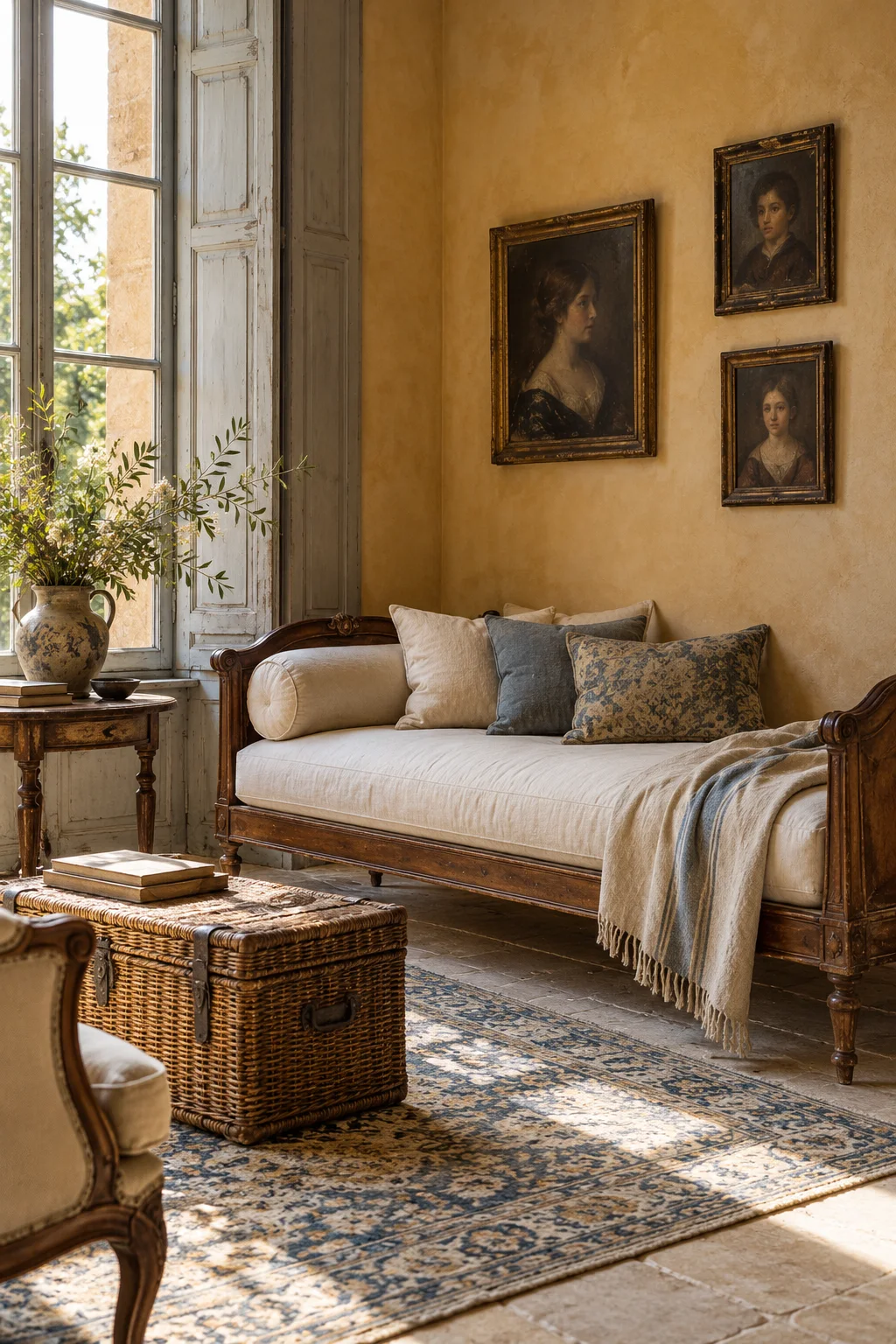
Winter in Provence decor rests on a short list of materials: painted clay, olive wood, faience, copper, linen, wax, cut greenery and terracotta.
For centuries, country furniture in France was not bought and sold the way it is today. It was commissioned from the village joiner, often for a marriage, and then inherited. Gérard Boutet, collecting memories of village life in the Beauce and the Sologne between 1870 and 1914, puts it simply: furniture was inherited from generation to generation, always had been.
In Gascony, the records show the same attachment. A farm monograph from the Orthe district, reproduced in Archives de Gascogne, describes a sharecropping family whose walnut furniture was rubbed with vinegar every week; families put their pride and savings into reaching a complete set of furniture, the standard fixed by custom. In the Armagnac, the bride's armoire and bed crossed the countryside in a procession, the passade du lit, described in our article on the wedding armoire.
Joseph de Pesquidoux dates the first break to the middle of the nineteenth century. Gascon rustic art disappeared. All kinds of materials came into use, and furniture supplied by distant factories and town shops invaded the houses, while the Paris department stores sent clothes by mail order and cloth brokers delivered fabrics to the door.
From then on, a farmhouse could hold two layers of furniture: the old, locally made pieces, inherited, and the new factory pieces, bought. When houses were cleared a century later, the old layer was the one dealers wanted.
Boutet describes the second break from his own village, in the Loir-et-Cher, writing in the late 1970s. A large hamlet had once counted about forty farms; you would struggle to find more than ten. Little by little, he writes, the villages lost their identity, and the local people themselves helped to change their appearance:
Not everyone lost out, he adds with irony. Antique dealers and secondhand dealers arrived by truck to "clean out" the attics, with the blessing of the owner, who rubbed his hands, delighted to be rid of all his old junk at last. Even the hubs of cart wheels were carried off, to be turned into ridiculous standard lamps.
Boutet's own family kept everything. In his parents' house he found what he calls true treasures: Second Empire clocks, substantial armoires, a dough trough (maie), a bluteau, the cabinet with a rotating sieve used to sift flour, and a table that would date from Louis XVI.
Then the abandoned houses fell into ruin, Boutet goes on, and city dwellers bought the hovels at high prices and restored them as best they could. He does not see a rebirth of the villages: the newcomers, he writes, never managed to recover the rustic simplicity of the old buildings, and few façades escaped disfigurement. The architectural historian Alfred Cayla made the same complaint about second homes in Gascony in 1977; read our article on renovation mistakes.
Three things followed from the clear-out, and you still see their traces in the market:
Small, cheap things followed another path. Sabots, Boutet's witnesses note, became museum pieces, and pastiches hang on walls as flower vases. Earthenware pots and faience plates, valued in centimes in the old farm inventories, survived in quantity but often in poor condition. Our article on the farmhouse inventory shows what each object was worth at the time.
Our article on antique, vintage or reproduction French country furniture gives a complete method.
Two armoires of the same form can differ greatly in price if one has a documented history: a known house, a family, a date carved or written, a photograph in place. Ask for every document the seller has, and keep them with the piece.
In France, country pieces still come out of houses through clearance specialists, house sales (vide-maisons), brocantes and flea markets, specialist dealers and regional auction houses. Our guide to antique shopping in France explains each channel. Interior designers sourcing for clients can read French antiques for interior designers.
The best reason to know this history is not nostalgia. It is that a piece with its story intact is worth more, lives better in a home, and can be passed on, as it was before, from one generation to the next.
| Trace of history | What it looks like | What to ask the seller |
|---|---|---|
| Regional travel | A regional style far from its region | Where was it bought, and from whom? |
| Conversion | Bookcase armoire, trough table, churn lamp | When was it converted? Are original parts kept? |
| Restoration | New back boards, feet, hardware or finish | What was done, and when? |
| Documented provenance | Carved initials, date, family papers, photographs | Can you put the history in writing? |
Most come from rural houses where furniture was made locally and inherited for generations. Large quantities reached the market in the decades after the Second World War, when village houses were cleared, modernised or abandoned and dealers bought their contents.
As villages emptied and tastes changed, many owners replaced family furniture with modern pieces and were glad to sell the old. The writer Gérard Boutet describes dealers arriving by truck to clear attics with the owners' blessing.
Check the back and inside for fresh wood, modern screws and machine-cut boards, look for proportions that seem wrong, compare the age of all the hardware, and make sure the wear makes sense for the piece's use. Ask the seller directly about any changes.
Yes. A documented history, such as the house it came from, carved initials or a date, family papers or photographs, can make a significant difference in value and makes the piece easier to resell.
Nov 20, 2026 · Antique guide
Winter in Provence decor rests on a short list of materials: painted clay, olive wood, faience, copper, linen, wax, cut greenery and terracotta.
Nov 19, 2026 · Antique guide
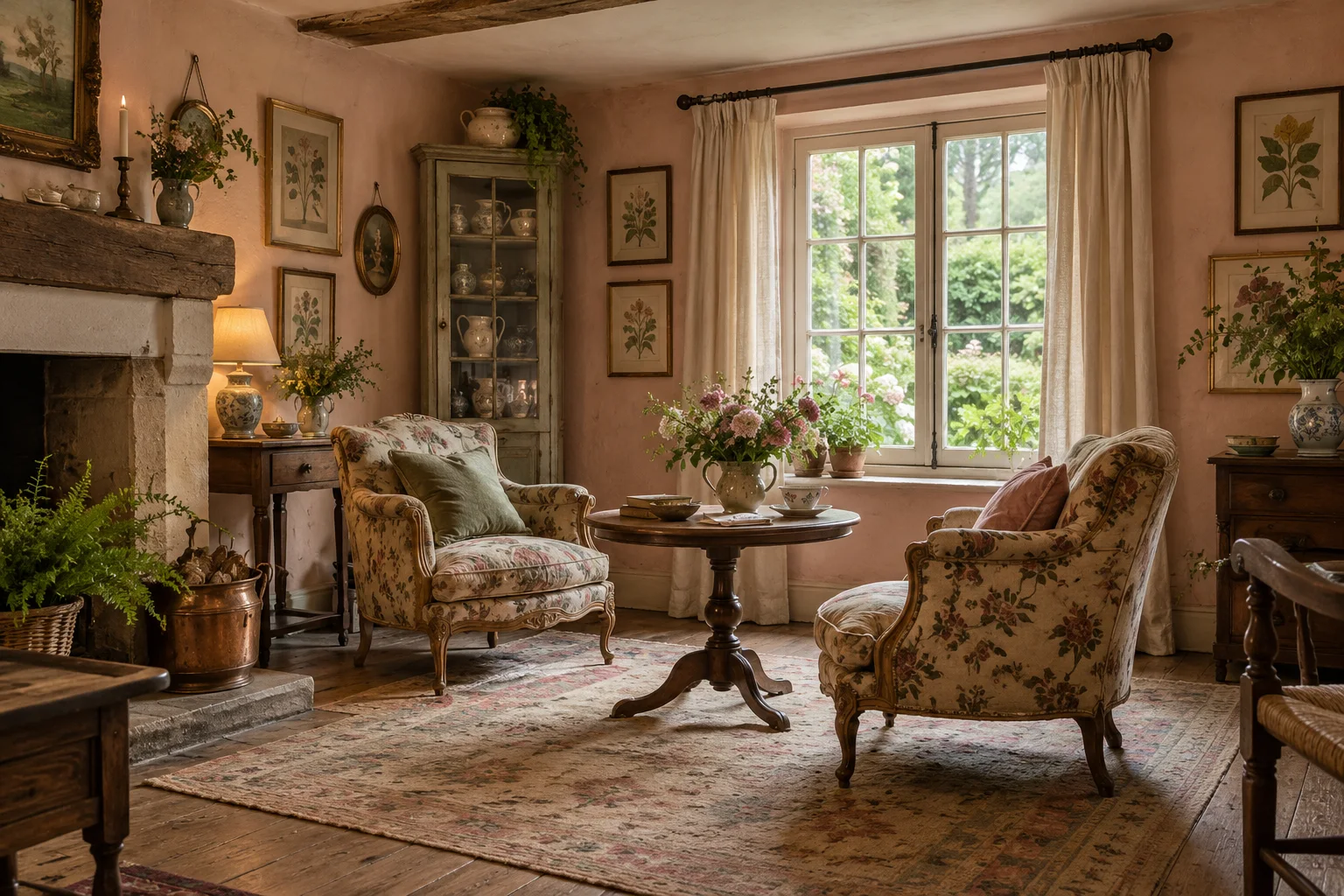
A French clock gives a country room a sound as well as a shape.
Nov 19, 2026 · Antique guide
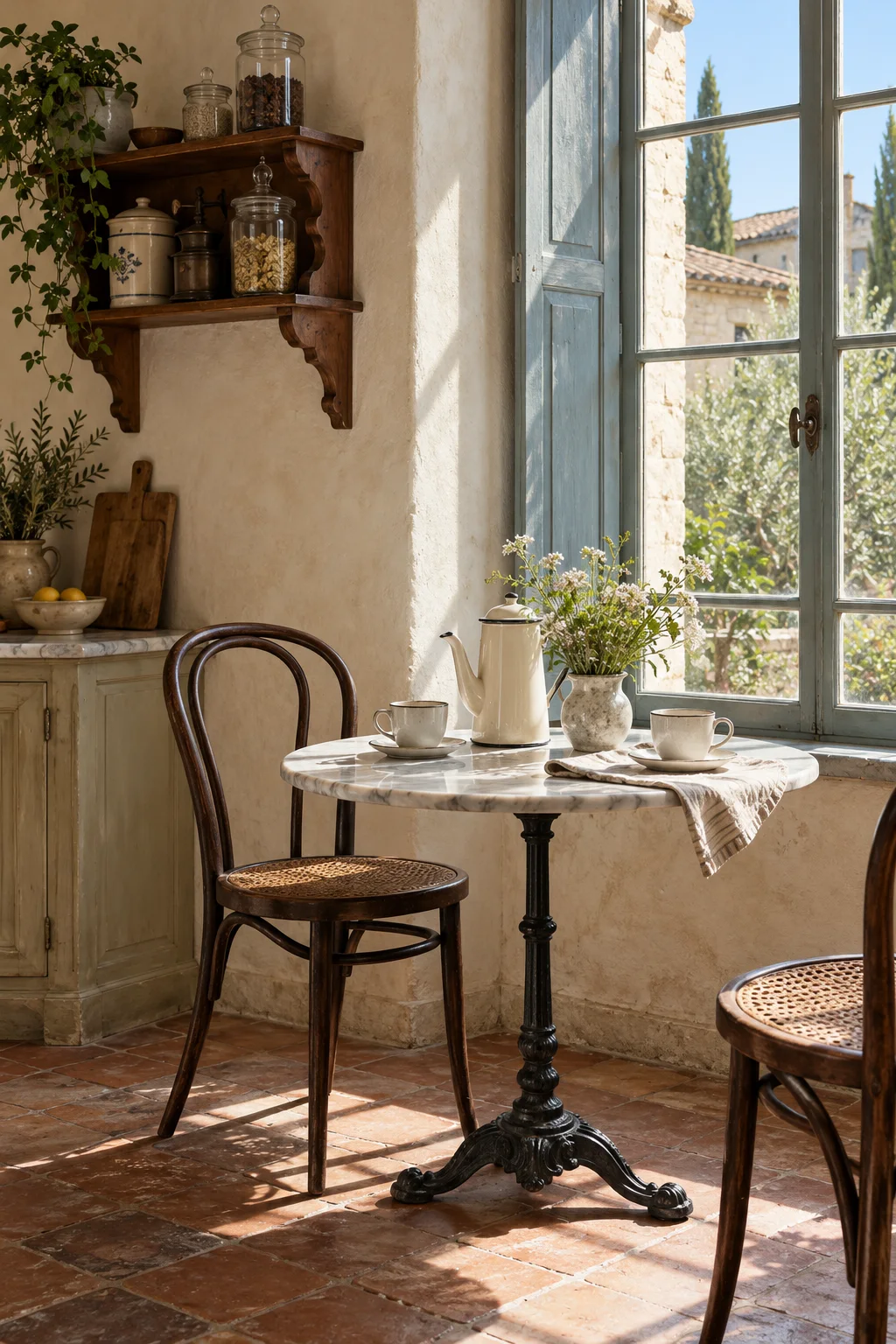
Antique French baskets were made to work: carrying produce to market, holding eggs, hauling grapes at harvest, proving bread and moving oysters.