Provence winter decor in ten pieces
- Santons for a crèche. Small painted clay figures made in Provence for the Christmas crib. Check paint losses and chipped bases, and attribute only by a maker's stamp.
- An olive wood board or bowl. Dense, figured and warm in tone. Check for cracks running through the grain.
- A faience platter. Tin-glazed earthenware with a white ground. Check rim chips and old repairs; name a region only from a mark.
- A copper jam pan. A bassine filled with greenery. Use a liner, since standing water marks copper.
- A linen cloth or hemp sheet. Hold it to the light to find thin areas and mends.
- Brass candlesticks with beeswax tapers. Check the base for weight and the cup for a snug fit.
- A terracotta pot. For a rosemary or a small olive tree brought indoors. Check for frost cracks and set a saucer underneath.
- Cut greenery. Olive, bay, rosemary, holly and ivy from the garden, replaced as it dries.
- A boutis. A Provençal quilted whitework throw. Check the stitching and stains; wash by hand only.
- An iron lantern or tole lamp. Check that an old lamp has been rewired to US standards before use.
The Provençal palette: ochre, olive and chalk white
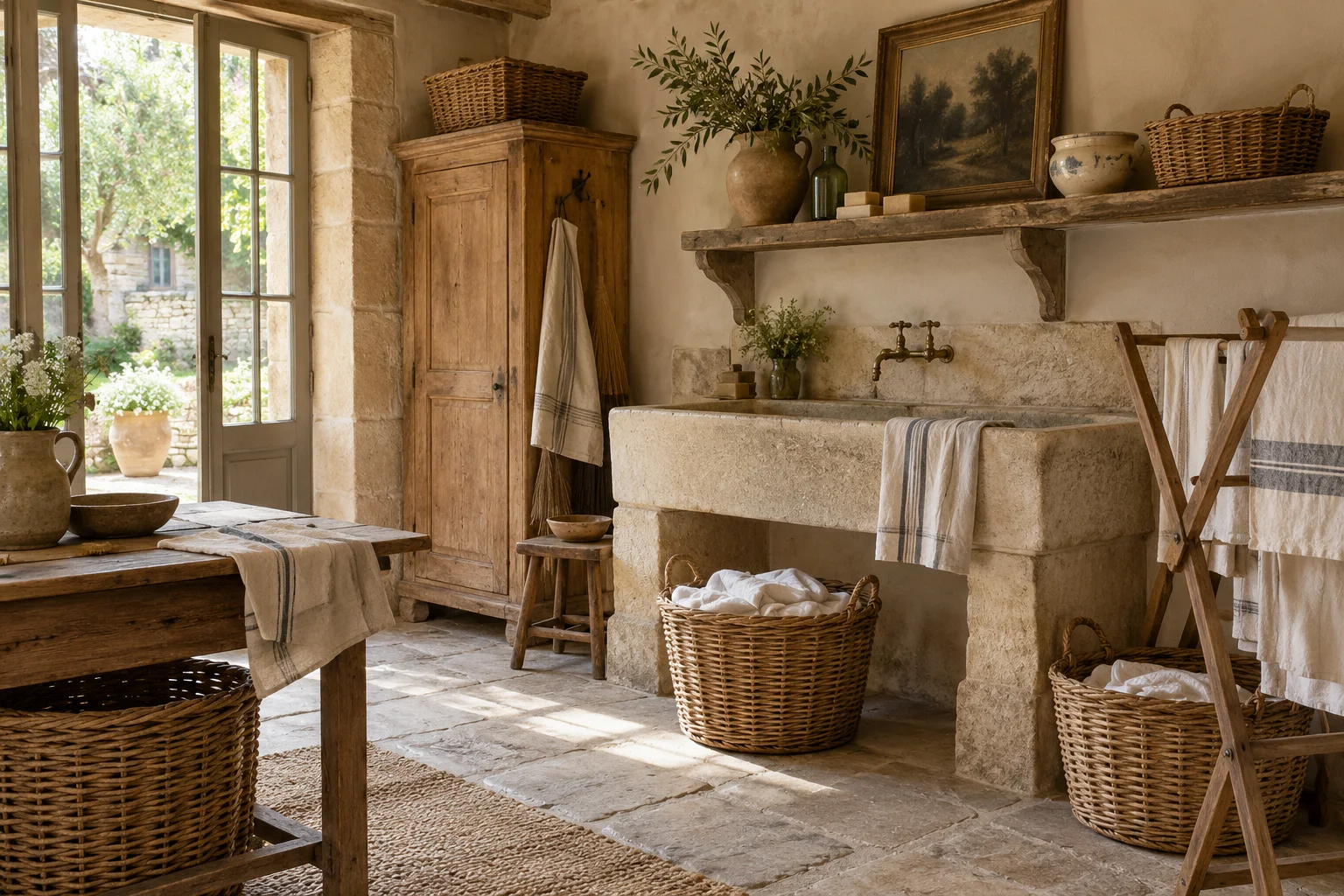
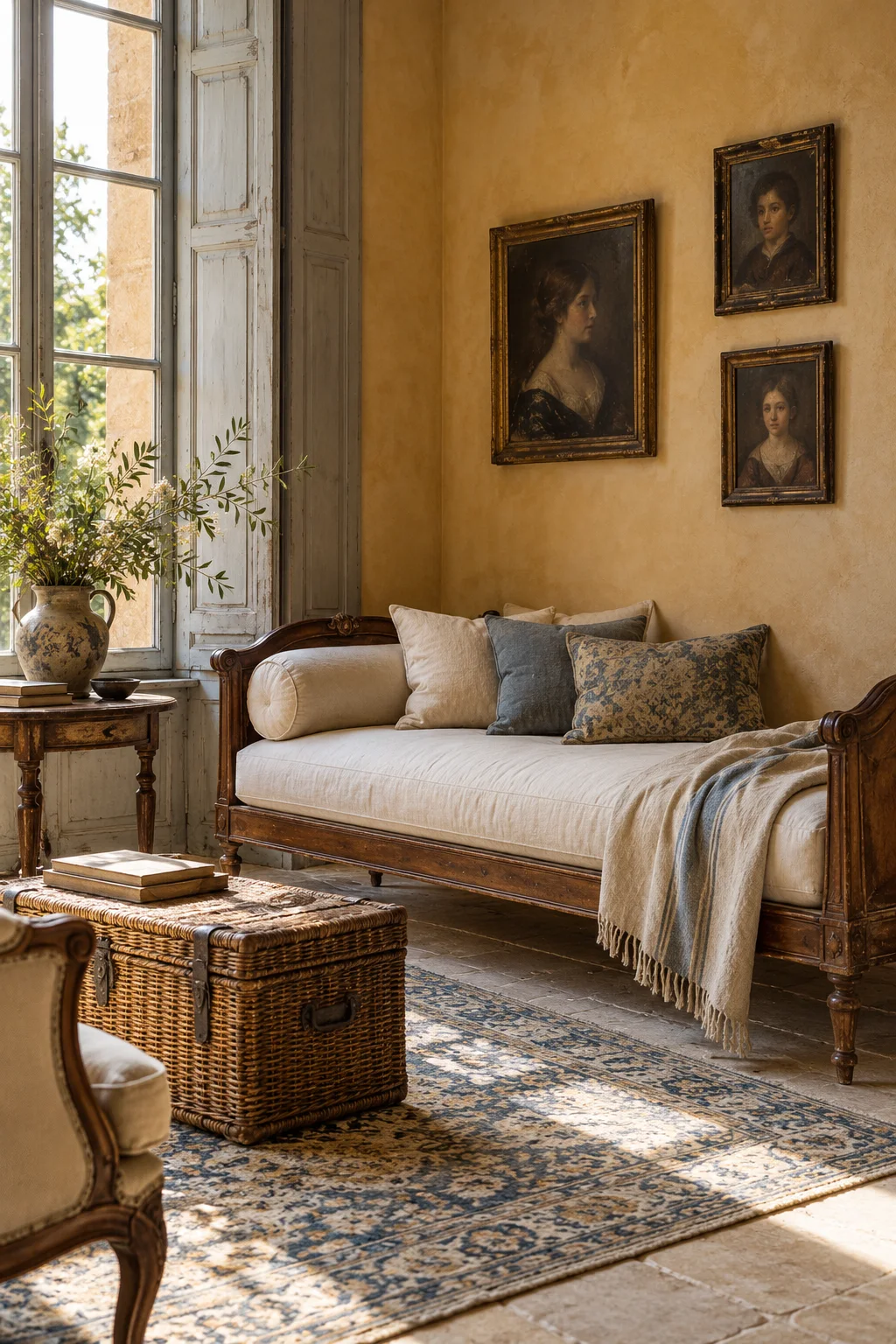
The palette comes from the land. Chalk white and raw linen take the large surfaces: walls, cloths, the boutis. Yellow and red ochre, the earth pigments long quarried around Roussillon in the Luberon, come in through faience, terracotta and painted wood. Olive and bay supply a gray-green. Red stays small: holly berries, a santon's cloak, a band on a linen towel. Copper and brass add warmth after dark, which comes early in December.
Room by room: Provençal Christmas decor vignettes
Entryway
An iron lantern on a chest, a terracotta pot of rosemary by the door and a bay wreath on the hook. Three pieces are enough to set the season at the threshold.
Living room
The crèche goes on a commode top or a mantel, at eye level for children and away from the fire. Our note on the Provençal crèche and Christmas candlelight covers display and storage. A boutis on the armchair and two brass candlesticks complete the room.
Kitchen and dining room
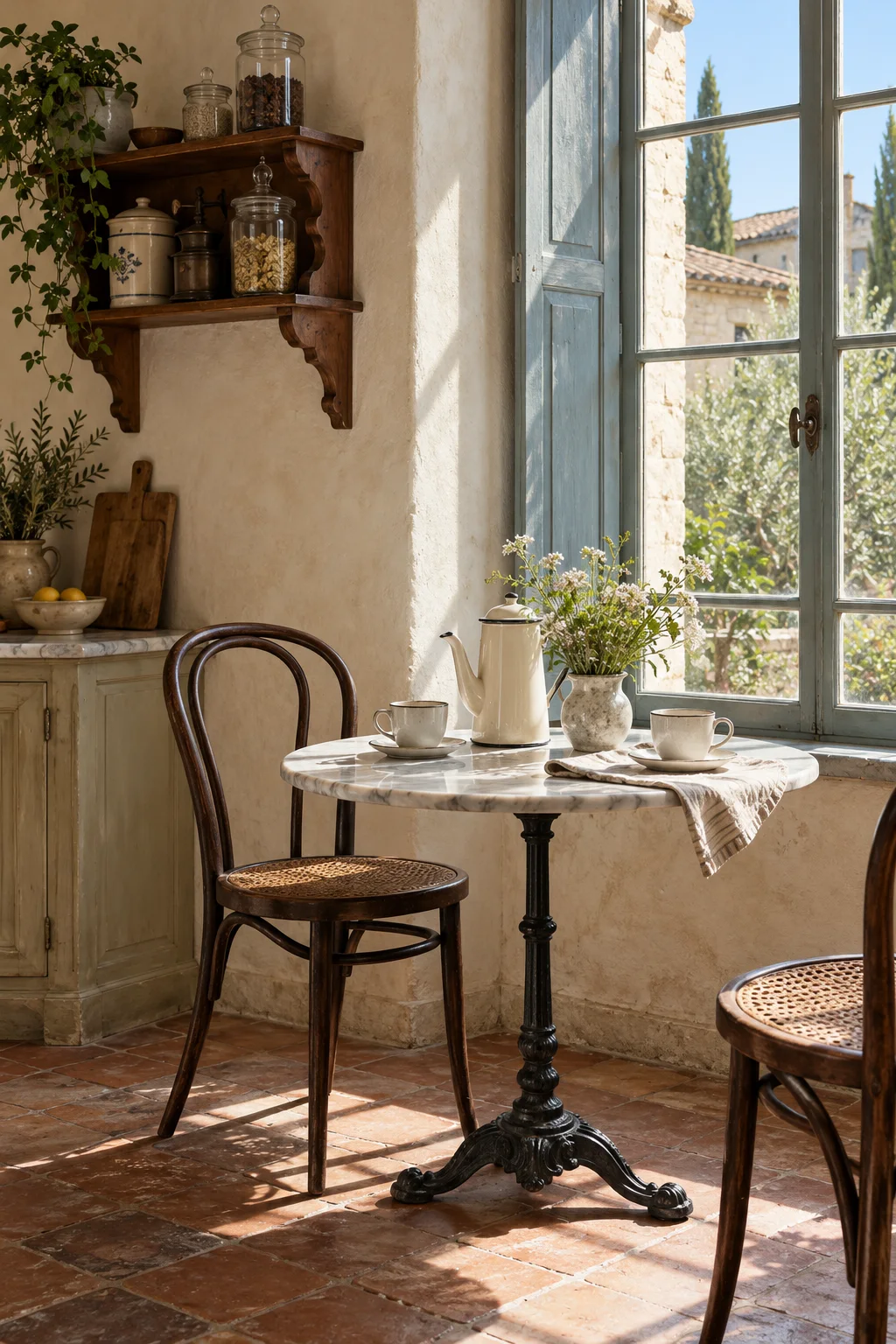
A copper bassine of olive branches sits on the table, olive wood boards stand on the dresser and faience fills the open shelf. The French country kitchen layout leaves room for all three. On the dining table, linen and candlelight do most of the work.
Garden and terrace
Before frost, potted olives, bay and citrus come into a cool, bright room. Our French country garden guide covers the pots and the plants that winter outdoors.
Buying French winter decor: what to check
Santons are still made by Provençal workshops, so a new santon is not an antique and a listing should say which it is. Faience and copper carry the most reproductions; ask for photos of the base, the mark and every repair. Shop brass candlesticks, antique dishes and faience and old wooden bread boards at Lo Cantou, where listings show condition and dimensions. Smaller French country accents fill in between the larger pieces.
What to compare
| Form | Suggested Use | Decisive Check |
|---|---|---|
| Santons | Crèche on a mantel or commode | Paint losses, chipped bases, maker's stamp |
| Faience platter | Open shelf or holiday table | Rim chips and old repairs; region by mark only |
| Copper bassine | Greenery on a kitchen table | Liner for water; tin lining if used for cooking |
| Terracotta pot | Potted olive or rosemary indoors | Frost cracks; saucer and felt pad underneath |
Your buying checklist
Continue planning your room
Frequently asked questions
What is winter in Provence decor?
It is a French country look built from regional materials: painted clay santons, olive wood, faience, copper, linen, beeswax candles, terracotta and cut greenery such as olive, bay and rosemary. The palette is chalk white, ochre and olive, with small touches of red. Most pieces stay in the house all year and are simply regrouped for the season.
Are santons antiques?
Some are, many are not. Santons have been made in Provence for generations and workshops still produce them, so age has to be shown by condition and, where present, by a maker's stamp, not by style. A listing should state whether a santon is new, vintage or older, and describe any paint losses or repairs.
How do you care for olive wood in winter?
Keep olive wood away from radiators and fireplaces, because dry heat can open cracks along the grain. Wash boards and bowls by hand, dry them at once and never soak them. Oil food surfaces occasionally with a food-safe mineral oil, which restores color and slows drying in heated rooms.
Can Provençal Christmas decor stay up after the holidays?
Most of it can. Linen, faience, copper, olive wood and terracotta belong to the house all year, and only the crèche and the cut greenery are seasonal. In Provence, many families keep the crèche in place until Candlemas on February 2, then pack the santons in tissue in a dry box.
Sources & further reading
- The Metropolitan Museum of Art — French Faience — Supports the description of faience as tin-glazed earthenware and the caution about attributing it without a mark.
- Canadian Conservation Institute — Basic care: furniture and objects made of wood — Supports keeping wooden objects away from heat sources and sudden changes in humidity.