The antique French farmhouse table and the pétrin
The table de ferme is the farmhouse table: a thick top of oak, walnut, chestnut or fruitwood, often 70 to 118 in (180 to 300 cm) long and 28 to 30 in (71 to 76 cm) high, on four legs joined by stretchers. Expect a scrubbed, uneven top, knife marks, burns, rings and stretchers worn by boots. A top that is perfectly flat and evenly colored has been planed or replaced; ask which, because a replaced top changes the description. Our page on French country dining tables compares sizes and seating.
The pétrin is the dough trough: a deep wooden box with a lid, usually on legs, used to knead and rest bread dough. Inside, look for flour residue in the joints and a smooth, worn floor; outside, hinges and locks are often replaced. A pétrin 40 to 55 in (100 to 140 cm) long works as a hall console, a linen chest or a side table in a dining room.
Panetière, garde-manger and the smaller kitchen pieces
A panetière is a bread cupboard: a box with spindled or pierced sides that lets air through, hung on a wall or set on a buffet. The form is most associated with Provence; attribute a regional origin only with documentation. A garde-manger, the food safe, has a door of spindles, pierced tin or fine screen to keep flies out. Both still store bread, fruit and cheese well.
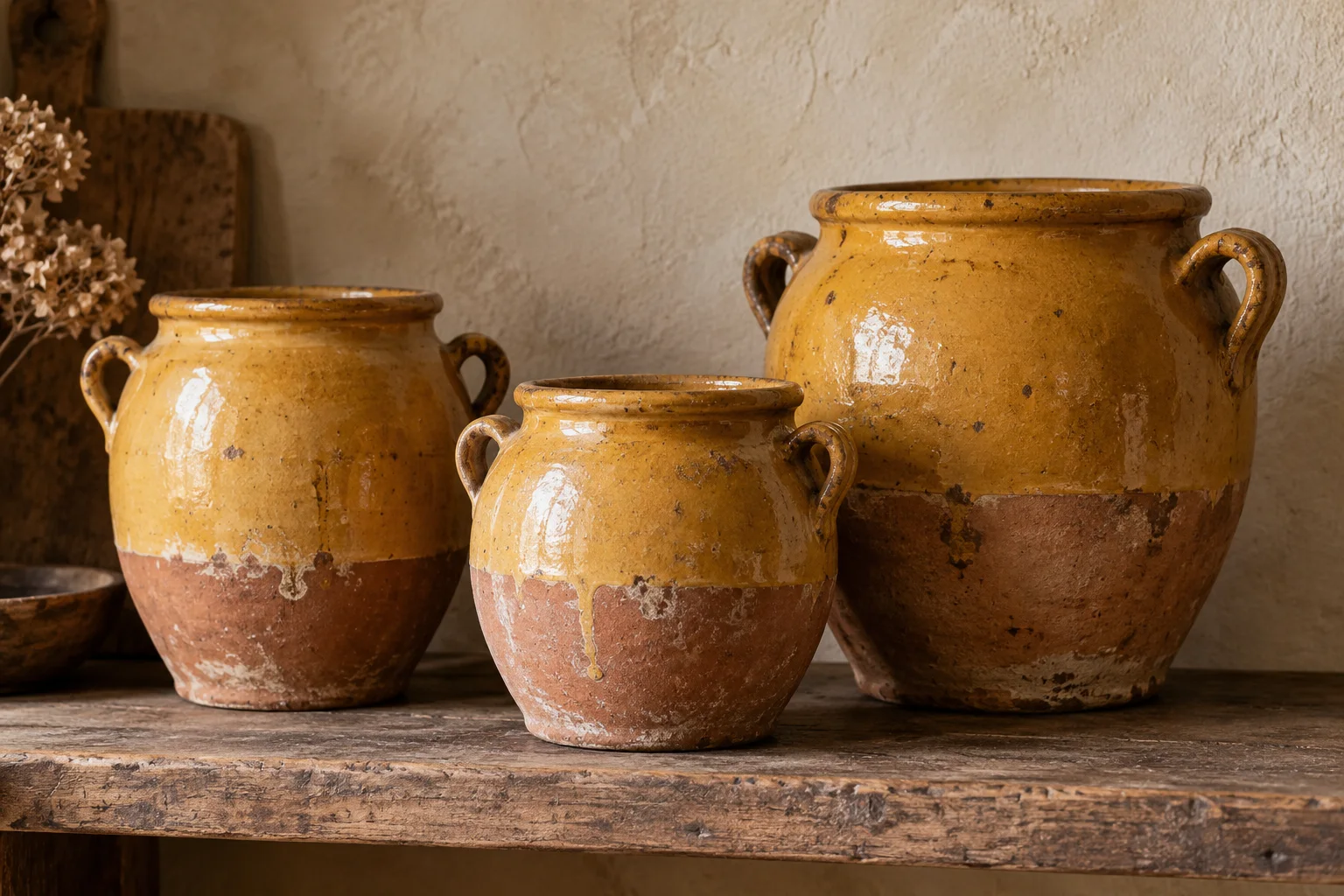
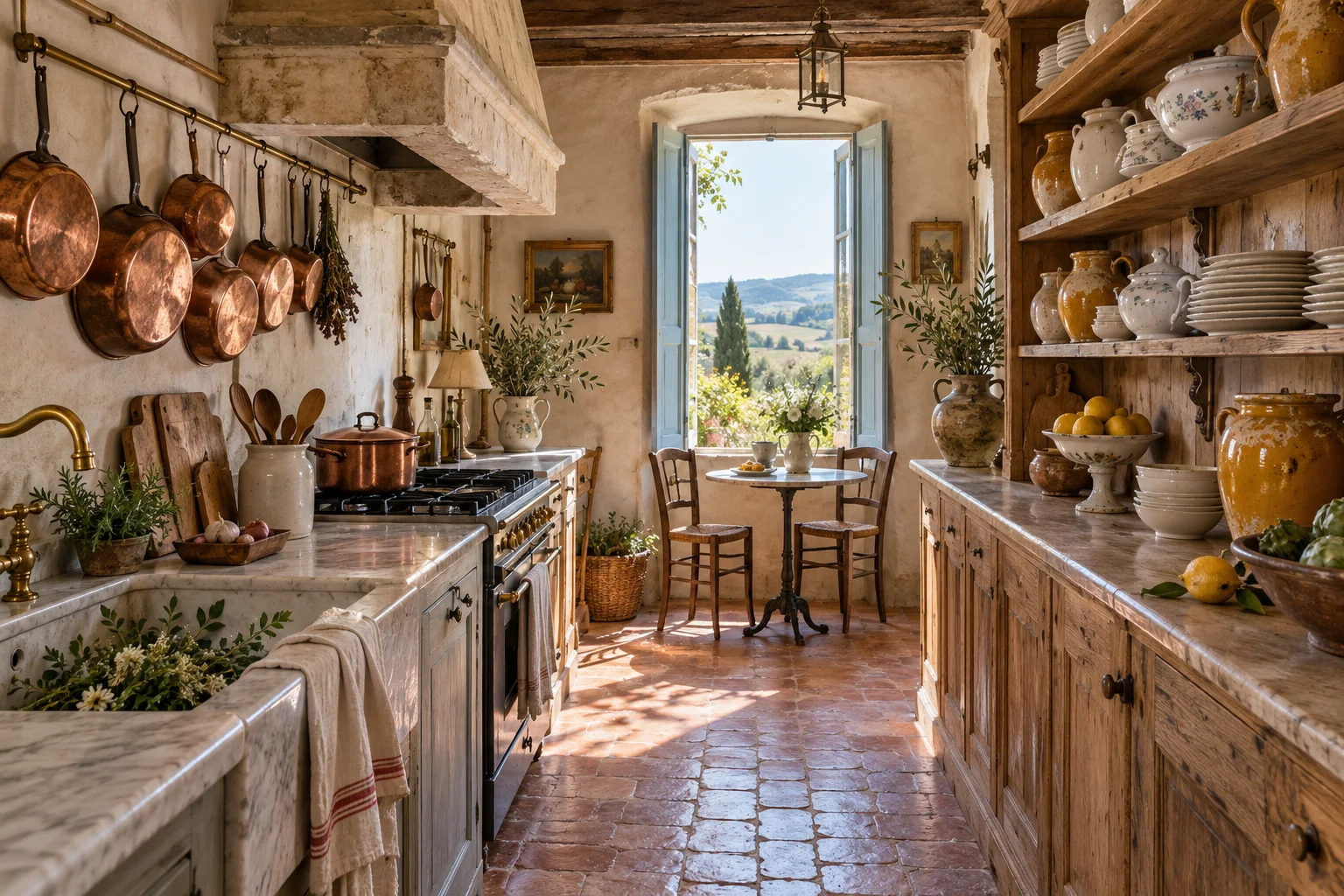
Smaller pieces carry the look into other rooms. Glazed French confit pots from the Southwest hold utensils or branches. Copper pans hang on a rail; have worn tin linings renewed before cooking. Enamel coffee pots and pitchers chip at the rims, which is normal; rust through the body is not. Hemp and linen grain sacks, some stenciled with initials or a farm name, become cushion covers and runners; see our antique linens and cushions.
What wear to expect on French farmhouse antiques
Accept worn edges, scrubbed and dished tops, old filled holes, replaced hinges, later handles, small splits along the grain and old woodworm flight holes that are clean and dark inside. These are the marks of use. Our article on patina in a farmhouse interior explains how to keep that surface rather than polish it away.
Question fresh pale dust under a piece, which signals active woodworm, legs cut down or extended, a top that does not match the base in wood or wear, fresh stain hiding repairs, and any date or region given without a document. For clients in the United States, Antiques 360 sources from dealers in Occitanie and southwest France, photographs every flaw and supplies age documentation where it exists. Documented antiques over 100 years old can be declared under HTS heading 9706; the outcome at the border is never promised in advance.
Sizes, moving and where they fit in a modern house
Farm furniture is heavy. A 9 ft (2.7 m) oak table can weigh 200 lb (90 kg) or more. Most tables come apart: the top lifts off pegs and the legs and stretchers are pinned. Measure the door, the hall turn and the stair, and keep pegs in a labeled bag. Pieces shipped abroad travel in ISPM 15 treated crates, the international standard for wood packaging.
In a modern house, one large farmhouse piece per room is usually enough: the table in the kitchen, the pétrin in the hall, the food safe on a landing. Pair them with plain modern seating and good light, and leave space around them. The French farmhouse interiors guide shows how these pieces sit in open-plan rooms.
What to compare
| Form | Suggested Use | Decisive Check |
|---|---|---|
| Table de ferme | Kitchen or dining table for 6 to 10 | Top and base matching in wood and wear |
| Pétrin | Hall console, linen chest, side table | Sound floor and lid; no active worm |
| Panetière or garde-manger | Bread, fruit and cheese storage | Original spindles or screen; wall fixing |
| Copper and enamel | Rail, open shelf, daily use | Tin lining before cooking; rust through enamel |
Your buying checklist
Continue planning your room
Frequently asked questions
What counts as a French farmhouse antique?
French farmhouse antiques are the furniture and tools of a working rural household: the table de ferme, the pétrin or dough trough, the panetière and garde-manger, glazed confit pots, copper pans, enamelware and hemp grain sacks. They are valued for their materials and honest wear rather than for refinement or a famous maker.
How can you tell if an antique French farmhouse table is original?
Compare the top and the base. Both should match in wood, color and wear, with knife marks, scrubbed hollows and worn stretchers in the places hands and feet touched. A perfectly flat, evenly colored top suggests planing or replacement. Look underneath for old tool marks and pegged joints, and ask what has been changed.
Is woodworm in a farmhouse antique a problem?
Old flight holes that are clean and dark inside are normal and usually inactive. Fresh pale dust under a piece, or holes with bright edges, suggest active infestation that needs treatment before the piece enters your home. Ask the seller whether the piece has been treated, and look under drawers and at leg ends.
Can a pétrin be used in a modern home?
Yes. A pétrin works as a hall console, a linen chest or a storage piece in a kitchen, with blankets or table linen under the lid. Check that the floor of the trough and the lid are sound and that no woodworm is active.
Sources & further reading
- Canadian Conservation Institute — Basic care: furniture and objects made of wood — Basic care of wooden furniture, including signs of insect activity and stable conditions.
- U.S. Customs and Border Protection — Importing antiques — How antiques are declared on import into the United States.
- IPPC — ISPM 15 implementation (wood packaging material) — The international standard for treated wood packaging used in shipping crates.