Five antique French baskets and what each was made for
The panier de marché, or French market basket, is the form most often found. A typical example is an oval of woven willow, 16–20 in / 40–50 cm long, with a fixed handle over the top or two side handles. The antique egg basket, panier à œufs, is smaller and deeper. Many French egg baskets are galvanized wire rather than wicker, shaped so that eggs sit off the ground and air passes through.
The hotte is a tall back basket with shoulder straps, used at the grape harvest and for farm loads. A full-size hotte stands 28–36 in / 71–91 cm, so a hotte is a floor piece, not a shelf piece. The banneton is a round or oval coil of straw or cane in which bread dough rises before baking. The bourriche is the low, lidded oyster basket of wooden slats or wicker.
Willow, chestnut and straw: reading antique wicker baskets
Most antique wicker baskets in France are willow, osier. Willow is woven with the bark on (brown), stripped (buff) or boiled before stripping (a warm tan). Regions such as Touraine are associated with willow work, but a region names a tradition, not the origin of one basket; attribute only by a label or a documented sale. Split chestnut, éclisses de châtaignier, gives flat, wide strips on a frame of round rods. Chestnut baskets are sturdier and common in the center and southwest of France.
Straw and rush are coiled and bound with cane or bramble, mostly for bannetons and grain baskets. Age shows in a darker, polished handle, an inside color that differs from the sun-faded outside, and repairs in mismatched material. A basket with uniform color, sharp unworn fiber ends and a glossy varnish is more likely recent. Neither is wrong; the description simply has to match the basket.
Checking breaks, woodworm and old repairs
Turn the basket over first. The base takes the weight and the damp, so look for broken stakes (the rigid uprights that carry the weave), soft or darkened fibers at the corners and rot where the basket stood on a stone floor. Sound willow springs back under light pressure; dry willow cracks. Then check the handle, the part that fails most often. A loose wrapping can be rebound; a cracked handle bow is a structural repair.
Small round holes with fine powder beneath mean woodworm, which attacks willow and chestnut as it attacks furniture. Fresh, pale powder suggests activity and calls for isolation in a sealed bag before the basket enters the house. White or green bloom is mold; a musty smell that persists after airing means the fibers have absorbed it. Old repairs in wire or string belong to a working basket and should be described, not hidden.
Cleaning, storage and display
Dust with a soft, dry brush, then vacuum on low suction through net. The Canadian Conservation Institute groups basketry with wooden objects: keep it dry, away from heaters and direct sun, and away from sudden swings in humidity. Never soak a basket. A cloth barely dampened and wrung hard, followed by drying in the shade, is the limit of household cleaning.
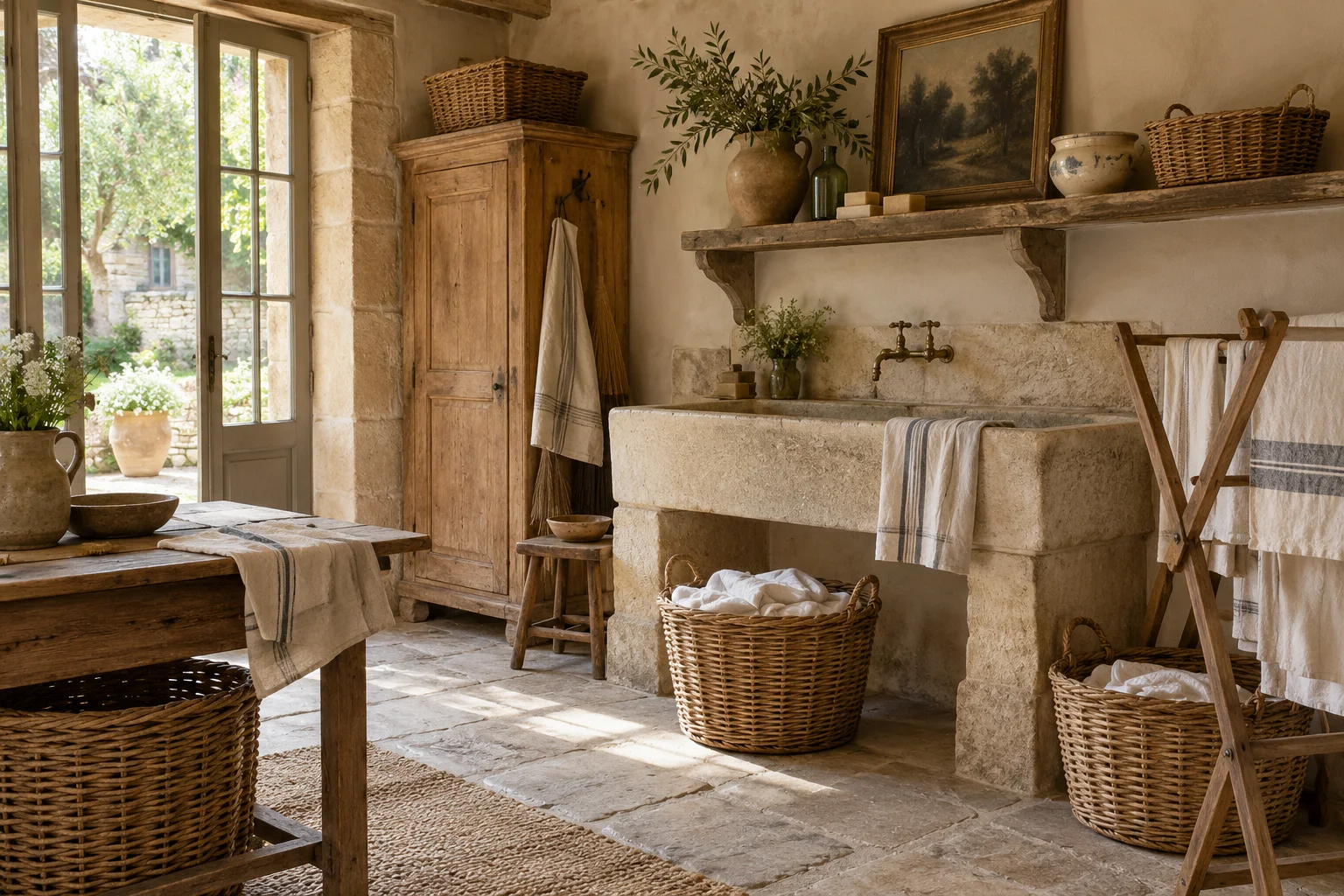
A market basket holds linens, logs or kindling; an egg basket holds onions or bulbs; a hotte stands by the hearth with rolled throws. Carry an old basket from underneath and keep heavy loads off the handle. Use an old banneton for display, or for proving only if clean, dry and free of mold. Our French country kitchen guide shows baskets beside crocks and copper, the baskets and boxes category gathers more forms, and the note on vintage wicker picnic hampers covers fitted baskets.
What to compare
| Form | Suggested Use | Decisive Check |
|---|---|---|
| Willow market basket | Linens, logs, kitchen storage | Handle bow sound; base stakes unbroken |
| Wire or wicker egg basket | Onions, bulbs, small display | Wire joints tight; no flaking rust at the base |
| Grape harvest hotte | Floor piece by a hearth or door | Straps and back frame stable; no fresh woodworm powder |
| Straw banneton | Bread proving or wall display | No mold or musty smell; coils tight |
Your buying checklist
Continue planning your room
Frequently asked questions
How can you tell if a French basket is antique?
Read construction and wear rather than labels, since few baskets are marked. Old baskets show darker, polished fibers at the handle, an inside color that differs from the faded outside, and repairs in mismatched material. Recent baskets look uniform, with sharp fiber ends. Treat 'antique' as a description the seller must support, not as a dated attribution.
Can you use an old banneton to prove bread?
Yes, if the banneton is clean, dry and free of mold. Brush out old flour, check the coils for dark spots and a musty smell, and dust with rice flour before use. Dry the basket fully in warm air after each bake. A banneton with mold in the straw, or a smell that persists after airing, should be kept for display.
What is a French egg basket made of?
Many French egg baskets are galvanized or painted wire, shaped so that eggs rest off the ground and air passes through. Others are tightly woven willow, sometimes lined with straw. Check wire baskets for loose joints and rust at the base, and willow ones for broken stakes. Both make practical holders for onions, garlic or bulbs.
How should you clean an antique wicker basket?
Use a soft, dry brush, then a vacuum on low suction through a net screen, following the weave. Do not soak the basket or dry it in the sun. For grime, wipe with a cloth barely dampened and wrung hard, then let the basket dry in the shade with good air circulation, away from heaters and radiators.
Sources & further reading
- Canadian Conservation Institute — Basic care: furniture and objects made of wood — Supports keeping wooden and basketry objects dry, away from heat and direct sun, with cleaning limited to dusting; it does not date the baskets discussed.