Nov 20, 2026 · Antique guide
Winter in Provence Decor: The Look in Ten Antique Pieces
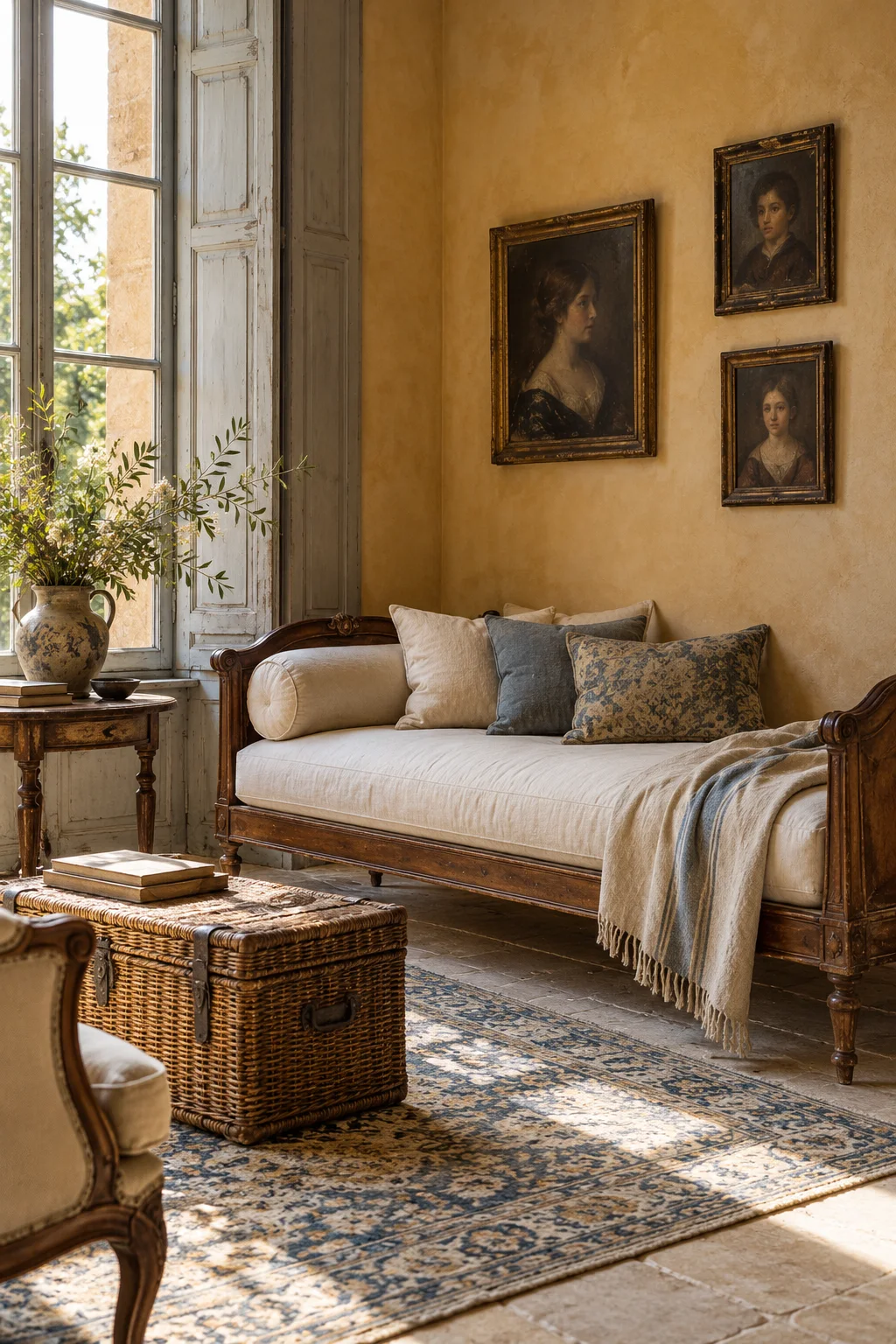
Winter in Provence decor rests on a short list of materials: painted clay, olive wood, faience, copper, linen, wax, cut greenery and terracotta.
In the Landes, the room with the fire was simply called the sol, the floor, or the cahouadé, the warming room. In the Lot-et-Garonne, Alfred Cayla found the same arrangement under other names: the kitchen, the salle, the oustal. The hearth was built at the same time as the first wall of the house, on the long side wall or on the internal dividing wall, and everything else was arranged around it.
The Gascon cookery writer Claudie Corty-Capdeville sums up its place in family life: around the trammel hanging in the fire, projects were made and unmade, tales of the evening gatherings were passed down, and family secrets were confided and argued over.
Joseph de Pesquidoux, describing the earliest Gascon farmhouses, gives a hearth so deep that people could sit inside it along the side wall. Its furnishings were few:
Cayla quotes the same description in his study of the houses of the Gers, which shows how far it was accepted as the type of the old Gascon kitchen.
The trammel is the adjustable hook that hangs the pot over the fire. In its simplest form it is a chain; the forged versions have a toothed or notched bar so that the pot can be raised or lowered, and some are decorated with scrolls and twisted iron. Our encyclopedia entry on the trammel explains the mechanisms, and the wedding trammel shows how this working tool could become a marriage gift.
What to check: hand-forged iron has slight irregularities in thickness and hammer marks; the teeth should be worn where the hook rested most often; links should be closed by forge-welding rather than modern welding beads.
The second stage of the Gascon hearth, Pesquidoux writes, brought heavy iron landiers. Their uprights carried hooks to hold and turn the hand spit, and one of them ended in a cup at the top, so that the nursing mother could set her bowl of soup there and eat it in front of the flame while feeding her baby.
The landier is the kitchen firedog, tall and working; the chenet is the lower firedog that only holds the logs. The difference shows in a farm inventory from the Orthe district, reproduced in Archives de Gascogne: the pair of kitchen landiers was valued at 20 francs, the pair of cast-iron chenets at 2.50 francs. The same text says the family polished them until they shone. Read the full inventory with prices.
What to check: buy them as a pair if you can, with matching height and hooks; look for wear on the spit hooks; check the feet for cracks, especially on cast iron, which is brittle; a cup or basket top (sometimes used as a warmer) should be original to the casting or forging, not welded on later. See also andirons and copper firedogs.
Salt had to stay dry, and the driest place in the house was beside the fire. The Gascon salt box sat under the mantel or in the wall next to it, and its lid made a seat. Salt boxes are among the most collected pieces of French folk joinery; our entry on the salt box covers the regional types. The Orthe inventory values one at 1.50 francs, which tells you that its present value comes from its charm and survival, not from what it cost.
What to check: a sloping or hinged lid with wear at the front edge, wood darkened by smoke, iron or wooden hinge pins, and often a little salt corrosion on any nails.
In the Lot-et-Garonne, Cayla notes, the back wall of the fireplace was protected by a cast-iron plate, the taque, sometimes by a stone slab, and exceptionally by a terracotta plate. The plate protects the masonry and throws heat back into the room.
What to check: cast-iron firebacks have been reproduced in large numbers. An old one usually shows a softened relief from heat and wear, a slightly uneven back, and corrosion consistent with long use. Very crisp casting, sharp edges and a perfectly flat back suggest a recent copy. Leave a small air gap behind it when you install it so it can expand.
Cayla insists that there was always a potager in these kitchens, as in the Landes: a masonry stove built against the wall, with one or more openings on top over small grates for charcoal or embers, used for slow cooking away from the main fire. Sauces, soups and preserves simmered there. Old potagers survive in some houses, often tiled; when you find one, keep it. It makes a superb shelf for copper and earthenware.
In the seventeenth century, Pesquidoux writes, the better farmhouses acquired a roasting jack driven by a stone weight and fixed to the jamb of the fireplace. When it was wound, the noise could be heard all around. Clockwork jacks and their spits survive in some quantity and make strong decorative pieces beside a fireplace, but a complete working mechanism with its weight and chain is rare.
The earliest light was the resin candle, burning on a forked iron rod. Later came the clay or iron oil lamp shaped like a closed sauceboat with a spout, burning an oakum wick in oil; then candles of tallow instead of resin; and in the better houses the copper oil lamp with its snuffer and three flames. Our fire and light chapter has entries on the oil lamp and the splint holder.
You do not need a working kitchen fireplace to use these objects, but they look right only in proportion. A few guidelines:
For the mantel itself, see our fireplace mantel entry and the fireplaces and accessories collection.
| Object | What it did | Decisive check |
|---|---|---|
| Trammel (crémaillère) | Adjustable hook for the pot over the fire | Forge-welded links, wear on the teeth, hammer marks |
| Kitchen landiers | Held the logs and the spit; a cup for a bowl | Matching pair, worn spit hooks, no cracks in cast iron |
| Low chenets | Held the logs only | Simple form; cast iron cracks easily |
| Salt box | Kept salt dry; lid used as a seat | Worn lid edge, smoke-darkened wood, original hinges |
| Fireback (taque) | Protected the wall, reflected heat | Softened relief and uneven back on an old casting |
| Roasting jack | Turned the spit by a falling weight | Complete mechanism, weight and chain are rare |
Landiers are tall kitchen firedogs with hooks for the spit, and sometimes a cup or basket at the top. Chenets are lower firedogs that only hold the logs. In one Gascon farm inventory, a pair of landiers was worth eight times a pair of cast-iron chenets.
A crémaillère, or trammel, is the adjustable hook or chain that hangs a cooking pot over an open fire. Forged versions have a toothed bar so the pot can be raised or lowered.
Old cast-iron firebacks usually have relief softened by heat and wear, a slightly uneven back and deep corrosion consistent with use. Very sharp detail, crisp edges and a perfectly flat back suggest a recent casting.
A potager was a masonry stove built against the kitchen wall, with openings on top over small grates for charcoal or embers. It was used for slow cooking and simmering away from the main fire.
Nov 20, 2026 · Antique guide
Winter in Provence decor rests on a short list of materials: painted clay, olive wood, faience, copper, linen, wax, cut greenery and terracotta.
Nov 20, 2026 · Antique guide
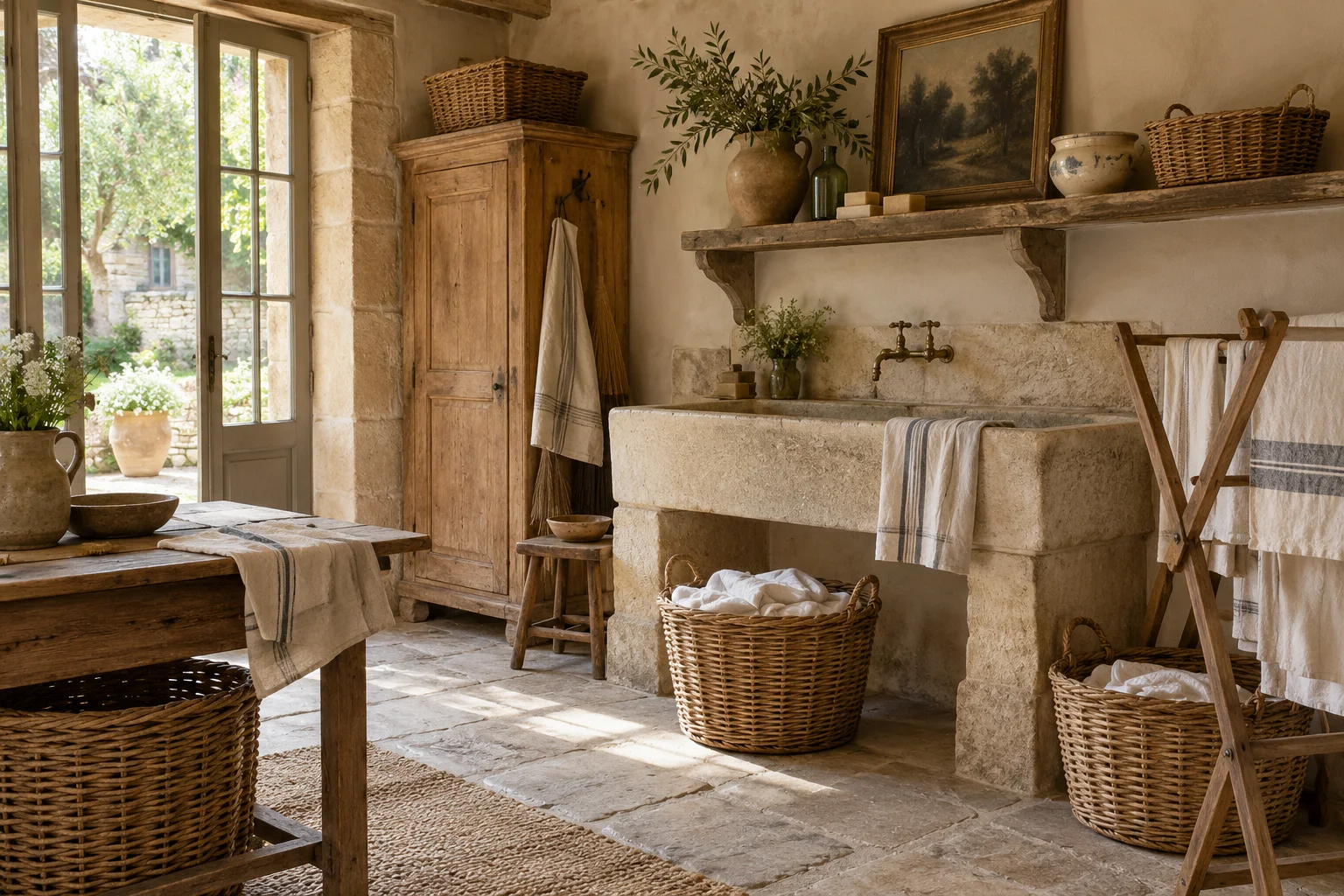
Almost every French country armoire, dough trough or copper pan on the market today once stood in a farmhouse where it had been handed down for generations.
Nov 19, 2026 · Antique guide
A French clock gives a country room a sound as well as a shape.