Nov 20, 2026 · Antique guide
French for Dresser: Commode, Vaisselier, Buffet or Coiffeuse?
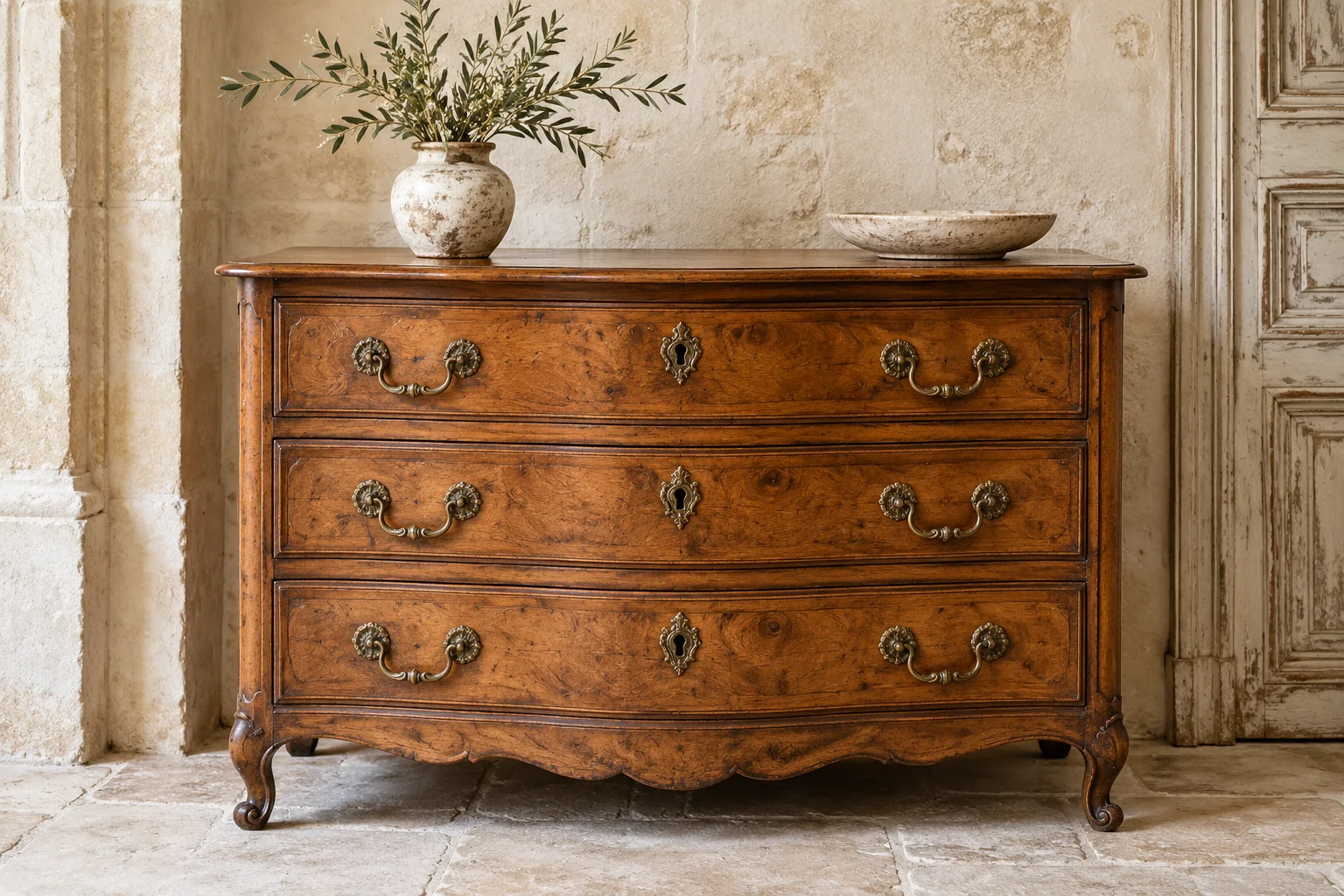
French for dresser is not one word, because English uses dresser for several different pieces.
The farm is called Labarraille, in the parish of Saint-Étienne-d'Orthe, on the low ground by the Adour in the southwest of the Landes. The family, the Darthès and Montauzé, are sharecroppers (métayers): they farm land owned by someone else and share the harvest. Three generations live together in what the author calls a stem family, the old patriarchal household of Béarn and the Orthe district: the grandparents, their daughter and son-in-law, the grandchildren and an unmarried great-uncle.
The text belongs to the late nineteenth or early twentieth century, the period covered by the whole Archives de Gascogne collection. The values below are in francs of that time. They are useful for comparing objects with each other, not for converting into today's prices.
The house, the oustao, has a single ground floor, like all the old farms of the district. The family explained to the author that the new square two-storey houses were much less cool in the summer heat. It is built of local rubble stone, with walls 48 cm (19 in) thick and a low-pitched tiled roof that overhangs the walls.
The plan is worth knowing because it explains where the furniture stood:
The house is swept every day and scrubbed every Saturday. The author notes that the plain iron firedogs in one bedroom shine as brightly as the kitchen firedogs.
The furniture, the author writes, is plentiful, of excellent quality and solidly made. Almost all of it is walnut, with a few pieces in chestnut and oak. It is cleaned every week by rubbing it with vinegar. A complete set of furniture of this quality is the peasant's luxury: families put their pride and their savings into it until they reach the standard fixed by custom, and this family had reached it several years earlier. The whole furniture was valued at 1,218.95 francs.
The bedding comes first and costs the most. Four beds in the Louis XIII style, with turned columns, each with a straw mattress, a feather bed, two mattresses, a bolster, a pillow and five blankets, plus curtains, valances and coverlets, and a cover for the washstand in red "Van Dyck" cretonne, are valued together at 682 francs. A spare bed frame not in use adds 15 francs. The beds and their textiles account for well over half of all the furniture.
This is the single most useful lesson of the inventory for collectors. The bed, with its hangings, was the major investment of a farm household. The turned-column bed called "Louis XIII" in the French trade, with spiral or bobbin-turned posts, was still the prestige bed of a Gascon farm at this date. For bed frames and their textiles, see antique bed frames and Gascon bed hangings.
An armoire is worth twelve chairs; a commode is worth less than an armoire. The prints, mirrors and stoups are cheap, which is why so many survive in poor condition today: nobody thought of them as valuable.
The clock and its case are listed separately. That matches a common French practice of the period: the movement could be bought ready-made from a clockmaker or a travelling seller, while the tall case was made by the local joiner. When you buy a longcase clock today, a case and a movement that did not start life together are therefore not necessarily a marriage of convenience. See the French longcase clock.
Two silk and cotton umbrellas, an ordinary umbrella, two market baskets and a makila, the Basque walking stick with a hidden point, valued at 3 francs. The makila has its own entry in our encyclopedia of the makila maker.
The utensils, the author writes, are solid, well kept and amply provided. They were valued at 332.75 francs in all.
The kitchen firedogs are worth eight times the cast-iron pair. Tall landiers with hooks for the spit were working equipment; low chenets simply held the logs. Our article on the Gascon hearth explains each object.
Two candlesticks, 3 francs, three copper candlesticks, 8.50 francs, a petroleum lamp, 1.25 francs, and a lantern, 1 franc. The petroleum lamp was cheap and new; the copper candlesticks were the valuable lights.
Pewter cutlery was worth more than all the faience plates together. Faience was everyday crockery, cheap and replaced when broken; pewter was melted and recast, but rarely thrown away. Seven earthenware tureens for a household of eight tells you what was eaten: soup, every day, at midday and in the evening. For how that table was laid, see How to serve a garbure on antique tableware.
The household linen was valued at 960.76 francs, nearly as much as all the furniture, and the men's clothes at 1,048.60 francs. Forty-five pairs of sheets, nine blankets, thirty-nine tablecloths and dozens of napkins and towels filled the armoires. Every member of the family, children included, had their own store. We describe it in The wedding armoire.
| Object | Recorded value | What it tells a collector today |
|---|---|---|
| Four Louis XIII column beds with hangings | 682 francs | The major investment; complete beds are scarce |
| Dish cupboard | 60 francs | The most expensive single piece of furniture |
| Three armoires | 120 francs | About 40 francs each; walnut preferred |
| Clock and case | 50 + 30 francs | Movement and case bought separately |
| Three large cauldrons | 90 francs | Copper was capital |
| 32 pewter spoons and 22 forks | 38 francs | Worth more than all the faience |
| Six dozen faience pieces | under 20 francs | Everyday crockery, often chipped |
A well-off sharecropping household in Gascony owned four turned-column beds with hangings, three armoires, two commodes, a dish cupboard, a clock in a tall case, two dining tables with leaves, about two dozen chairs, mirrors, prints and holy water stoups, mostly in walnut.
In this inventory, the beds with their textiles were the costliest furniture, worth more than half of the total. Household linen and clothes were each worth nearly as much as all the furniture together.
Farm households often bought the clock movement ready-made and had the case made by the local joiner. The inventory studied here lists the clock at 50 francs and its case at 30 francs as separate items.
In this Gascon household almost all the furniture was walnut, with some pieces in chestnut and oak. Elsewhere in Gascony oak and chestnut dominate.
Nov 20, 2026 · Antique guide
French for dresser is not one word, because English uses dresser for several different pieces.
Nov 20, 2026 · Antique guide
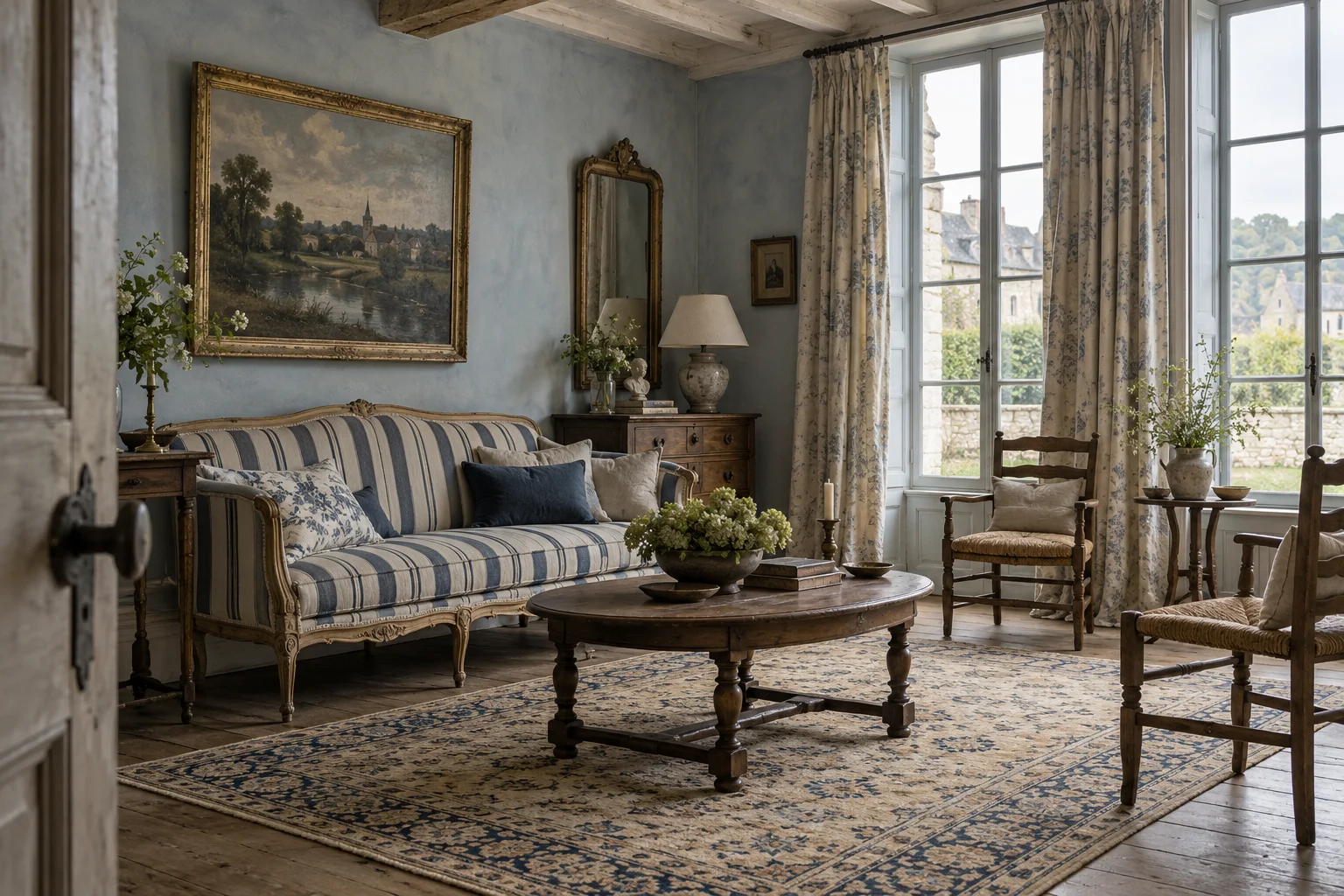
An antique sofa table is a long, narrow table, usually 48–60 in (122–152 cm) long and only 18–24 in (46–61 cm) deep, often with a drop leaf at each end and a drawer…
Nov 20, 2026 · Antique guide
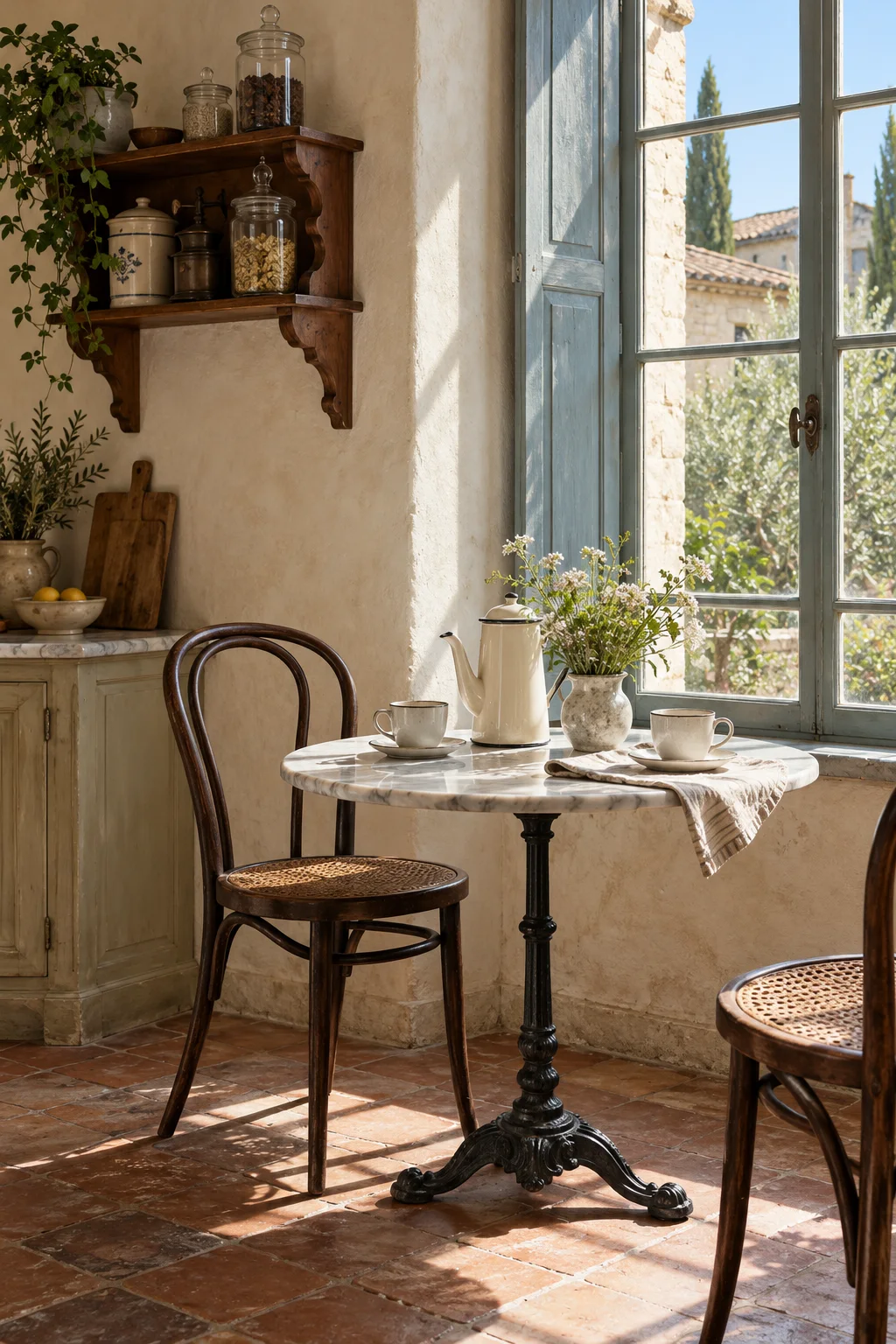
French farmhouse interior design starts with the building and the work that was done in it: lime walls, stone or terracotta floors, a long table, open shelves of…