 AI-created styling idea
Lighting
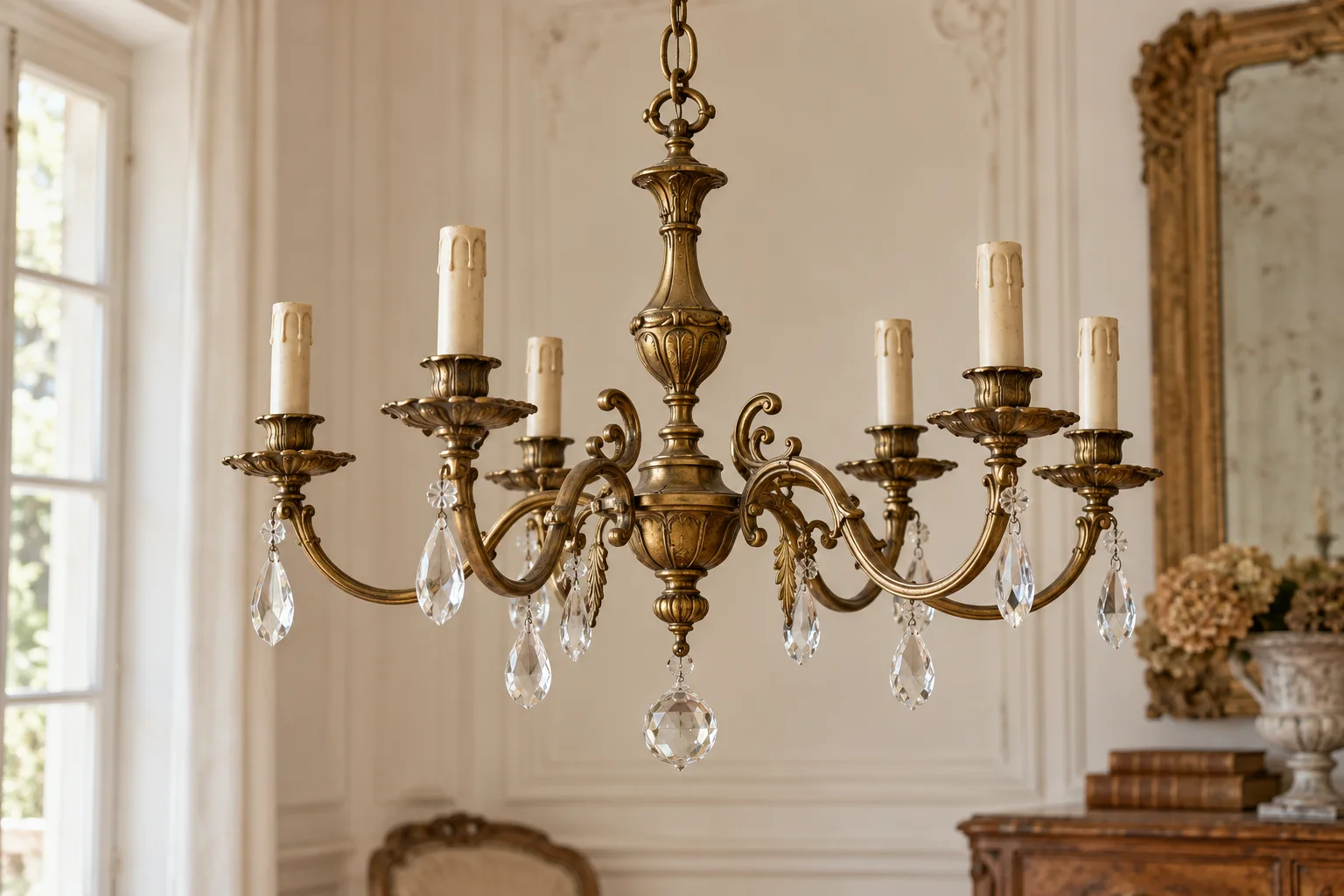
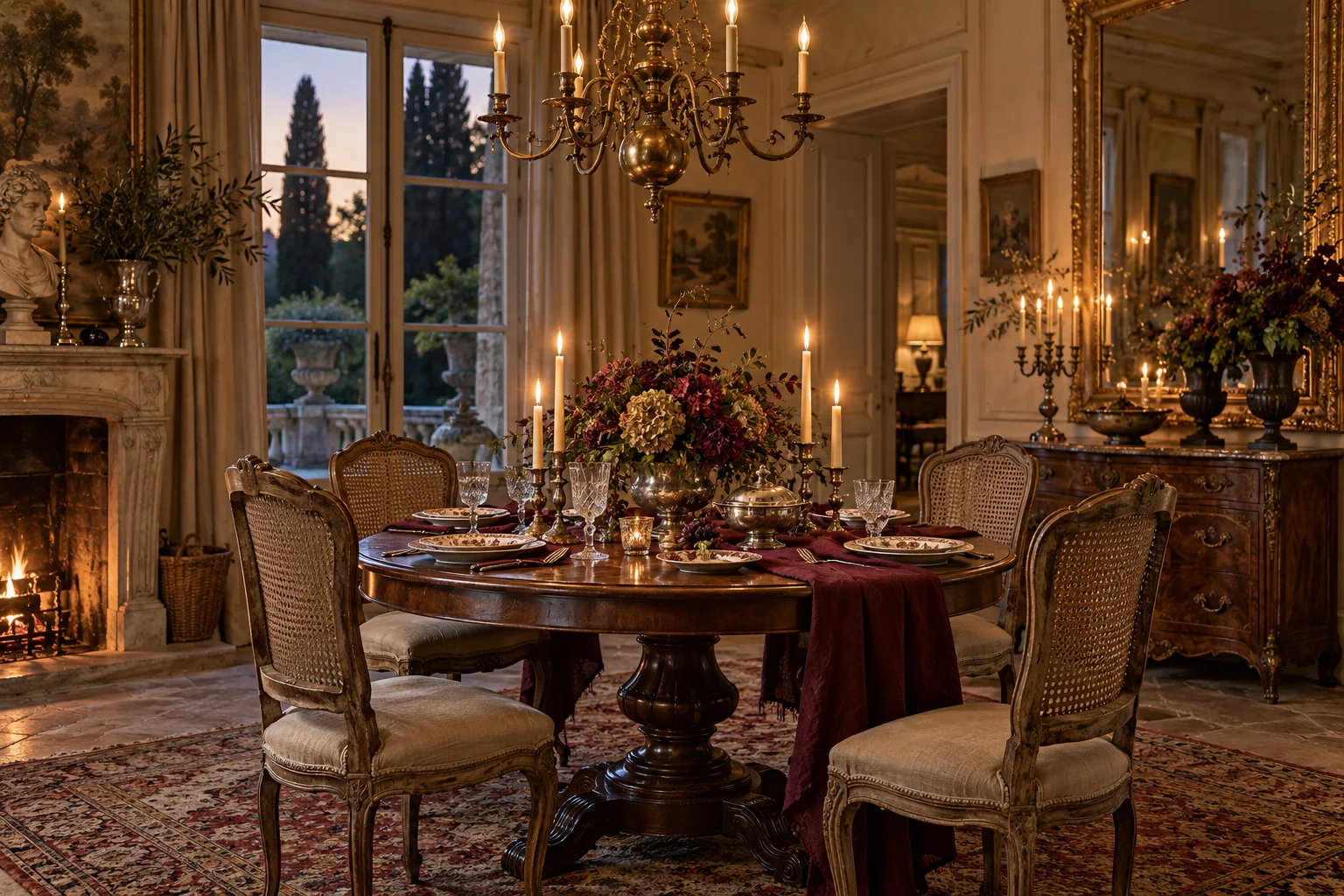
Antique chandeliers
Size by the room, hang 30 to 36 in above the table, count the drops.
ExploreFrench Country · An inspiration catalogue
French country lighting works in layers: a chandelier or pendant for the center of the room, sconces for the walls, lamps for the evening and a lantern for the door, most of them antique and all of them rewired to current standards.
French country lighting is recognizable by its materials and its restraint: wrought iron, painted tole, brass, a little crystal and sometimes turned wood, giving warm light at low levels rather than one bright source from the ceiling. The fixtures are often antique; the wiring never should be. The same principle runs through French country decor as a whole: old surfaces, modern safety.
Wrought iron suits beamed ceilings and stone floors; tole (painted sheet metal) brings color and leaf forms; gilt brass and bronze carry the more formal rooms; crystal catches candlelight in a dining room. Mix two of these in a room, rarely three.
Bulbs of 2200–2700 K match the color of candlelight and flatter old wood and gilding. A dining room reads well at 20–30 lumens per square foot overall, with the chandelier dimmed and lamps or candles doing the rest.
An antique chandelier, sconce or lamp can be used every day once it is rewired with listed components and hung from a fixing rated for its weight. The section on rewiring below explains what that involves.
A French country chandelier in forged iron, or a turned-wood body with tole leaves, hangs lower and lighter than a crystal piece and suits ceilings of 8–9 ft (2.4–2.7 m). Check that arms are original to the body (look at the solder or rivet points and the paint continuity) and that candle cups sit level. The antique chandeliers category shows the main forms.
French antique chandeliers in crystal come as cage forms, Empire rings with chains and a central bowl, and the basket (bag) form where strands of drops meet below the frame. Count the drops against the hooks: a piece missing 10 percent of its crystal is common and should be priced and described as such. Pressed glass and cut crystal look different in daylight; ask for a close photograph of a drop's edges.
A working rule for diameter: add the room's length and width in feet and read the sum as inches (a 12 × 14 ft room suits a 26-in chandelier). Over a dining table, hang the lowest point 30–36 in (76–91 cm) above the top; in an open room, keep 7 ft (2.1 m) of clearance. The chandelier should be narrower than the table by at least 12 in (30 cm) on each side. Our page on the French country living room covers how the center light works with lamps and the mantel.
French antique wall lights come as gilt-bronze two-arm sconces (appliques), tole and iron candle sconces, and small crystal pieces for a bedroom. Pairs are more useful than singles beside a mirror, a bed or a mantel. Browse wall sconces for the forms.
Mount the center of a sconce at 60–66 in (152–168 cm) from the floor, lower (54–58 in / 137–147 cm) beside a bed or a reading chair. Beside a mirror, set the pair at eye height and 28–36 in (71–91 cm) apart.
Antique back plates are often smaller than a US junction box (which is about 4 in / 10 cm across). A new canopy or an adapter plate solves it; ask the electrician to confirm the back plate fully covers the box and that the sconce is rated for the wall's wiring.
The bouillotte lamp (a brass base with candle arms under an adjustable tole shade) gives the classic French country lamp silhouette; tole lamps with painted shades bring color to a side table. Look for an intact shade mechanism and original paint; both are often restored, which should be disclosed. See antique lamps.
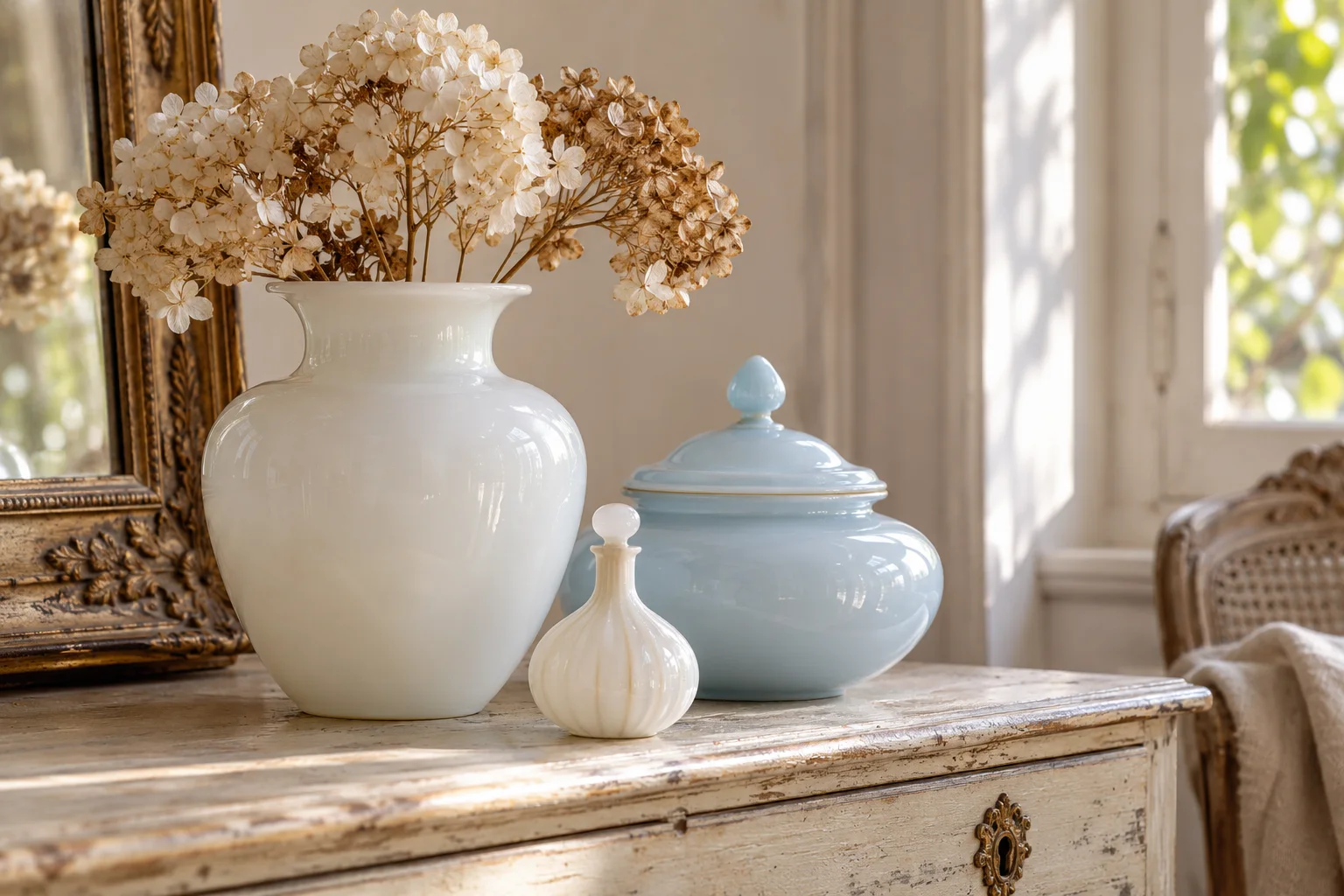
Mid-century ceramic lamp bases and French opaline add the vintage layer to a room of antiques. Attribute a ceramic base to a maker only when it is marked; "Vallauris" or "Provençal" without a mark describes a look, not an origin.
A converted oil lamp or candelabra lamp is honest when the conversion is reversible and visible: a socket set into the burner collar, a cord that leaves the base through an existing opening. A floor lamp in iron or turned wood lights the reading corner; compare floor lamps by height (58–64 in / 147–163 cm to the shade bottom suits a seated reader).
A hanging or wall lantern in tole or iron marks the door and the stair. Glass panels should be present or honestly replaced; old lantern glass is thin and slightly uneven. Explore lanterns and the entryway scenes.
Enamel factory shades and small tole pendants light a kitchen island or a bistro table; hang them 30–36 in (76–91 cm) above the work surface and 24–30 in (61–76 cm) apart when used in a row. See pendant lights.
Antique lanterns moved outdoors need a wet-location rated conversion or a sheltered position under a porch. For a terrace or a courtyard, a candle lantern on a table keeps the antique and avoids the wiring question; the French country garden page covers the furniture around it.
New listed sockets and cord, a canopy and strain relief, a grounded chain or stem where required, and a fixing rated for the fixture's weight (a crystal chandelier can exceed 40 lb / 18 kg). French fixtures were made for 220–230 V; after rewiring for 120 V they take standard US bulbs, with a wattage limit written on the socket. Warm LED candle bulbs reduce heat on old tole and crystal.
A lighting restorer or a licensed electrician who works with antiques, before installation, never after. Keep the original parts that were removed; they document the piece.
For pieces bought in France, ask for the rewiring to be done before shipping and described in the condition report. Lo Cantou lists lighting with condition notes alongside its brass candlesticks and candle holders; a designer sourcing chandeliers for a project can send a brief to Antiques 360, which proposes three documented pieces within 72 hours, rewired to US standards before delivery, with crating, freight and brokerage quoted upfront. The French country antiques guide explains how such a listing should read.
AI-created styling ideaLighting
Size by the room, hang 30 to 36 in above the table, count the drops.
Explore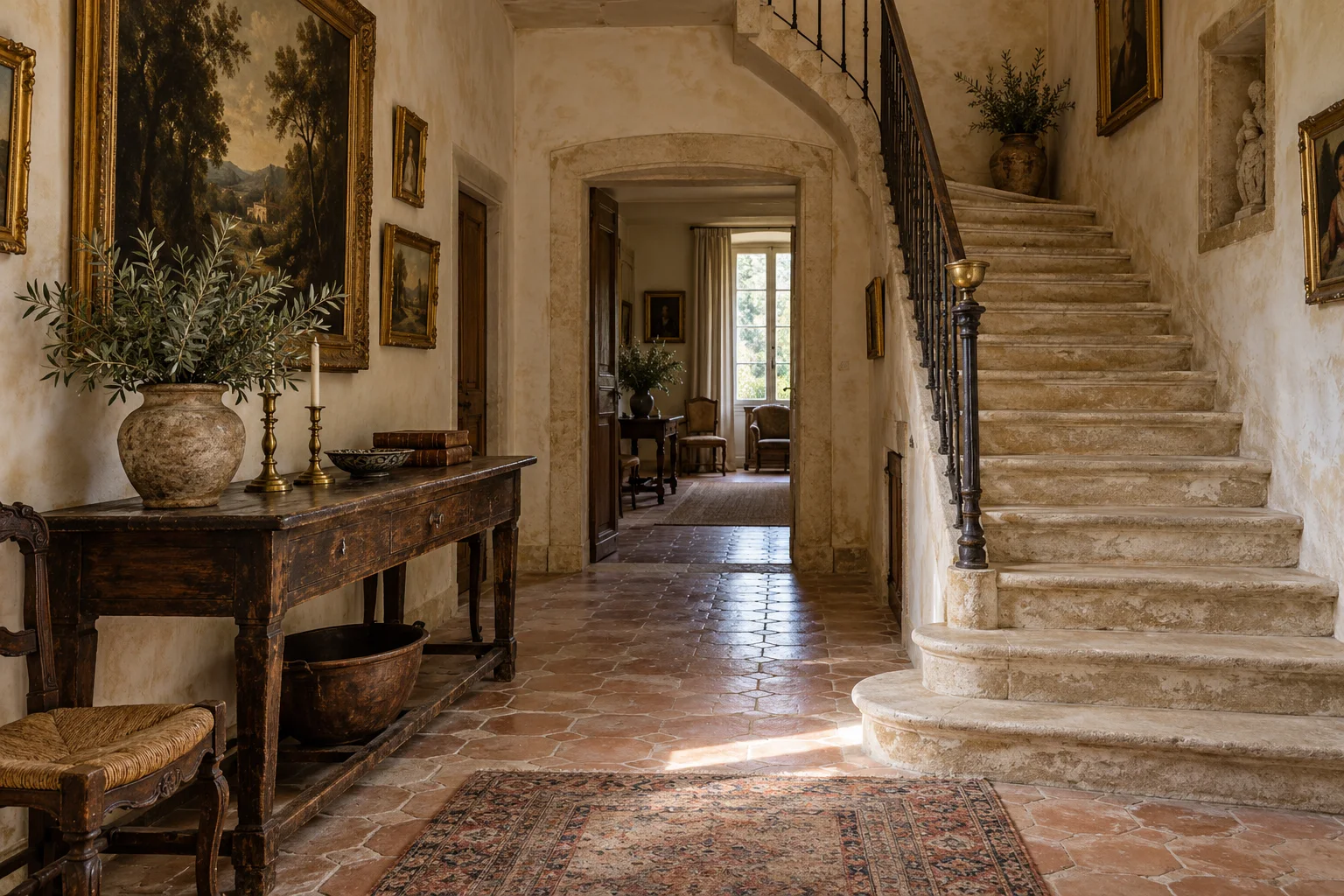 AI-created styling idea
Lighting
Buy pairs, mount at 60 to 66 in, check the back plate against the junction box.
Explore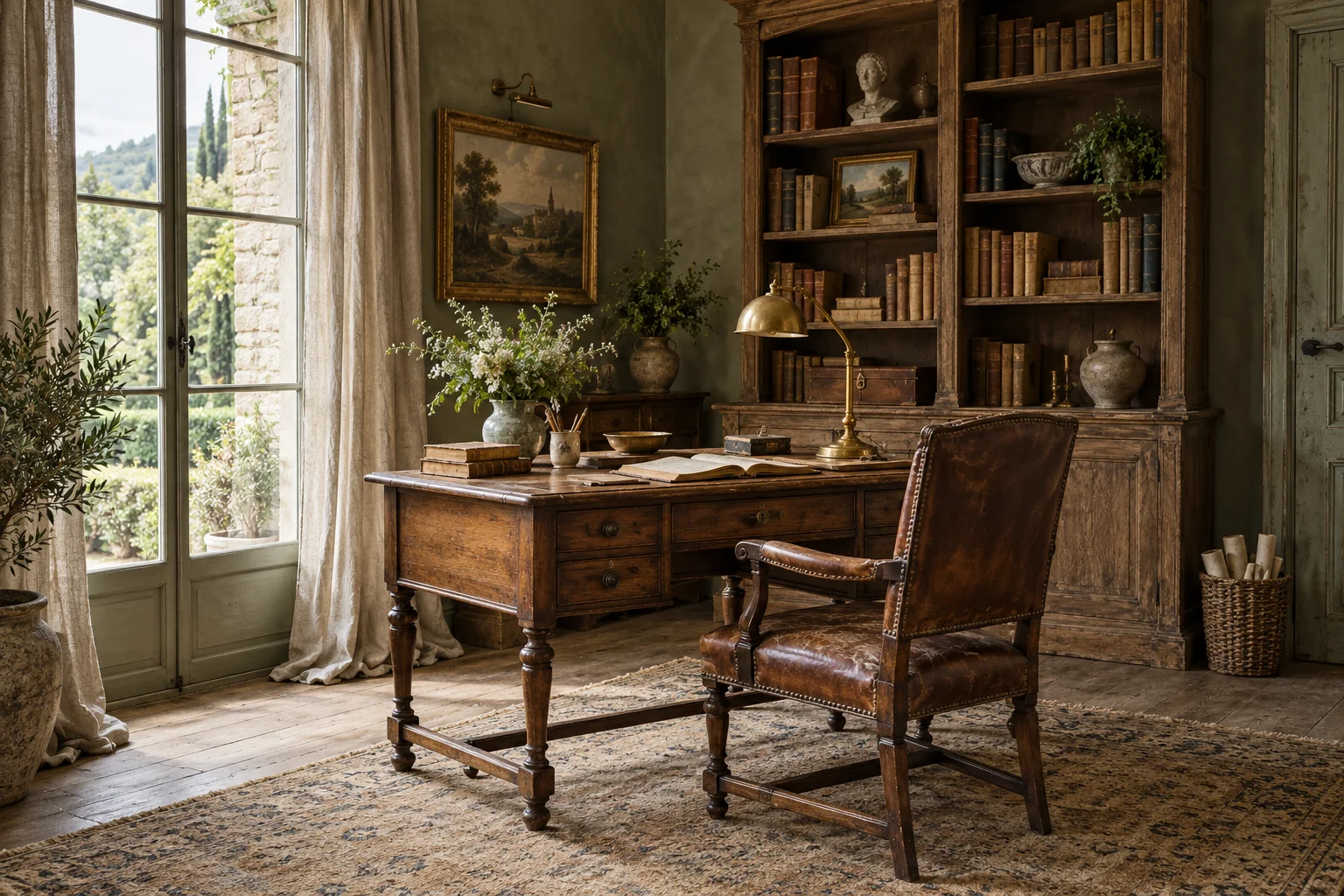 AI-created styling idea
Lighting
Bouillotte, tole or converted oil lamp: look for reversible conversions and original shades.
Explore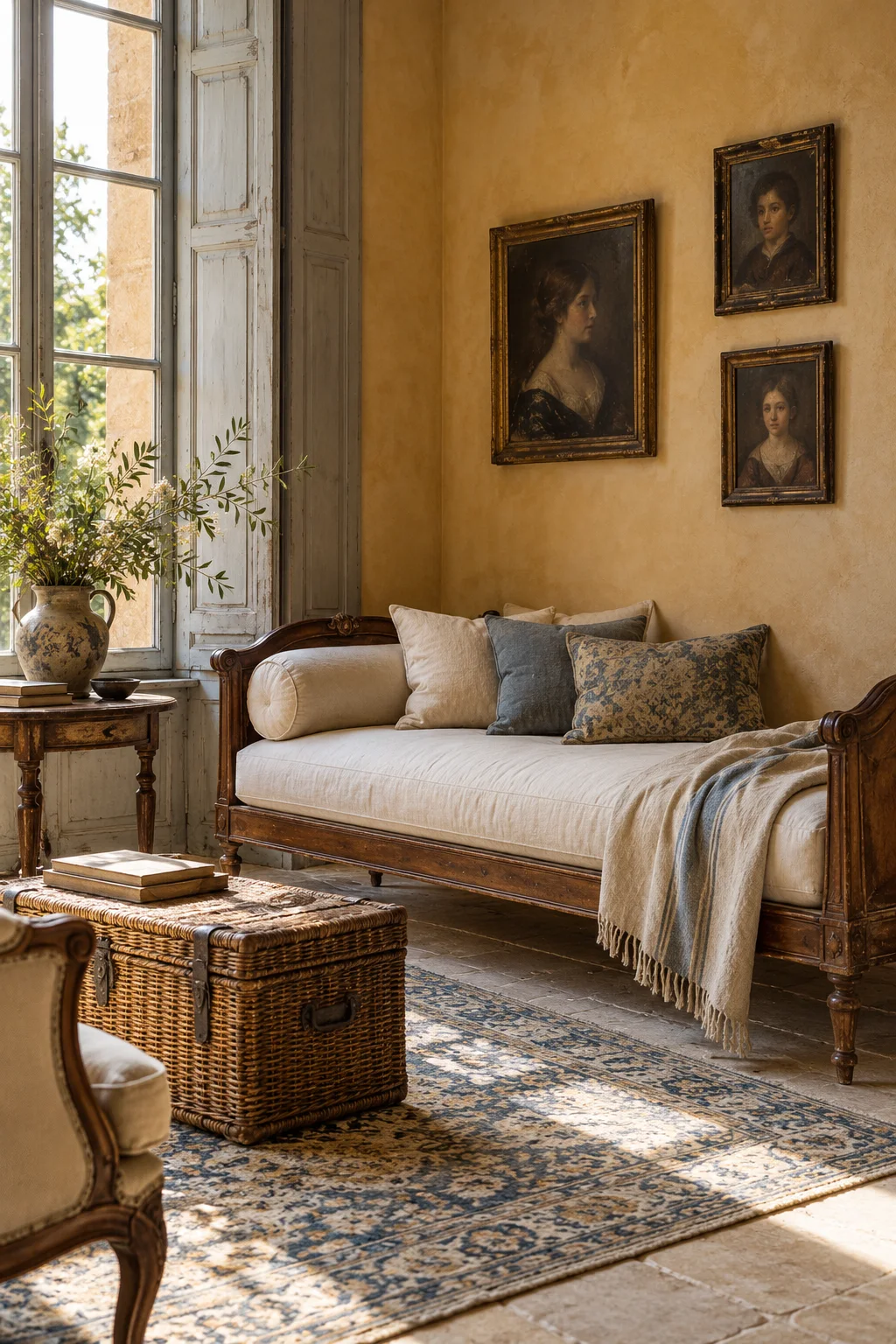 AI-created styling idea
Lighting
Shade bottom at 58 to 64 in for a seated reader; check the base weight for stability.
Explore AI-created styling idea
 AI-created styling idea
Lighting
The layer below electricity: pairs for the table, weight and drip pans to check.
ExploreThe lighting subcategories, arranged by the room where they usually belong.
Hang the lowest point of the chandelier 30 to 36 in (76 to 91 cm) above the tabletop, toward the lower figure with an 8 ft ceiling and the higher figure above 9 ft. Keep the fixture at least 12 in narrower than the table on each side so nobody rises into it, and put it on a dimmer so candles and lamps can take over during the meal.
Add the room's length and width in feet and read the result as the chandelier diameter in inches: a 12 by 14 ft room suits a piece about 26 in across. Over a table, a diameter of one half to two thirds of the table width looks right. Iron and tole forms can run slightly larger than crystal ones because they are visually lighter.
Yes. French fixtures were made for 220 to 230 volts and old cords and sockets are not safe to reuse. Have a restorer or an electrician fit listed sockets, new cord, a proper canopy and a fixing rated for the weight before installation. Ask sellers in France to rewire before shipping and to describe it in the condition report.
Warm LED candle bulbs of 2200 to 2700 K give the color of candlelight without heating old tole, paint or crystal, and they stay within the wattage limit marked on rewired sockets. Choose clear bulbs for crystal pieces so the drops sparkle and frosted bulbs for tole and iron shades, and put every ceiling fixture on a dimmer.
Nov 6, 2026 · Antique guide
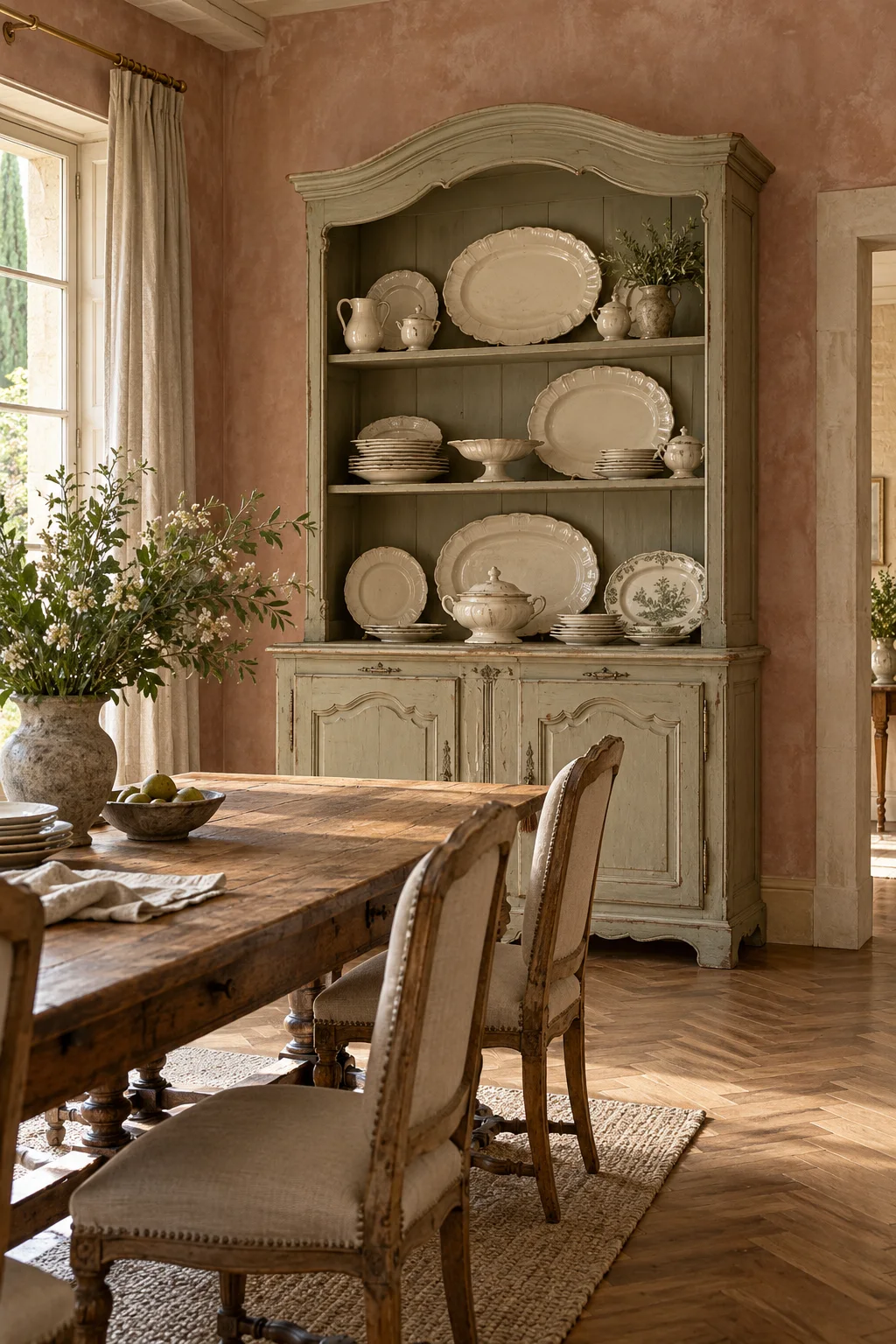
A French country Thanksgiving table takes its look from the farmhouse: a linen cloth, white ironstone or faience plates, mixed silverplate, short bistro glasses,…
Nov 5, 2026 · Antique guide
French country Christmas decor works best when it borrows from the house rather than from a store: brass candlesticks taken down from the mantel, greenery cut from…
Nov 5, 2026 · Antique guide
Mid-century French table lamps, made between about 1950 and 1975, fall into three families: glazed ceramic bases, articulated lamps and space-age designs.
Nov 2, 2026 · Antique guide
French country gifts that travel well are small, sturdy and useful: a linen tea towel, a brass candlestick, a confit pot, a set of silver-plated spoons.
Nov 1, 2026 · Antique guide
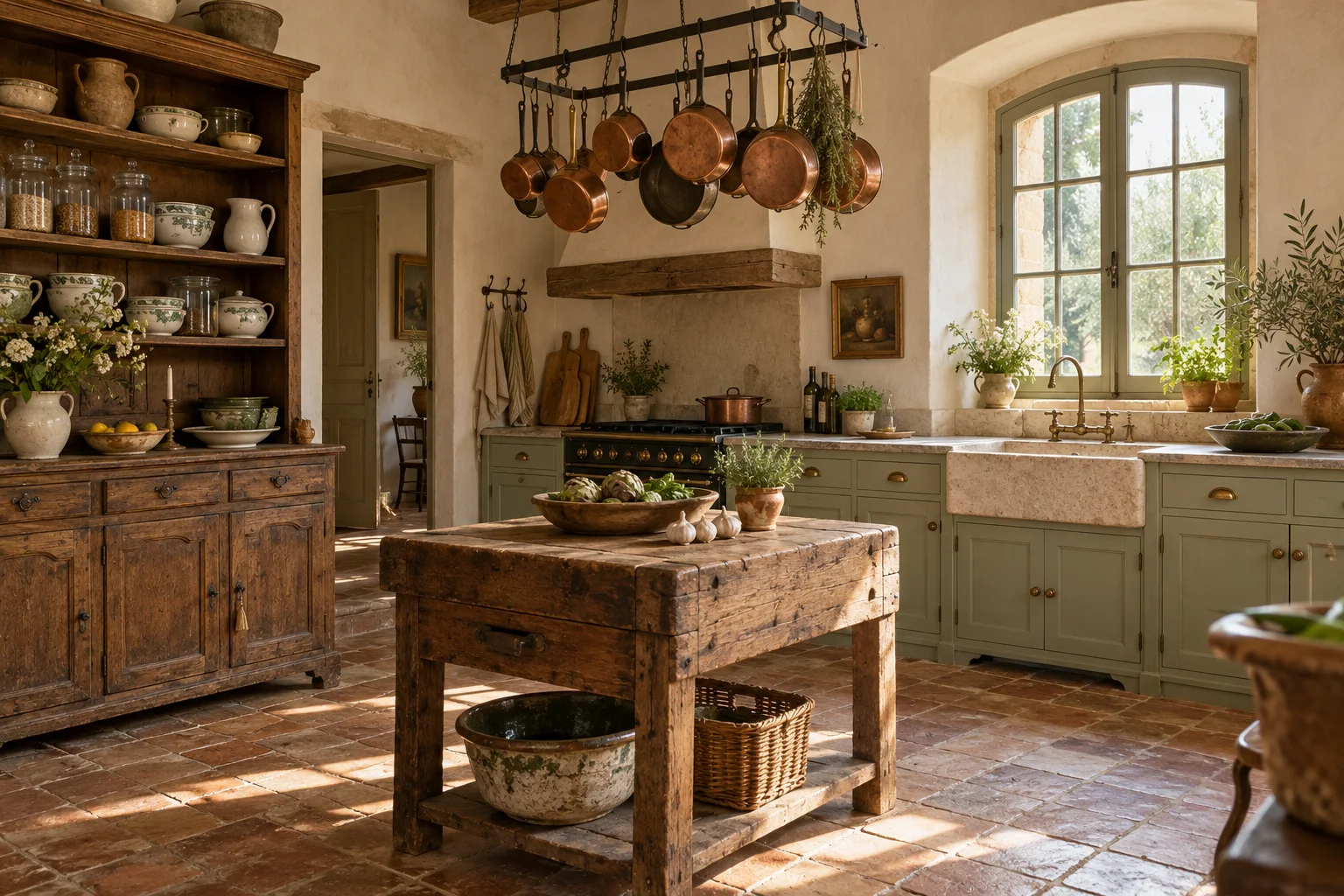
A French country chandelier is lighter in spirit than its crystal cousins: forged iron, turned wood with tole leaves, painted sheet metal with flowers, or wooden…
Nov 1, 2026 · Antique guide
A vintage globe lamp is a glass sphere on a metal fitting: opaline or milk glass, clear or smoked, on brass, chrome or lacquered steel from the 1950s to the 1970s.