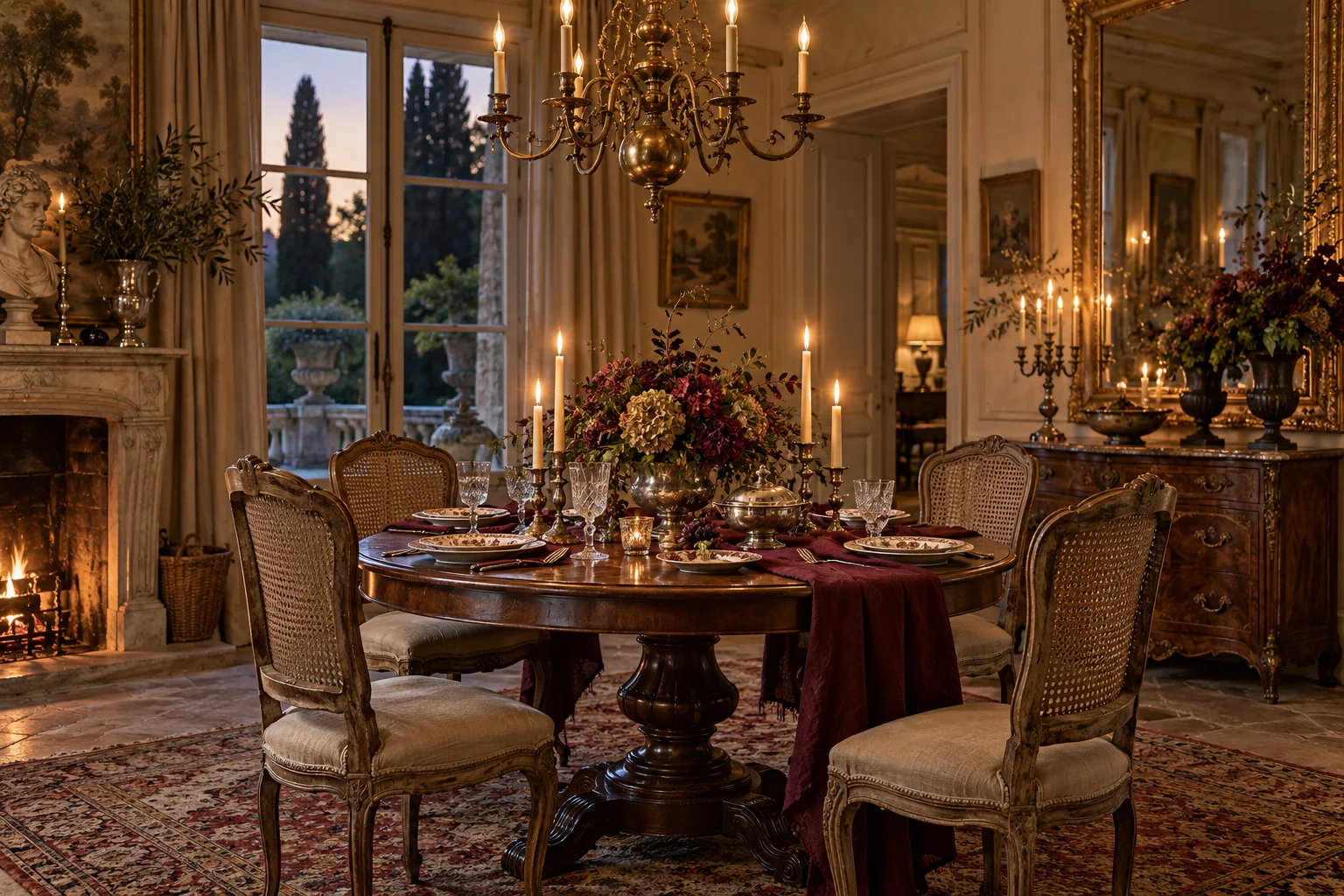
 AI-created styling idea
Lighting
Candlesticks & candelabras
Check that the arms sit firm, the drip pans are present and the base does not rock.
ExploreFrench Country · An inspiration catalogue
Antique brass and bronze carry the light and the fire of a French country house: candlesticks, lamps, chandeliers, sconces, andirons, clocks and the mounts on furniture.
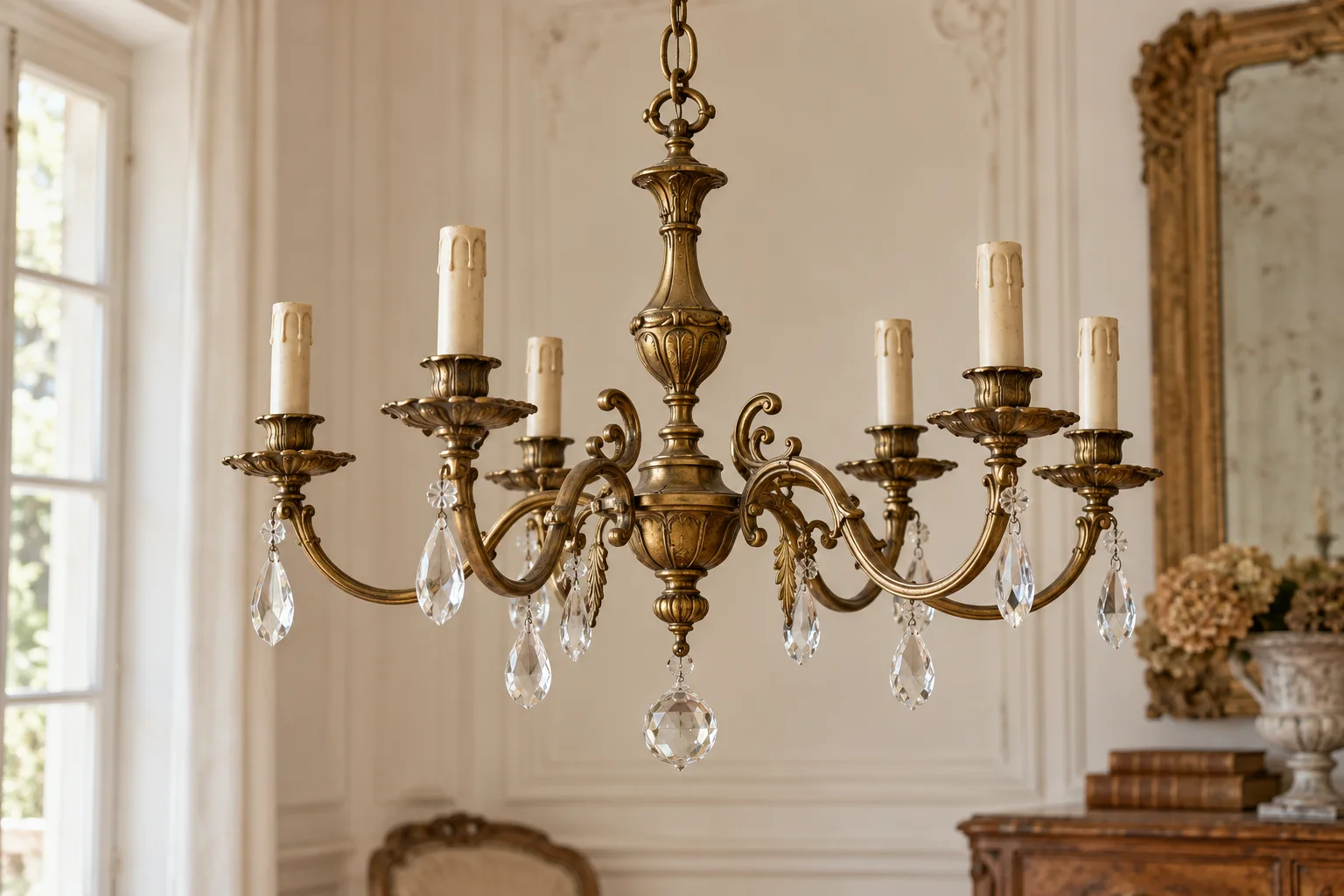
Antique brass and bronze are both alloys of copper. Brass adds zinc and reads yellow, from pale lemon to deep gold; it was rolled, spun, turned and cast for candlesticks, lamp bases and hardware. Bronze adds tin and reads browner and redder under wear; it casts finer detail and was used for statuettes, clock cases, andirons and furniture mounts. Both are heavy and non-magnetic. The difference shows best where wear has cut through the surface: yellow for brass, a warmer brown-pink for bronze.
Gilt bronze (bronze doré, often called ormolu in English) is cast bronze, chased by hand and then gilded. On older French pieces the gilding was usually fire gilding, a mercury process abandoned for health reasons; later pieces were electro-gilt or simply lacquered to look gold. Fine gilt bronze shows crisp chasing in the hollows, a matt and burnished contrast, and gold that wears to brown bronze on the high points. Never polish it: the gold layer is thin and does not come back.
Spelter is a zinc alloy cast as a cheaper substitute for bronze, often patinated dark or gilded. It is lighter, softer and gray where scratched underneath. Brass-plated steel and iron pull a magnet, and plating wears through to gray or copper-colored metal. These materials are not fakes in themselves; many good 19th- and 20th-century lamps and clocks used them. They should simply be named correctly, because spelter bends, breaks and repairs differently from bronze.
A brass candlestick usually stands 8–12 in / 20–30 cm high, a candelabra with three to five lights 14–22 in / 35–55 cm. Check that the arms are firm in their sockets, that the bobèches (drip pans) are present, and that the weighted base does not rock. Our page on candlesticks and candelabras shows the forms, and the journal guide to antique brass candelabras, their arms, weight and care details the checks.
Much antique lighting in brass began as oil or candle lighting and was electrified later. Converted oil lamps, bouillotte lamps and student lamps each have their own weak points, explained in the guide to antique brass lamps and their rewiring. A crystal and brass chandelier needs its frame, drops and ceiling hook checked together; the article on crystal and brass chandeliers lists what to inspect. Our page on antique wall sconces covers the wall-mounted forms.
Andirons (chenets) hold the logs off the hearth; in French houses the visible front is often brass or bronze on an iron bar that takes the heat. Pairs should match in height, typically 10–16 in / 25–40 cm at the front, and the iron bars should be complete. A fender, tongs, shovel and a brass-bound log box complete the hearth. The page on fireplaces and fireplace accessories groups these pieces with mantels and firebacks.
Mantel clocks in gilt bronze or patinated spelter are among the most common French decorative bronzes; see French mantel and wall clocks for the forms. On furniture, brass and bronze appear as handles, escutcheons, sabots on the feet and mounts on corners. Replaced hardware is common and acceptable when described; screws with modern slots, fresh holes around a handle or mismatched patina tell you the fittings changed. Bells, door knockers and keys complete the small-metal vocabulary of the house.
The living room gathers most of the brass and bronze in a French country house: andirons in the fireplace, a clock and a pair of candlesticks on the mantel, a lamp on a side table. Keep the metals to one or two tones so the room stays calm. Our guide to furnishing a French country living room shows how a single brass lamp warms linen, limewash and stone without adding clutter.
Above the table, a brass or crystal chandelier sets the scale of the room; hang it so the lowest point sits about 30–34 in / 76–86 cm above the tabletop. On the table, two candelabras or four candlesticks are enough. In the dining room, around a farmhouse table, brass reads warmer than silver at night, and it sits comfortably with faience and copper. The guide to choosing French country lighting compares fixtures room by room.
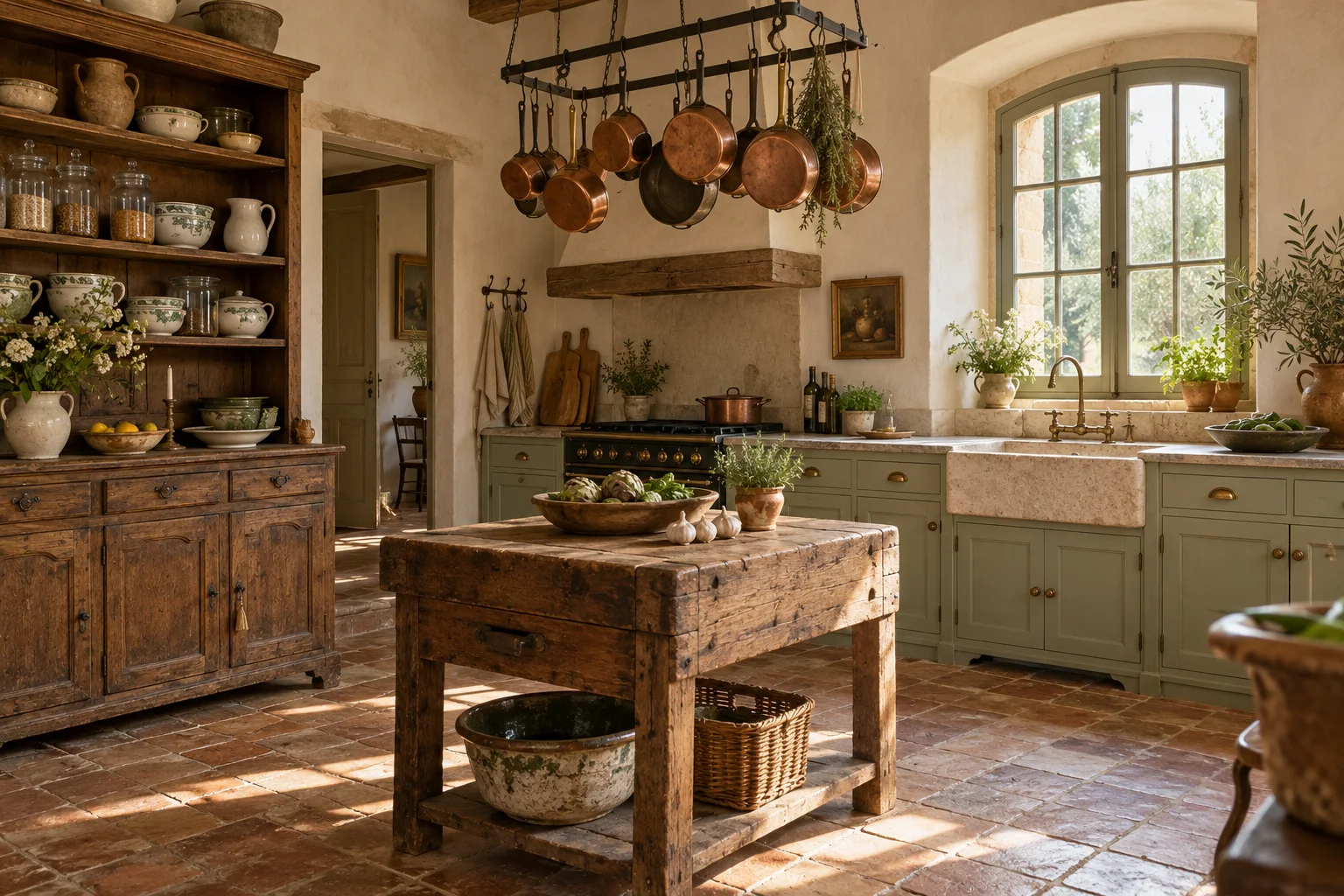
In the country kitchen, brass appears as scale pans, handles on copper, a pendant over the worktable and rail hooks; our page on vintage pendant lights covers hanging fixtures. In the French country bedroom, a pair of small brass lamps or swing-arm sconces beside the bed is the classic choice. Keep the bulbs warm, around 2700 K, so polished or patinated brass glows instead of glaring.
Brass and bronze outdoors weather fast: brass darkens and spots, bronze turns brown and then green. That change suits a French country garden on a bell by the gate, a door knocker or a bronze garden ornament. Bring antique lanterns indoors in winter or hang them under cover, and use only outdoor-rated wiring. The page on antique lanterns shows the hanging and wall-mounted forms that suit a porch or a covered terrace.
Lift the piece first: cast brass and bronze are heavy for their size, while spelter and brass-coated aluminum feel light. Hold a small magnet against the base; if it sticks, the body is iron or steel under a coating. Then turn the piece over. A file mark or scratch on the underside shows the true metal: yellow for brass, brown-red for bronze, gray for spelter. Ask the seller for weight and height so you can compare listings on more than photographs.
Good bronze shows crisp edges, chased details and clean hollows; soft, blurry detail suggests a cast taken from another casting. Wear should sit where hands go: the stem of a candlestick, the top of an andiron, the edge of a handle. Uniform wear on hidden surfaces is artificial. A style name such as Louis XV or Empire describes an inspiration, not a documented attribution; date and origin need a mark, a signature or a document.
Assume every antique lamp, sconce and chandelier needs rewiring before use in the United States: new cord, polarized plug, sockets insulated from the metal body, done by a qualified restorer. Homeowners can browse the brass candlesticks at Lo Cantou, each listing with condition details. Designers can brief Antiques 360 for three documented pieces within 72 hours, rewiring to US standards and the landed cost known upfront.
A stable brown patina on brass protects the metal and needs nothing but dusting. Polishing removes a little metal every time and, done often, softens edges and wears through plating. The Canadian Conservation Institute note on cleaning and waxing brass and copper recommends a mild polish and a protective microcrystalline wax over abrasive pastes. Decide on bright or mellow once, then keep the piece there with the least work.
Gilt bronze, patinated bronze and painted spelter are not polished. Dust them with a soft brush; remove grease with a barely damp cloth and dry at once. Green or dark patinas on bronze statuettes were often applied on purpose by the foundry and are part of the object. Ammonia dips, metal polish and steel wool destroy gilding and patina in minutes. When a gilt surface is dirty or flaking, a metals conservator, not a polisher, is the right call.
Many 20th-century brass lamps and fittings were lacquered at the factory to stay bright. Old lacquer fails in patches, leaving bright areas next to tarnished ones. Polishing over it does not work; the lacquer must be stripped, the brass cleaned and then left bare or lacquered again in a workshop. Ask whether a piece is lacquered before buying, since stripping a chandelier with dozens of arms is a substantial job.
These categories hold most of the brass and bronze in the catalogue. The wider lighting catalogue gathers every lamp, chandelier and lantern in one place.
AI-created styling ideaLighting
Check that the arms sit firm, the drip pans are present and the base does not rock.
Explore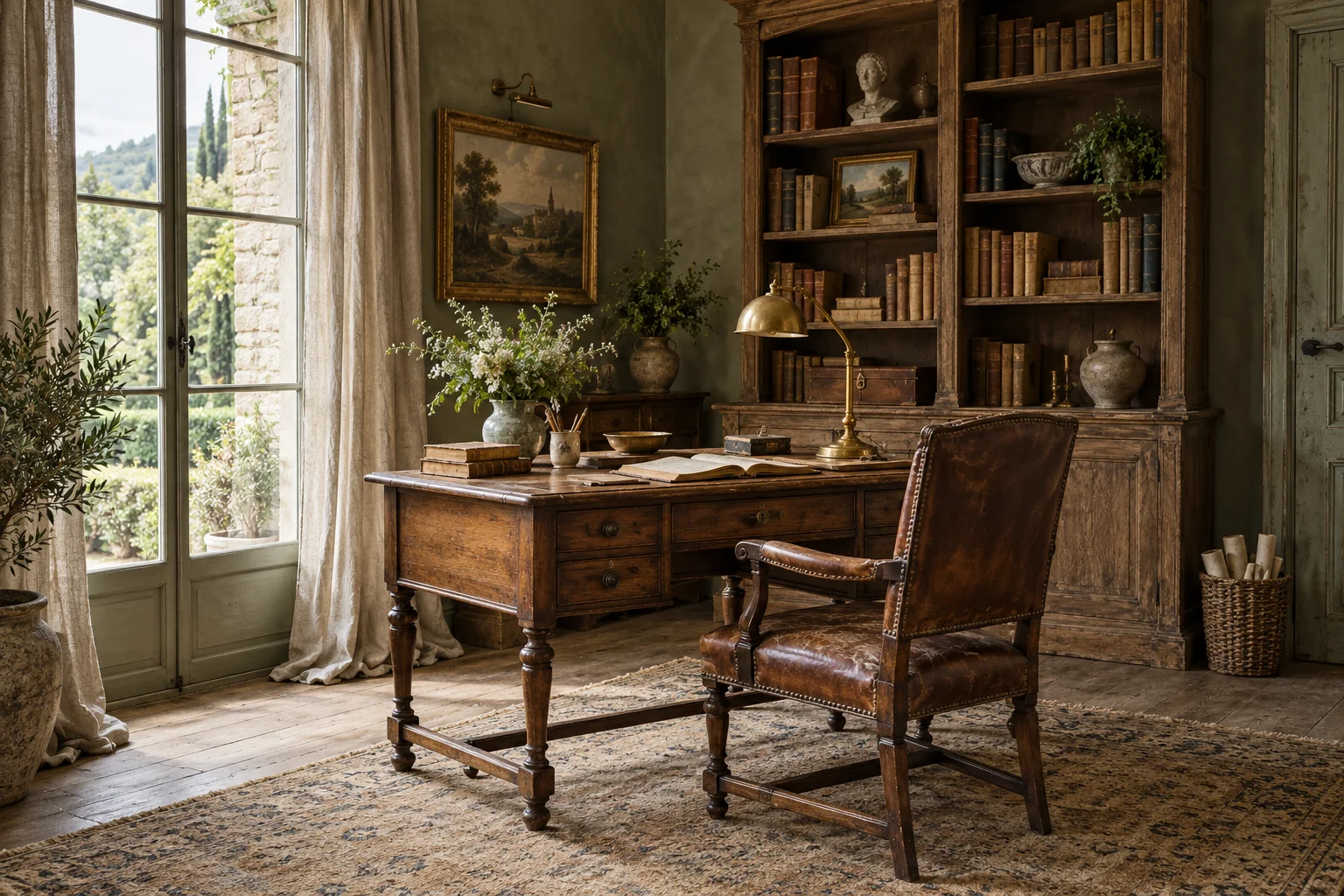 AI-created styling idea
Lighting
Lift, test with a magnet, then plan the rewiring before you choose the shade.
ExploreAI-created styling ideaLighting
Count the arms and drops, and confirm the ceiling hook can take the full weight.
Explore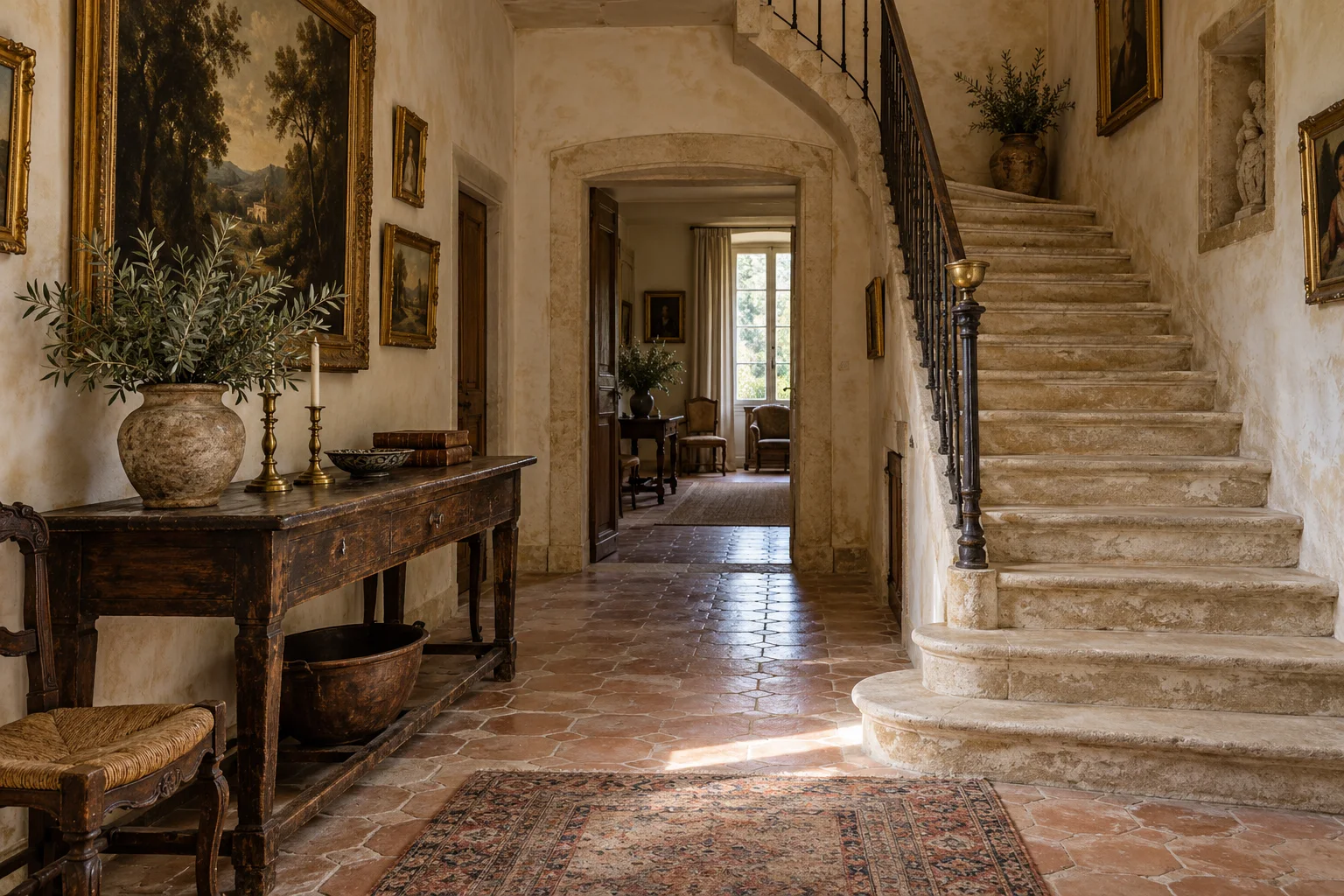 AI-created styling idea
Lighting
Look for matching pairs, sound back plates and a route for the wiring in the wall.
Explore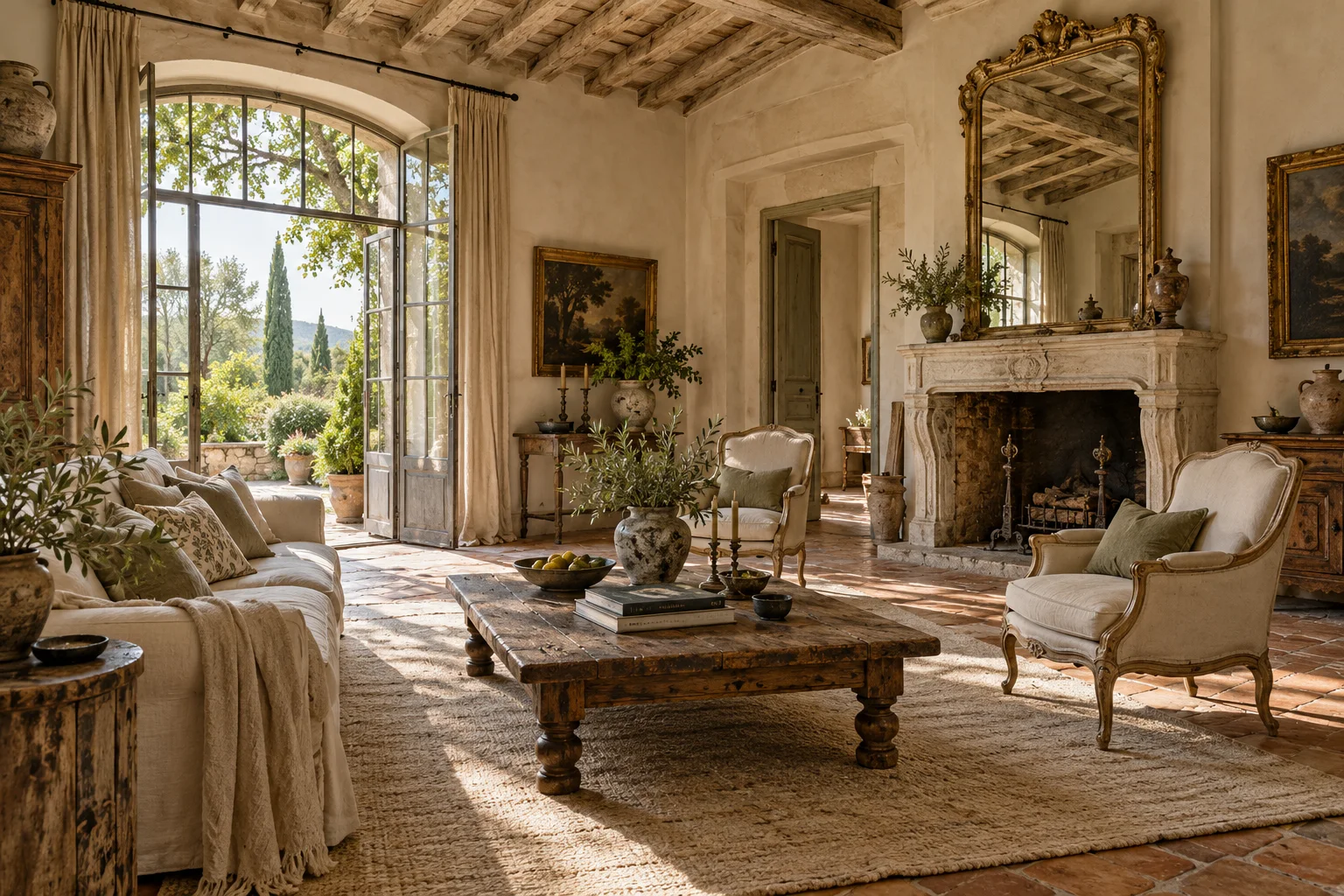 AI-created styling idea
Architectural
Andirons come in pairs: compare their heights and check the iron bars behind the brass.
Explore AI-created styling idea
Decorative objects
Name the case metal correctly, then ask whether the movement has been serviced.
ExploreLook where wear has cut through the surface. Brass shows a yellow color, from pale lemon to gold; bronze shows a warmer brown or reddish tone. Bronze is usually cast with finer detail and is common for statuettes, mounts and andirons; brass is common for candlesticks, lamps and hardware. Neither metal attracts a magnet, so a magnet only rules out steel or iron.
Ormolu is the English name commonly used for gilt bronze: cast bronze, chased by hand and covered with a thin layer of gold. It is not brass, although lacquered brass is often sold under the same word. Real gilding wears to brown bronze on high points. Never polish ormolu, because metal polish removes the gold layer, which cannot be restored without regilding.
Only if you want them bright, and then gently. A stable brown patina is a sound, protective surface that needs only dusting. Polishing removes a little metal each time and can cut through plating. If you prefer a bright finish, use a mild polish, buff well and apply a thin protective wax so the shine lasts longer between cleanings.
Yes, once it has been rewired. Old cloth or rubber cords, brittle sockets and unpolarized plugs are fire and shock risks. A qualified lamp restorer should fit a new cord, a polarized plug and sockets insulated from the brass body, and check the internal pipe for sharp edges. Ask the seller whether rewiring to US standards has already been done.
Nov 6, 2026 · Antique guide
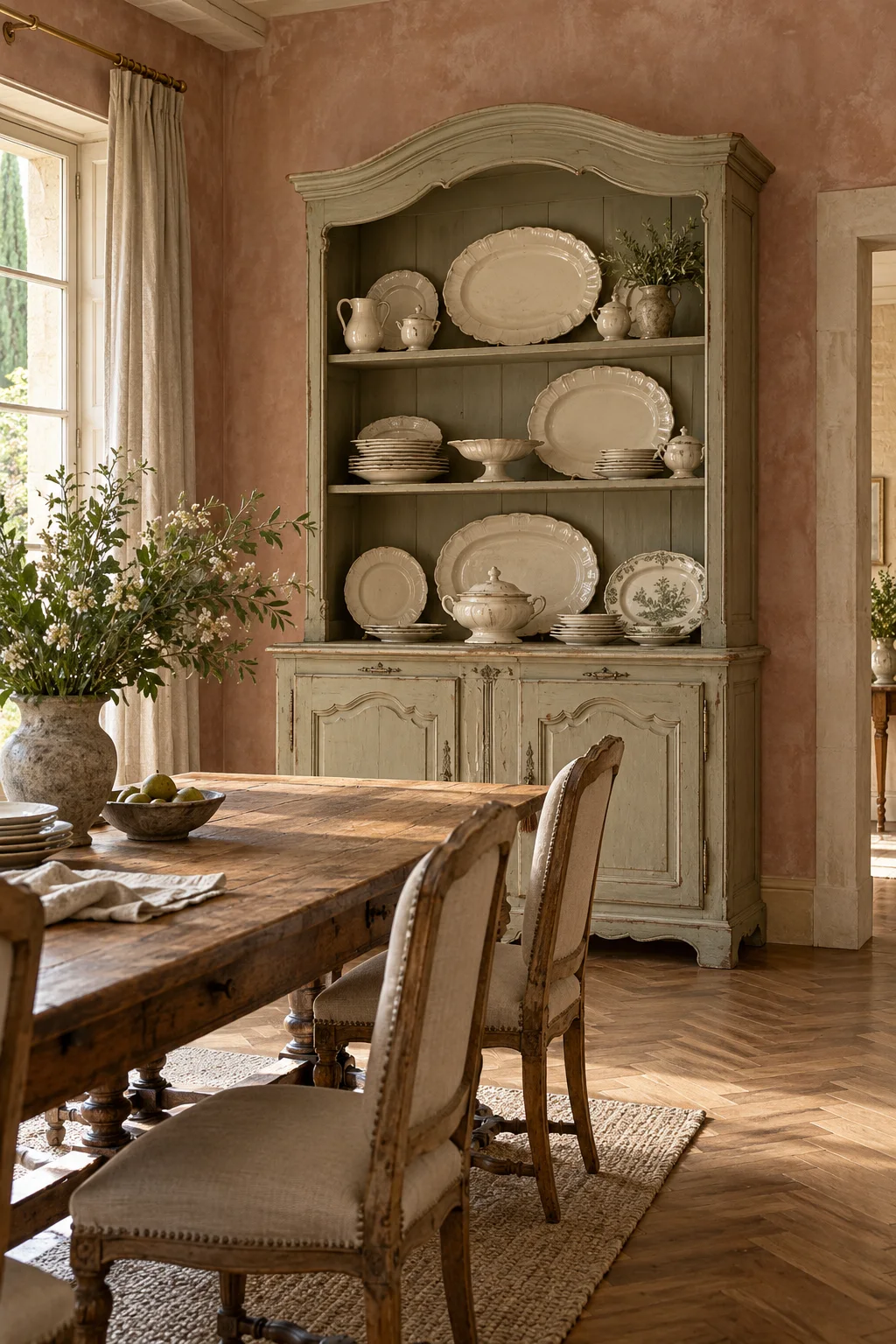
A French country Thanksgiving table takes its look from the farmhouse: a linen cloth, white ironstone or faience plates, mixed silverplate, short bistro glasses,…
Nov 5, 2026 · Antique guide
French country Christmas decor works best when it borrows from the house rather than from a store: brass candlesticks taken down from the mantel, greenery cut from…
Nov 5, 2026 · Antique guide
Mid-century French table lamps, made between about 1950 and 1975, fall into three families: glazed ceramic bases, articulated lamps and space-age designs.
Nov 2, 2026 · Antique guide
French country gifts that travel well are small, sturdy and useful: a linen tea towel, a brass candlestick, a confit pot, a set of silver-plated spoons.
Nov 1, 2026 · Antique guide
A French country chandelier is lighter in spirit than its crystal cousins: forged iron, turned wood with tole leaves, painted sheet metal with flowers, or wooden…
Nov 1, 2026 · Antique guide
A vintage globe lamp is a glass sphere on a metal fitting: opaline or milk glass, clear or smoked, on brass, chrome or lacquered steel from the 1950s to the 1970s.