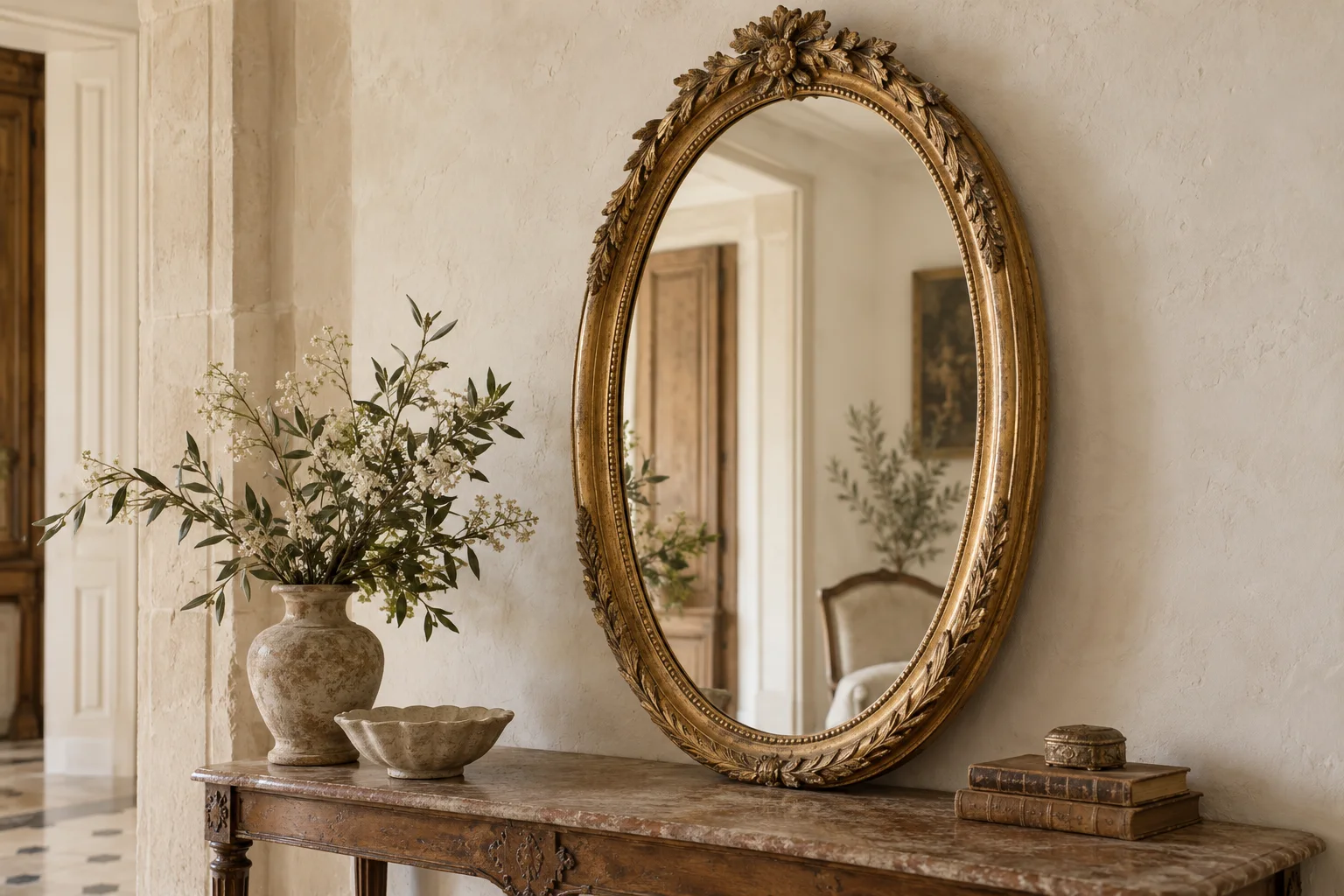
 AI-created styling idea
Mirrors
Antique mirrors
Choose a mirror for its reflection, proportions, and the condition of its separate components.
ExploreFrench Country · An inspiration catalogue · Updated November 2026
French country antiques are the documented pieces behind the style: mirrors, lighting, provincial furniture and tableware that are more than a century old, described honestly and shipped with the cost known in advance.
What are French country antiques? They are pieces from rural and provincial France made more than 100 years ago: armoires, buffets and farmhouse tables, gilt mirrors, chandeliers, copper, earthenware and linen. The word antique describes documented age, not style; a regional name describes a tradition unless provenance is documented.
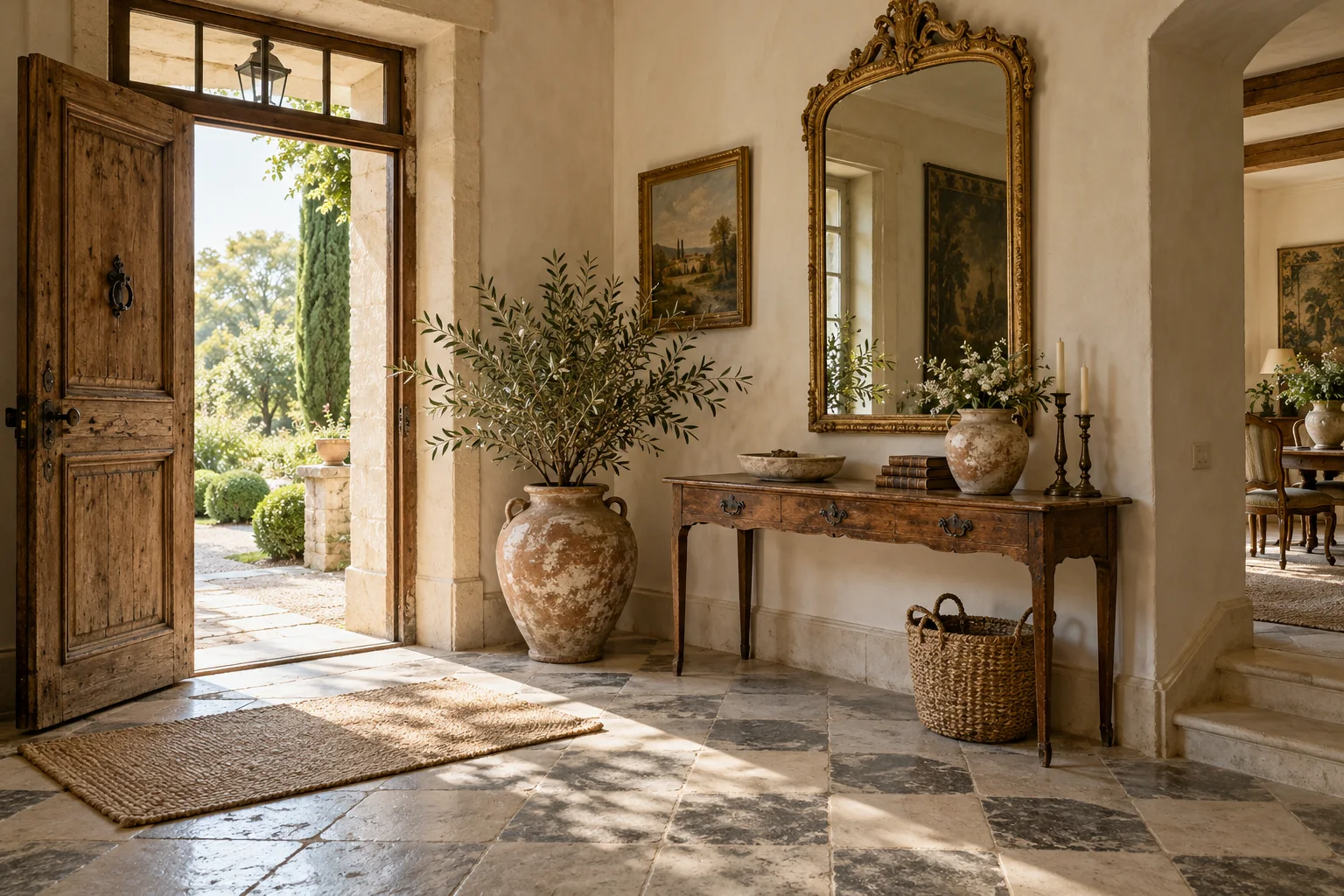
French country antiques are pieces made more than 100 years ago, which today means before the mid-1920s. The line is not only a convention of the trade: it is the definition used by United States customs for heading 9706, under which documented antiques over 100 years old carry a zero general duty rate, subject to classification and age documentation confirmed for each piece. A younger piece is vintage, however worn, and is declared and priced differently.
Three words that look alike describe three different things. A period piece was made when the style was current. A style piece imitates an earlier design, sometimes a century later. An attribution names a maker or a region, and it needs a mark, a stamp or a document. A listing that says "Louis XV" describes a form; it does not date the object. Treat regional names the same way: "Provençal" or "Gascon" describes a tradition unless provenance is documented.
Written age documentation, photographs of every flaw including repairs and replaced parts, dimensions in inches and centimetres, the woods or materials, and a condition report that separates wear from damage. Established dealers can provide a period invoice, photographs of the joinery or an expert opinion for valuable pieces. Without these, a seller is offering an opinion, not a documented antique.
Gilt trumeau, mantel and bistro mirrors, mostly 1820–1930, with original glass where it survives. Check the gesso at the corners, the foxing on the silvering and whether the glass has been replaced. The guide to antique mirrors explains the components, and the mirror category shows the forms in rooms.
Crystal and bronze chandeliers, iron and tole country lights, Art Deco pairs from 1920–1940, sconces and bouillotte lamps. Antique lighting is rewired to US standards before delivery; ask for the invoice of the rewiring. See the chandelier category and the full lighting catalogue.
Commodes, buffets, armoires and farmhouse tables in walnut, oak and fruitwood, mostly 1780–1900. Furniture is the heaviest and most often restored category: expect replaced tops, re-glued joints and later hardware, and expect each one to be listed. Our French country furniture guide covers the forms and the checks; the buffets and sideboards page shows the sizes.
Copper, faience, silverplate and glass from 1880–1950 are the most accessible antiques and the easiest to ship. Confit pots, copper cookware and service pieces travel as small parcels; sets curated to match are more useful than single pieces. The tableware catalogue lists every category.
These twenty French country antiques are the ones most often found at established dealers in southwest France and most often asked for in briefs. Prices vary with condition, size, completeness and documentation, so each entry names what drives value and the check to make, rather than a figure.
The overmantel or trumeau mirror, often 50–70 in / 127–178 cm tall, was made for the wall above a fireplace, sometimes with a painted panel over the glass. Value follows the state of the gilding, whether the glass is original and whether the frame has been regilded. Our complete guide to antique French mirrors explains each component.
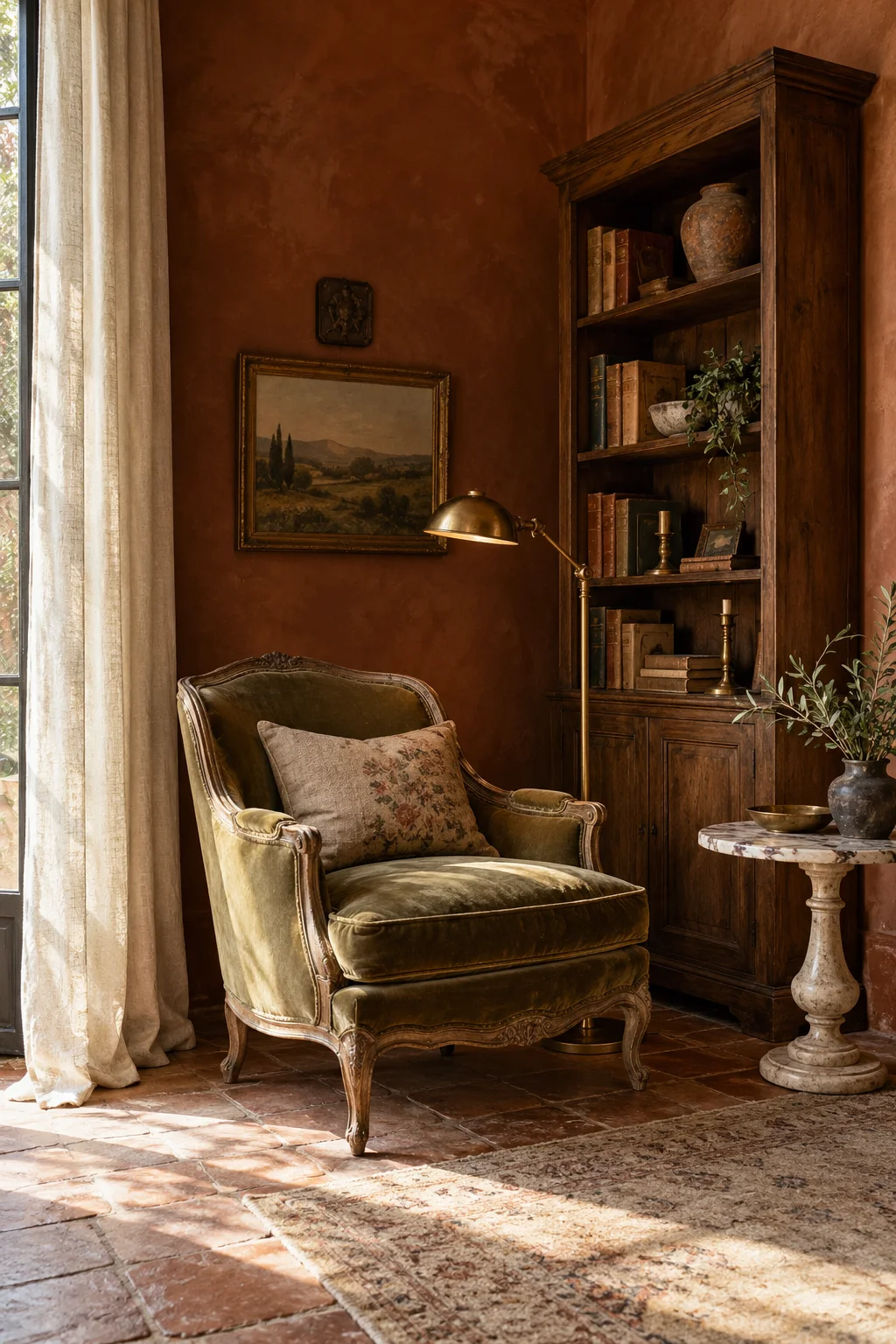
Oval mirrors in carved wood or gilt gesso, usually 20–40 in / 50–100 cm high, suit an entry or the wall above a commode. Look at the carving in raking light: crisp, unworn edges on an otherwise worn frame suggest later work. The page on French country mirrors and wall decor shows where they hang and at what height.
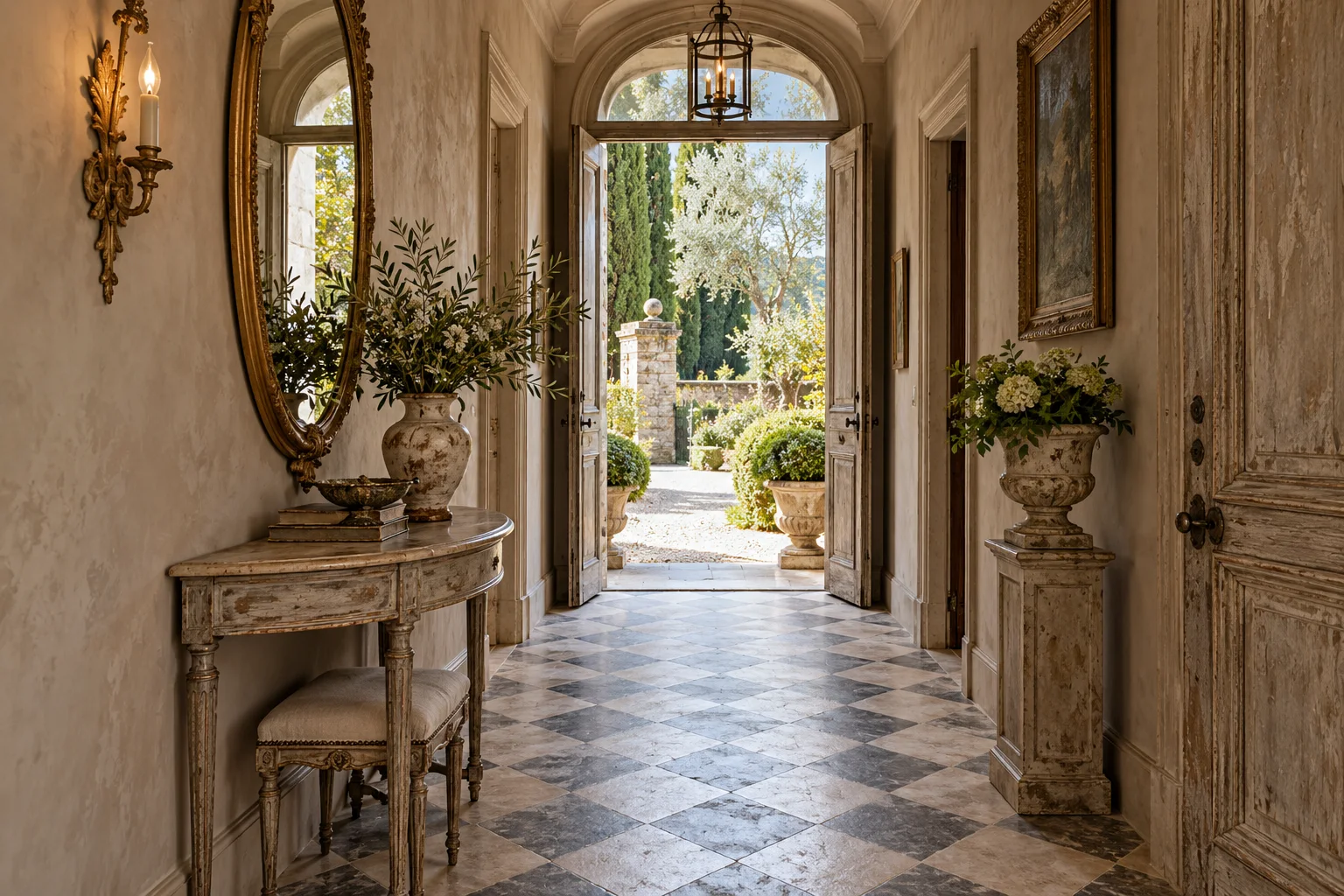
Crystal and brass chandeliers are described by the number of lights, usually 5 to 12, and by the drop from ceiling to the lowest crystal. Count the missing drops, check that the brass frame is original, and ask for the rewiring invoice. The article on antique crystal and brass chandeliers lists every point to check before buying.
Hall lanterns in iron or brass with glass panes, 18–30 in / 45–76 cm tall, are among the most practical antique lights for an entry or a stair. Glass panes are often replaced, so ask which ones are old. Every lantern is rewired to US standards before use. Our page on choosing French country lighting compares lantern and pendant sizes.
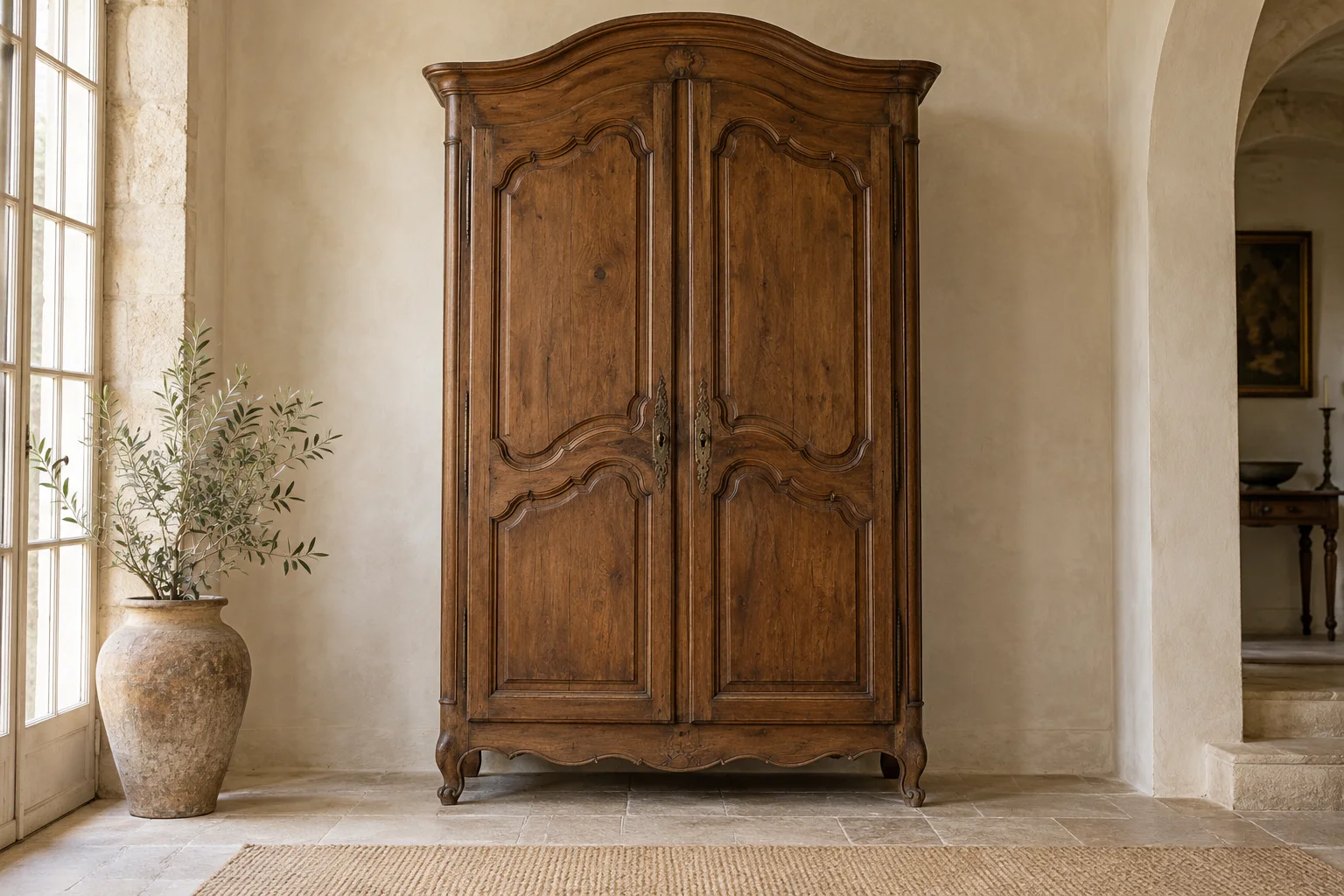
Provincial armoires are the best-documented large French country antiques, because a dealer can read their joinery, pegs and hardware. Value follows the wood, the carving, the original cornice and the state of the back. Most stand 86–95 in / 220–240 cm tall, so measure the ceiling first. Examples with condition notes are listed among the French armoires at Lo Cantou.
The two-part buffet, or buffet deux corps, stands 85–100 in / 215–255 cm tall and is often a marriage of two pieces. A sound example matches in wood, carving and back boards from top to bottom. Ask for a photograph of both backs side by side. The page on French country sideboards and buffets compares the low and two-part forms.
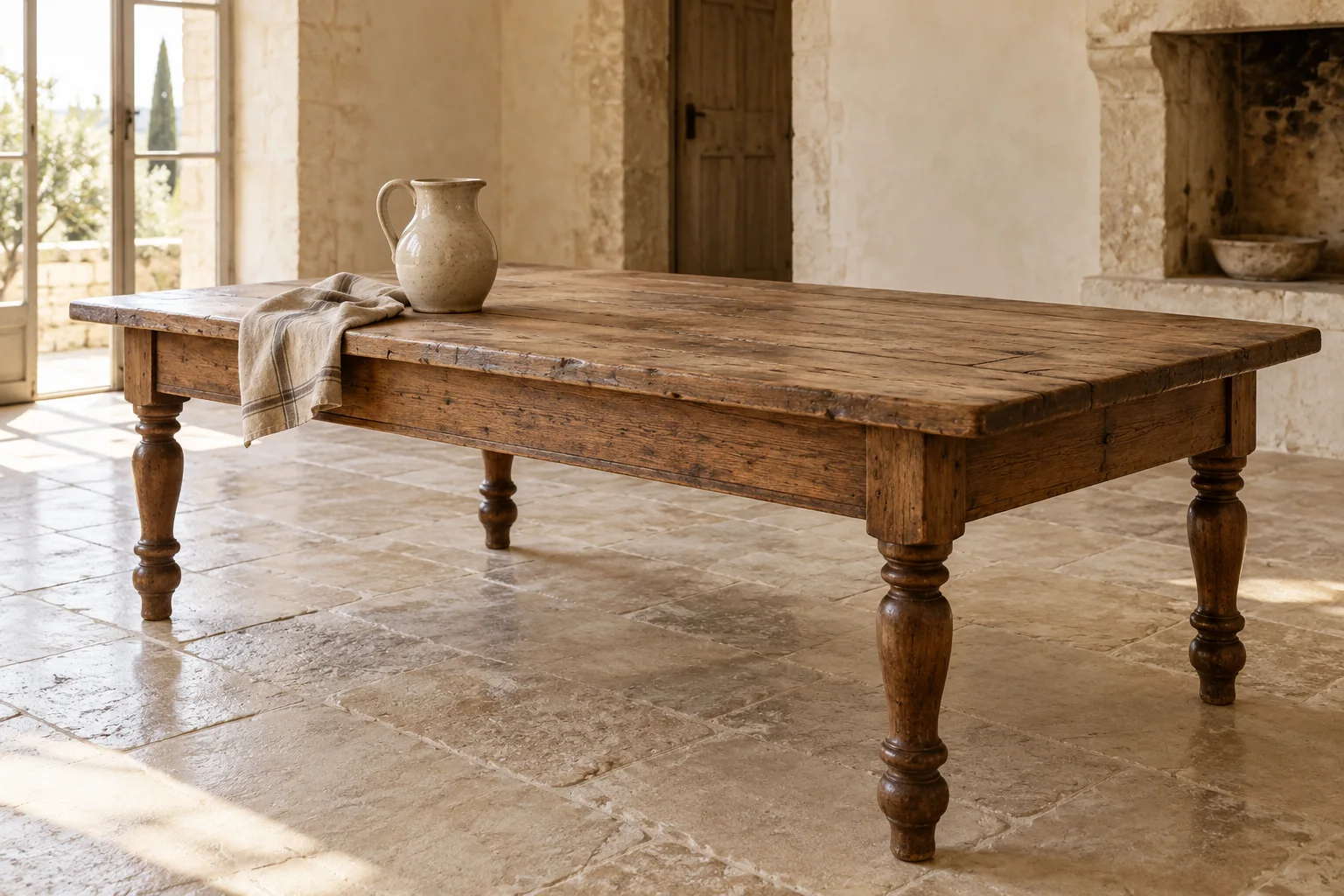
An antique table de ferme usually stands 29–31 in / 74–79 cm high, with a plank top that may have been replaced. A replaced top is acceptable when it is declared: it changes the description, not the use. Check the underside for new screws and fresh saw marks. Our guide to French country dining tables gives the length per seat.
Antique bergères and cabriolets are bought for the frame. Ask whether the joints have been re-glued, whether the carving is complete, and what lies under the cover: old webbing and horsehair, or modern foam. Most antique seating ships as a frame only and is upholstered on arrival. The page on French country chairs explains seat heights and forms.
Matching sets of four, six or eight rush-seat chairs are scarcer than single chairs, which is why mixed sets are normal in French houses. A true set matches in seat height, within about ½ in / 1 cm, and in the turning of the legs. The article on antique dining chairs in sets and odd numbers explains how to build one.
French copper saucepans often come in graduated sets, for example five pans from about 5 to 9 in / 12 to 24 cm across. Jam pans, the bassines à confiture, are unlined and used only for fruit and sugar. Check the tin lining, the rivets and the iron or brass handles. Our page on French copper cookware covers retinning.
Confit pots from southwest France, glazed only inside and on the upper half, range from about 6 to 16 in / 15 to 40 cm tall. Value follows size, glaze color and the absence of cracks. Describe a pot by material and condition before suggesting an origin. The guide to vintage French kitchenware shows the other earthenware forms.
Salt-glazed stoneware jugs and crocks, the French grès, are heavy, easy to collect and almost unbreakable in daily use. A stamp on the shoulder can name the pottery; without one, attribute only by form and glaze. Check for hairline cracks with a light tap. Our page on French faience and pottery separates stoneware from tin-glazed faience.
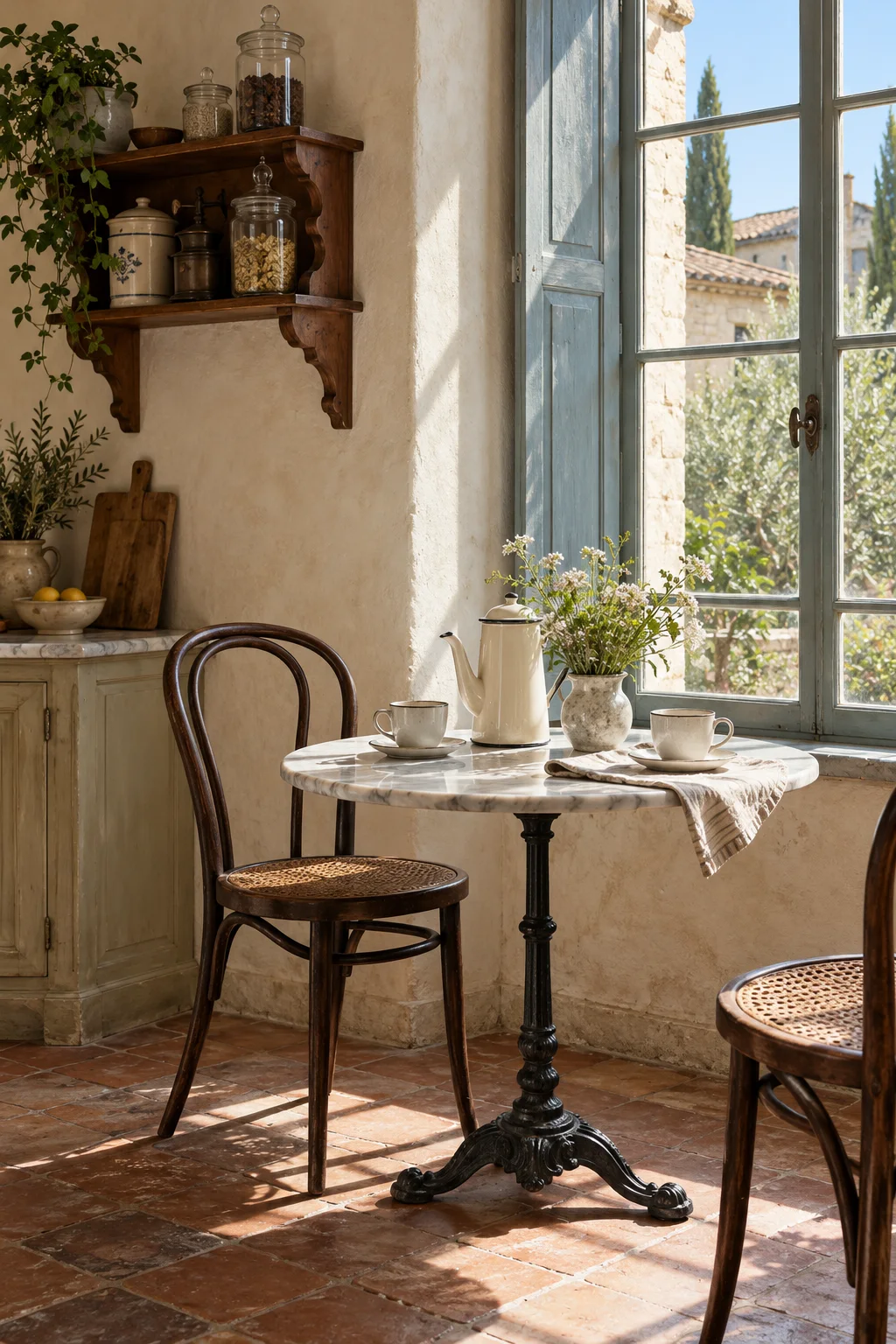
Enamel coffee pots and jugs from the 20th century are vintage rather than antique, and a listing should say so. Decorated enamel with transfer patterns is usually more sought after than plain white. Check the base and the spout for rust before using one for water or flowers. Related small objects are gathered on the French collectibles page.
Balance scales with a set of brass weights, often from 1 g to 1 kg, sat on many French kitchen counters. A complete set of weights in its wooden block is worth more than the scale alone. Check that the pans are original and that the beam swings freely. Read more on vintage kitchen scales and their weights.
Hemp sheets and métis, the linen-cotton mix, were woven on narrow looms about 31–39 in / 80–100 cm wide and often joined with a center seam. A sheet of about 79 × 118 in / 200 × 300 cm is common. Hold it against the light to find thin areas before buying. Our page on French linen and antique textiles explains the weaves.
Monogrammed towels and napkins came in trousseau sets of six or twelve, embroidered in red or white thread with initials. A complete set with matching monograms is the better find than odd pieces. Check the embroidery for loose threads and the hems for wear. The full range is in the textiles catalogue, from towels to bolster covers.
French silver-plated flatware carries a maker's mark, and many services also state the silver weight used per dozen pieces. A service of twelve place settings in one pattern is worth more than mixed pieces. Check the tines and the backs of spoons for wear through to the base metal. See the page on silver-plated flatware and French silverware.
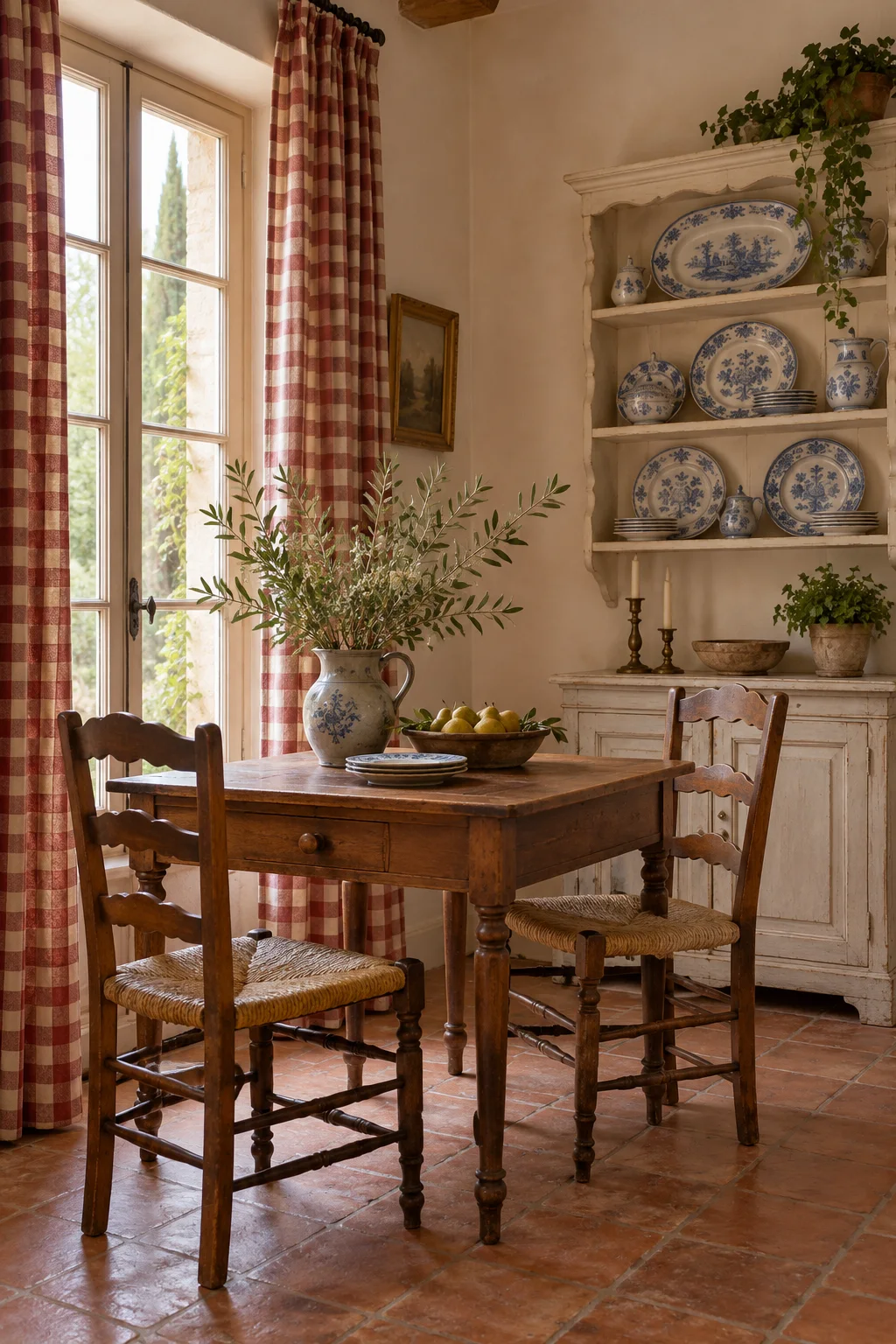
Mantel clocks in marble, bronze or gilt spelter, often with a matching pair of candlesticks, stood on many French mantels. Ask whether the movement runs, when it was last serviced and whether the dial is original. Bronze is much heavier than spelter at the same size. Our guide to French clocks, from comtoise to carriage clocks explains the movements.
Landscapes, still lifes and portraits by provincial painters fill many French country rooms. A signature is not an attribution until it has been checked, so describe a painting by subject, medium and size, and the frame separately. Check the canvas for tears and flaking paint. The page on French paintings and art for the home explains framing and hanging.
Cast-iron urns, 20–36 in / 50–90 cm tall, and stone troughs carved from one block can weigh more than 200 lb / 90 kg. Check an urn for cracks at the stem and a trough for frost damage along the rim. Plan the crate and the delivery before buying. The forms are shown among the garden statues and ornaments.
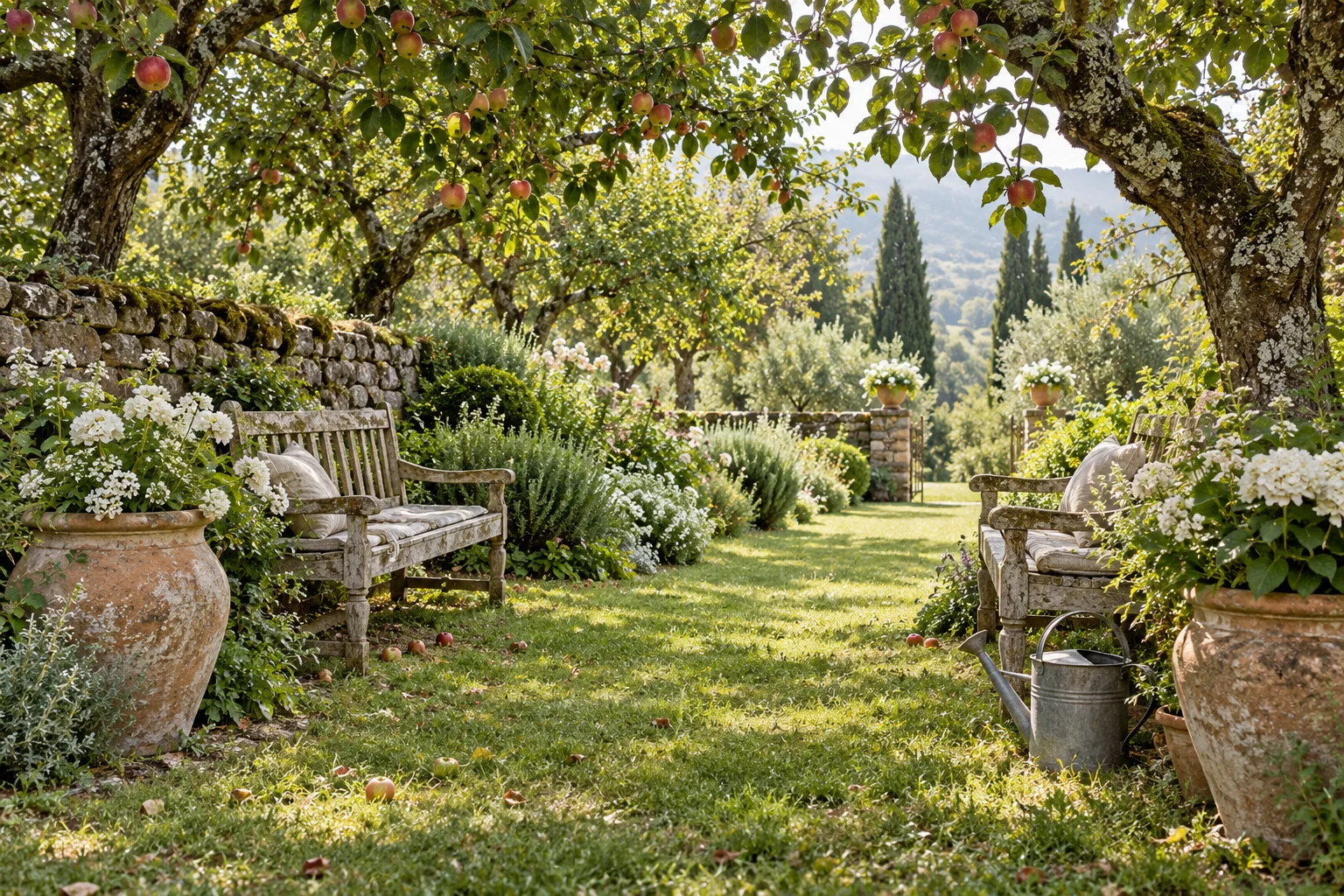
Regional names are useful for describing a form, but they remain descriptions: a piece is Provençal or Breton in a listing only when its provenance is documented. The notes below give the features most often associated with each region.
Provençal furniture is usually walnut, with flowing curves, cabriole feet and carving of wheat, flowers and baskets. The spindled panetière, the rush-seated chair and the long buffet belong here, alongside printed cottons and glazed earthenware. The antique market at L’Isle-sur-la-Sorgue in Provence is where many buyers first meet the style.
Normandy furniture is mostly oak, often heavily carved, and best known for the wedding armoire with doves, baskets and garlands on the cornice and doors. Grandfather clocks and plate dressers follow the same rich carving. A Norman-style armoire can be very tall, so measure before falling for one; the armoires and wardrobes page shows the proportions.
Breton furniture is dark oak or chestnut, with turned spindles, geometric carving and brass studs. The lit clos, an enclosed box bed with sliding or hinged doors, is the best-known form and is now often converted into a cupboard or a bookcase. Check a converted piece for the original panels. Old beds and headboards are on the beds and headboards page.
Basque furniture is oak or chestnut, with sober lines and geometric chip carving, including rosettes and discs. The region is also known for striped linen in bold colored bands, used for tablecloths and the cloths once laid over oxen. Treat a "Basque" label on a stripe as a style name; the antique linens and cushions page shows the old weaves.
The southwest, between Toulouse, the Gers and the Pyrenees, is walnut and chestnut country, with plain armoires, long farmhouse tables, glazed confit pots and copper in daily use. It is also where many of the dealers behind this catalogue work. The Gascon farmhouse style shows the interiors that go with these pieces.
In Lorraine and the east, oak and fruitwood armoires carry carved or painted decoration, and painted furniture is more common than in the west. Tall case clocks, the comtoise, come from neighboring Franche-Comté and appear across rural France. Attribute a clock movement only by its mark; the French clocks page shows the forms.
The walnut country of Occitanie and southwest France, between Toulouse, the Gers and the Pyrenees, still has family dealers who have traded for decades and who buy from estates rather than from other dealers. A dealer established since the 1980s can document a piece from its purchase; a marketplace listing often cannot. This is the network that Antiques 360 draws on for designers.
The weekend brocante and the large fairs are where the style is discovered and where most mistakes are made. Prices are lower, documentation is rare, and export paperwork is your problem. Buy small objects there; buy furniture and lighting from a dealer who will put the age in writing.
Provenance is not a story to tell guests, it is the basis of the description, the customs declaration and the insurance value. A piece with a documented age enters the United States as an antique; a piece without it is classified as furniture or lighting and may be dutiable. Keep the documents with the piece; a printed provenance card delivered with it serves the next owner too.
An honest listing shows the back, the underside, the inside of drawers, the worst crack and every repair, in raking light rather than retouched. Six photographs of the front and none of the back is a reason to ask for more. Condition and age are separate questions: a sound piece can be young, a worn piece can be a reproduction.
Ask for height, width and depth measured at the widest points, with cornice and feet, plus the usable interior depth of storage pieces. A commode listed at 34¼ × 50 × 23⅝ in (87 × 127 × 60 cm) tells you whether it clears a doorway; "medium size" does not. For seating, note the seat height and the frame width; upholstered antique seating usually ships as a frame only.
Replaced tops, later hardware, re-caned seats and rewired lamps are normal and should be disclosed, not hidden and not treated as defects. What matters is that the description matches the object and the price. A documented restoration lowers nothing when the use is domestic; it changes the description when the purchase is for a collection.
Browse the listings at Lo Cantou, where each piece is shown with its condition details and current availability. Use the room scenes in this catalogue to decide the scale first, then search by category. The French country decor guide explains how one antique per room is usually enough.
Antiques 360 works from a brief: the piece, the style, the maximum dimensions in inches, the budget and the deadline. Within 72 hours the designer receives three documented options, each with photographs, a condition report, written age documentation and a landed-cost quote. A piece can be held for up to 7 days while the client decides, and a live video from the dealer's shop can be arranged on request. The first brief is free.
One quote covers the piece, the export crate built to the ISPM 15 standard, freight, insurance at declared value and customs brokerage, with duties estimated line by line and paid on import. The duty rate is never promised before a licensed US customs broker confirms it for the piece; if a rate changes before shipping, the order can be cancelled at no charge. The landed cost calculator shows how the lines add up.
Count 6–12 weeks by sea and 2–3 weeks by air, tracked door to door, after a 50 percent deposit. Export paperwork is prepared before shipment: HTS classification, written age documentation for antiques over 100 years old, CITES screening, the wood declaration required by the Lacey Act and a treatment certificate for antique wood. Hospitality and multi-piece projects can be consolidated in one container when the volume allows.
Classified under heading 9706 when the age is documented, with a zero general rate subject to confirmation. Described with period, region when provable, materials, condition and restorations.
Bistro chairs, Art Deco lighting, enamelware and opaline are younger than 100 years and are classified as what they are: furniture, lighting, tableware. They may be dutiable, they are usually cheaper and they are often in better condition. Nothing wrong with vintage, provided the listing does not call it antique.
Useful when you need eight matching chairs or a table to exact dimensions. A reproduction is declared as new furniture and should never carry an age claim. Decorative distressing on a reproduction is a finish, not a history.
Dust old wood with a soft dry cloth and keep it away from radiators, air vents and direct sun, which split panels and fade the color. Aim for steady indoor humidity, roughly 40–55 percent, especially in the first winter after a piece arrives from France. Wax a waxed surface once or twice a year at most, and never use silicone sprays. The Canadian Conservation Institute note on wooden furniture sets out the basics, and our page on antique wood furniture covers each timber.
Decide first whether a piece is for use or display. Cooking copper is washed by hand, dried at once and retinned when the copper shows through; display copper can keep its dark patina. Polish brass sparingly, because every polish removes metal and softens detail, and keep polish off wood and gilding. The CCI note on cleaning and waxing brass and copper explains the methods, and our page on antique brass and bronze covers hardware and candlesticks.
Wash old linen by hand or on a gentle cycle in cool to lukewarm water, with a mild detergent and no chlorine bleach. Dry it flat or on a line out of strong sun, and store it rolled or loosely folded in cotton, refolding along new lines every few months. The CCI guidelines on caring for textiles cover storage, and our linen and textiles guide explains how to read hemp, linen and métis.
The categories below are the ones most often requested in briefs. Each page shows the piece in a room, the checks that matter and where to continue. The complete list is in the art and decorative objects catalogue, the mirror catalogue and the furniture catalogue.
AI-created styling ideaMirrors
Choose a mirror for its reflection, proportions, and the condition of its separate components.
Explore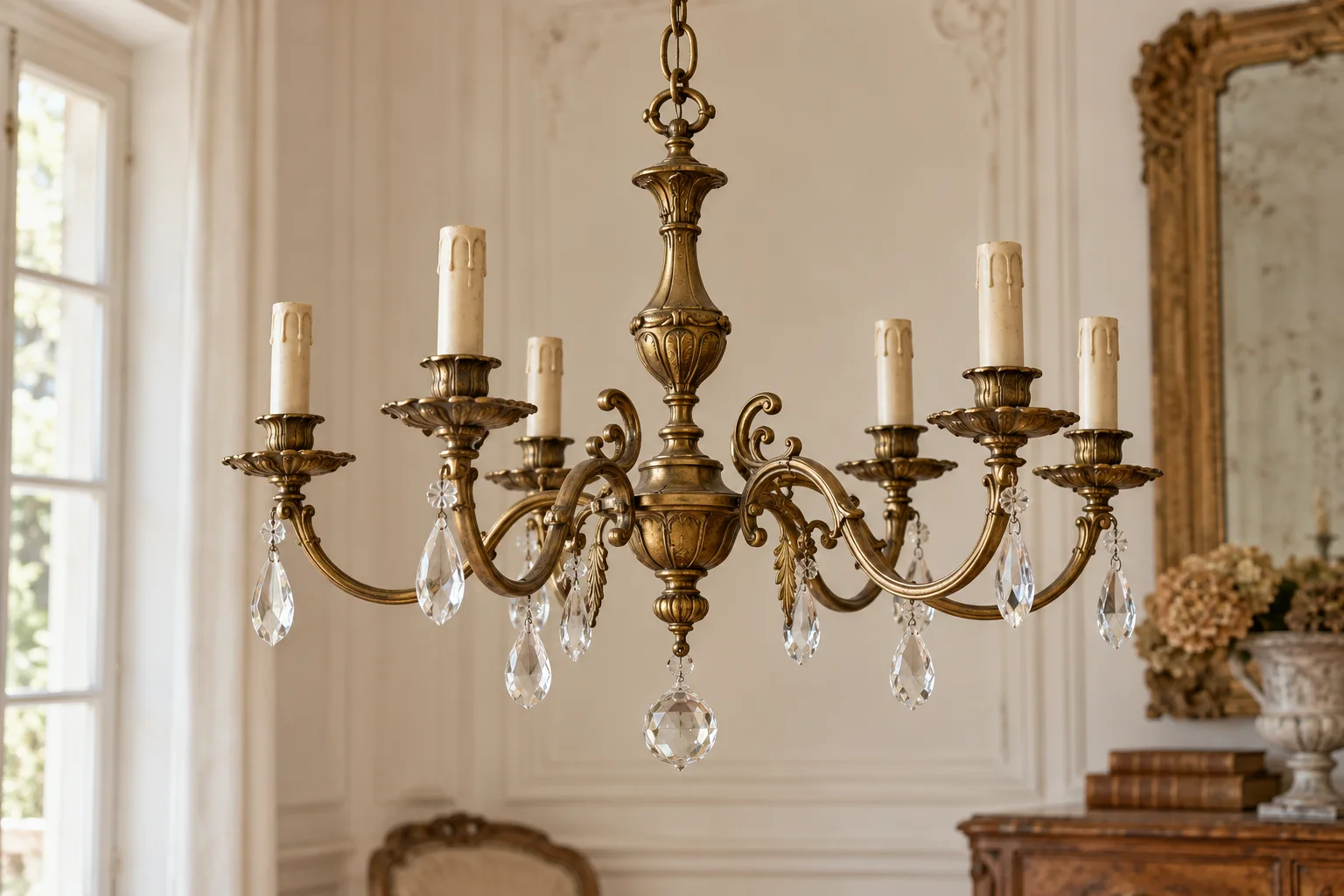 AI-created styling idea
Lighting
Assess a chandelier's volume, decorative elements and installation before planning the lighting.
Explore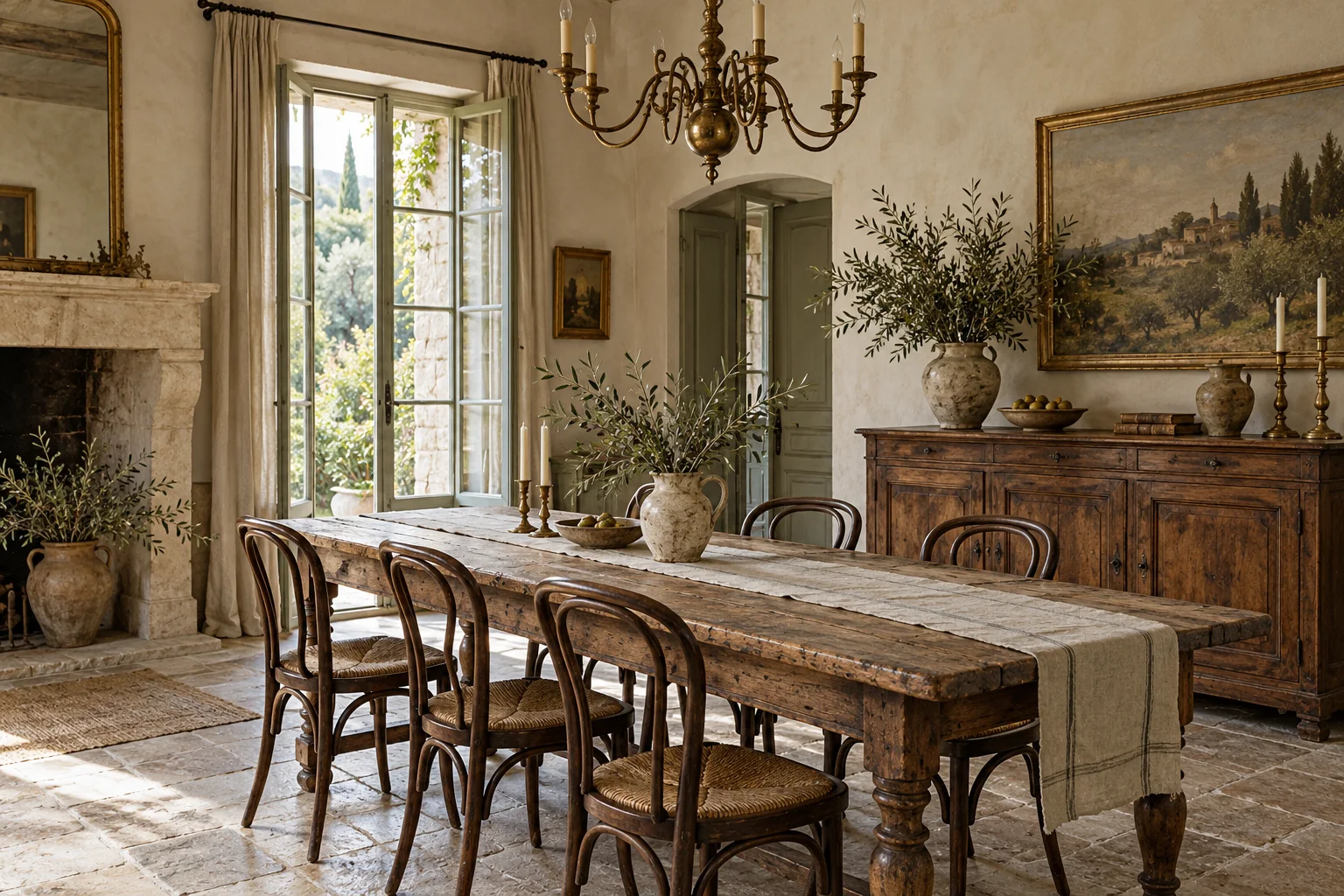 AI-created styling idea
Furniture
Choose a sideboard around your serving dishes, access needs, and useful serving surfaces.
Explore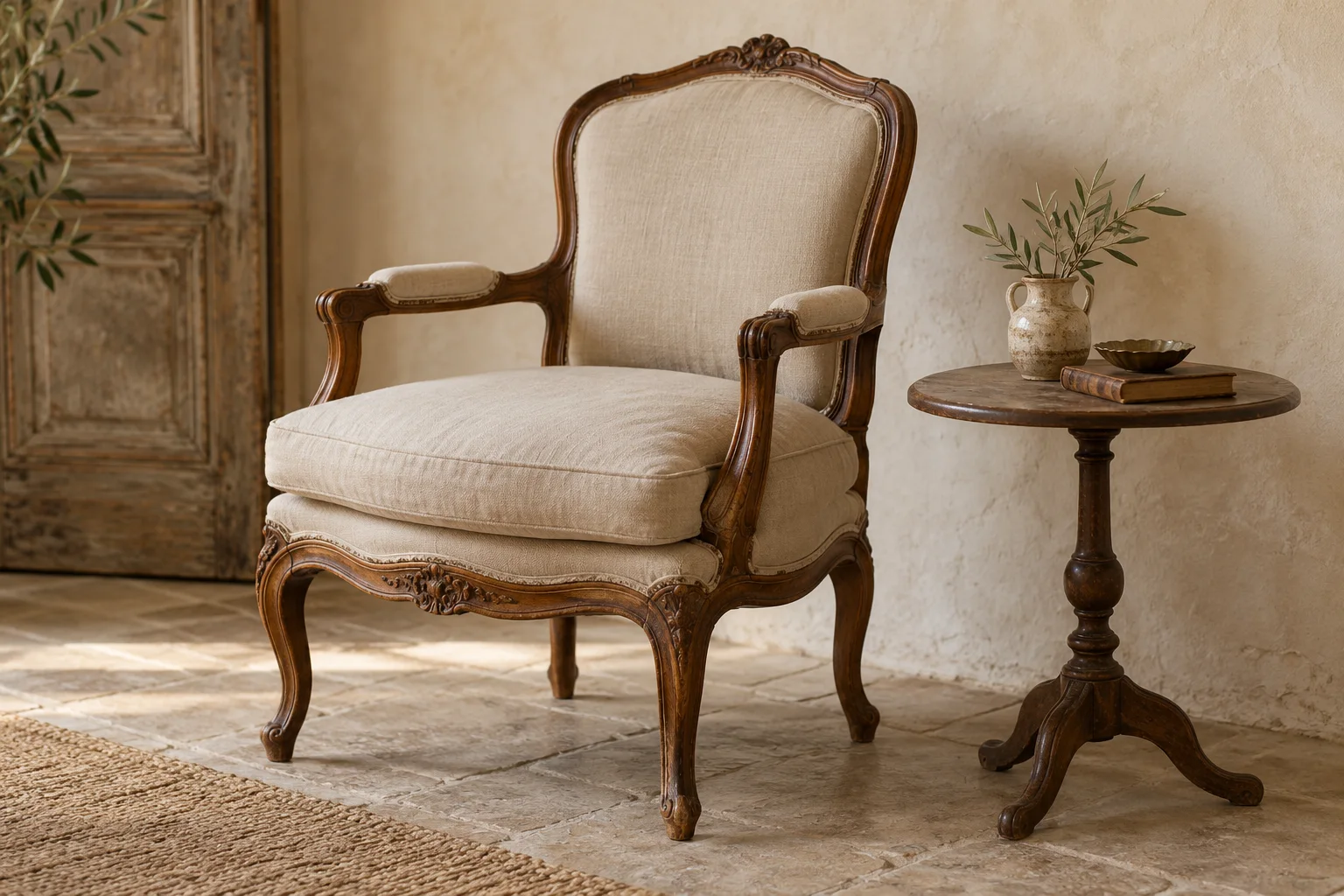 AI-created styling idea
Furniture
Upholstered antique seating usually ships as a frame only; judge the frame and the joints first.
Explore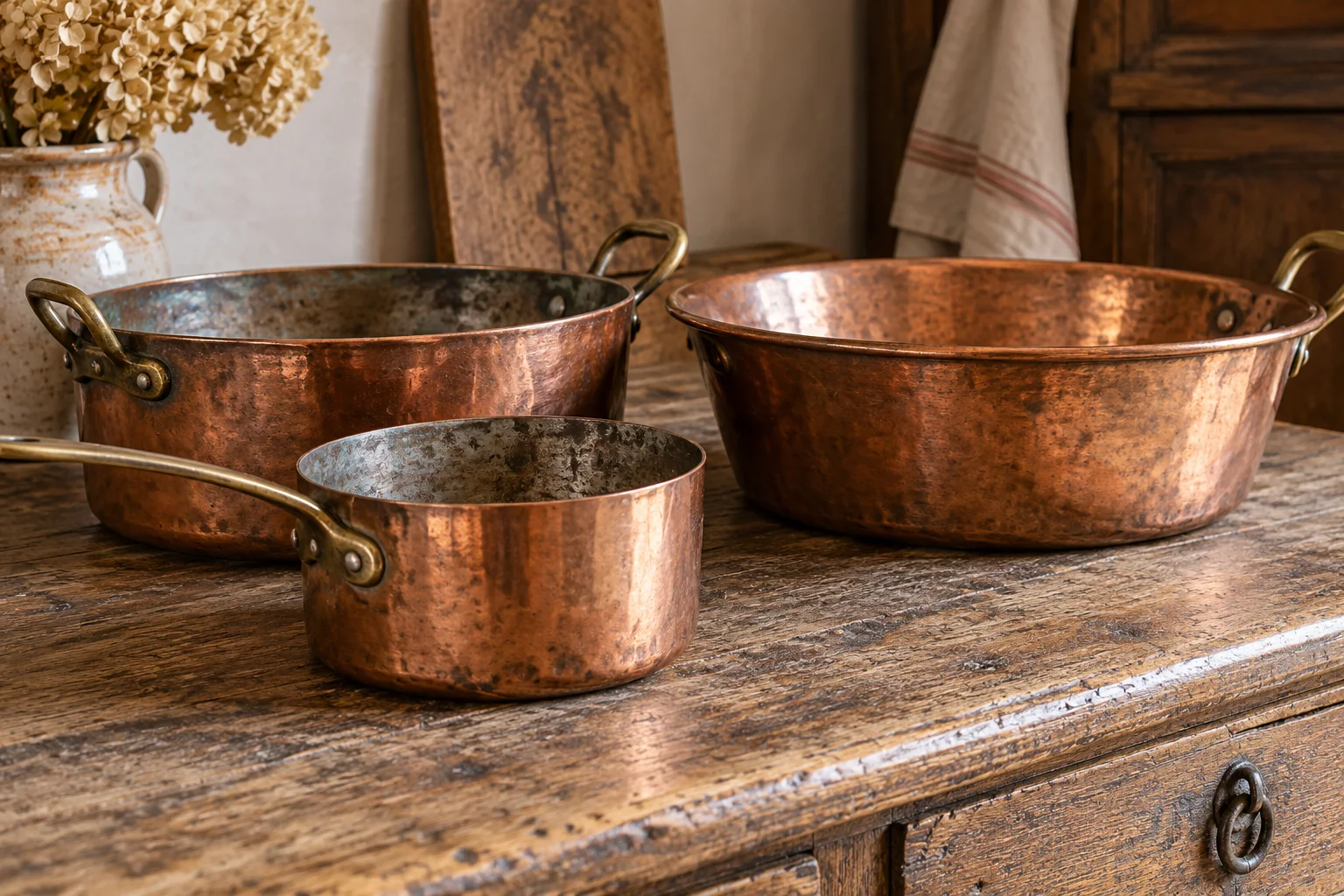 AI-created styling idea
Tableware & kitchen
Tinning, gauge and stamps decide whether a pan cooks or decorates.
Explore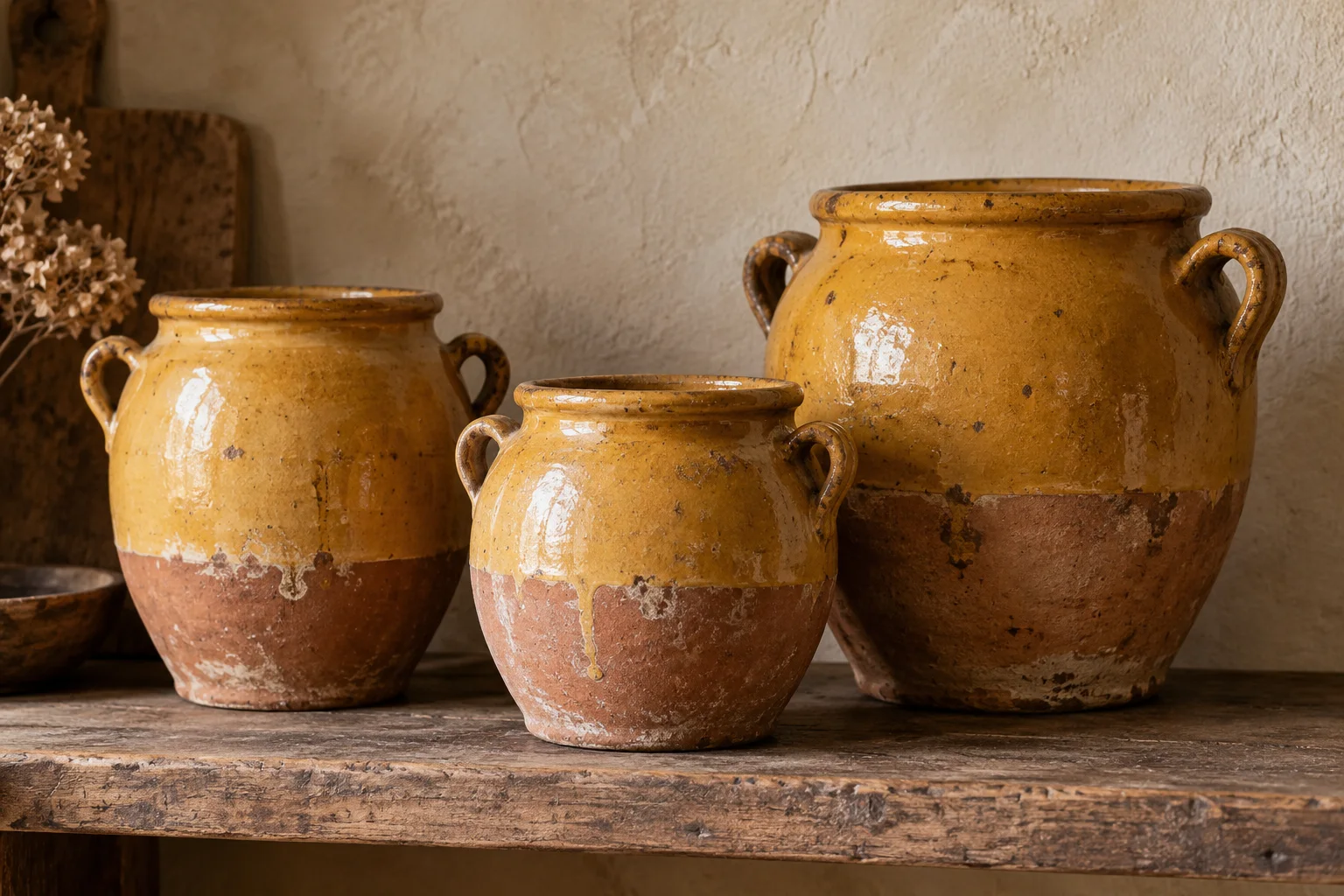 AI-created styling idea
Tableware & kitchen
Describe a confit pot by material and condition before assigning an origin.
ExploreA piece made more than 100 years ago, which today means before the mid-1920s, with the age supported by documentation such as a period invoice, photographs of the joinery or an expert opinion. Younger pieces, including most bistro chairs and Art Deco lighting, are vintage. The word antique describes age, not style, condition or value.
Documented antiques over 100 years old are classified under heading 9706 of the Harmonized Tariff Schedule, which provides a zero general rate when the classification and age documentation requirements are met. The rate for each piece should be confirmed by a licensed customs broker before you commit; vintage pieces and reproductions are classified as ordinary goods and may be dutiable.
Allow 6–12 weeks by sea and 2–3 weeks by air after the deposit, plus the time to build an ISPM 15 export crate and prepare the paperwork. Small objects such as copper, faience and silverplate travel faster as parcels. A reliable quote states the lead time per piece and tracks the shipment at every step through delivery.
Yes. Ask for photographs of the back, underside and every flaw in natural light, and request a live video from the dealer's shop if the piece is important. A hold of up to 7 days lets a client decide after seeing the documentation. If a piece arrives damaged, insurance at declared value covers the loss when the shipment was insured door to door.
Keep wood away from radiators, vents and direct sun, and hold indoor humidity steady, especially during the first winter. Wax waxed surfaces once or twice a year and avoid silicone sprays. Polish brass and display copper sparingly, retin cooking copper when needed, and wash old linen gently in cool water without chlorine bleach.
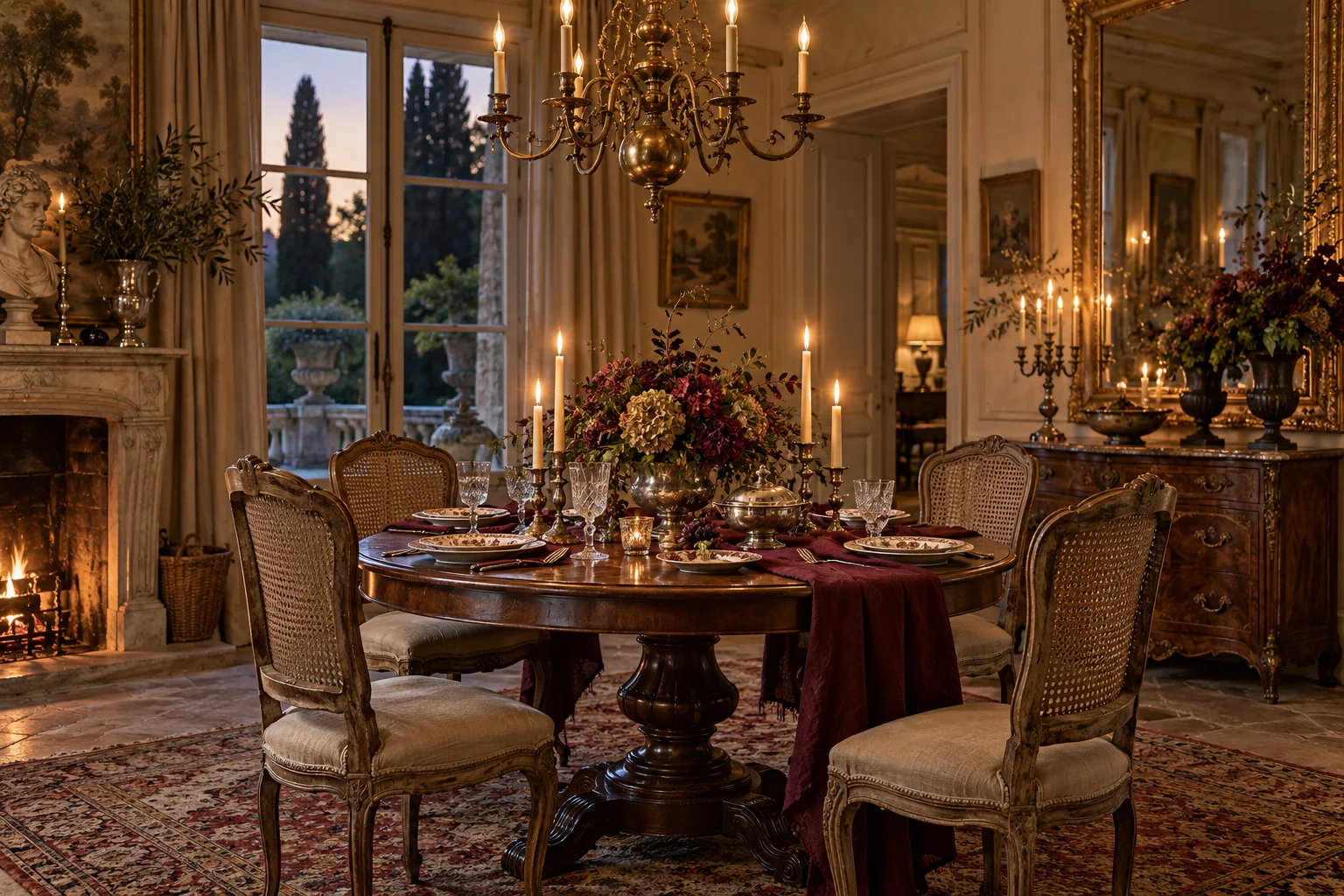
Nov 6, 2026 · Antique guide
A French country Thanksgiving table takes its look from the farmhouse: a linen cloth, white ironstone or faience plates, mixed silverplate, short bistro glasses,…
Nov 6, 2026 · Antique guide
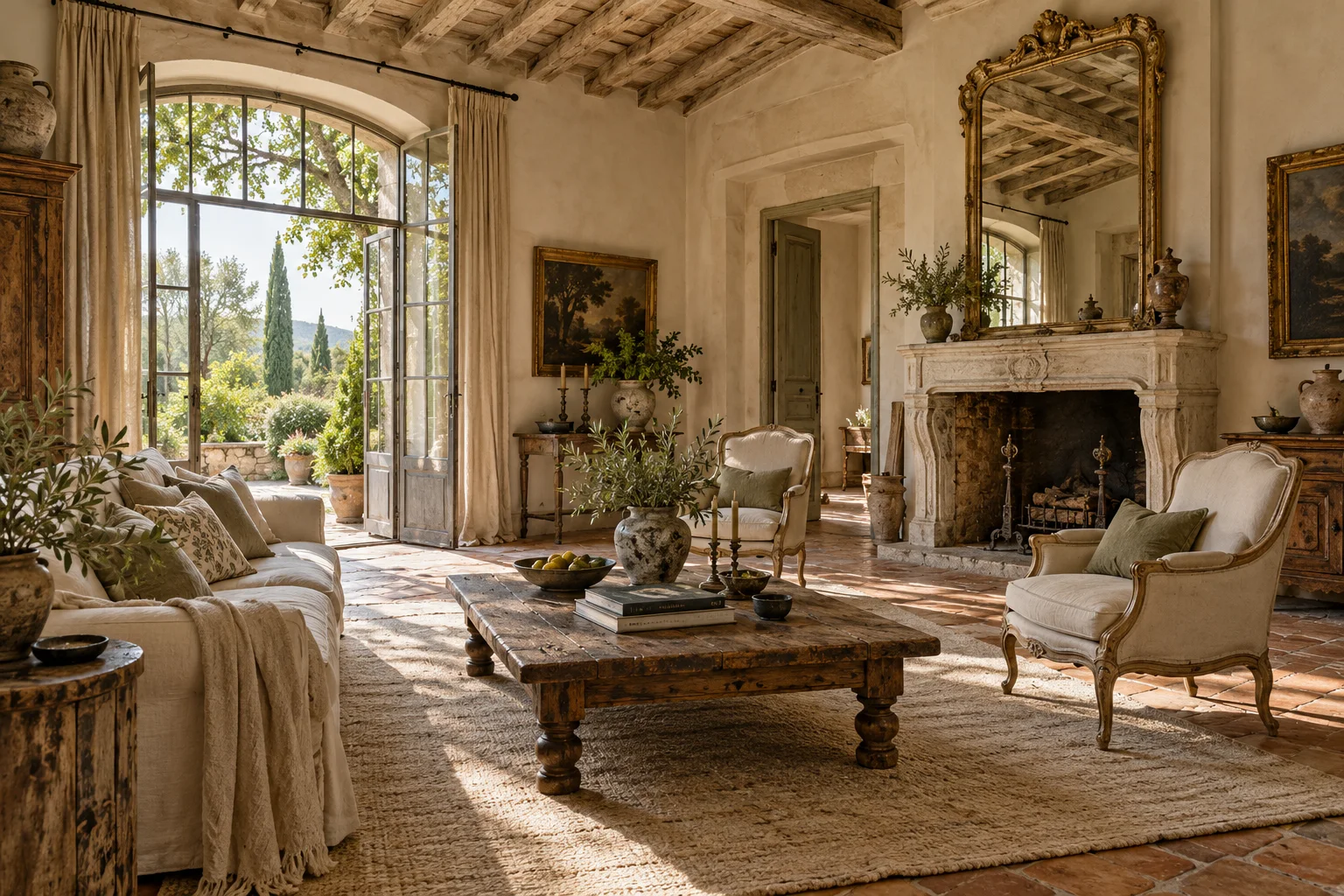
An antique fireplace mantel sets the scale of a living room before any furniture arrives.
Nov 6, 2026 · Antique guide
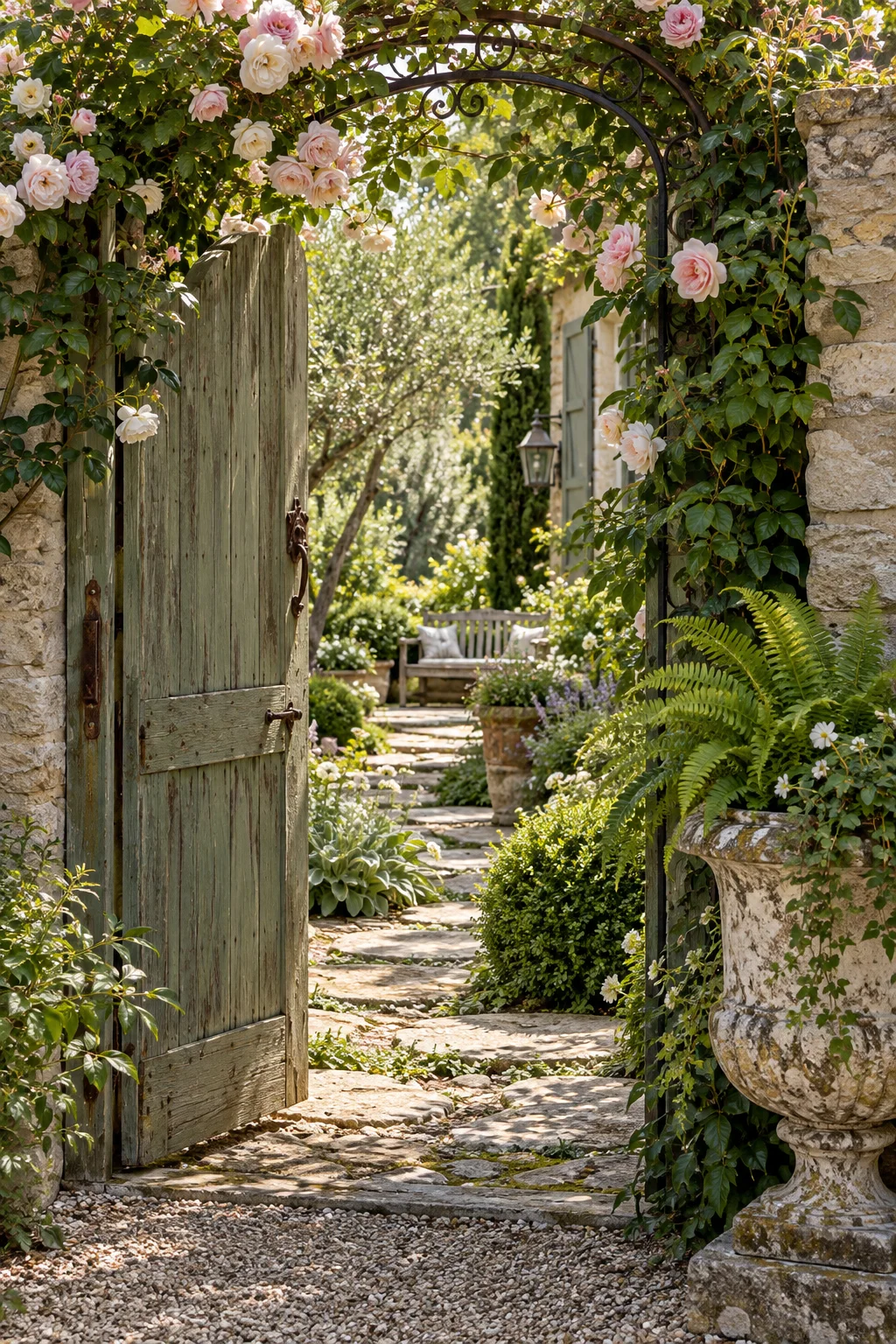
Terra cotta pots give a French country garden its color and weight: a pair of glazed Anduze vases at the top of the steps, a Biot jar in a bed of lavender, rows of…
Nov 5, 2026 · Antique guide
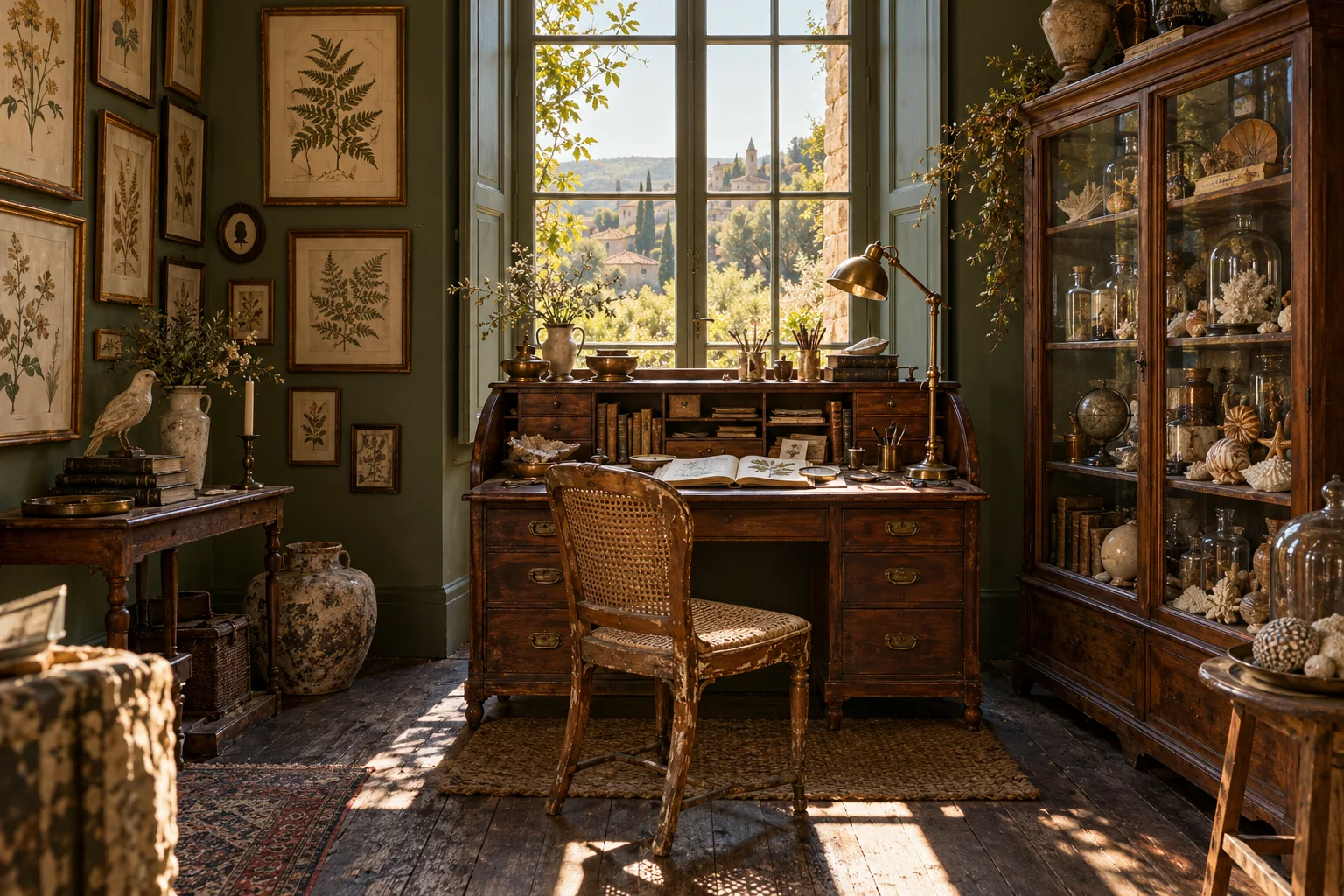
Vintage pottery from French kitchens and workshops falls into two bodies and three glazes.
Nov 5, 2026 · Antique guide
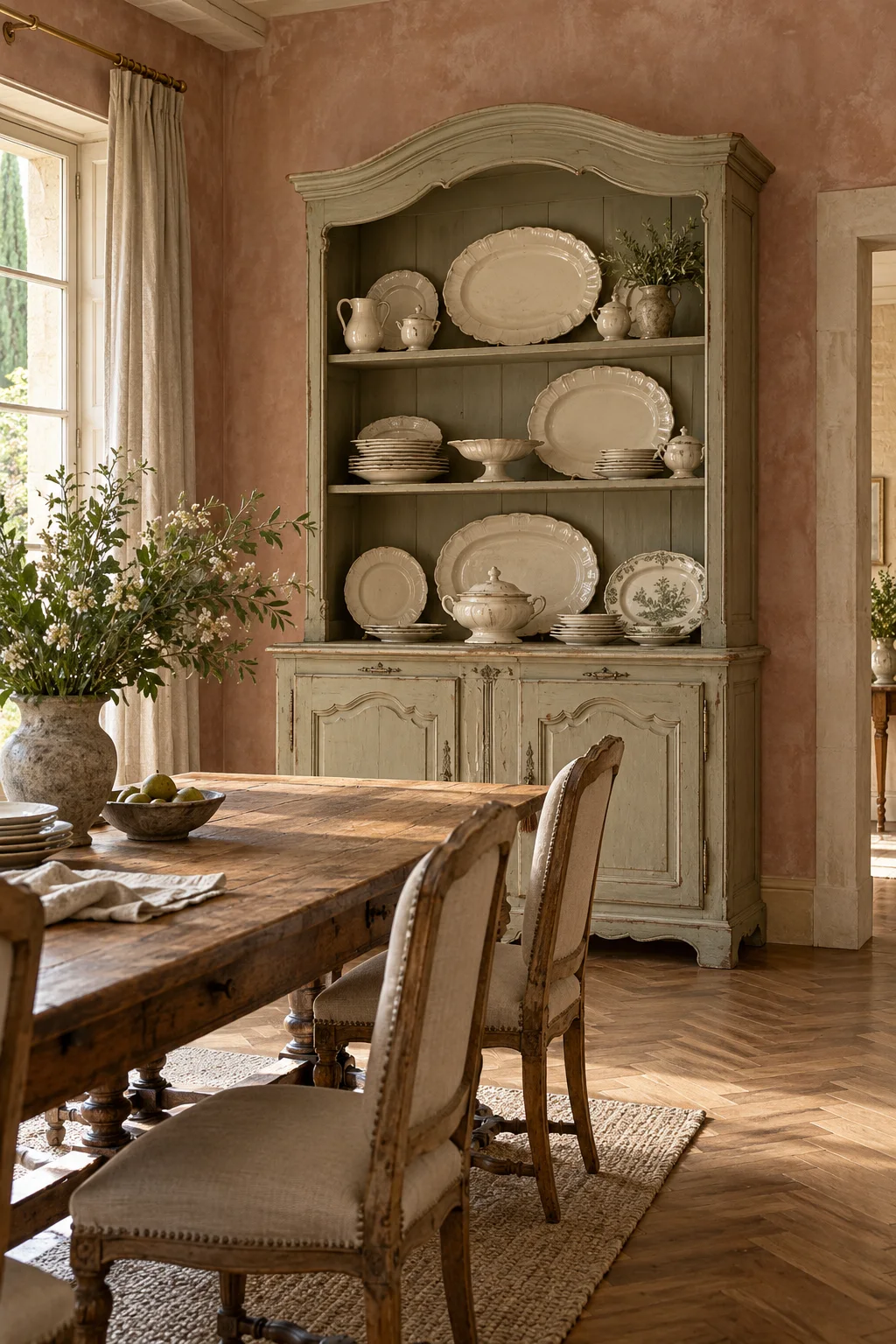
An antique magazine rack is one of the few small antiques that still does its original job and several new ones.
Nov 5, 2026 · Antique guide
French country Christmas decor works best when it borrows from the house rather than from a store: brass candlesticks taken down from the mantel, greenery cut from…