Woven rattan bistro chairs: the Paris terrace chair
The rattan bistro chair has a frame of rattan cane, bent with heat and fixed with nails or screws, the joints wrapped in strips of rattan peel. The seat and back are woven in colored strips, in patterns of stripes, checks or chevrons. On most post-war terrace chairs the strips are a synthetic polyamide, often sold under the name Rilsan; older chairs used rattan peel or other natural fiber.
Paris workshops such as Drucker and Gatti are known for rattan bistro chairs. Attribute a chair to a workshop only by its label, stamp or a documented invoice; a woven pattern alone does not identify a maker, because patterns were shared and copied. On any rattan cafe chair, check that the joints are tight, that the cane has no splits at the bends, that the weave is taut and complete, and that the feet keep their protective caps.
Bentwood and metal French cafe chairs
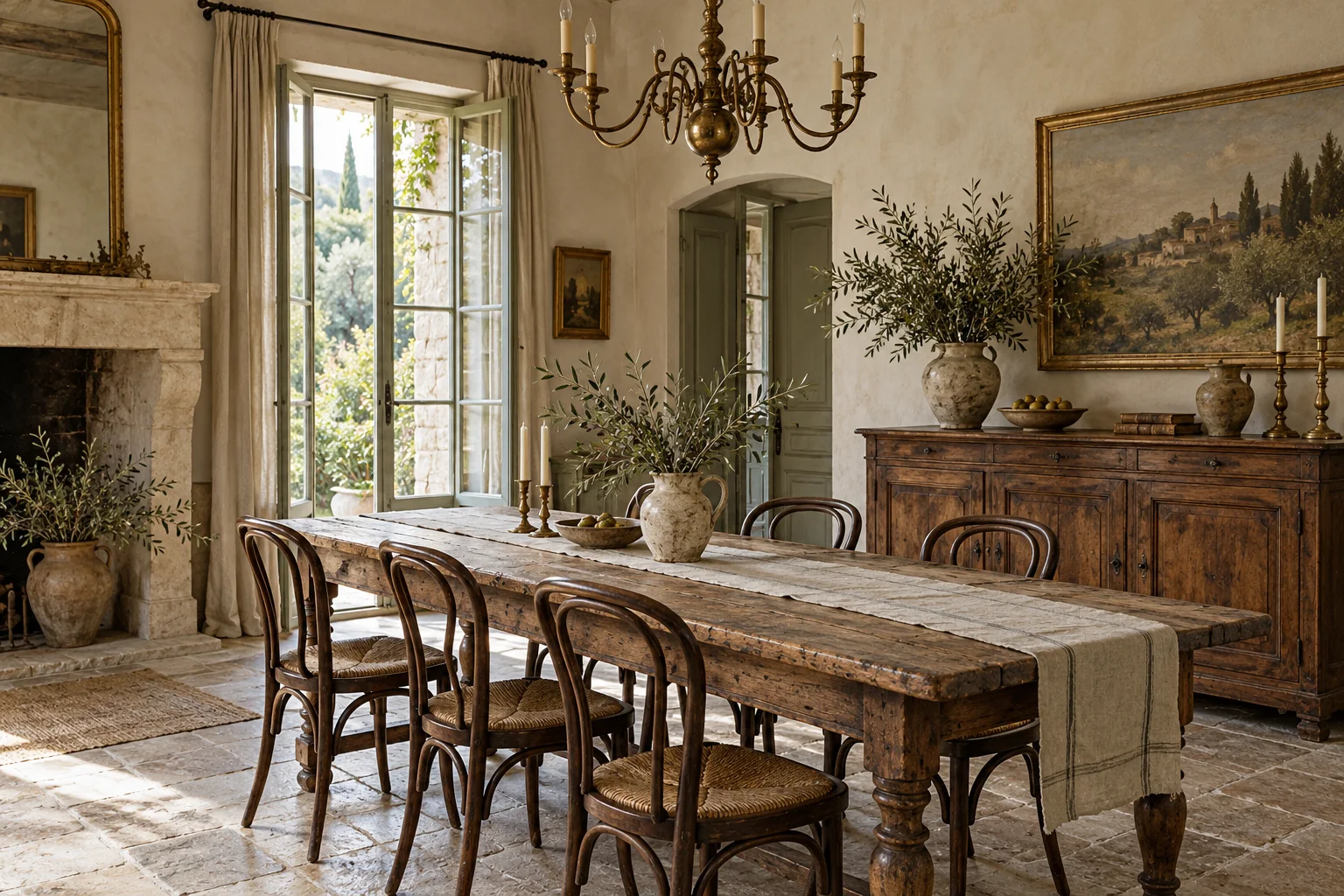
The bentwood chair is solid beech, steamed and bent around forms, then assembled with screws, with a cane, plywood or pressed seat. Thonet-type models were made by many later factories, so attribute only by a label or a stamp under the seat; our note on bentwood chairs, labels and checks covers the marks. Check for cracks at the bends, loose screws and a loose ring under the seat.
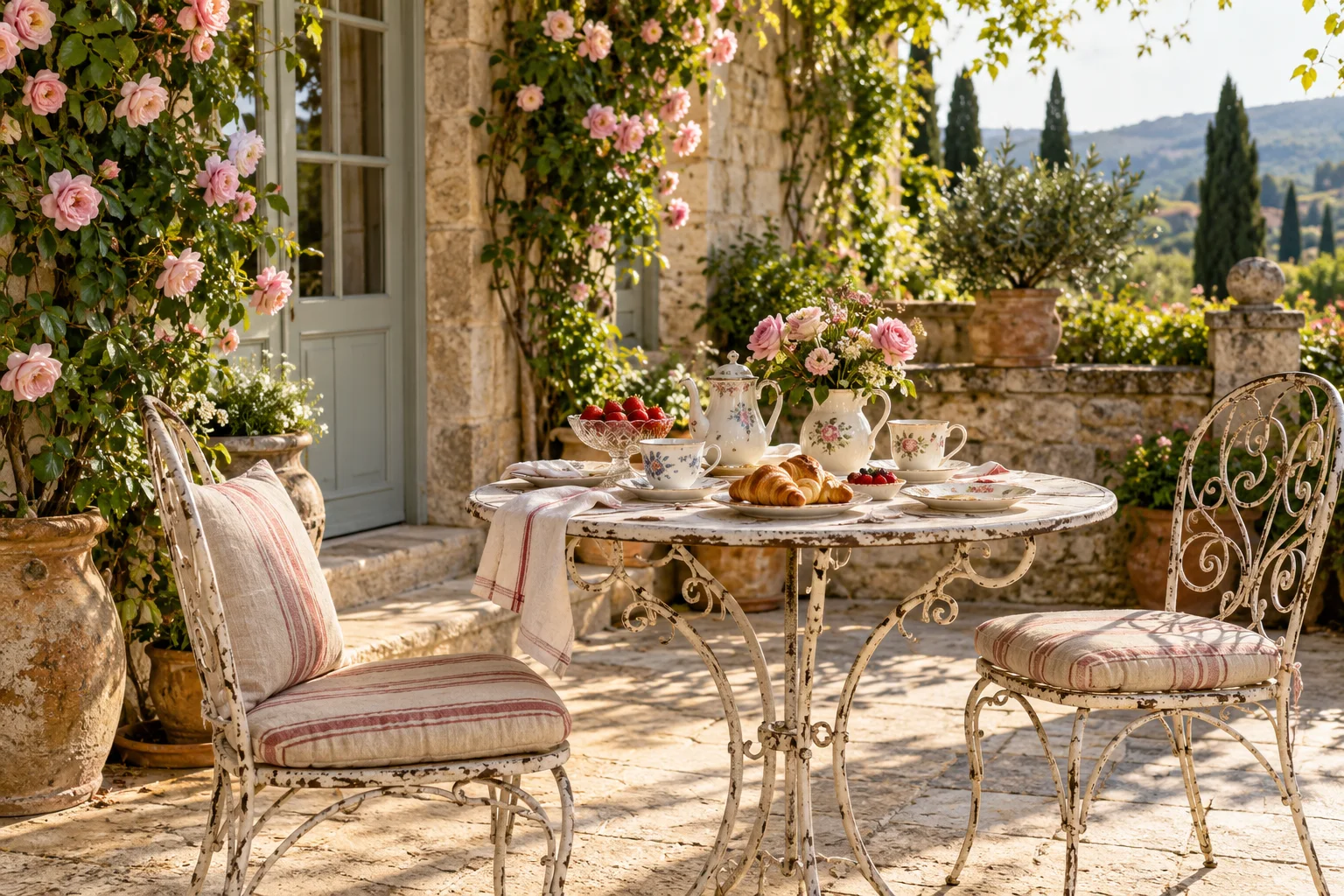
Metal chairs are the outdoor branch: folding steel chairs with slatted seats, stamped sheet-steel chairs with perforated seats, and wrought-iron café chairs. Check for rust where water sits, on the seat and at the feet, and for cracked welds and a stiff folding mechanism. Old paint layers may contain lead, so strip them with care and with protection.
Sizes, outdoor use and mixing bistro chairs at a table
Most Parisian bistro chairs have a seat height of about 17–18 in / 43–46 cm and a seat 15–17 in / 38–43 cm wide, narrower than a dining chair. A table 28–30 in / 71–76 cm high leaves the usual 10–12 in / 25–30 cm between seat and tabletop; check the apron so knees clear it. Allow 22–24 in / 56–61 cm of table edge per chair. Our pages on bistro tables and on marble and cast-iron café tables give the matching sizes.
Metal chairs can live outside all year if drained and repainted when needed. Rattan chairs belong under cover: Paris cafés keep them under awnings, and the cane frame dislikes standing water and long sun. Bentwood stays indoors, because beech swells and shrinks with moisture. To mix chairs at one table, keep seat heights within about 1 in / 2.5 cm and repeat one element, the material, the color or the finish. Our guide to French country chairs shows more combinations.
Caring for a rattan weave and a bentwood frame
Wipe a synthetic weave with mild soapy water, rinse with a damp cloth and dry in the shade. Clean natural rattan peel with a cloth barely damp, never soaked. Strong sun fades the colored strips and dries the cane, so bring chairs in or cover them in high summer and over winter. Once a year, check and tighten the joints.
Dust a bentwood frame, wax it occasionally and tighten the screws when the chair starts to move. Keep it away from radiators, which dry the beech and open the joints. More seating forms are gathered in bistro and dining chairs.
What to compare
| Form | Suggested Use | Decisive Check |
|---|---|---|
| Woven rattan café chair | Covered terrace, kitchen, breakfast table | Tight joints; label or stamp before any attribution |
| Bentwood bistro chair | Dining room, café table indoors | Cracks at the bends; loose ring under the seat |
| Folding or stamped steel chair | Garden, patio, balcony | Rust at seat and feet; sound welds |
Your buying checklist
Continue planning your room
Frequently asked questions
Can French rattan bistro chairs stay outside?
Only under cover. The synthetic weave tolerates weather well, but the rattan frame does not like standing water or long exposure to sun. Paris cafés keep them under awnings and bring them in at night. At home, store them indoors or under a roof over winter, and wipe them dry after rain.
How do you know who made a rattan bistro chair?
Look for a label, stamp or metal tag, usually under the seat or on a rear leg, and for a documented invoice. Workshops such as Drucker and Gatti are known for these chairs, but woven patterns were shared and copied, so a pattern alone does not identify a maker. Without a mark, describe the chair as a Paris-style rattan bistro chair.
What is the right height for bistro chairs at a dining table?
Most French bistro chairs have a seat height of about 17–18 in / 43–46 cm, which suits a table 28–30 in / 71–76 cm high. Aim for 10–12 in / 25–30 cm between the seat and the tabletop, and check that knees clear the apron. Allow about 22–24 in / 56–61 cm of table edge per chair.
Can you mix bistro chairs around one table?
Yes, if one element stays constant. Keep the seat heights within about 1 in / 2.5 cm of each other and repeat the material, the color or the finish. Two rattan chairs at the ends with bentwood chairs along the sides works; six unrelated chairs of different heights reads as clutter.
Sources & further reading
- USDA Forest Products Laboratory — Wood Handbook: Wood as an Engineering Material — Supports how wood, beech included, swells and shrinks with changes in moisture, the reason bentwood stays indoors.
- Canadian Conservation Institute — Basic care: furniture and objects made of wood — Supports dusting, stable humidity and distance from heat and direct sun for wooden and woven furniture.