 AI-created styling idea
Tableware & kitchen
Copper cookware & utensils
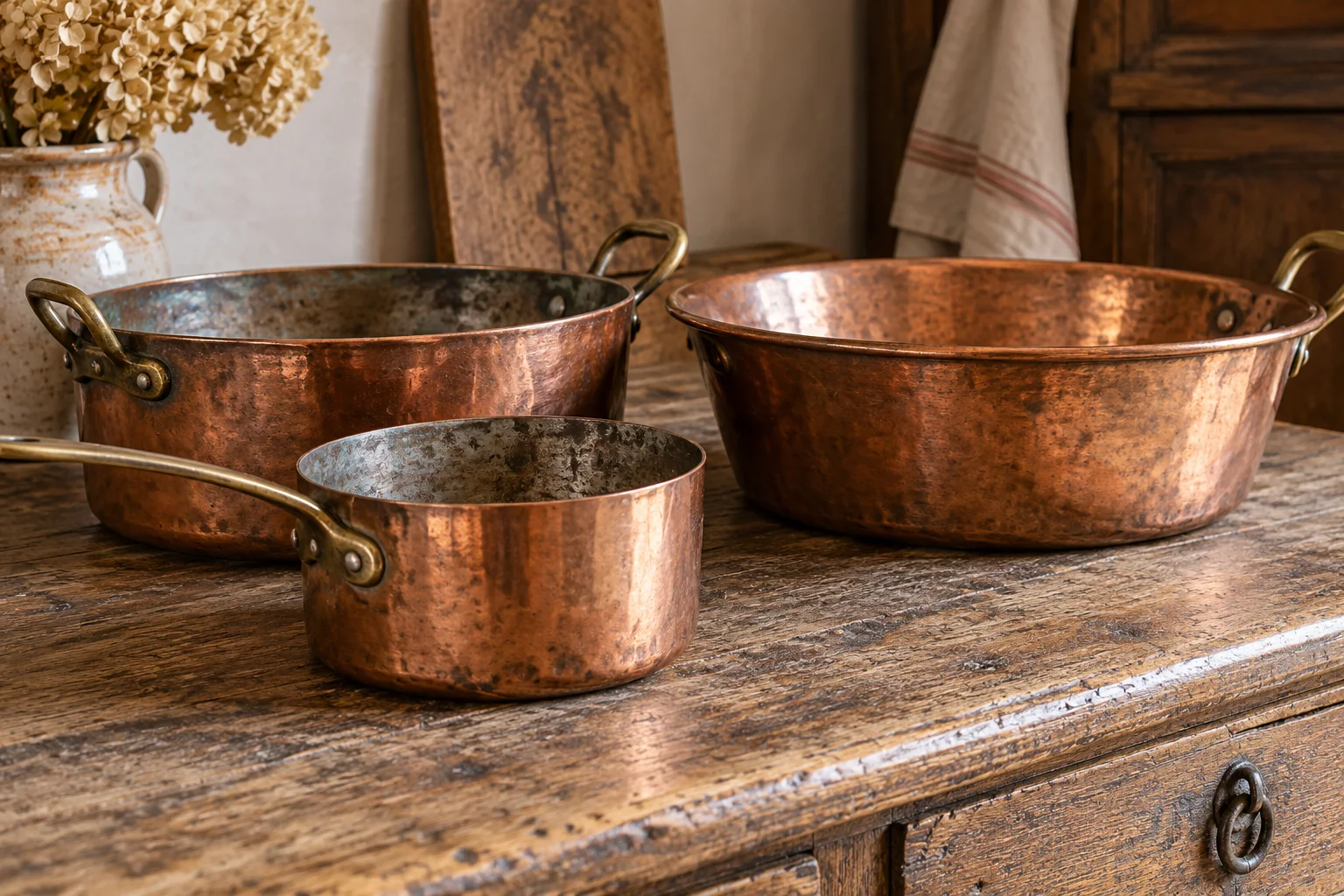
Check the tin lining and the gauge at the rim before cooking in copper.
ExploreFrench Country · An inspiration catalogue
Vintage French kitchenware is the everyday equipment of French kitchens from about 1880 to 1960: cast-iron cocottes, copper and tin, pepper mills and coffee grinders, balance scales, bread boards, preserve jars and cheese knives, much of it still fit for use. This page sorts the field and links every guide in the series.
Vintage French kitchenware attracts two kinds of buyer: cooks who want tools that outlast modern ones, and decorators who want a kitchen that looks lived in. Both are well served, because most of these pieces were made for hard daily work in farmhouses, restaurants and town kitchens. The difference between them is a single check per object, and this series is built around those checks.
The pieces that fill French markets today date mostly from the late nineteenth century to the 1960s, when industrial production made good iron, enamel, copper and glass affordable to ordinary households. Our overview of twelve French kitchenware pieces worth collecting lists them in the order a kitchen fills up, from copper pans and confit pots to a salt box and a gratin dish.
Think by material rather than by object. Iron and enamel carry heat; copper and tin conduct it; wood takes knives and bread; stoneware and glass store food. Each material ages in its own way and needs its own care, which is why a mixed shelf of copper, wood and glass looks right: every surface wears differently and honestly.
The first decision about any vintage kitchen piece is whether it will be used or displayed. A chipped cocotte, a crazed jar or a cracked board can still make a good shelf, but it should not touch food. Decide before buying, and pay the price that matches the use.
The French cocotte is a heavy lidded pot for slow cooking, in bare or enameled cast iron. Names such as Le Creuset, Cousances, Staub and Japy appear on French enameled iron; read the cast mark under the base or the lid rather than the color, and attribute only by mark. Our guide to the vintage cast iron pot and French cocottes covers marks, chips and crazing, and Lo Cantou keeps a page on the vintage cast iron pot.
French copper pans were traditionally lined with tin, which wears with use and can be renewed by a re-tinner. Thickness matters: about 2–3 mm (0.08–0.12 in) at the rim marks a pan made for cooking rather than display. The full story of gauges, linings and handles is on our French copper cookware page.
Fluted tin moulds for cakes and aspics, copper jelly moulds and glazed earthenware gratin dishes all hang well on a wall. Tin rusts once the coating wears through; keep tinned pieces dry and decorative if the surface is pitted.
The wooden table pepper mill is the most recognizable French kitchen object. According to the company's own history, the Peugeot family made its first coffee mill in 1840 and its first pepper mill in 1874. An old mill may be a Peugeot, another maker's mill or a later copy; the mark and the mechanism decide. Read French pepper mills, Peugeot grinders and antique salt cellars before buying, and remember that salt needs a mill made for salt.
Box coffee mills with a drawer, wall-mounted mills with a glass reservoir, enamel coffee pots and glass vacuum brewers all turn up in French kitchens. Check that the burrs turn freely and that the drawer and crank are original. Our guide to the vintage coffee grinder covers the types, and Lo Cantou describes vintage coffee grinders and coffee makers it has listed.
The Roberval balance, with two pans on top, and its set of brass weights measured flour in French kitchens for generations and still do. A complete set of weights matters more than shine; stamps on the weights should stay legible. Our guide to vintage kitchen scales explains how to test accuracy with a known mass.
Round bread boards with a handle, thick chopping boards and end-grain butcher blocks in beech, elm, walnut or oak carry the knife marks of their first kitchen. Shallow surface checks are normal; a crack that goes right through is not. See vintage cutting boards and French bread boards, and Lo Cantou's selection of antique bread boards.
The French clamp jar, sealed by a glass lid, a rubber ring and a wire bail, is the family of the Le Parfait jar; American Mason-type jars close with a screw lid. Keep old jars for dry storage and display, and do home canning only in current jars with new seals. Our guide to vintage canning jars shows how to date a jar from its glass and closure.
A French cheese course brings its own tools: a forked-tip knife for hard cheeses, a holed blade for soft ones, a wire or a girolle for some, and a wooden board or a plateau à fromage under a glass cloche. Old handles in bone, horn or celluloid need hand washing. Read our guide to cheese knives, boards and care, and see Lo Cantou's cheese knives and serveware.
Enamel chipped inside a pot exposes iron that rusts and flakes into food; keep such a pot for display or for dry storage. Fine crazing on the outside is cosmetic. Bare cast iron with surface rust can usually be scrubbed and re-seasoned with a thin coat of oil baked on; deep pitting or a crack in the base ends its cooking life.
Never cook acidic food in copper where the tin lining has worn through to red metal; have it re-tinned first. Polish the outside only as often as you like the look, since each polish removes a little metal. The Canadian Conservation Institute's guidance on caring for metal objects explains how metals corrode and how to store them dry.
Wash wooden boards by hand, dry them standing on edge, and oil them with a food-safe mineral oil when they look pale. Never soak them or put them in a dishwasher. Glass jars with chips at the rim cannot seal; use them for pasta, beans or utensils. For wooden handles and boards, the CCI notes on basic care of wooden objects give the conservation view.
Buy the pieces you will use every week first: a cocotte of about 9–11 in (24–28 cm) diameter for stews, a bread board, a pepper mill, a set of preserve jars for dry goods. Display pieces such as moulds, scales and coffee grinders come next, and complete the look once the working core is in place.
A French country kitchen was never bought in one go. Copper from one decade, enamel from another and a board from a third read as a kitchen that grew over time. Keep one or two metals and one wood tone to hold the mix together, and give every piece a job or a place on a rail.
Buy from sellers who show marks, linings and chips in photographs; Lo Cantou's French country kitchen selection is described that way. A designer equipping a client kitchen can send a brief to Antiques 360 for documented copper, tableware and kitchen pieces, with the landed cost known upfront.
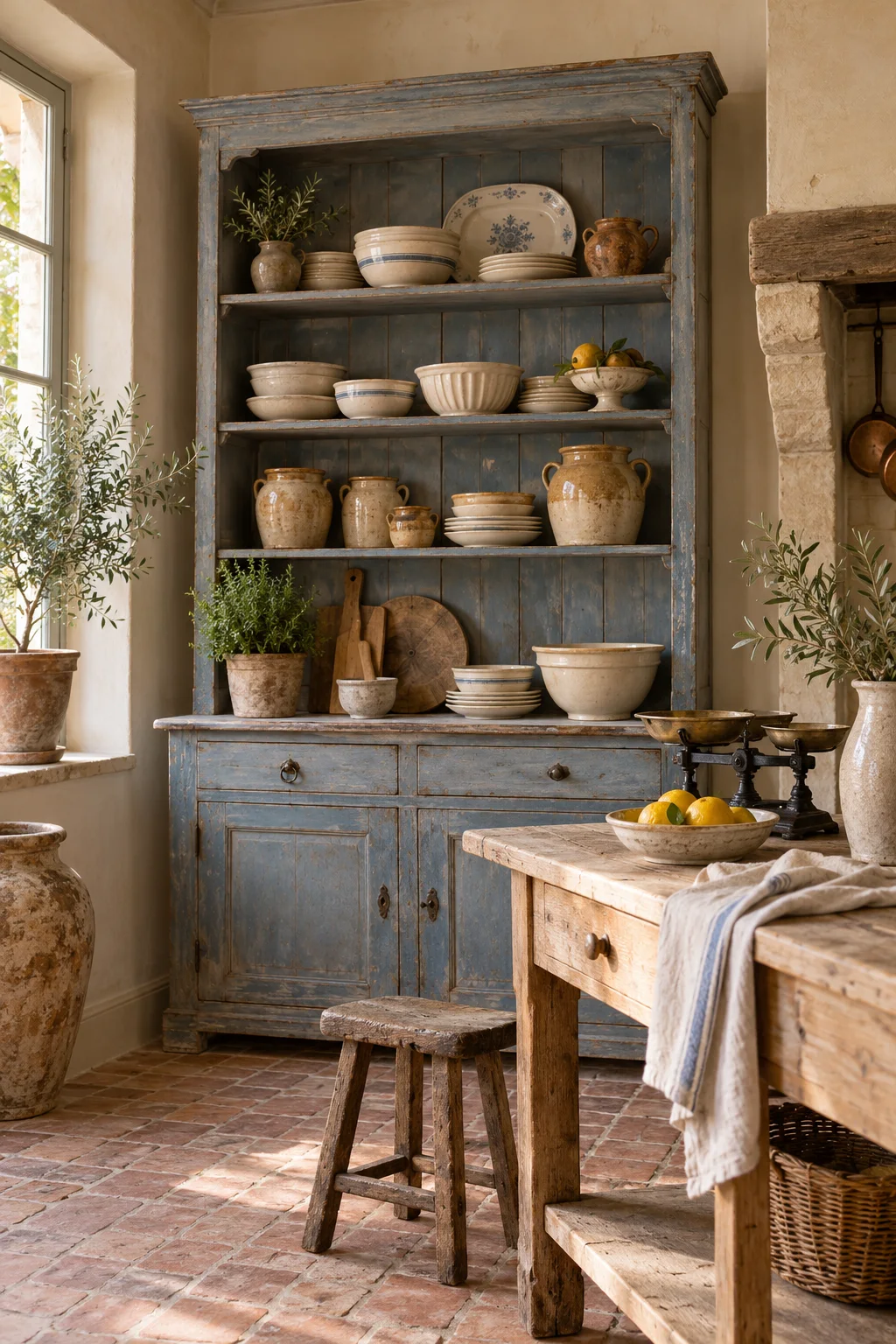
In the kitchen, copper hangs from a rail over the stove, jars line an open shelf and the cocotte stays on the range. Our French country kitchen page shows how the layout works around a dresser and a scrubbed table.
Boards, cheese knives, salt cellars and a pepper mill move to the table in the dining room. Our page on French country tableware shows how they sit beside faience plates and bistro glasses.
Stoneware jars, preserve jars and scales suit a pantry or a laundry room with shelves, and a cool cellar takes demijohns and crocks. For the wider picture, our French country antiques guide explains what to look for in each category.
Each guide takes one piece of vintage French kitchenware, with the checks that decide whether it is a tool or an ornament. New guides are added as they are published.
AI-created styling ideaTableware & kitchen
Check the tin lining and the gauge at the rim before cooking in copper.
Explore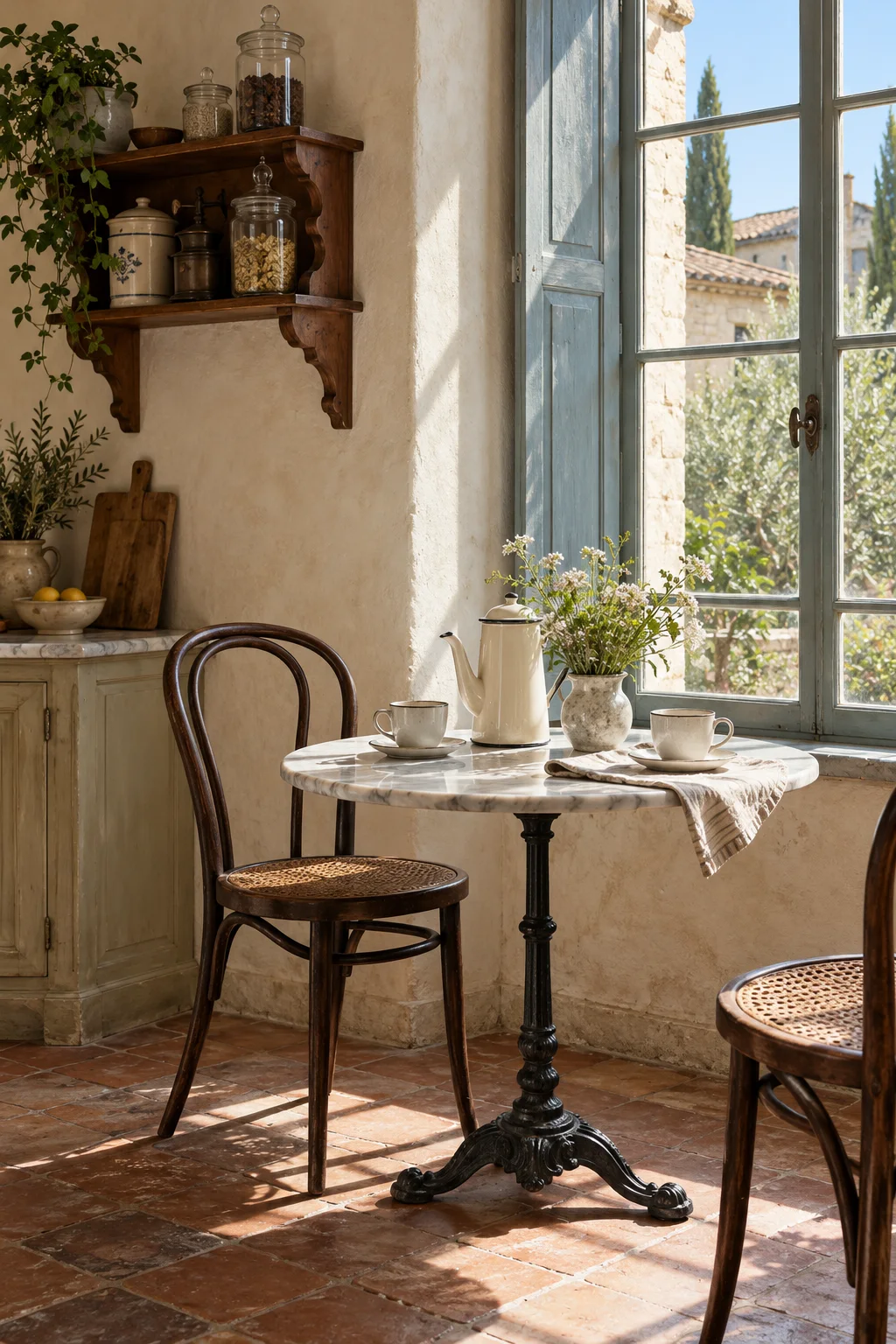 AI-created styling idea
Tableware & kitchen
Old jars for dry goods and display; new seals for anything preserved.
Explore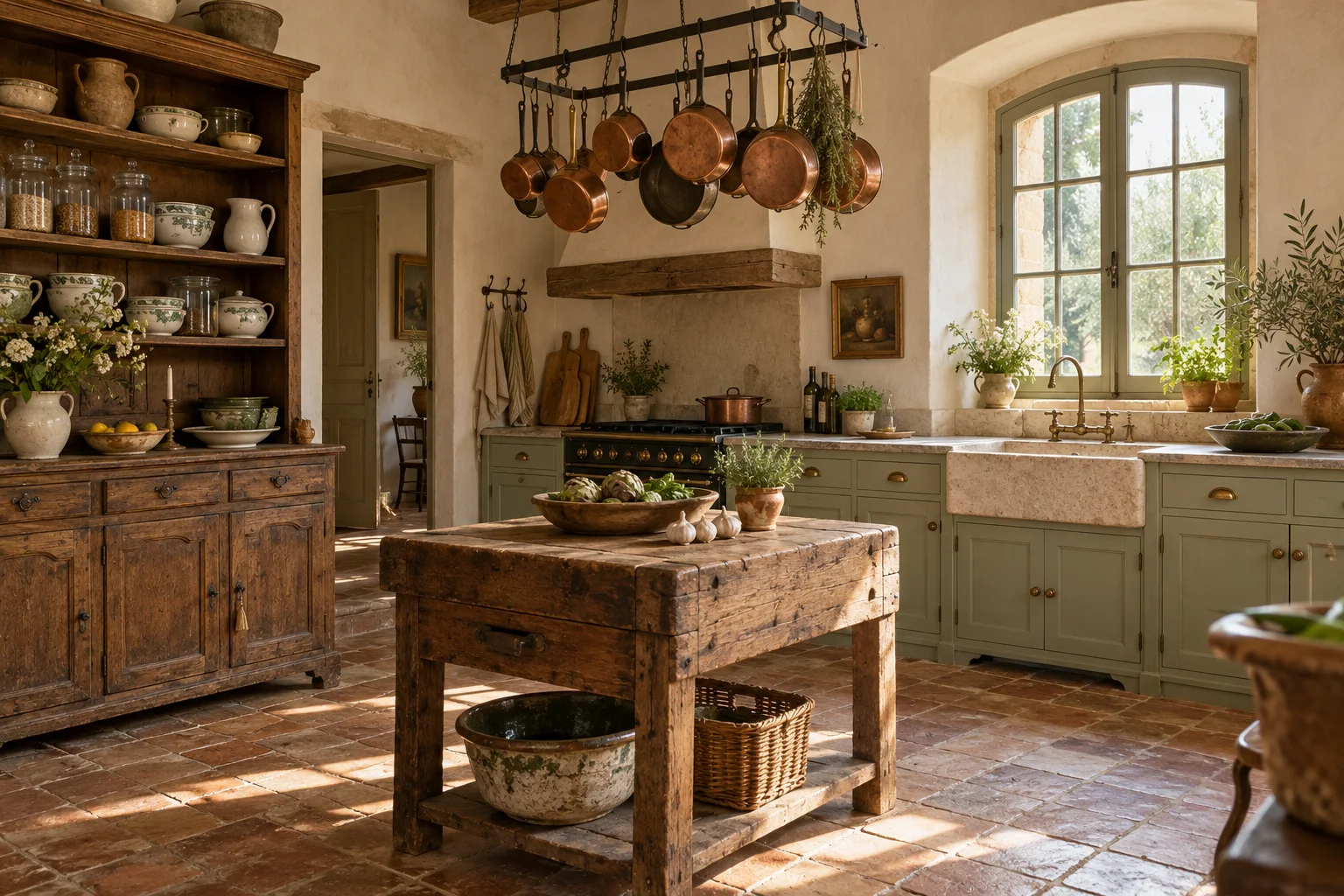 AI-created styling idea
Tableware & kitchen
A complete set of weights matters more than a bright polish.
Explore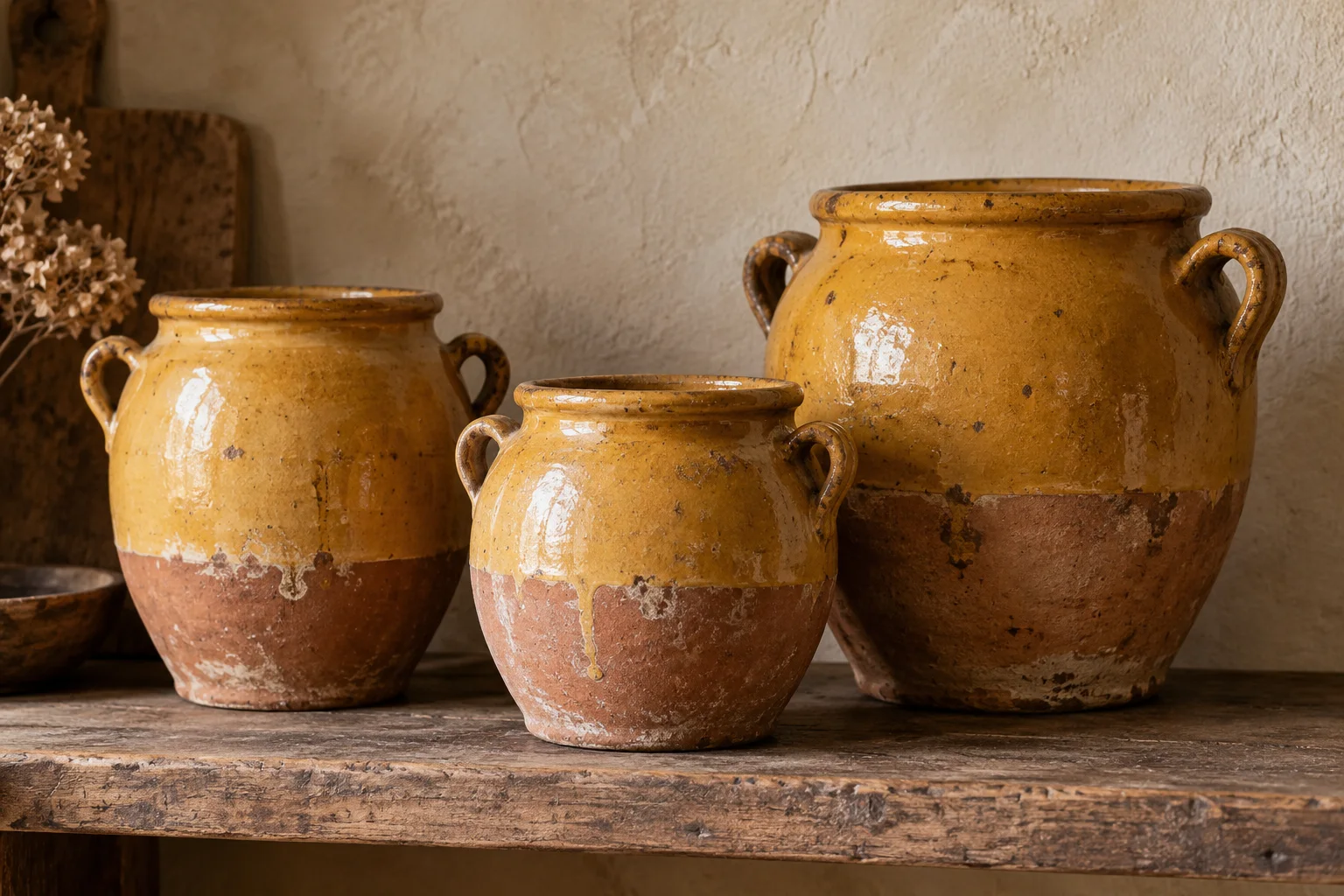 AI-created styling idea
Tableware & kitchen
Tap for cracks and keep crazed earthenware away from long food storage.
Explore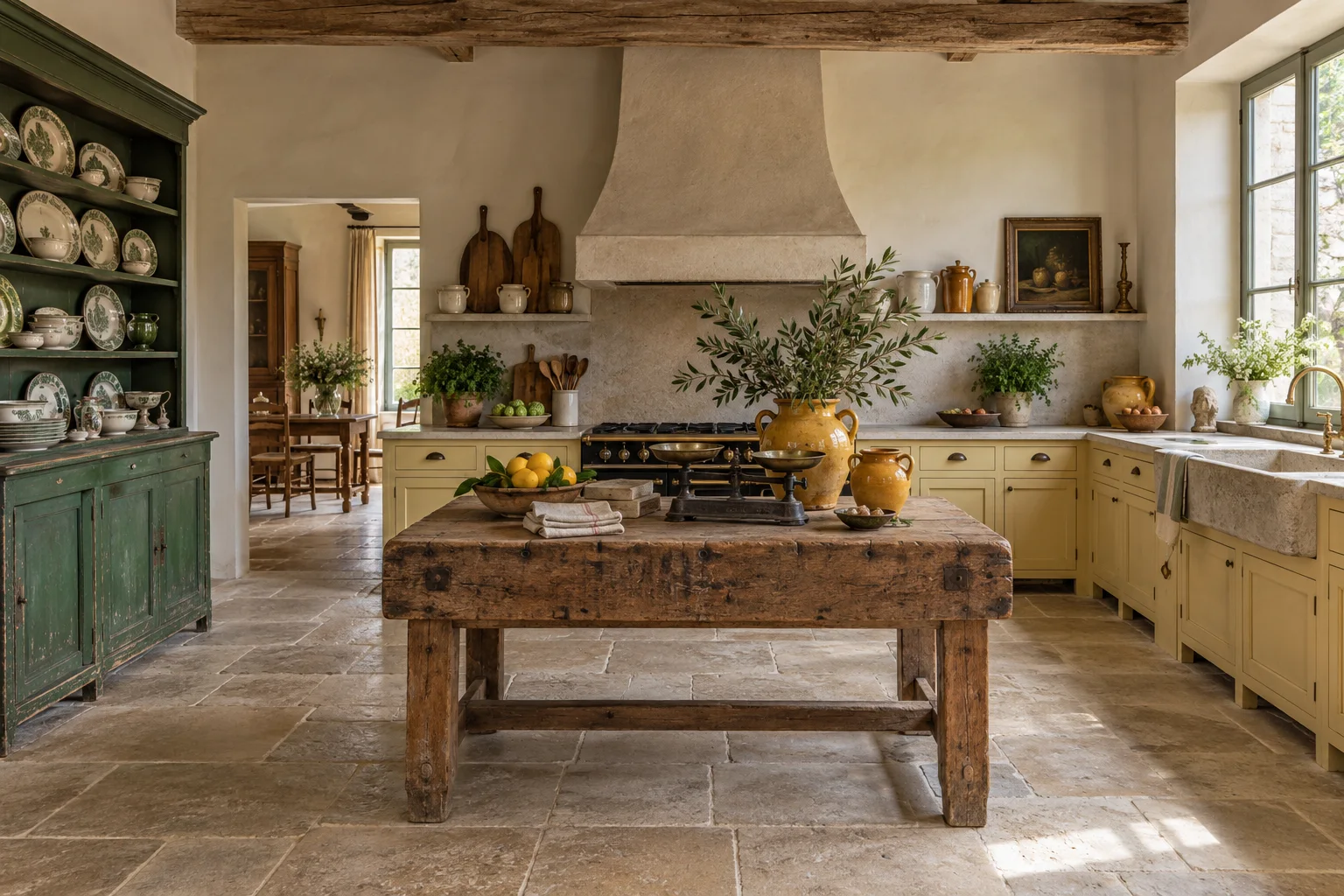 AI-created styling idea
Tableware
Boards, trays and bread bins: look for cracks that go right through.
ExploreAI-created styling ideaTableware & kitchen
Enamel and glass pitchers: check the lip and the handle joins first.
ExploreMuch of it is, once checked. Sound enameled cast iron, re-seasoned bare iron, and copper with an intact tin lining cook well. Do not cook in enamel that is chipped inside, in copper worn through to red metal, or in crazed old earthenware. Old canning jars are for dry storage and display; preserve only in current jars with new seals.
Look for the Peugeot name or lion mark on the mechanism, the base or the top nut, and check that the mechanism matches the period of the body. Many mills of similar shape were made by other firms or are later copies. Without a mark, describe the mill by wood, mechanism and condition rather than by maker.
Buy the pieces you will use each week: a cast-iron cocotte, a wooden bread board, a pepper mill and a set of preserve jars for dry goods. Add display pieces such as tin moulds, a balance scale and a coffee grinder afterwards. A working core first makes the decorative pieces look as if they belong.
Scrape off crumbs, wash quickly with warm water and a little soap, and dry the board standing on its edge so both faces breathe. Never soak it or put it in the dishwasher. When the wood looks pale or dry, rub in a thin coat of food-safe mineral oil and leave it overnight before using it again.
Chips on the outside or on the rim are mostly cosmetic, though exposed iron should be kept dry to stop rust spreading. Chips on the inside cooking surface are a different matter: exposed iron rusts and loose enamel can flake into food. Keep a pot with interior chips for display, for dried flowers or for storing utensils.
Nov 6, 2026 · Antique guide
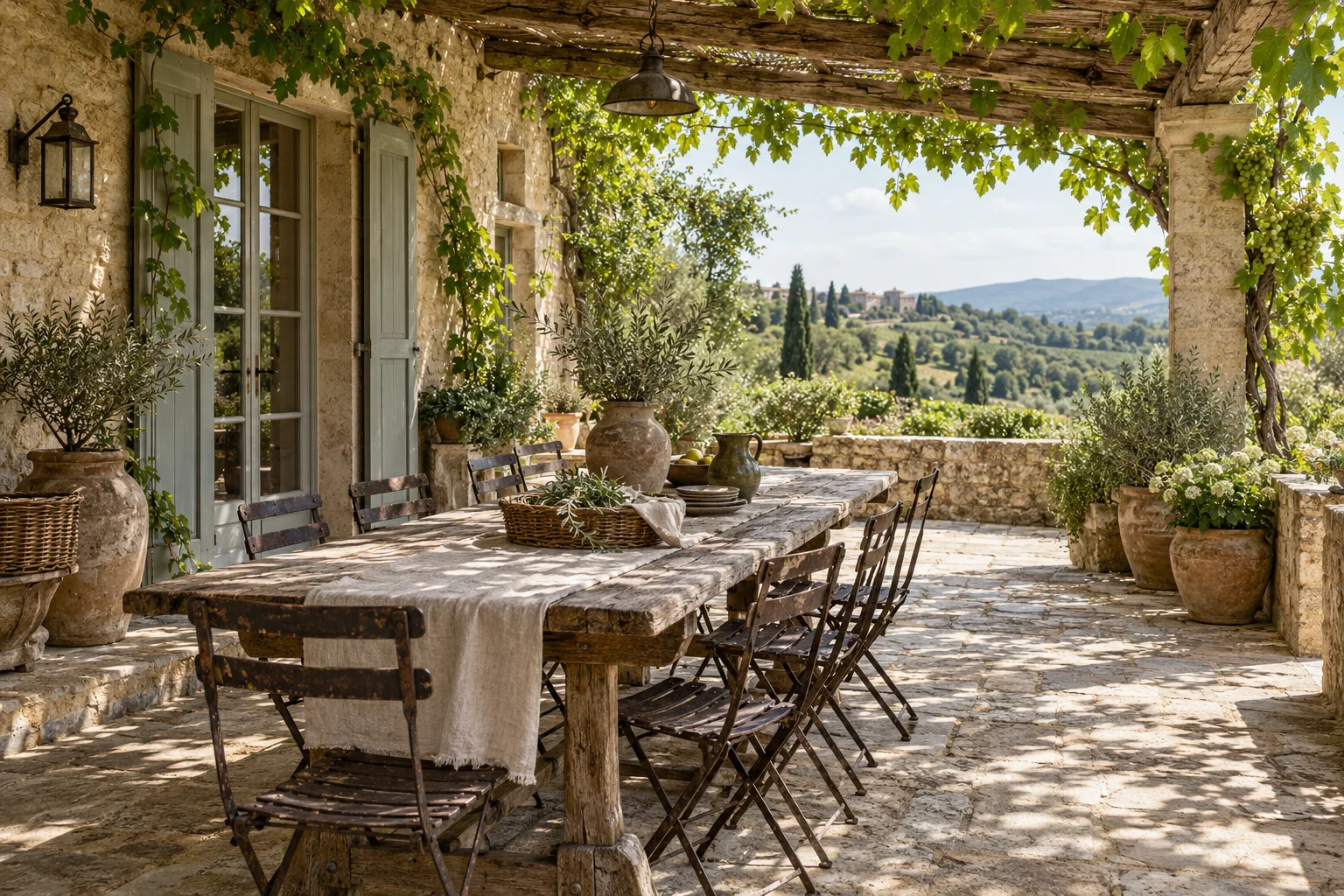
Vintage metal chairs bring the terrace indoors.
Nov 6, 2026 · Antique guide
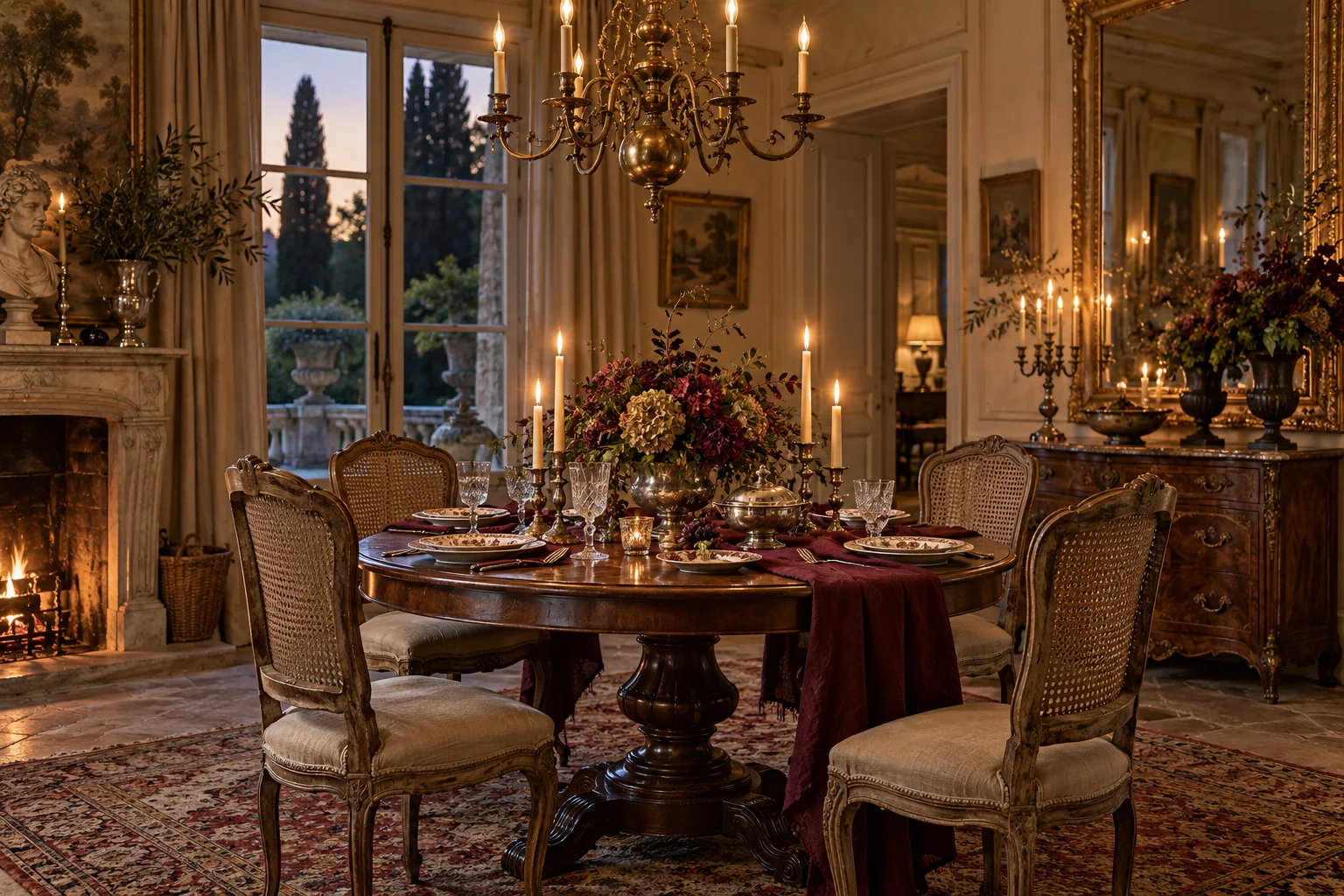
A French country Thanksgiving table takes its look from the farmhouse: a linen cloth, white ironstone or faience plates, mixed silverplate, short bistro glasses,…
Nov 6, 2026 · Antique guide
French kitchenware from 1880 to 1960 was made for daily work, which is why the good pieces are still at it.
Nov 5, 2026 · Antique guide
Vintage silver and vintage silverplate look alike on a sideboard and behave differently in the hand, in the sink and at resale.
Nov 5, 2026 · Antique guide
Vintage pottery from French kitchens and workshops falls into two bodies and three glazes.
Nov 5, 2026 · Antique guide
An antique magazine rack is one of the few small antiques that still does its original job and several new ones.