Reading the ladder-back form
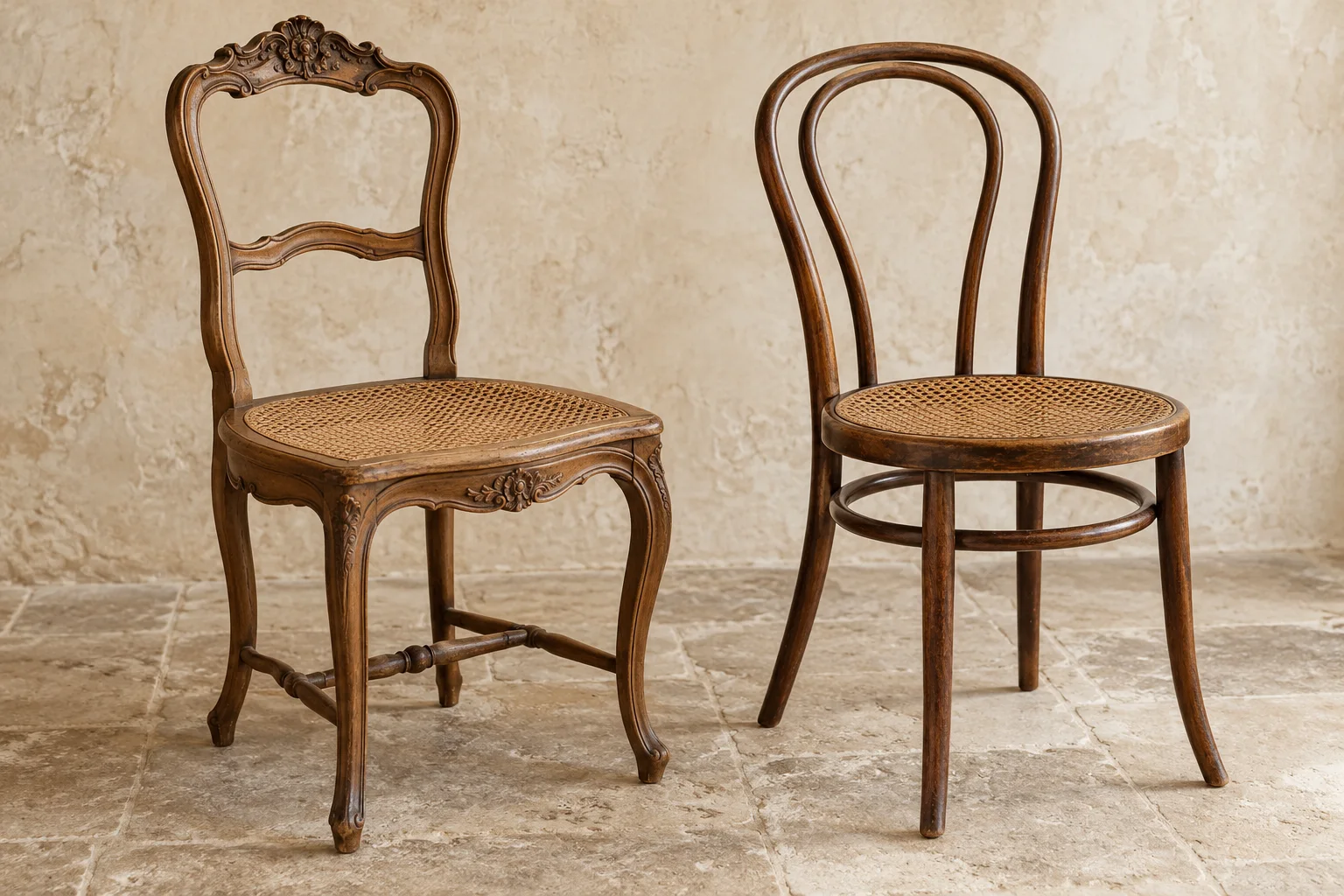
The back is the identity of an antique ladder back chair: slats of equal width stacked between two posts, or slats that widen toward the top, sometimes arched or pierced with a small cut-out. Back heights run from 36 to 42 in (91–107 cm), taller than most dining chairs, which gives the form its presence at a kitchen table. The posts are turned, with a finial at the top on finer chairs.
The legs are turned too, joined by stretchers at two heights, with the front stretcher worn hollow by generations of heels. Wear in the right places is the best evidence of age: the front stretcher, the top slat where hands pull the chair, the outer edges of the rush. Fresh end grain under the feet means shortened legs, a common fate on stone floors.
The seat is rush, woven in a pattern of four triangles meeting at the centre, over rails that are often round in section. Our bistro and dining chairs catalogue separates ladder-backs from the lower chaise paillée by back height; our guide to choosing antique chairs covers the general checks.
Regional forms and what they suggest
Provence favoured mulberry, walnut and painted beech, with slats that curve gently and sometimes a rush seat dyed in green or ochre. The Southwest, between Toulouse and the Pyrenees, used walnut and cherry, with plainer slats and heavier turnings suited to farm kitchens. Northern workshops produced beech and elm chairs in larger numbers, often stained dark, for cafés and dining rooms.
These regional habits are descriptions, not attributions. A chair with Provençal features may have been made in a Lyon factory in 1920; a painted chair may have been painted last year. Attribute a region only when a seller documents the provenance, and judge the chair on its joints, its wear and the quality of the rush.
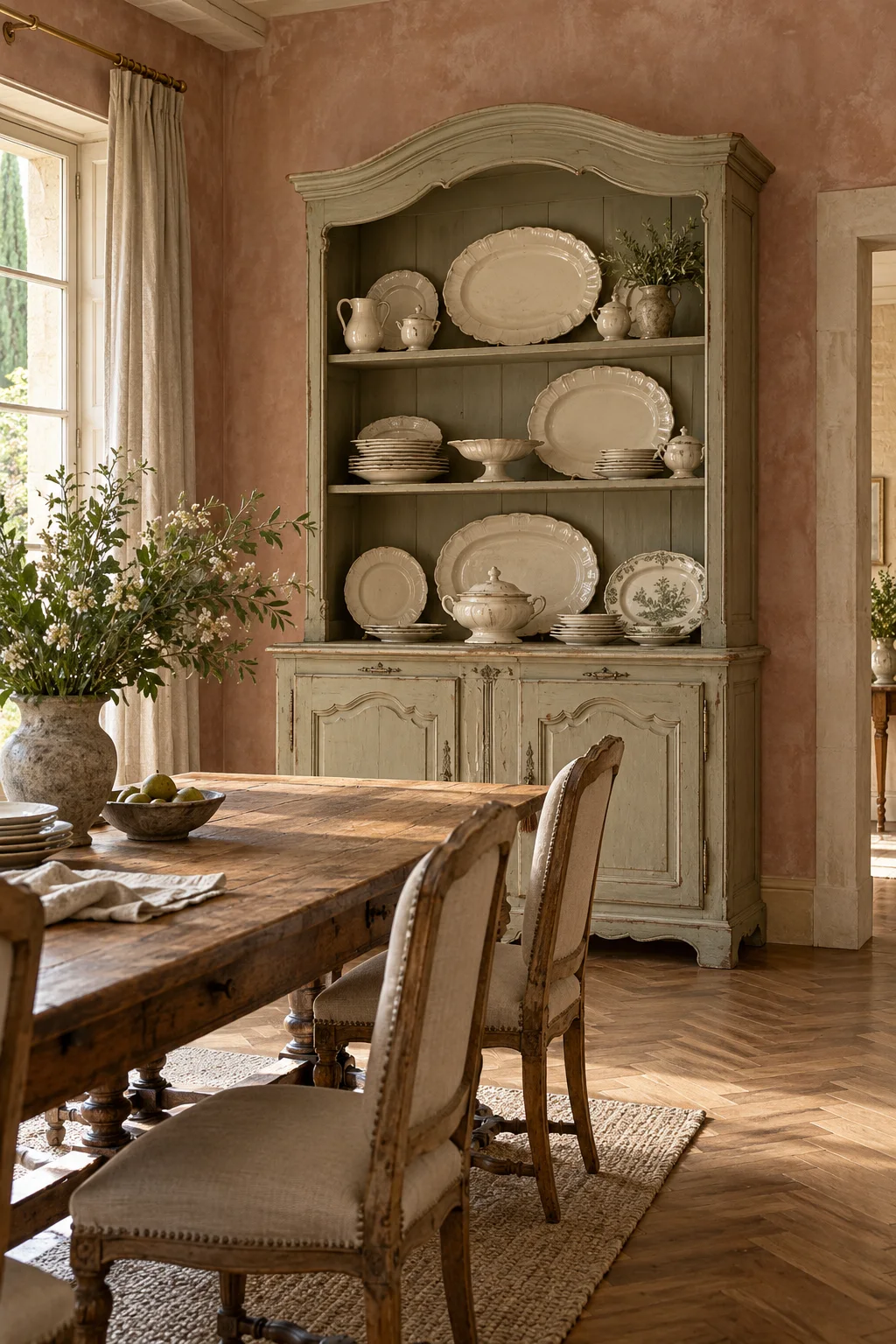
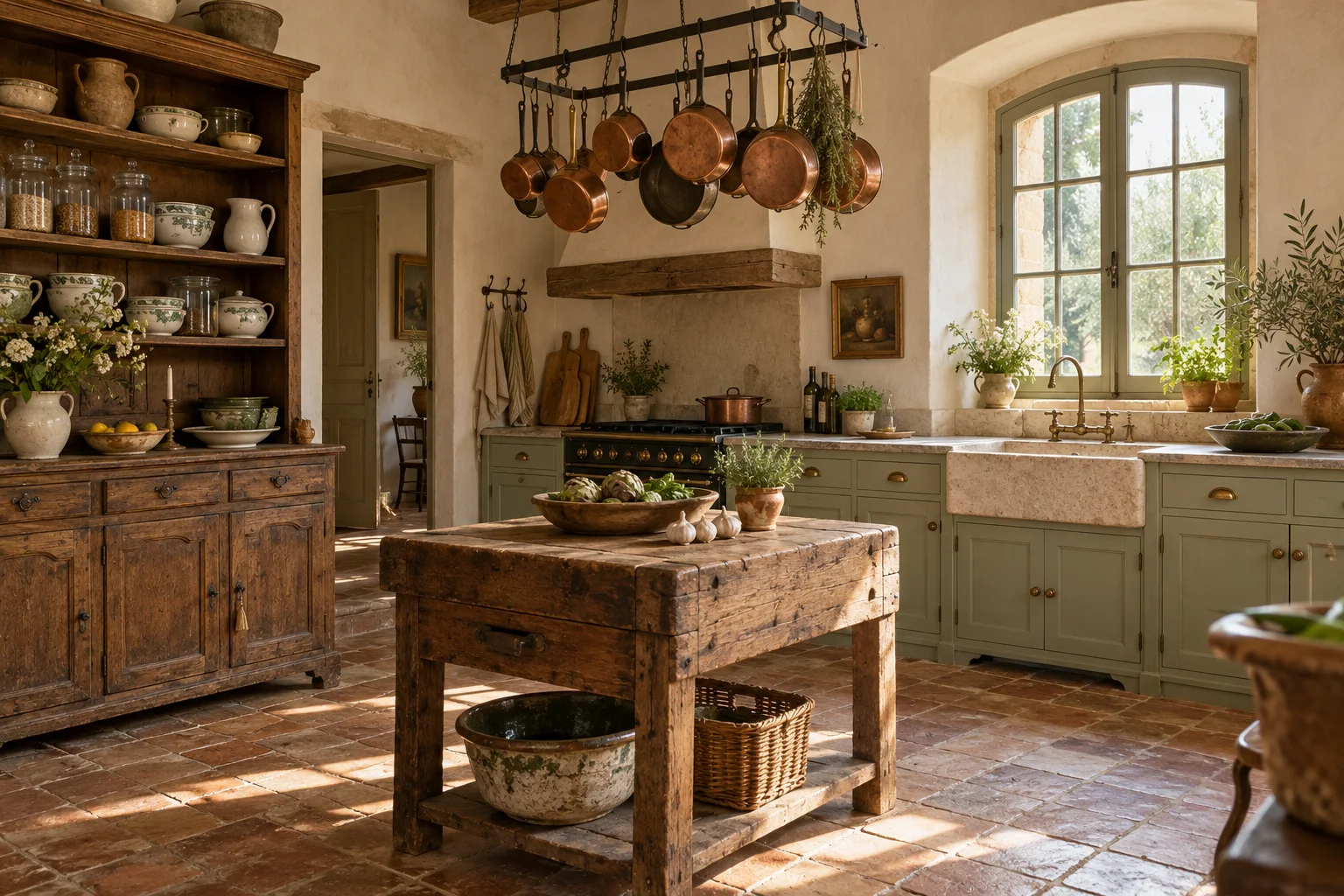
In the house, ladder-backs suit the kitchen and the dining room alike, and a single one by a bed holds a lamp and a book. The Gascon farmhouse style pages show them with copper and confit pots.
Re-rushing, care and sizing at a table
A rush seat lasts decades, then sags into a hollow with loose strands at the edges. Re-rushing replaces the whole seat; a weaver works from the corners inward over several hours per chair, and the new rush darkens over a year. Ask whether natural rush or paper rush will be used, and keep the old seat if the chair is documented. Never soak rush to clean it; a soft brush and a dry cloth are enough.
At a table of 29–30 in (74–76 cm), the seat should sit at 17–19 in (43–48 cm), measured at the front edge, with the back slats clearing the table edge when the chair is pushed in. The tall back needs 36 in (91 cm) of clearance behind the chair to pull it out. Allow 22–24 in (56–61 cm) of table edge per ladder-back, slightly less than for armchairs.
A set of six matched ladder-backs is rare; four plus two of another rush-seated form is the practical answer, with seat heights within 1 in (2.5 cm). For the whole table, see our guide to French country dining tables and the French country chairs overview.
What to compare
| Form | Suggested Use | Decisive Check |
|---|---|---|
| Walnut or cherry ladder-back | Farmhouse dining table | Front stretcher wear, feet not shortened |
| Painted beech ladder-back | Kitchen, bedroom corner | Paint layers original, rush firm |
| Tall five-slat chair | Head of the table | Back clears the table, 36 in behind to pull out |
Your buying checklist
Continue planning your room
Frequently asked questions
What makes a chair a ladder-back?
A back built of three to five horizontal slats stacked between two turned posts, like the rungs of a ladder, usually above a woven rush seat and turned legs with stretchers. French ladder-backs stand 36–42 in (91–107 cm) high, taller than most dining chairs.
How much does it cost to re-rush a chair?
Prices depend on the weaver, the region and whether natural or paper rush is used, so ask for a quote per chair. The work takes several hours per seat and the new rush darkens over a year. Keep the old seat if the chair has documented provenance, and never soak rush to clean it.
Are antique ladder-back chairs comfortable?
They are upright rather than lounging chairs, built for meals. A seat height of 17–19 in (43–48 cm) and a back that leans slightly make them comfortable for an hour at the table; a flat cushion tied to the posts softens the rush for longer dinners.
How do I know where a ladder-back chair was made?
You usually cannot from the chair alone. Walnut and cherry with heavy turnings suggest the Southwest, painted beech and curved slats suggest Provence, dark-stained beech and elm suggest northern factories, but these are habits, not proofs. Only documented provenance attributes a region.
Sources & further reading
- Canadian Conservation Institute — Basic care: furniture and objects made of wood — Care of wooden chairs and plant-fibre seats: dry cleaning, avoiding damp and preserving finishes.