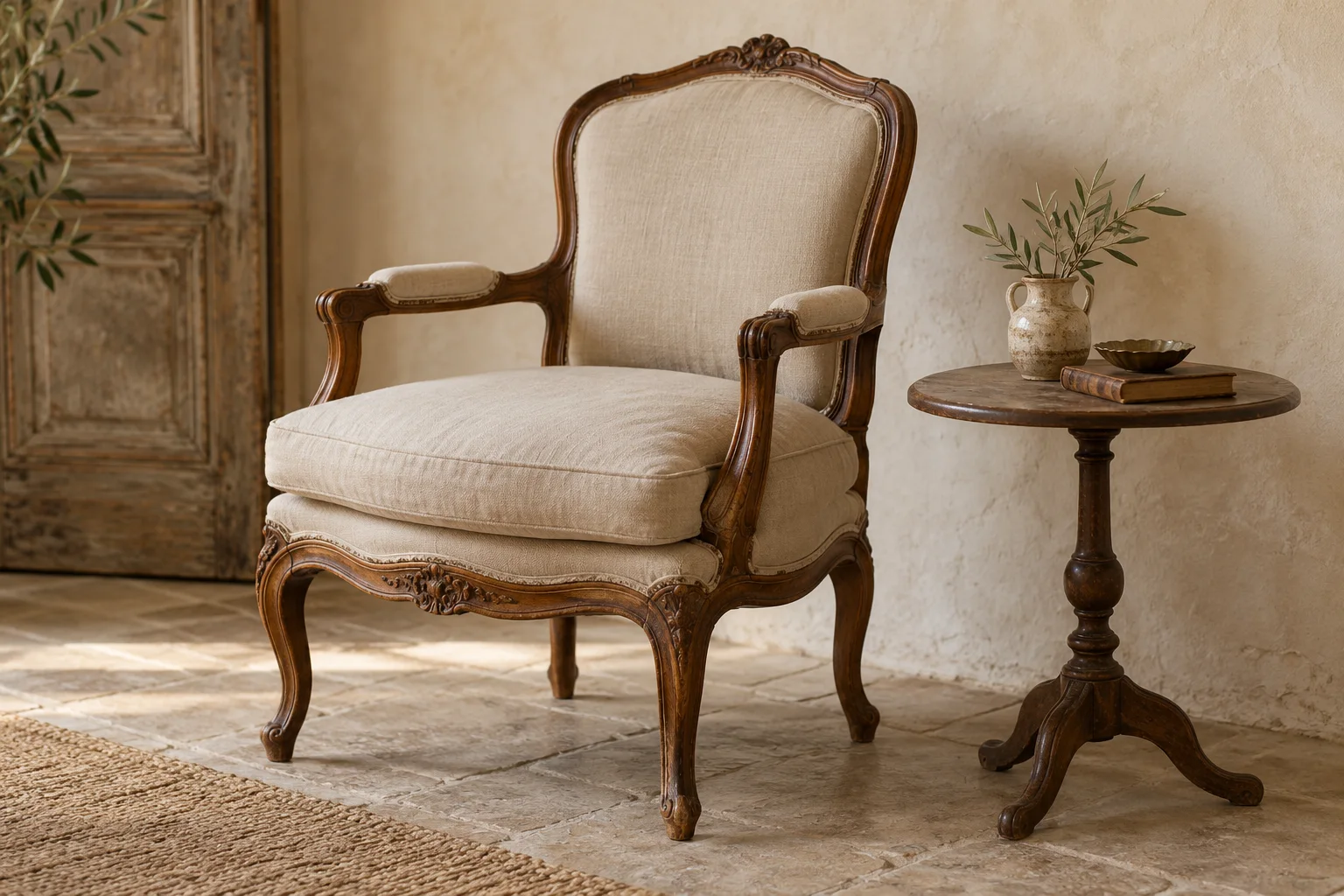
 AI-created styling idea
Seating
Antique armchairs
Check the frame joints and ask whether carving and upholstery are original before choosing a fabric.
ExploreFrench Country · An inspiration catalogue
French Provincial style is the furniture and decor of the French regions read through the curves of the Paris court: carved walnut and fruitwood, cabriole legs, faded color and rooms built for daily use rather than display.
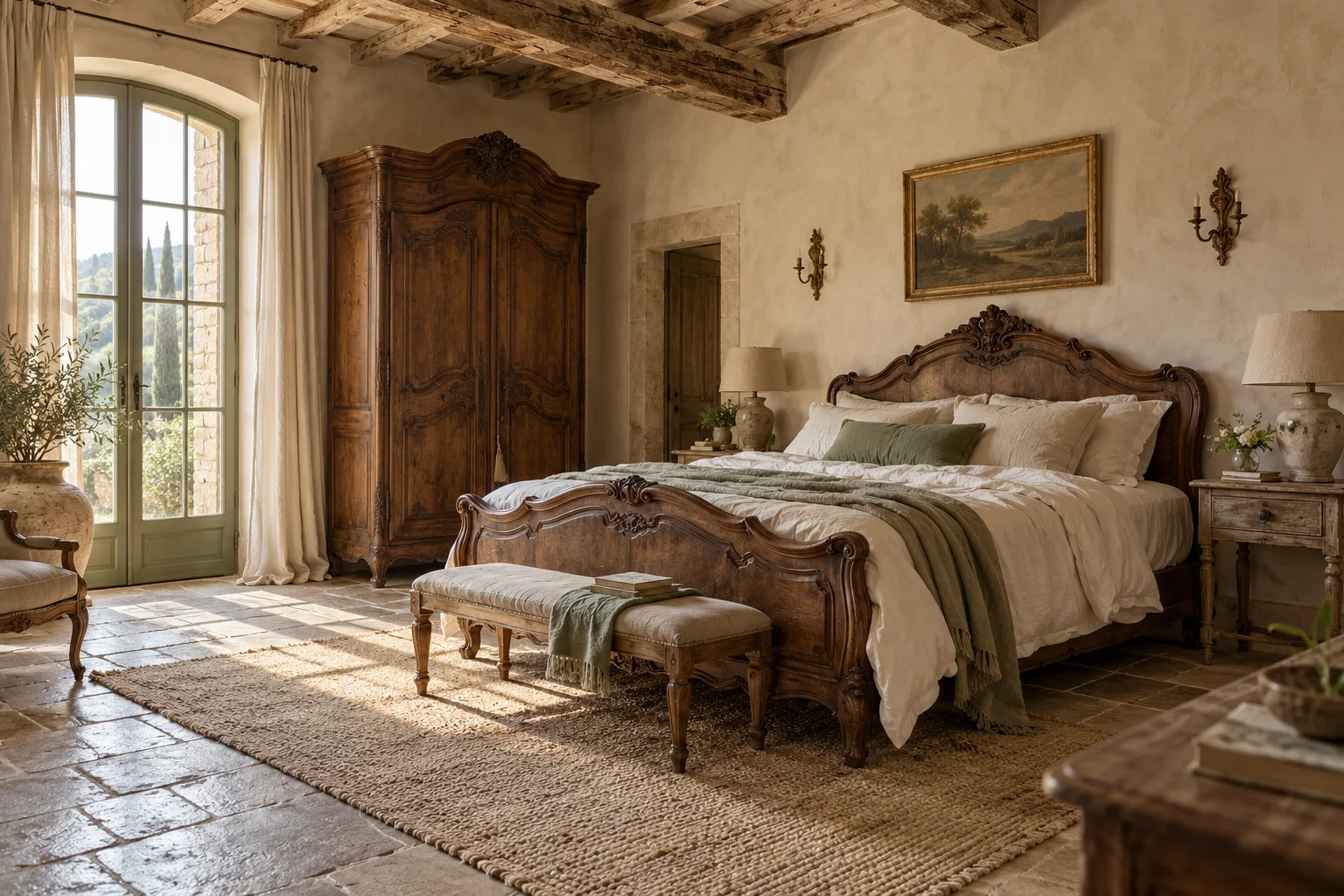
French Provincial style took shape in the eighteenth century, when joiners in Provence, Normandy, Burgundy, Lorraine and the southwest copied the furniture shapes fashionable in Paris and Versailles. They worked in local solid wood rather than imported veneers, simplified the ornament and built for families who kept one armoire for generations. The Louis XV curve, with its cabriole leg and shaped apron, became the most lasting provincial form. The Met's essay on eighteenth-century French case furniture shows the Paris models the regions adapted.
Each region kept its own accent. Provençal pieces favor walnut and fruitwood, carved flowers and pierced bread cupboards called panetières. Norman armoires carry dense floral carving in oak and are often linked with marriage gifts. Pieces from Lorraine and the Alps tend to be plainer. A regional label describes a type; attribute a piece to a region only when wood, construction and provenance agree.
Provincial workshops kept making Louis XV forms well into the nineteenth century, and factories reproduced them through the twentieth. In the United States, the name French Provincial was also used from the mid-twentieth century for factory bedroom sets, often painted white with gilt trim. A style name describes an inspiration, not a documented date; our note on reading Louis XV furniture without dating it explains the difference.
Solid walnut, oak, cherry, pear and chestnut carry the French Provincial interior, usually waxed rather than lacquered. Marble tops appear on commodes and bedside tables, rush seats on ladder-back chairs, and hand-forged iron or brass on hinges and keyhole plates. Linen, cotton ticking and printed cottons soften the wood. Stone or terracotta floors, limewashed walls and exposed beams complete the room.
The colors come from the landscape: ochre, olive, lavender, faded blue, sun-bleached cream and the warm brown of waxed walnut. Painted furniture often shows gray-green, pale blue or off-white. Keep walls light and let the wood supply the depth. Two accent colors repeated in textiles and ceramics usually give French Provincial decor its calm.
Look for the cabriole leg ending in a scroll foot, the shaped apron under a table or commode, carved shells, flowers and baskets, and long hinges called fiches. Chairs and bergères, the closed-arm upholstered armchairs, show a carved top rail. One or two carved motifs per piece is typical; heavy carving on every surface often signals later work.
Separate the decorative choice from the checks. Ask for dimensions in inches and centimeters, the wood, every repair photographed and whether the piece is antique, vintage or reproduction. Armoires often stand 85–95 in / 216–241 cm, so measure ceilings and stair turns; many dismantle with pegs. Homeowners can browse French Provincial furniture listings at Lo Cantou; designers can send a sourcing brief to Antiques 360 for documented pieces with the landed cost known upfront.
Start with one case piece, such as a walnut commode or a low buffet, and two carved armchairs facing a linen sofa. A gilt or carved mirror above the mantel adds height. Keep the coffee table simple, in waxed wood or stone, about 16–18 in / 41–46 cm from the sofa. Our French country living room guide covers layout around a fireplace.
The bedroom is where the style feels most complete. A carved bed or a painted headboard, an armoire for linen and a pair of marble-topped bedside tables are enough. Choose white or flax bedding and one printed fabric, such as toile at the window. For proportions and storage, see our French country bedroom ideas.
A long walnut or oak table, rush-seated ladder-back chairs and a two-part buffet or vaisselier, a dresser with a plate rack, define the dining room. Allow about 24 in / 61 cm of table length per diner. Ochre and green glazed earthenware belongs on open shelves. See the French country kitchen guide and our notes on choosing a country dining table.
A small walnut console or a demi-lune table with a mirror above sets the tone at the door. Outdoors, Provençal gardens rely on gravel, clipped box, lavender and large glazed jars. Iron chairs and a stone table carry the style into the shade. Our French country garden page lists planters and furniture suited to your climate.
Lighten the room without moving furniture. Replace wool throws with linen, roll up heavy rugs in a stone-floored room and fill a faience pitcher with lavender, olive branches or garden roses. Pale blue and yellow Provençal prints on cushions and tablecloths suit the season. Move one small table outdoors for meals in the shade.
Bring back warmth with wool, velvet cushions in ochre or deep red, and brass that catches candlelight. A bowl of quinces or walnuts on a buffet does more than seasonal ornaments. Close shutters and lined curtains at dusk; old houses relied on them, and they still help a high-ceilinged room keep its heat.
For a holiday table, lay white linen, mix faience with silverplate and set brass candlesticks in pairs. Keep centerpieces under 12 in / 30 cm so guests can see each other. Provence keeps the custom of thirteen desserts at Christmas, and a buffet laid with small dishes suits the style. Our French country Christmas decor article has more ideas.
The two overlap, but the emphasis differs. French country decor leans rustic and informal, with farmhouse tables, baskets and an easy mix of new and old. French Provincial style puts the furniture first: curved silhouettes, carving and a more ordered room. A provincial commode can refine a country room, and a country table can relax a provincial one.
The Gascon farmhouse style of the southwest is plainer still, with heavy oak, stone sinks and very little carving. At the other end, chateaucore and castlecore borrow from grand houses: gilt, crystal and carved paneling. French Provincial sits between the two, refined but domestic.
Shabby chic decor often uses provincial shapes but paints them white and distresses the edges. French Provincial pieces more often keep waxed wood or original paint. If a listing says distressed, ask whether the wear comes from use or was applied for effect.
AI-created styling ideaSeating
Check the frame joints and ask whether carving and upholstery are original before choosing a fabric.
Explore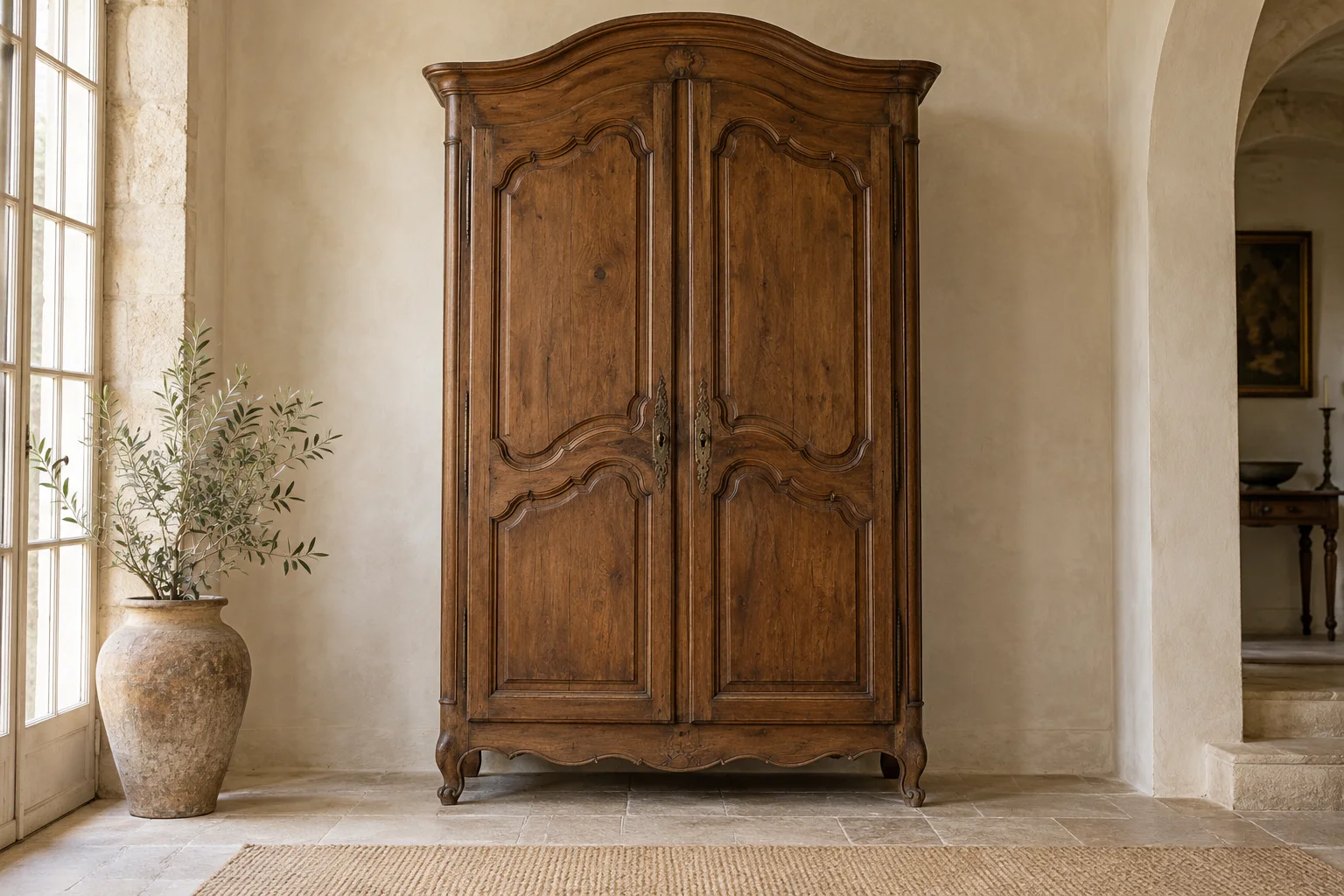 AI-created styling idea
Furniture
Measure height, depth and stair turns, and ask whether the armoire dismantles with pegs.
Explore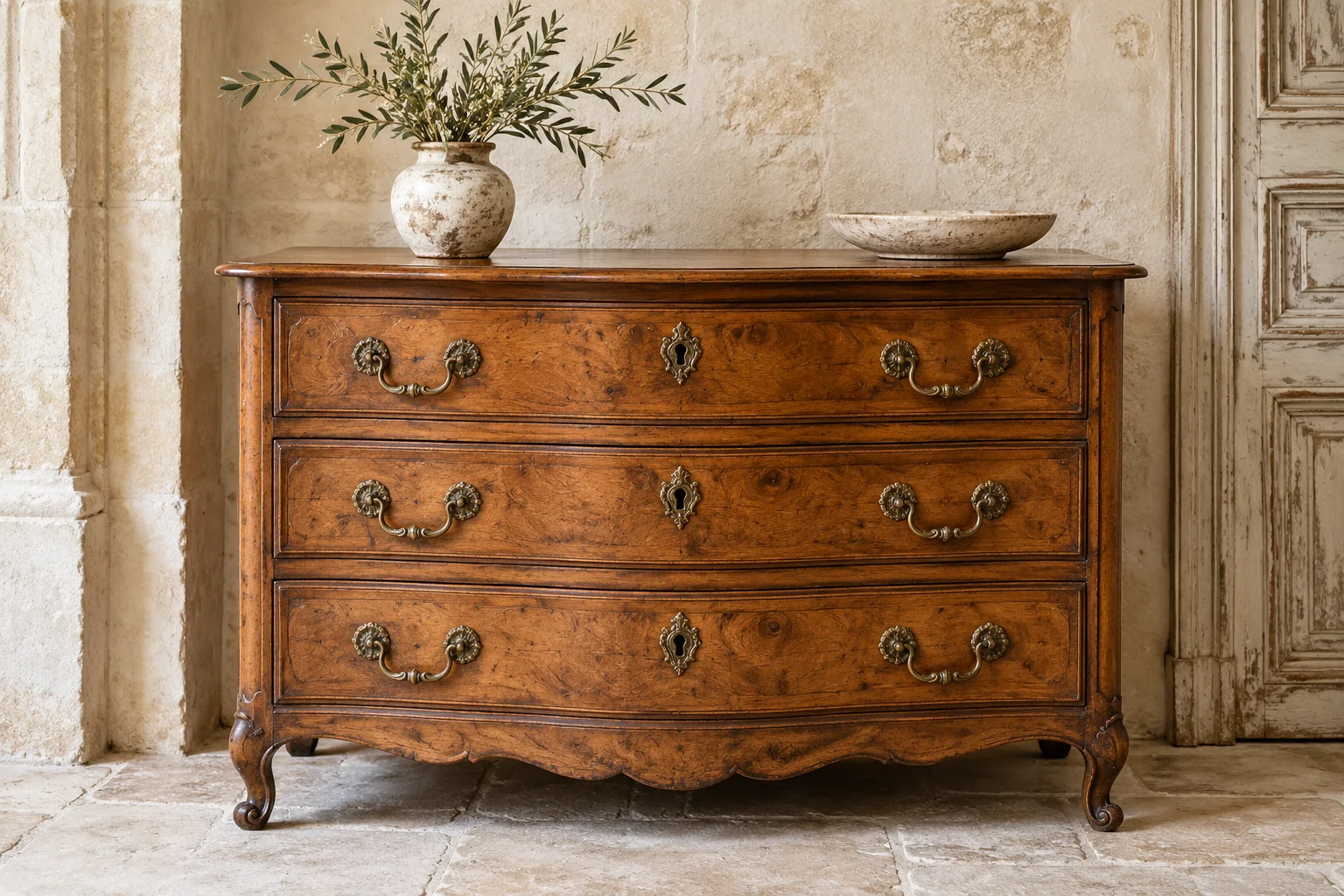 AI-created styling idea
Furniture
Open every drawer, check the runners and ask whether the marble or wood top is original.
Explore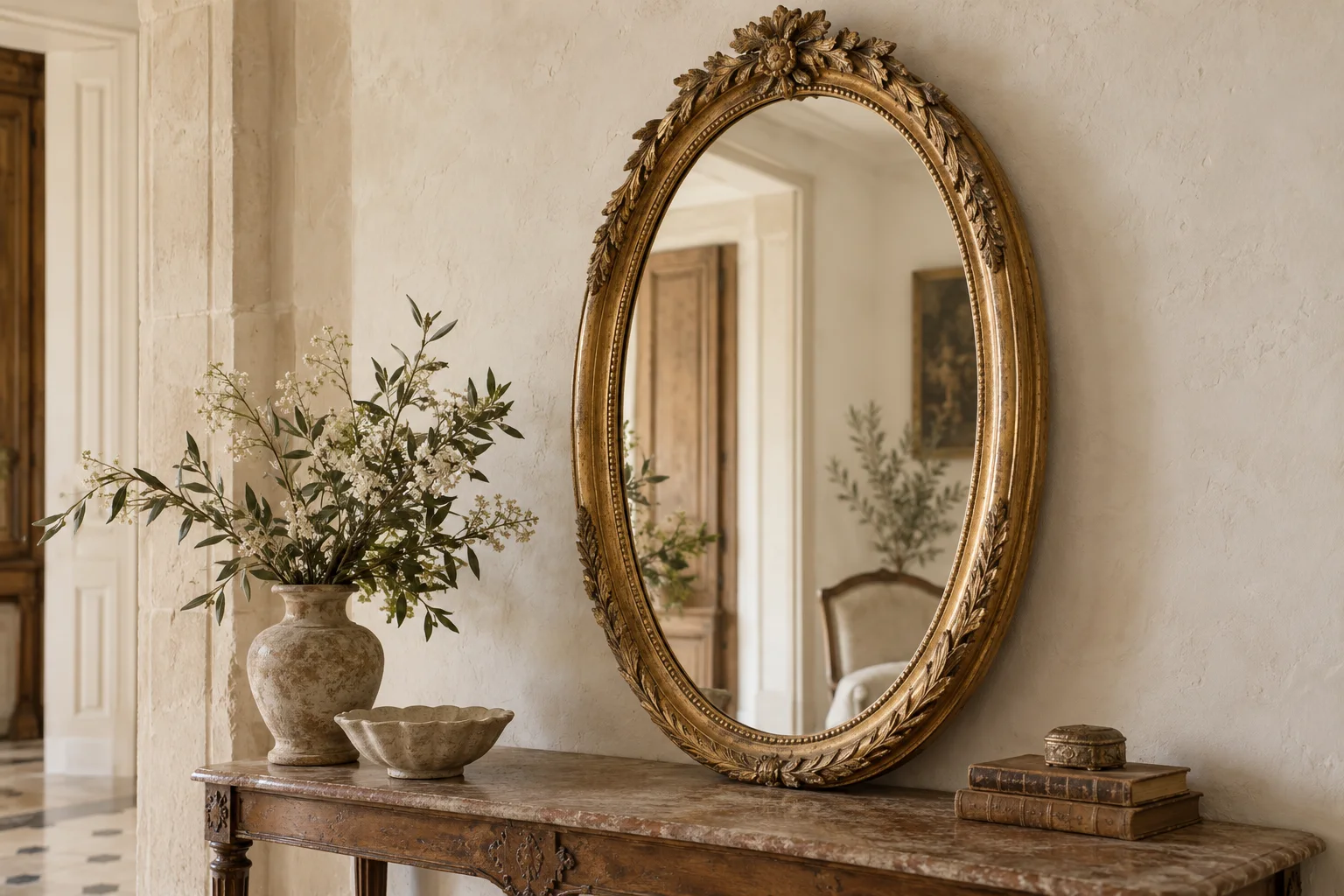 AI-created styling idea
Mirrors
Judge the glass, the gilt and the backboard separately before judging the whole mirror.
Explore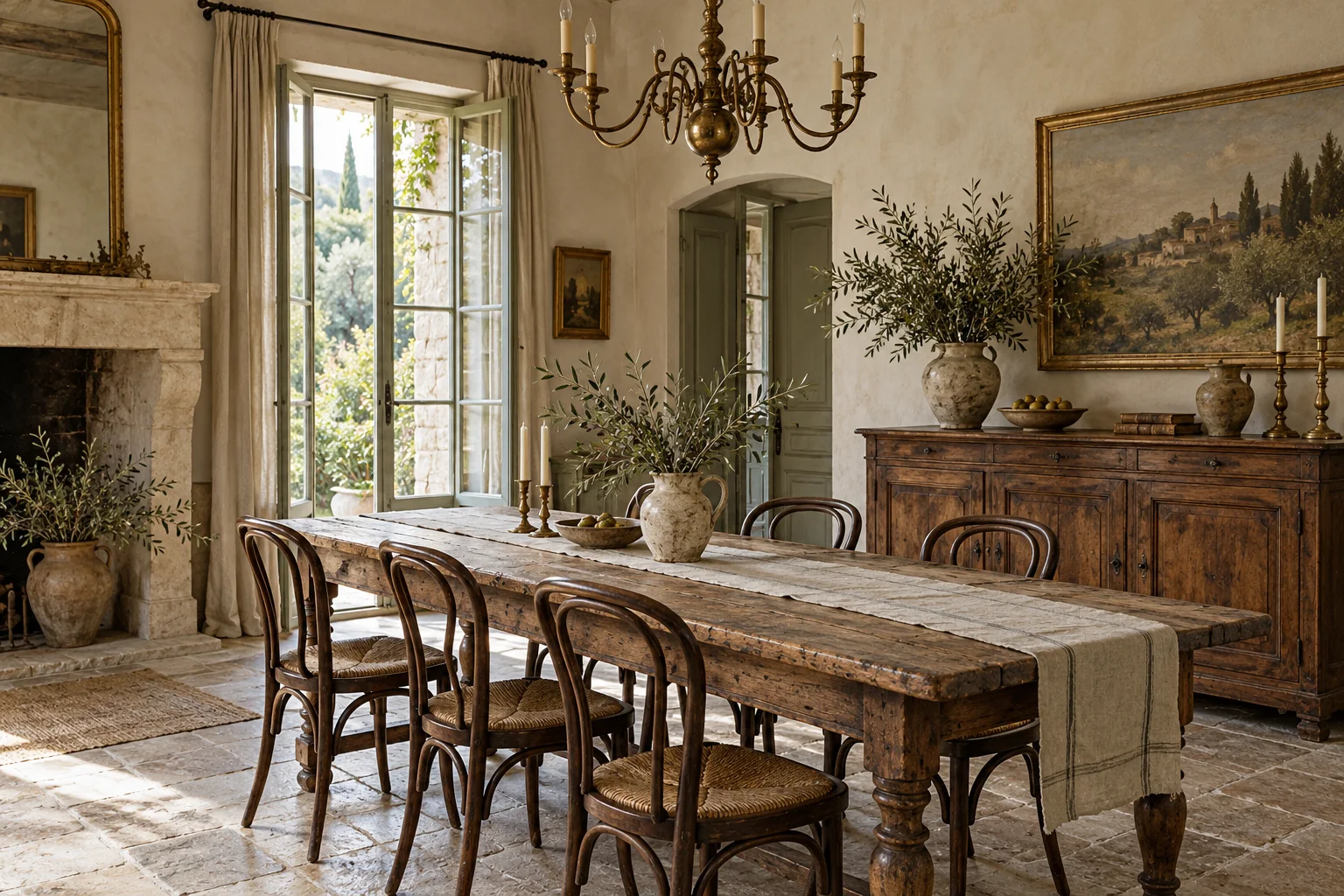 AI-created styling idea
Furniture
Compare top height and depth with the room, then check doors, hinges and shelves.
Explore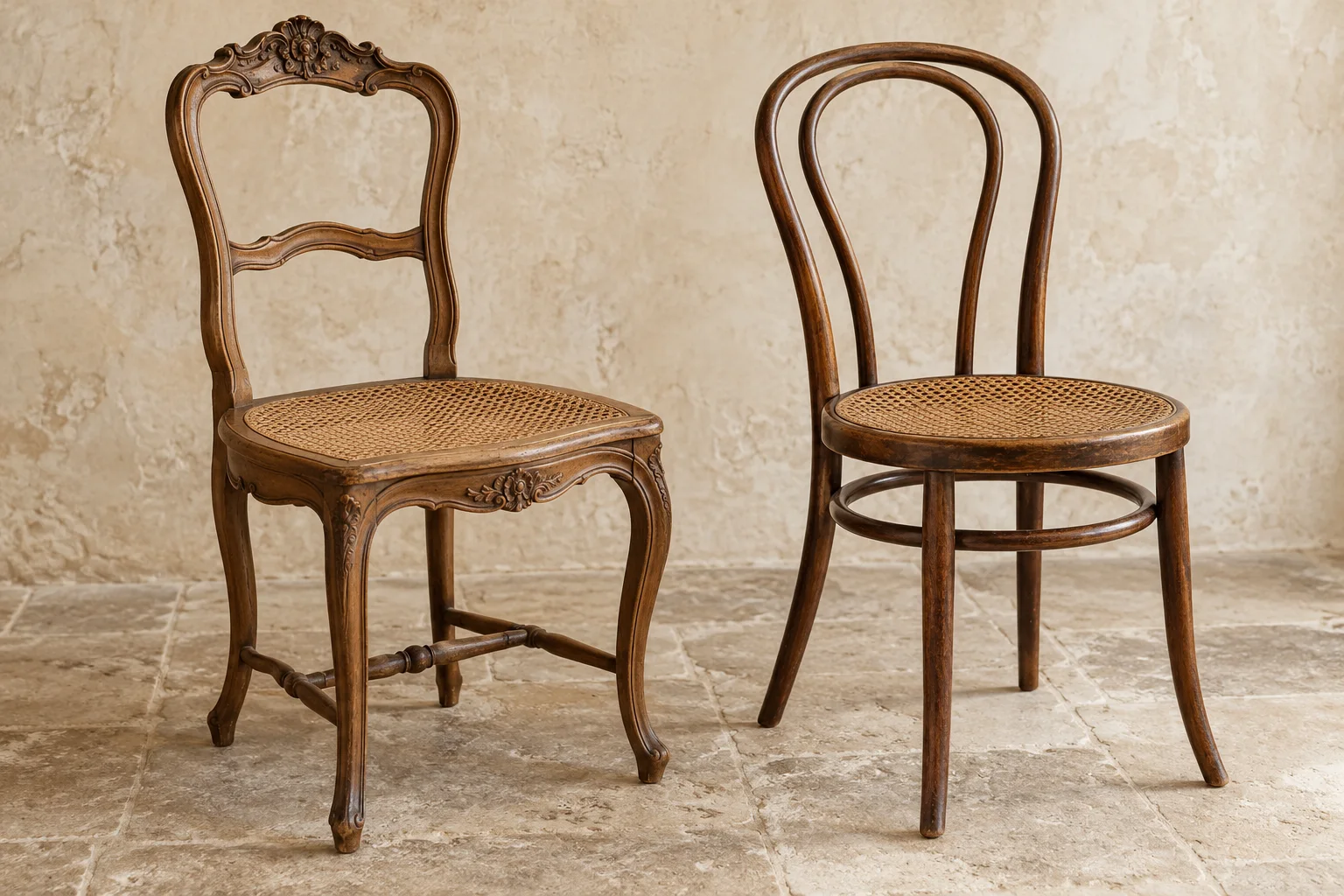 AI-created styling idea
Seating
Sit on each chair and check rush or cane seats, stretchers and loose joints.
ExploreFrench Provincial style focuses on refined regional furniture: curved legs, carved aprons and waxed walnut or fruitwood, arranged in an orderly room. French country is broader and more rustic, mixing farmhouse tables, baskets, linen and everyday objects. The two overlap, and many rooms combine a provincial commode or armchair with simpler country pieces.
Look at construction, not style. Hand-cut dovetails, pegged joints, tool marks inside, uneven shrinkage across panels and wear where hands and feet touch suggest age. Machine-cut joints, plywood backs and identical carving point to later production. Ask for photographs of the back, drawers and underside, and attribute a date only by mark or document.
Warm white, cream and soft gray work for walls, with ochre, olive, lavender and faded blue as accents. Waxed walnut and fruitwood add depth, so the walls can stay light. Repeat two accent colors in cushions, curtains and ceramics, and check paint samples in morning and evening light before committing.
Yes, when it is used selectively. One carved commode, a pair of bergères or a gilt mirror gives a plain modern room warmth and a sense of history. Keep the surrounding furniture simple and the palette quiet so the curves and the wood remain the focal point. Avoid matching sets, which make a room look staged.
Nov 5, 2026 · Antique guide
"Louis XV commode" can mean three different pieces of furniture: a period chest, a later Louis XV style chest, or a regional walnut commode.