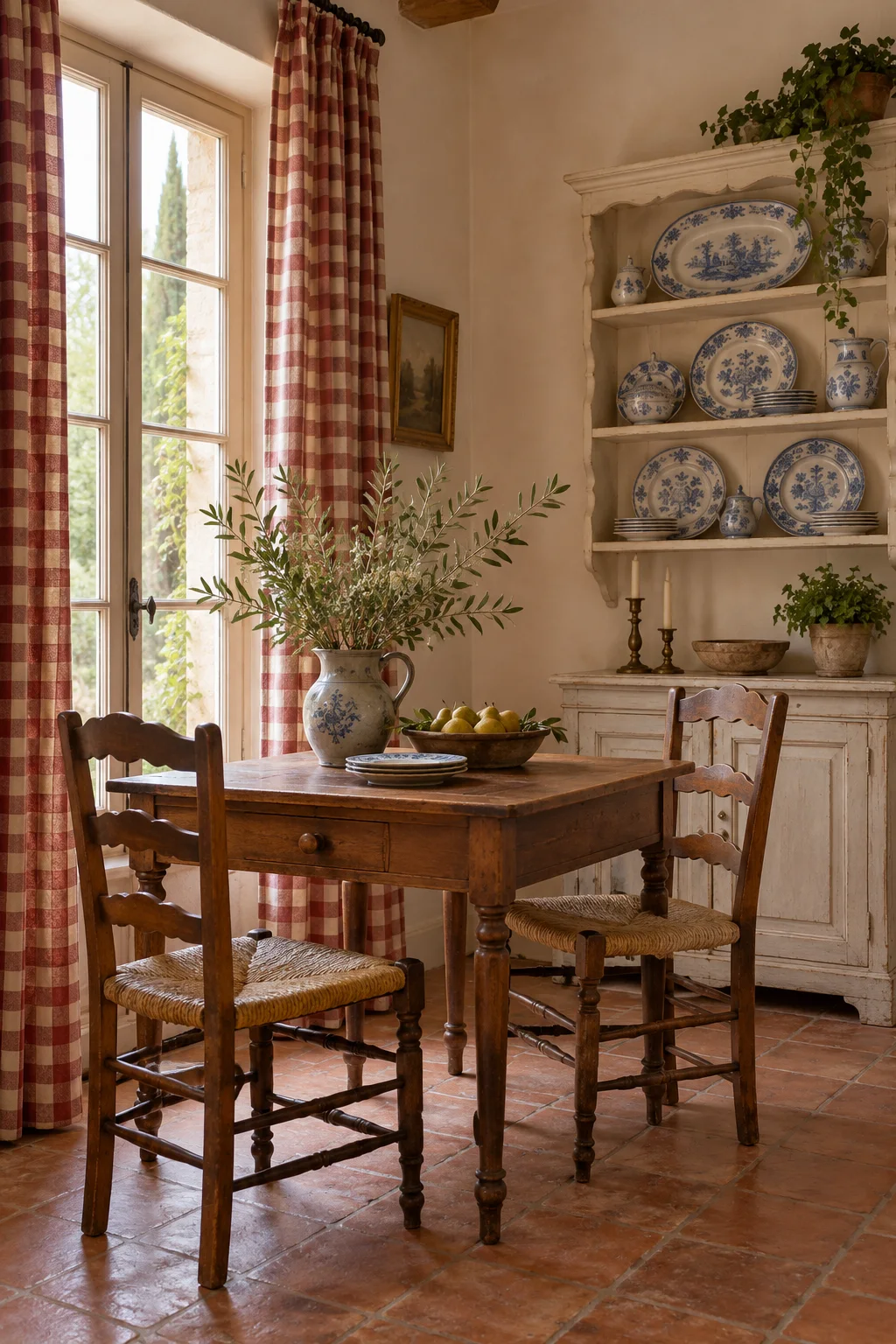
 AI-created styling idea
Tableware
Silver-plated flatware
Read the square maker's mark, then check the tine backs and spoon tips for wear-through.
ExploreFrench Country · An inspiration catalogue
Silver plated flatware is the everyday silver of the French table: a base metal under a thin coat of silver, marked by a maker's stamp rather than a hallmark.
French silver plated flatware and French sterling look alike on the table, but their marks differ. Since 1838, French sterling carries the Minerva head, a helmeted profile with a numeral: 1 for the first standard, 950 parts silver per thousand, and 2 for the second standard, 800. Beside it, a lozenge-shaped maker's mark holds initials and a symbol. The Minerva mark proves the metal standard; it does not date the piece within the long period it has been used.
French silverplate (métal argenté) carries a maker's mark in a square or rectangular cartouche, not a lozenge. Many marks add a number, which dealers commonly read as the grams of silver deposited on a dozen pieces; treat it as a guide to quality, not a guarantee. A well-known maker's name appears only when it is struck on the piece. Attribute only by mark: an unmarked fork in a familiar pattern is described by its pattern, not by a famous name.
A piece with no marks at all is assumed to be plated. English plate is often stamped EPNS, American plate may read quadruple plate, and nickel-silver bases sometimes carry a brand name of their own. None of these marks means solid silver. Chemical test kits exist but mark the surface; a reputable seller identifies by mark and declares anything untested. The journal guide to vintage silver against silverplate and how to read the marks shows the main stamps side by side.
A French place setting traditionally starts with a table fork and a table spoon, laid tines and bowl down so the crest or monogram shows. Knives, dessert pieces, fish sets and teaspoons were often bought separately and in different patterns. Build a service by pattern first, then by maker, and accept that knives rarely match the forks exactly. Our guide to silverplate flatware, its marks, wear and how to build a service lists the pieces in order of usefulness.
An antique silverware set in its fitted box (écrin) is attractive, but check the count before the box. Sets of twelve table forks and spoons are the classic unit; boxes often hold replacements in a near pattern, or are missing pieces. Open every slot, count, compare marks and weigh a few pieces. The article on antique silverware sets, their composition and completeness explains what a complete set usually contains.
Serving pieces bring silver to the center of the table: an oval tray, a soup tureen, a sauce boat, a bread basket, a pair of candlesticks. Plated serving pieces wear first on feet, handles and rims, where the base metal shows yellow or pink. Our pages on trays and serving accessories and on antique candlesticks and candelabras show the common forms and what to check on each.
A vintage silver champagne bucket, usually silverplate, stands 8–9 in / 20–23 cm high with two side handles. Check the inside for wear-through and the base for leaks, since water sits there for hours. The journal guide to vintage champagne buckets in silverplate, copper and glass compares the materials. Coasters, wine funnels and bottle stands are grouped with antique glasses and decanters in the catalogue.
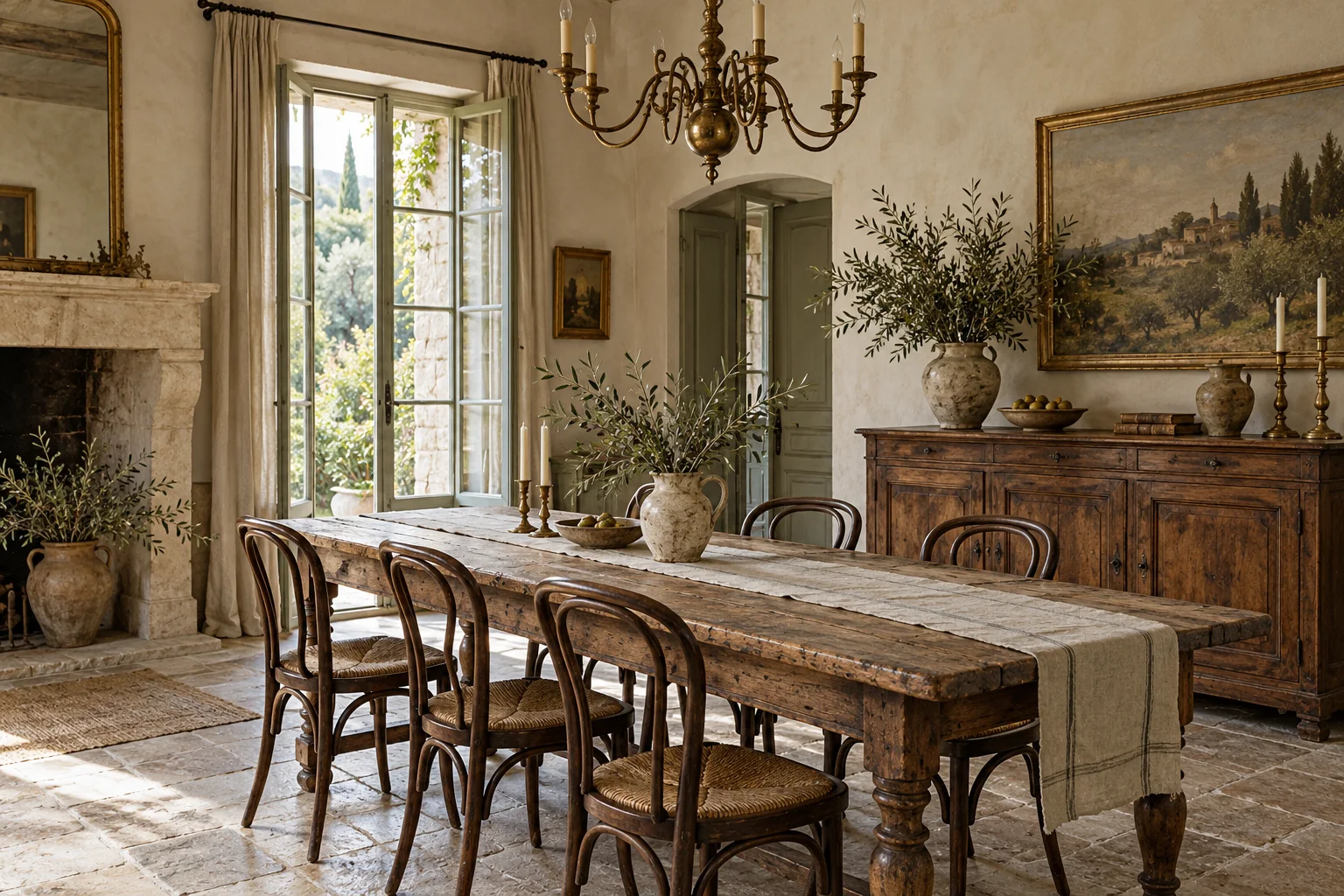
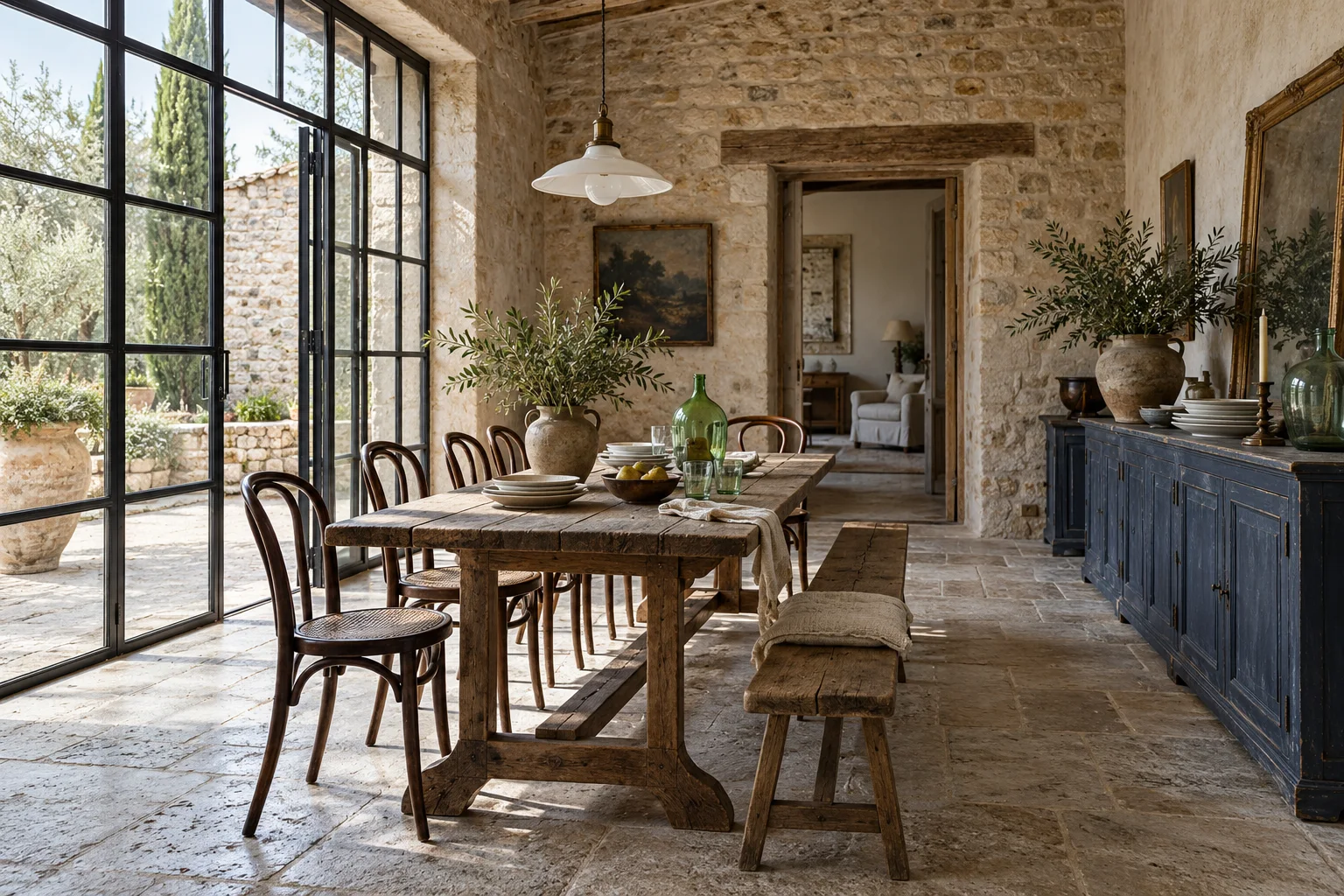
The dining room is the natural home of French silverware. In a country dining room set around a farmhouse table, plated flatware on bare wood or linen looks right with faience and plain glass. Keep the service in a lined drawer of the buffet so it is used rather than saved. Our French country tableware guide explains how silver, earthenware and glass share one table without competing.
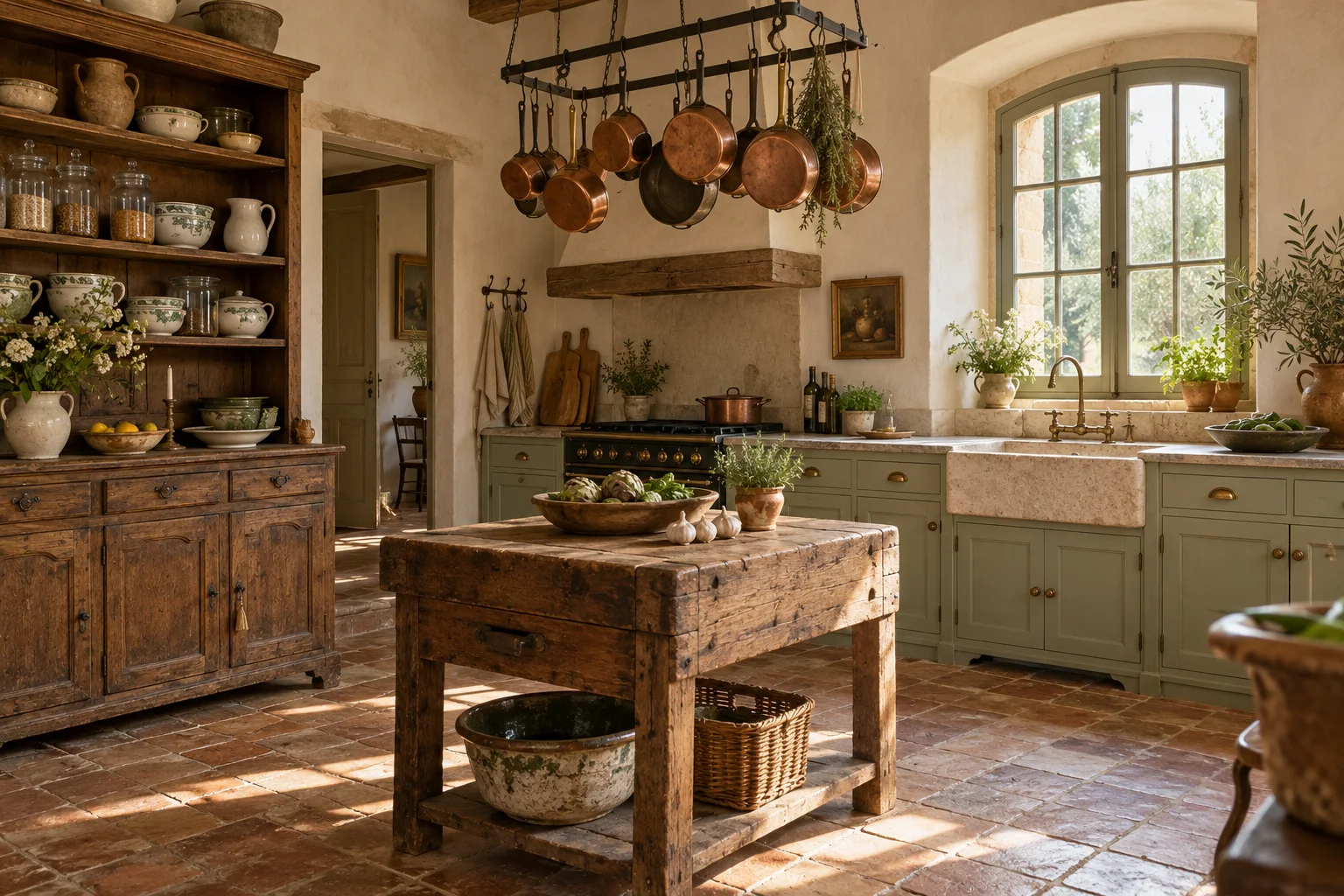
Plated serving spoons, ladles and sauce boats work hard in a French country kitchen, beside copper and stoneware. Keep them in a drawer lined with cotton flannel, away from rubber bands and newspaper, both of which tarnish silver quickly. Avoid leaving silver in contact with eggs, salt, vinegar or mustard for long: sulfur and salt mark the surface within hours. Rinse serving pieces as soon as the meal ends.
Away from the table, a plated tray becomes a drinks tray on a buffet or ottoman in the country living room, and a pair of silver candlesticks stands on the mantel. In a French country bedroom, a small tray on a chest holds rings and keys, and a silver-backed brush or mirror sits on a dressing table. One silver accent per surface keeps the effect light.
For a lunch in a French country garden, a champagne bucket in the shade and plated flatware on linen are part of the scene. Outdoor use is fine, but salt air, sun and spilled wine tarnish silver quickly. Wash everything the same day, dry it fully before storing, and keep fine sterling indoors. Plate that has already worn through is a sensible choice for the terrace table.
Plating wears first where silver touches the table and the mouth: the backs of fork tines, the tips of spoon bowls, the heel of the handle. There the color turns yellow-gray over nickel silver or pink over copper or brass. Light wear on a few points is normal for vintage silverplate flatware and does not stop daily use. Wear-through on most pieces means the set is decorative unless it is replated.
Old knives often have hollow handles filled with resin, soldered around a steel blade. Heat loosens the filler and the blade starts to turn or rattle; hot water and dishwashers are the usual cause. Check that each blade is firm and that the steel shows no deep pitting. Many later knives have stainless blades, which is practical for daily use. Mixing knives from a different pattern is accepted at a French table.
Ask for the number of pieces by type, a photograph of the marks, and close-ups of the most worn piece. Homeowners can browse the art de la table listings at Lo Cantou for flatware and serving pieces with condition details. Designers building a table for a client can send a brief to Antiques 360 for three documented pieces within 72 hours, every mark and flaw photographed and the landed cost known upfront.
Tarnish is silver sulfide, a thin dark film formed by sulfur in the air and in some foods. Wash silver by hand in warm water with mild dish soap, rinse and dry at once with a soft towel. For tarnish, use a gentle silver cream with a soft cloth, working in straight lines. The Canadian Conservation Institute guidance on metals explains why the gentlest method is best. On plate, every polish removes a little silver.
The dishwasher is the fastest way to ruin silver plated silverware. Detergents etch and dull the surface, heat loosens filled knife handles, and contact with stainless steel in the basket can leave dark spots. Hand washing takes a few minutes after a meal and keeps the plating for decades. Avoid dip cleaners: they strip tarnish quickly but also remove the dark accents in the pattern that give it depth.
Store flatware in anti-tarnish cloth rolls or in a drawer lined with silver cloth, one piece beside another rather than in a heap. Keep it away from oak drawers without lining, rubber, felt with sulfur dyes and cardboard. Silica gel or anti-tarnish strips in a closed drawer slow tarnish noticeably. Using silver regularly is itself a form of care: pieces washed and dried each week rarely need polishing.
These categories group silver and silverplate by use at the table and the bar. The wider tableware and kitchen catalogue continues with earthenware, glass and copper.
AI-created styling ideaTableware
Read the square maker's mark, then check the tine backs and spoon tips for wear-through.
ExploreAI-created styling ideaTableware
Look at feet, handles and rims, where plate wears first on a tray or tureen.
Explore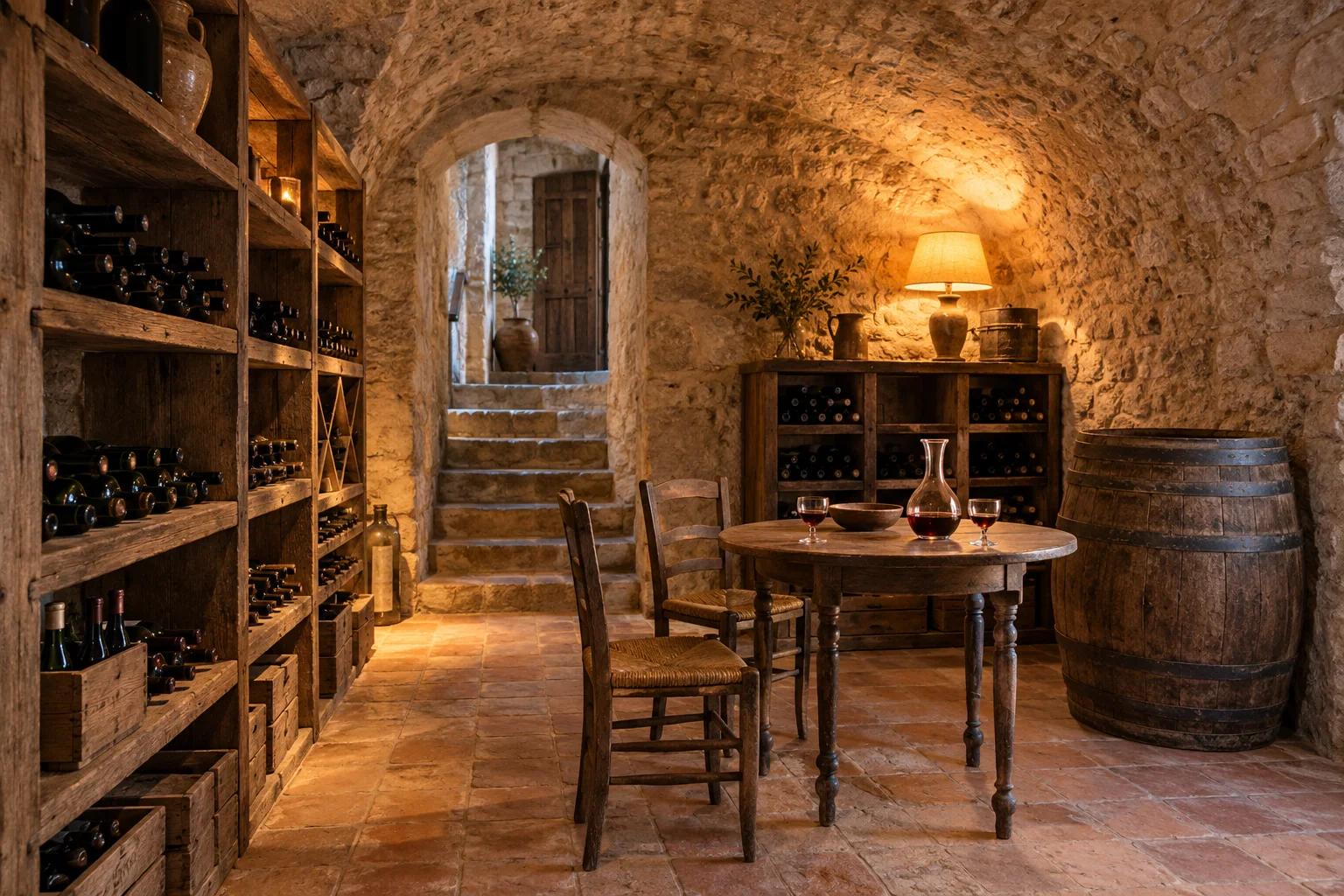 AI-created styling idea
Tableware
Pair cut glass and decanters with plated coasters and wine funnels on one tray.
Explore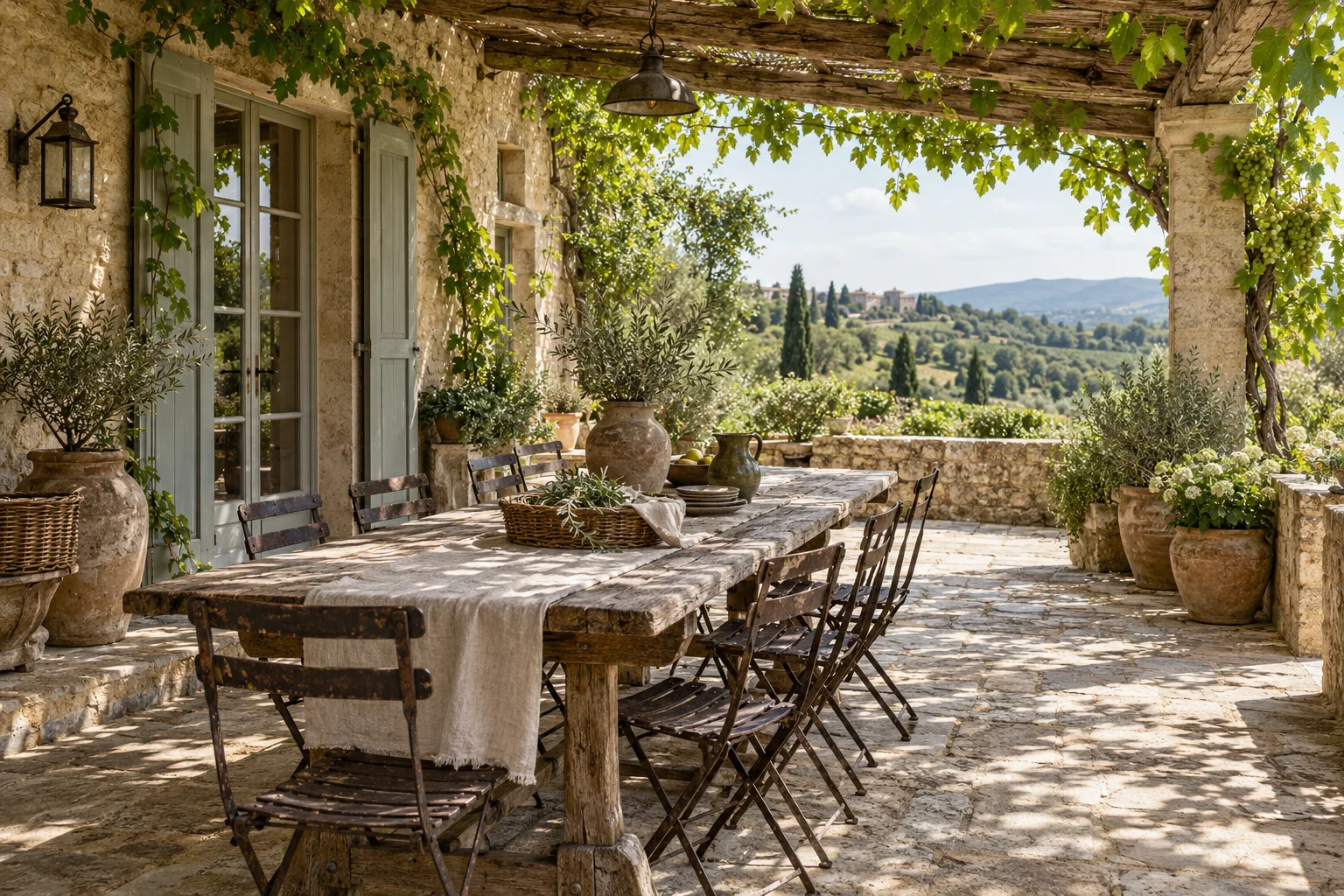 AI-created styling idea
Barware
Champagne buckets and coolers: check the base for leaks and the inside for wear.
Explore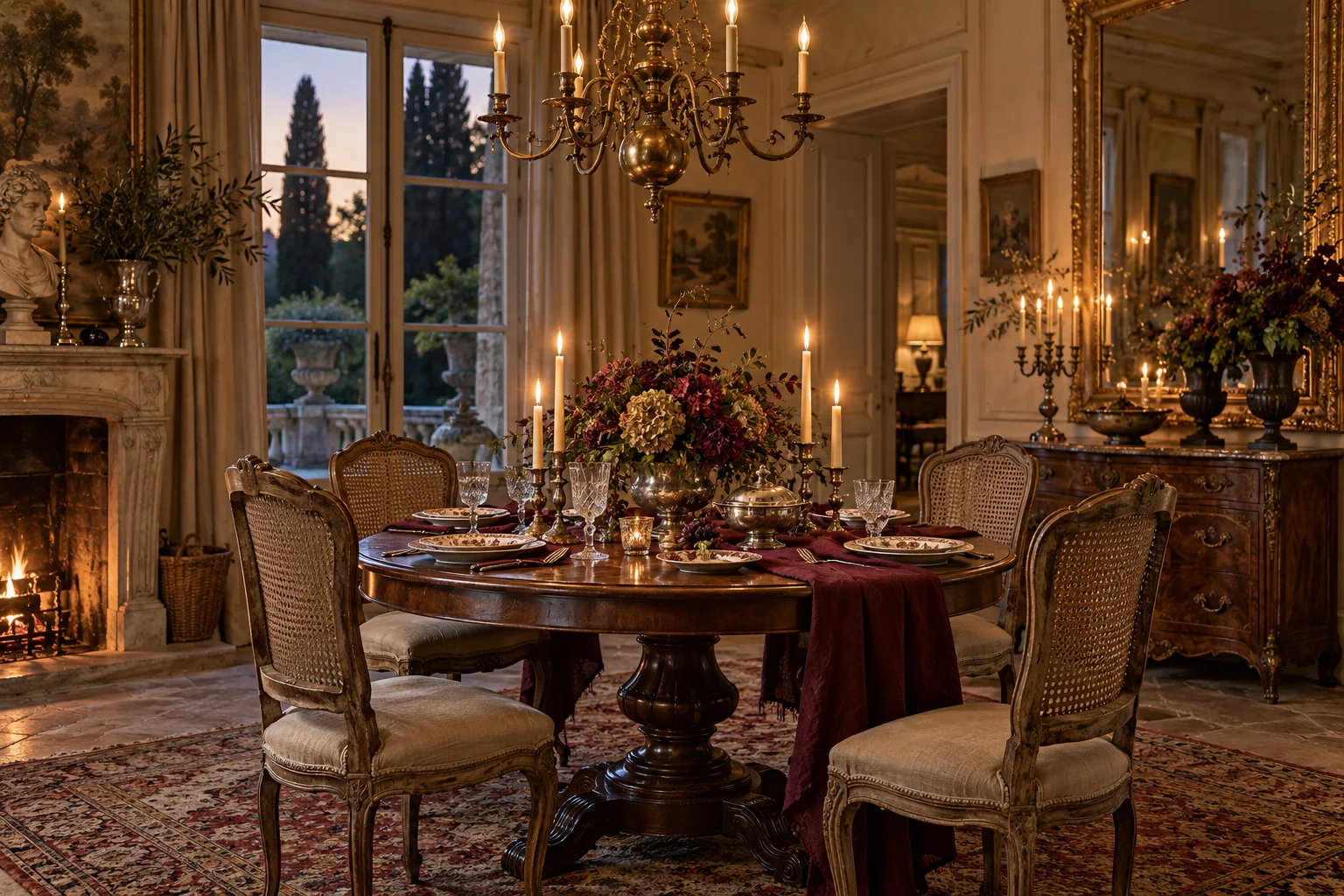 AI-created styling idea
Lighting
Silver or brass, check that the stem is firm and the base sits level.
ExploreLook at the marks. French sterling carries the Minerva head with a numeral 1 or 2 and a maker's mark in a lozenge. French silverplate carries a maker's mark in a square or rectangle, often with a number. A piece with no marks is assumed plated. Wear-through showing yellow or pink metal on high points confirms plate.
Yes, with hand washing. Silverplate was made for daily use, and light wear on fork tines and spoon tips is normal. Wash by hand soon after meals, dry immediately and store in a lined drawer. Avoid the dishwasher, which dulls plating and loosens filled knife handles. Pieces worn through on most surfaces are better kept for display or replated.
Wash first in warm soapy water, then use a gentle silver cream with a soft cloth, rubbing in straight lines rather than circles. Rinse and dry thoroughly. Avoid abrasive powders and quick dip cleaners, which strip silver and the dark accents in the pattern. Every polish removes a little plating, so prevent tarnish with good storage instead.
On many French plated pieces, a number struck in or beside the square maker's mark is commonly read as the grams of silver deposited on a dozen pieces. A higher number suggests a heavier plating. Treat it as an indication rather than a guarantee, and judge the actual wear on the tine backs and spoon tips before buying.
Nov 6, 2026 · Antique guide
A French country Thanksgiving table takes its look from the farmhouse: a linen cloth, white ironstone or faience plates, mixed silverplate, short bistro glasses,…
Nov 6, 2026 · Antique guide
French kitchenware from 1880 to 1960 was made for daily work, which is why the good pieces are still at it.
Nov 6, 2026 · Antique guide
Samadet faience is the tin-glazed tableware made in a single village of the Landes, in the Tursan hills south of Mont-de-Marsan, from about 1730 to 1840.
Nov 5, 2026 · Antique guide
Vintage silver and vintage silverplate look alike on a sideboard and behave differently in the hand, in the sink and at resale.
Nov 5, 2026 · Antique guide
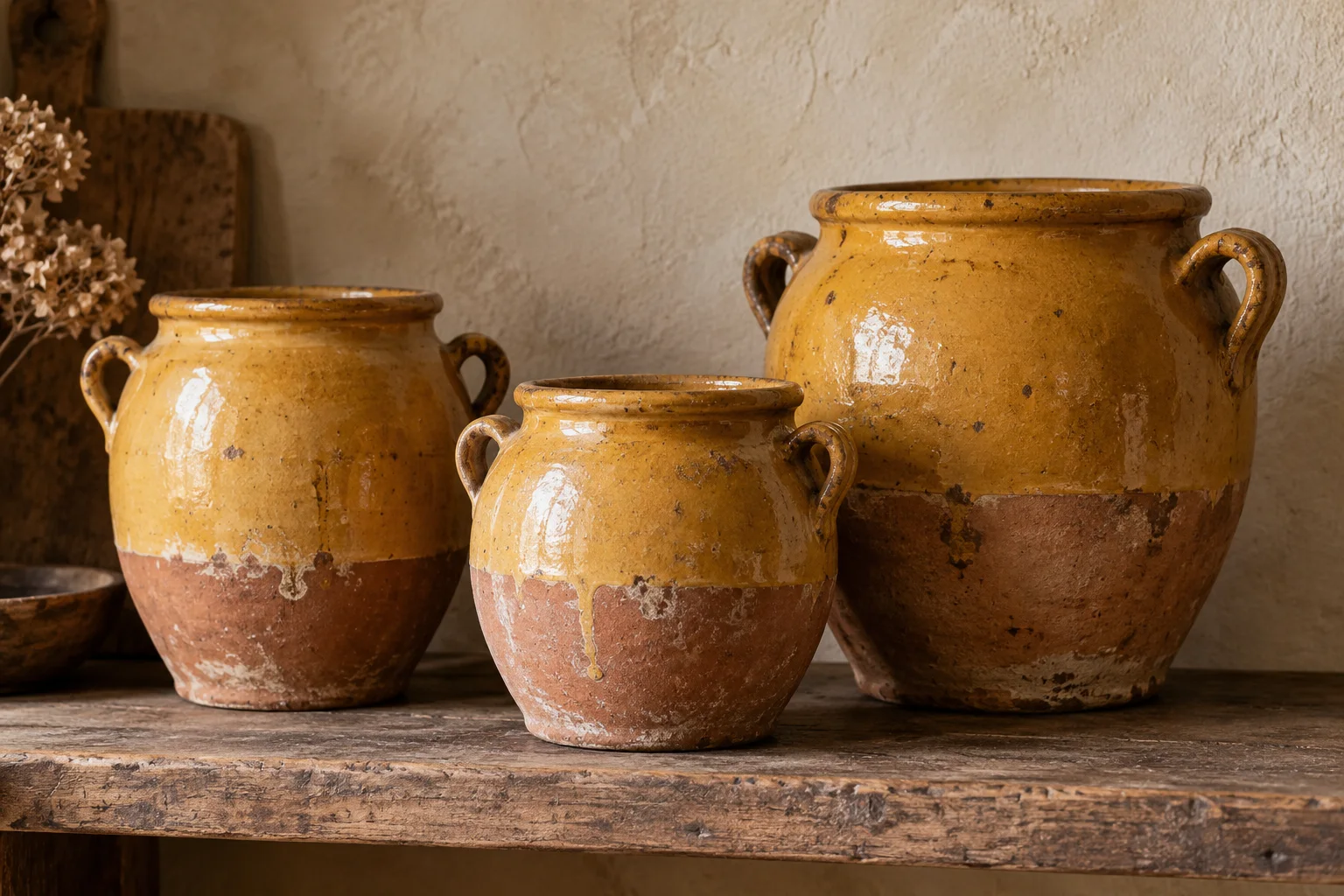
Vintage pottery from French kitchens and workshops falls into two bodies and three glazes.
Nov 5, 2026 · Antique guide
An antique magazine rack is one of the few small antiques that still does its original job and several new ones.