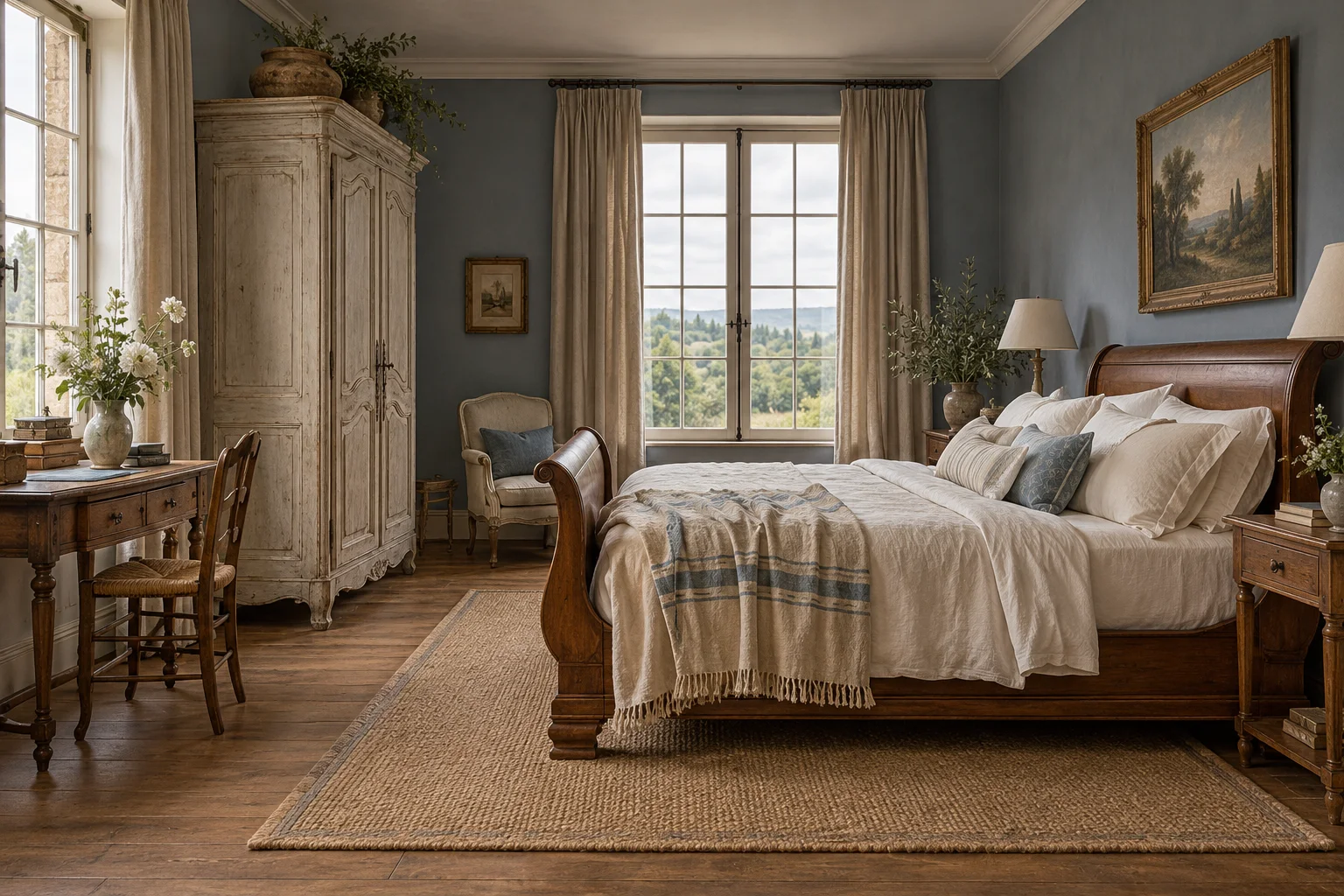
 AI-created styling idea
Textiles
Antique linens & cushions
Unfold every piece against the light: thin folds, darns and stains decide the use.
ExploreFrench Country · An inspiration catalogue
French linen, in old sheets, napkins, tea towels and grain sacks, is the softest material in a country house and one of the easiest antiques to use every day.
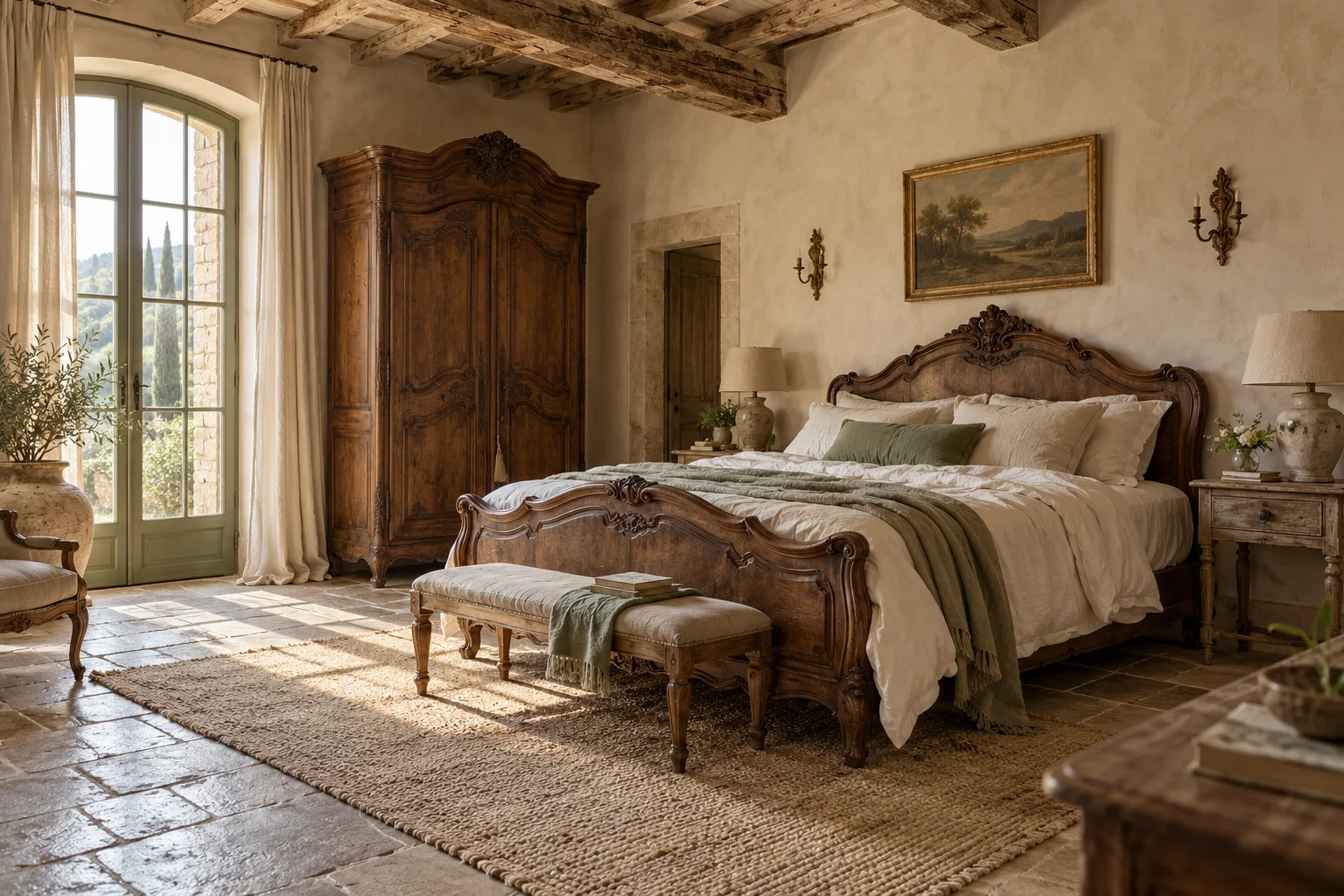
Pure French linen (lin) is woven from flax. It feels cool and dry in the hand, creases readily, and has a slight sheen and small irregular slubs in the thread. Old linen softens with every wash without losing strength, which is why sheets and napkins woven generations ago are still in use. Held to the light, a good linen sheet shows an even weave with occasional thicker threads, never the perfect regularity of machine cotton.
Métis is a mixed cloth, usually a cotton warp with a linen weft. It is softer and smoother than pure linen from the start, creases less and drapes well, which made it a common choice for sheets and pillowcases in French households. Métis has a matt, slightly fuzzy surface. Sellers sometimes call it linen; a correct listing names it métis, which is a quality in its own right, not a lesser cloth.
Hemp (chanvre) was grown and woven on farms across rural France for sheets, sacks and work cloths. It is heavier, stiffer and more irregular than linen, with a grayer or creamier color and a rough, almost papery hand when new. Hemp softens with washing but keeps more body. Hand-loomed hemp and linen sheets often have a central seam joining two narrow widths, a good sign of age when the stitching is by hand.
Vintage bed linen from France was made large for deep beds and long tucks; many sheets measure 79–90 in / 200–230 cm wide and 110–120 in / 280–300 cm long, so measure before you buy. Monograms are embroidered in white or in red cross-stitch, often with initials only. A monogram identifies a household's initials, not a family, a date or a region; treat any story attached to it as a story unless a document supports it.
Antique linen napkins were sold in sets of six or twelve. Dinner napkins usually measure 26–32 in / 65–80 cm square, much larger than modern ones; tea napkins are smaller. Damask napkins show a woven pattern that changes with the light. Tea towels (torchons) are plain linen or métis, often with a red or blue stripe along the edge. Count the set, compare the sizes and match the monograms before calling it complete.
Grain sacks are coarse hemp or linen, about 24 × 47 in / 60 × 120 cm, often with a colored stripe and stenciled letters. They make cushion covers, bench pads and runners. Mattress ticking (toile à matelas) is a tight striped cotton or linen twill, made to hold feathers in; it upholsters chairs and stools well. Check grain sacks for mends, patches and mold stains, which are common and usually fine for decorative use.
Woven wall hangings in the manner of Aubusson, with verdure landscapes or floral borders, are widely made and widely copied. A style name describes an inspiration, not a documented attribution: Aubusson-style is not Aubusson. A workshop mark woven into the selvedge, a label or a document are required before naming a manufactory. Our page on rugs and tapestries shows the forms. Large antique tapestries need a hanging sleeve and a hook-and-loop strip along the full width, never nails.
The French country bedroom is where linen does most work: layered sheets, a monogrammed pillowcase, a linen bolster on a carved bed. French linen bedding goes on a modern mattress with a deep fold under; use the generous size of old sheets as a turn-down over a quilt. Keep a stack in an armoire with lavender sachets rather than in plastic bags.
On the table, a heavy linen or damask cloth and large napkins set the tone in a dining room built around a farmhouse table. In the French country kitchen, striped torchons hang from a rail by the range and a grain sack covers a bench. Linen on the table should be washable: keep fine damask for occasions and plain linen for everyday meals.
In the French country living room, linen covers the seats: loose covers on settees and chaises, plain or ticking cushions, a linen throw on an armchair. A tapestry fragment or a crewel panel above a bench adds pattern; our journal piece on crewel embroidery, wool on linen explains how to read the stitches. Keep tapestries out of direct sun, which fades wool dyes quickly.
For a long lunch in the French country garden, a linen tablecloth and napkins under the trees are part of the scene. Use sturdy plain linen or métis rather than fine damask, and bring everything in after the meal: sun bleaches and weakens fibers, and dew leaves mildew spots. Wine and fruit stains should be rinsed in cold water the same day, before the heat of the sun sets them.
Unfold each piece fully and hold it up to a window. Thin areas, darns and pinholes show at once. Darns are normal on sheets that were used for decades and can be charming; thin areas along the old fold lines will split in the wash. Check the hems: hand-rolled hems and hand stitching suggest age; machine overlocking suggests later finishing. Ask the seller for full dimensions and a photograph of every repair.
Yellow lines along folds come from storage and usually soften with soaking. Small brown rust spots (rouille) come from iron and often stay. Gray mold spots rarely disappear completely. A uniform ivory tone is age, not dirt. Decide which marks you can live with: a sheet used under a quilt hides much more than a tablecloth. Avoid chlorine bleach, which weakens old fibers and yellows métis over time.
Count sets and measure each piece; mixed sizes in a so-called set of twelve are common. Homeowners can find French linens and tableware among the listings at Lo Cantou, each with condition details. For a designer furnishing a project with a tapestry or a large set of upholstery linen, a brief to Antiques 360 returns three documented pieces within 72 hours, with every flaw photographed and the landed cost known upfront.
Soak first, then wash. A long soak in lukewarm water with a gentle detergent loosens most storage yellowing. Wash sturdy sheets and napkins on a gentle cycle at 104 °F / 40 °C; hand-wash fragile, lace-trimmed or embroidered pieces. The Canadian Conservation Institute guidance on textiles advises against chlorine bleach and strong treatments on fragile cloth. Dry flat or on a line in the shade, and iron linen while still damp.
Store linen clean and dry, because stains and food residues attract insects and darken with time. Roll large pieces such as tablecloths and tapestries around a padded tube, or fold them with tissue in the folds and change the fold lines every few months. Avoid plastic bags and bare wood shelves, which trap moisture and stain; line shelves with clean cotton. Keep wool tapestries away from moths with regular inspection.
Darning a small hole with linen thread keeps a sheet in use. Badly worn sheets can become pillowcases, napkins or tea towels; damaged monograms can be cut out and framed. Tapestries are a different matter: reweaving, consolidation and lining are conservator's work, and a poor repair lowers interest more than the original damage. Ask before cutting anything that might be older or rarer than it first looks.
The categories below show linen at work, from the bed to the seat. The wider textiles catalogue brings every family together.
AI-created styling ideaTextiles
Unfold every piece against the light: thin folds, darns and stains decide the use.
Explore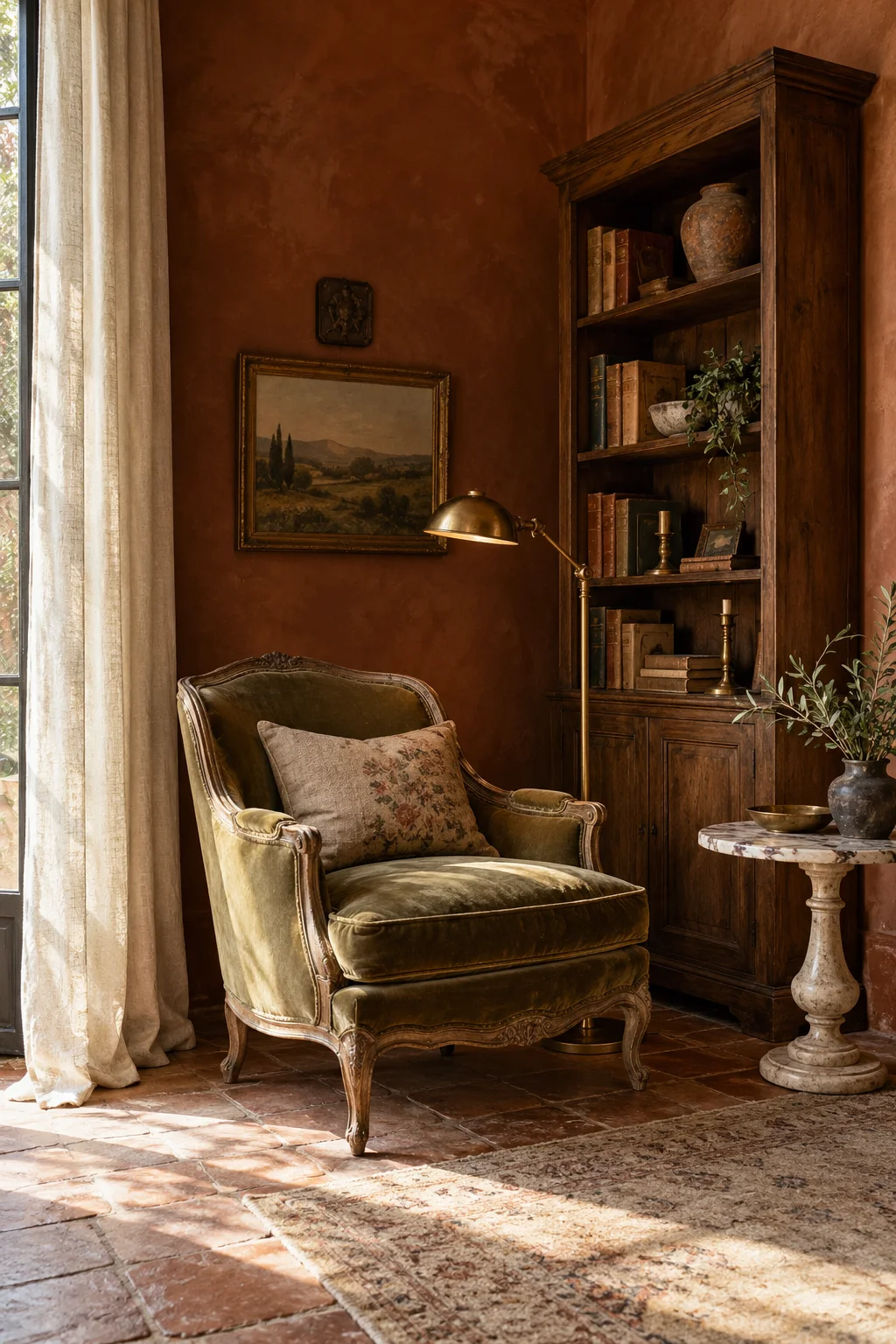 AI-created styling idea
Textiles
Read the selvedge and the back; a style name is not a workshop attribution.
Explore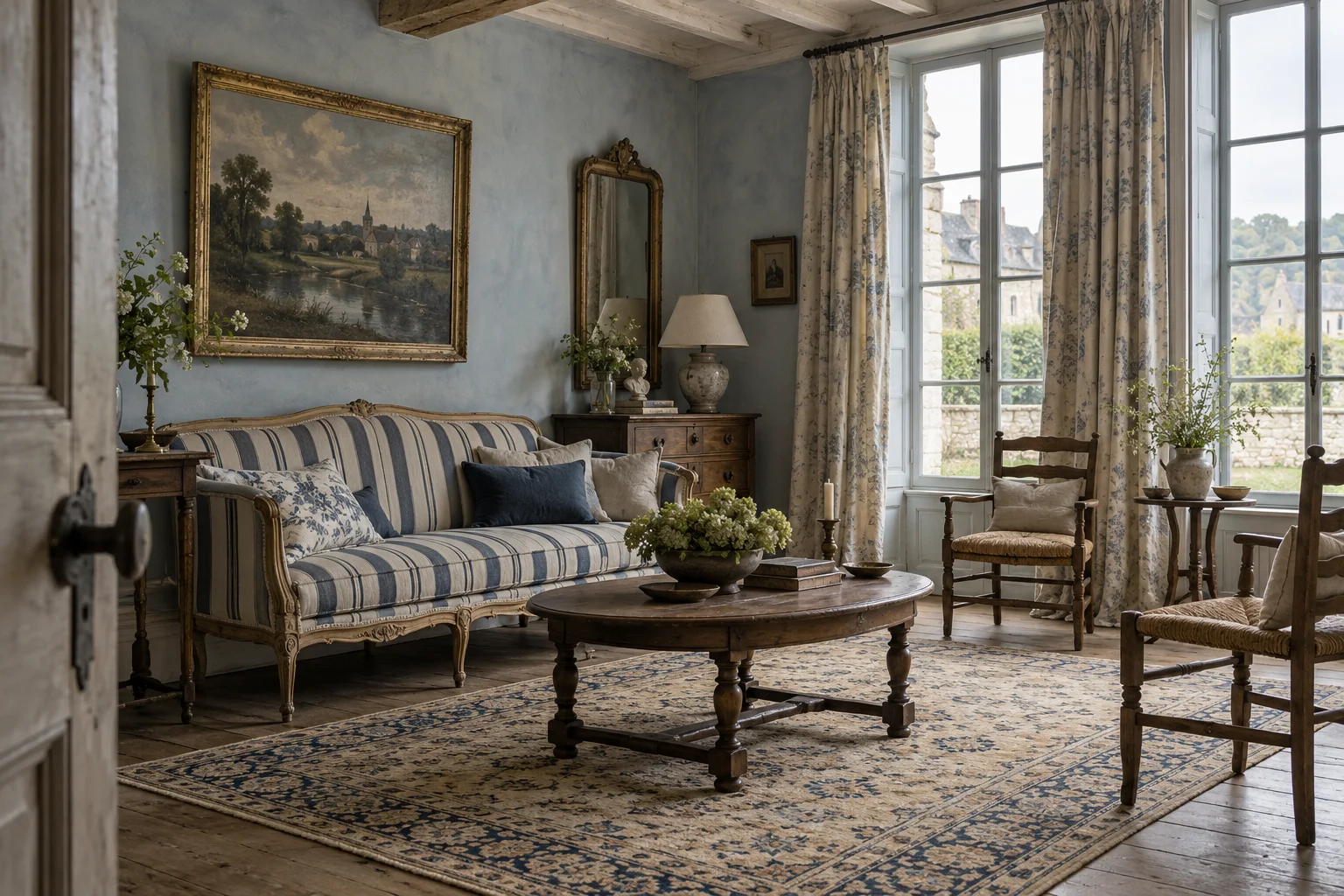 AI-created styling idea
Furniture
Check the frame and springs first, then choose linen or ticking for the cover.
Explore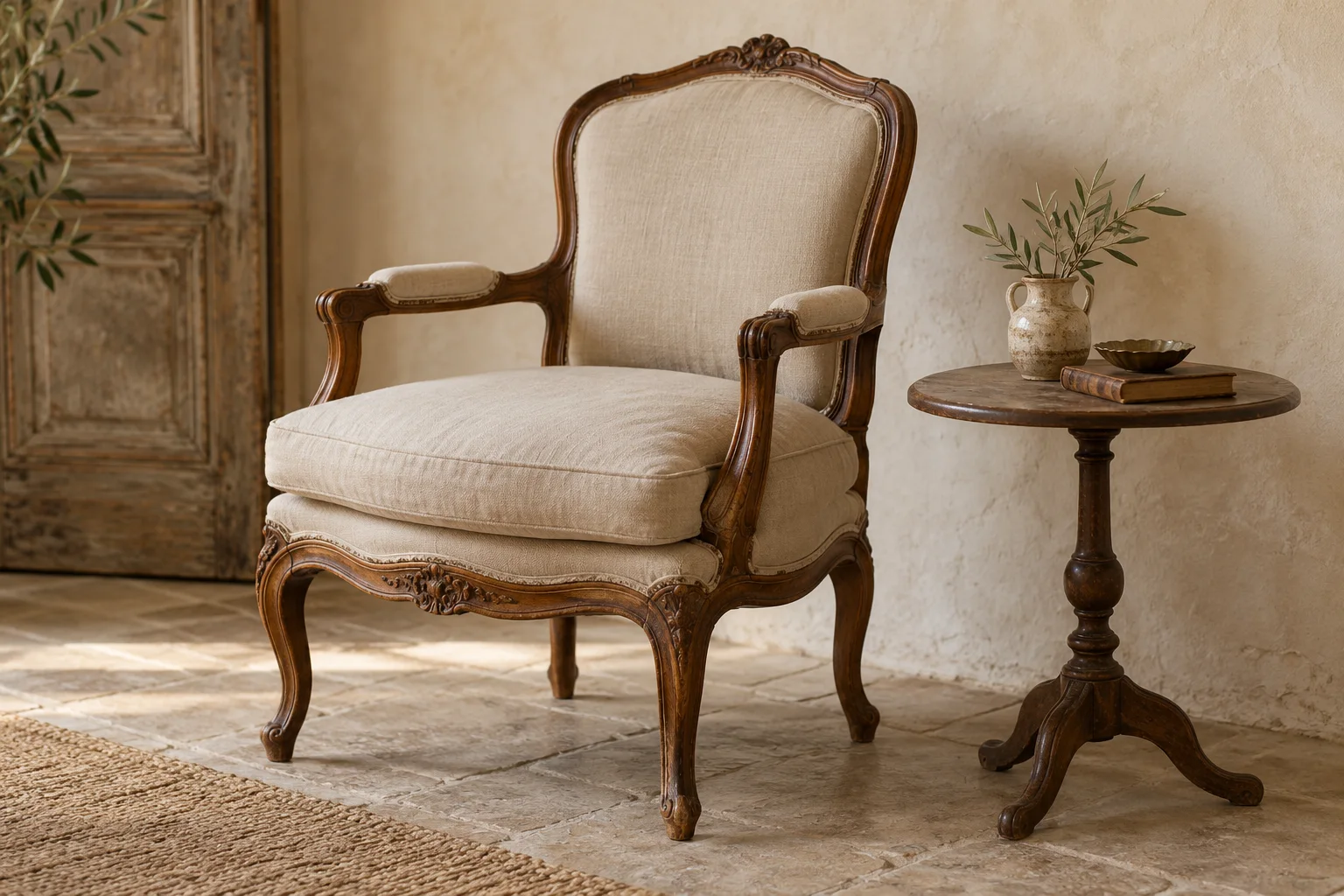 AI-created styling idea
Furniture
Test the joints, then decide whether the old cover is yours to change.
Explore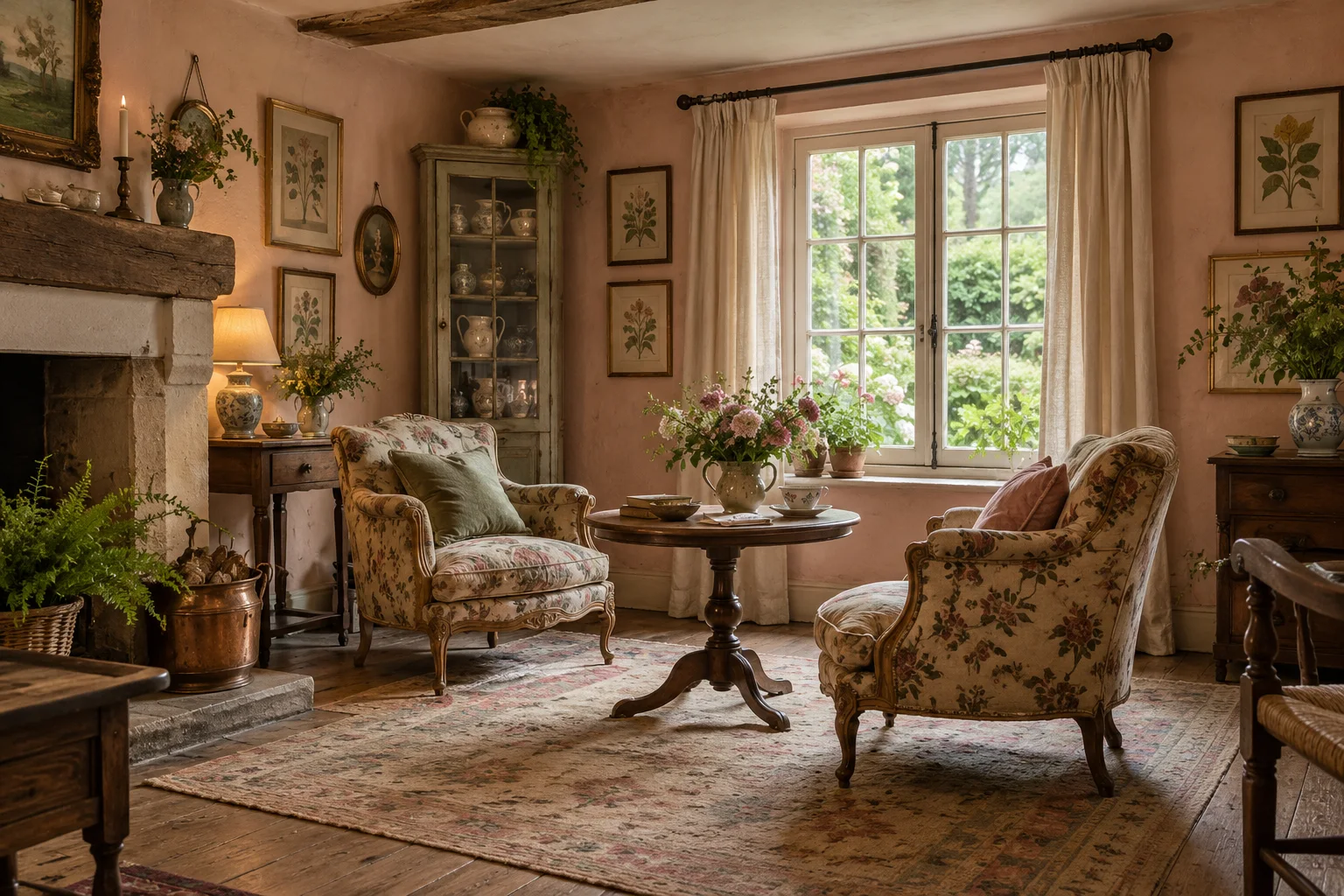 AI-created styling idea
Furniture
A small stool takes a remnant of ticking or a grain sack beautifully.
ExploreFeel and look closely. Pure linen is cool, dry and slightly stiff, with a soft sheen and irregular slubs in the thread. Métis, a cotton warp with a linen weft, is softer and smoother with a matt, slightly fuzzy surface. Cotton is uniform and smooth. A thread count under a magnifier shows linen's irregular yarns most clearly.
Yes. Most old French sheets are large, often 79–90 in or 200–230 cm wide, so they fit a queen or king bed with room to tuck. Use them as flat sheets or as a turn-down over a quilt. Check the fold lines for thin areas, wash on a gentle cycle and avoid chlorine bleach to keep the fibers strong.
Start with a long soak in lukewarm water with a gentle detergent, changing the water as it yellows. Many storage stains along fold lines soften after one or two days. Dry in indirect daylight. Avoid chlorine bleach, which weakens old fibers. Rust spots and mold stains rarely disappear completely, so judge them before you buy.
Not necessarily. Aubusson-style describes a look, usually verdure landscapes or floral borders, which many workshops and factories reproduced. Only a woven workshop mark, a label or a document supports an attribution to a specific manufactory. Describe an unmarked piece by its technique, materials, size and condition, and treat the style name as an inspiration rather than an origin.
Nov 4, 2026 · Antique guide
French country fabrics rest on a few patterns: toile de Jouy, gingham, ticking stripes, Provençal printed florals and plain linen.
Oct 30, 2026 · Antique guide
French country decor ideas work best when each one is concrete: a measurement, a material, a place in the room.