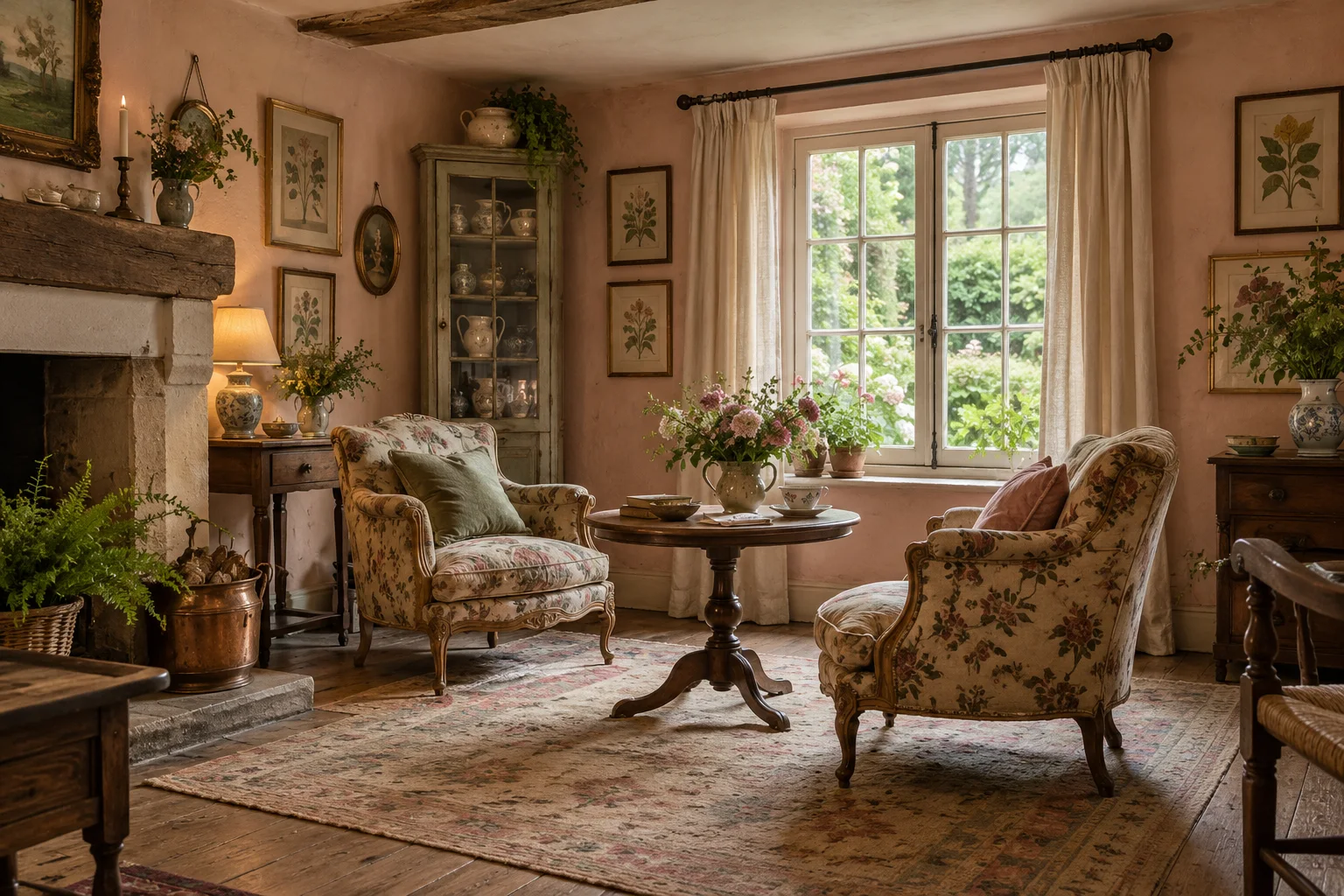
 AI-created styling idea
Tables
Vintage coffee tables
Check veneer edges and lacquer for chips, and measure the height against your sofa seat.
ExploreFrench Country · An inspiration catalogue
French Art Deco furniture trades the curves of country pieces for clean geometry, rich veneers, lacquer and polished metal, and one well-chosen piece can sharpen a French country room.
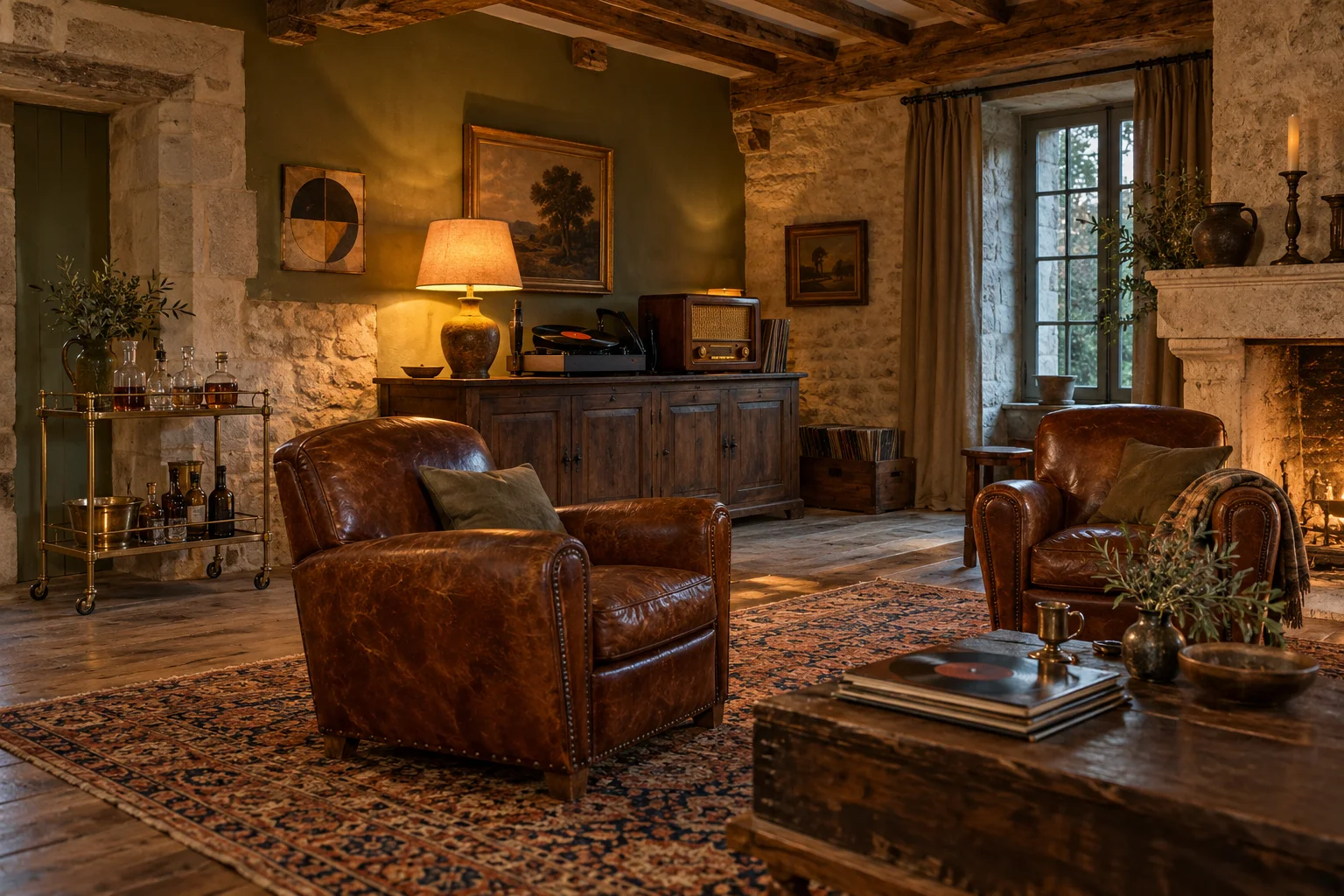
French Art Deco furniture belongs to a style named after the international exhibition of modern decorative and industrial arts held in Paris in 1925. The short name came into common use only in the 1960s, when exhibitions and collectors revived interest in the period. The style is usually dated from about 1910 to the late 1930s, so the 1925 exhibition marks a high point rather than a beginning.
French Art Deco furniture grew from two currents. One followed the cabinetmaking tradition, with rare veneers, lacquer and fine inlay on simple, solid forms. The other, stronger by the end of the 1920s, favored tubular steel, glass and plain surfaces. Names such as Jacques-Émile Ruhlmann for veneered furniture, Jean Dunand for lacquer and Edgar Brandt for wrought iron belong to that history. A piece is attributed to them only by stamp, signature or documented provenance.
In the 1920s, Paris department stores ran their own design studios, and regional workshops adapted the style for apartments and provincial houses. Bedroom suites, dining sets and small tables in walnut or oak veneer are among the pieces most often seen at French dealers. These simpler pieces carry the lines of the style without the rare materials, and they usually suit a country home best.
Look for book-matched veneers in macassar ebony, rosewood, amboyna burl, walnut and sycamore, often laid over an oak or pine carcass. Lacquer, shagreen, parchment, marble, mirror glass, wrought iron, nickel and chrome supply contrast. The palette pairs black and dark brown wood with cream, gold and silver, plus the occasional jade green or deep red. Ask what any pale inlay is made of before buying.
Stepped profiles, sunbursts, fans, chevrons and stylized baskets of flowers mark Art Deco decor. Legs taper or give way to solid plinths, sometimes finished with metal shoes called sabots. Mirrors have beveled edges and etched or sandblasted motifs. Seating includes the rounded gondola-back armchair and the leather club chair. Symmetry is strict: a bookcase, a buffet or a mirror is usually designed around a center line.
Art Deco reproduction furniture has been made in quantity since the revival of the 1960s and 1970s, and new pieces in the style are still produced. Check the carcass first: period pieces use solid wood, early plywood or blockboard under the veneer, while particleboard or MDF points to later manufacture. Look at the underside, the back and the drawer sides for even oxidation, wear where hands and feet touch, and screws that match the age. A style name describes an inspiration, not a documented attribution, so read every listing's wording closely.
Start with condition: lifting veneer, crazed lacquer, pitted chrome and lost mirror silvering cost more to repair than they appear. Ask for photographs of the back, the underside and every repair. Most Art Deco furniture is under 100 years old, so HTS heading 9706 for antiques over 100 years covers only the earliest pieces, and only with age documentation; ask for the tariff classification and the landed cost before buying. Lo Cantou lists antique and vintage mirrors with condition notes, and designers can send a brief to Antiques 360 for documented pieces from dealers in southwest France.
A low table in lacquer, glass or veneer, a pair of club chairs and a stepped bookcase define an Art Deco living room. Keep the sofa plain. Our article on Art Deco coffee tables compares French forms and veneer checks, and the guide to stepped bookshelves and glazed bookcases covers wall fixing and glass. The French country living room guide covers layout.
Art Deco bedrooms were often sold as suites: a bed, two bedside cabinets, an armoire and sometimes a dressing table in matching veneer. A full suite can overwhelm a country room, so take the bedside cabinets or the armoire alone. See Art Deco nightstands and headboards, the piece on Art Deco armoires and how they dismantle, and our French country bedroom ideas.
A buffet with a stepped top, a table on a plinth or shaped base and chairs with low, curved backs set an Art Deco dining room. Many sideboards of the period stand about 18–22 in / 46–56 cm deep, so check the walkway behind the chairs. Deco chairs can sit at a country table, or the reverse. Our pages on farmhouse dining tables and the French country kitchen show proportions that work.
A narrow console in marble and wrought iron or in veneer, under a beveled or sunburst mirror, gives an Art Deco entry. Allow at least 36 in / 91 cm of clear passage beside the console. The article on Art Deco console and entry tables covers hallway depth, and Art Deco wall mirrors covers silvering and hanging weight. Plate glass 1/4 in / 6 mm thick weighs about 3 lb per square foot / 15 kg per square meter. Our entryway ideas show more layouts.
French country decor rests on waxed oak, terracotta, linen and baskets. An Art Deco mirror, a lacquered side table or a pair of chrome lamps adds a straight line and a polished surface to that mix. Choose one piece, give it space and repeat its metal or color once elsewhere in the room, for example on a picture frame or a lampshade trim.
An Art Deco piece sits well beside older French country antiques because both rely on good wood and careful finishing. A walnut Deco cabinet next to a nineteenth-century walnut chest shares color, grain and polish. Beside the gilt and crystal of a chateaucore room, keep Deco pieces dark and plain so the two kinds of shine do not compete.
Art Nouveau, which came first, used whiplash curves and plant forms; Art Deco straightened them into geometry. French country style follows rural forms that changed slowly over two centuries, while Art Deco is an urban, fashion-led style of a few decades. Mixing works because the contrast is clear: one ordered, polished piece set against the relaxed, worn country furniture around it.
AI-created styling ideaTables
Check veneer edges and lacquer for chips, and measure the height against your sofa seat.
Explore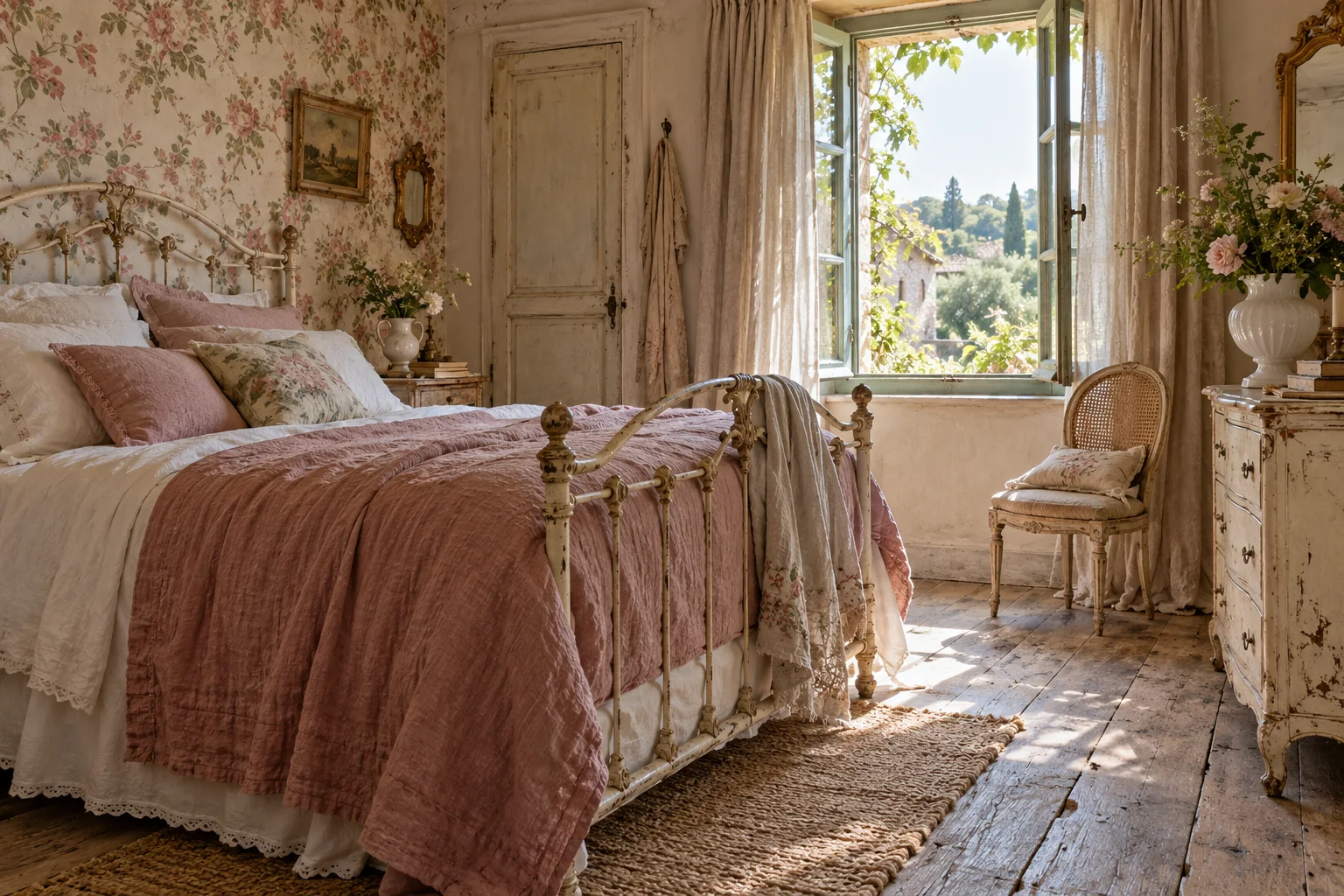 AI-created styling idea
Bedroom
Ask whether a pair truly matches and whether the handles and tops are original.
Explore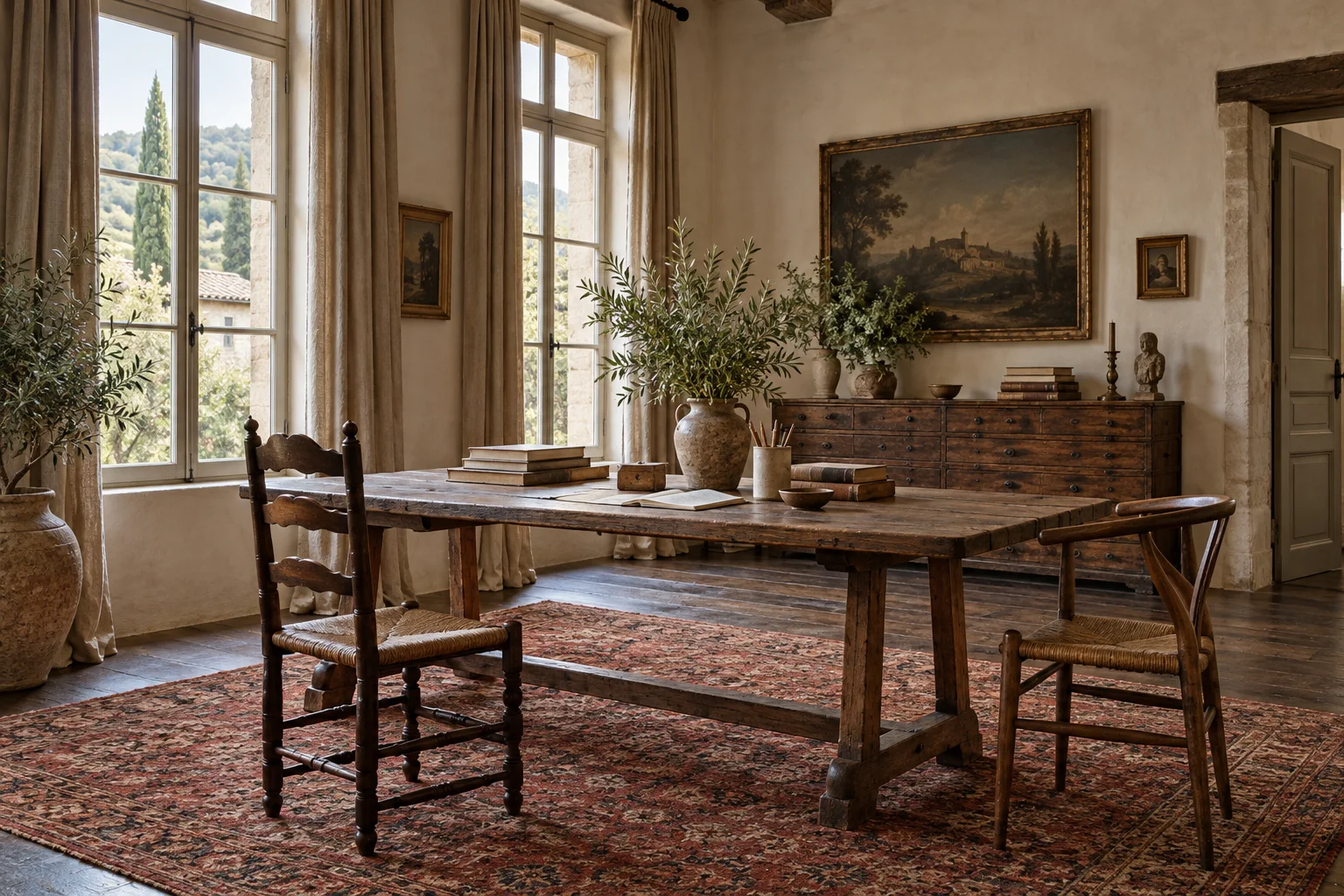 AI-created styling idea
Storage
Check glass shelves, wall fixing points and the load each shelf can carry.
Explore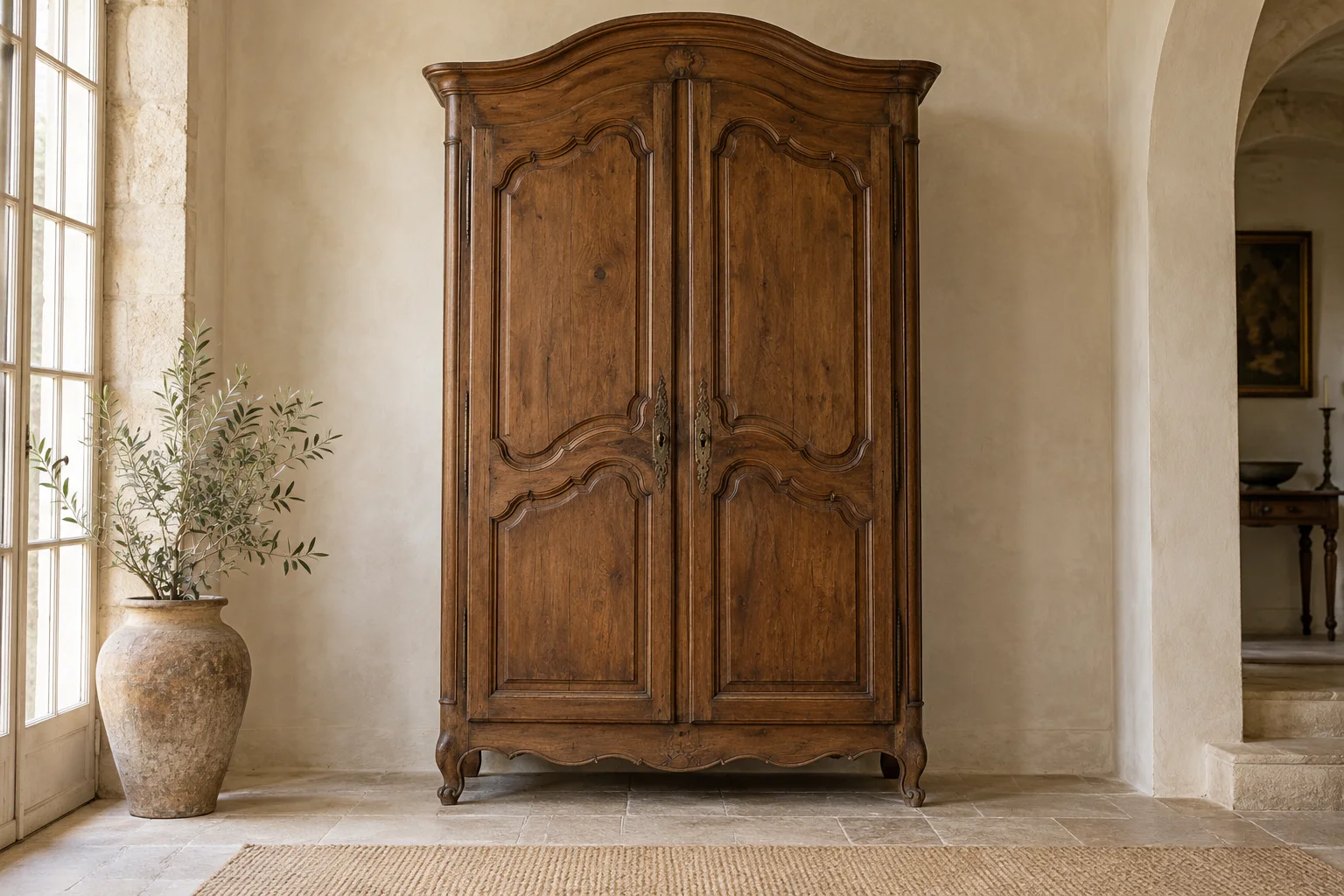 AI-created styling idea
Storage
Ask how it dismantles, and check mirror doors for lost silvering and worn hinges.
Explore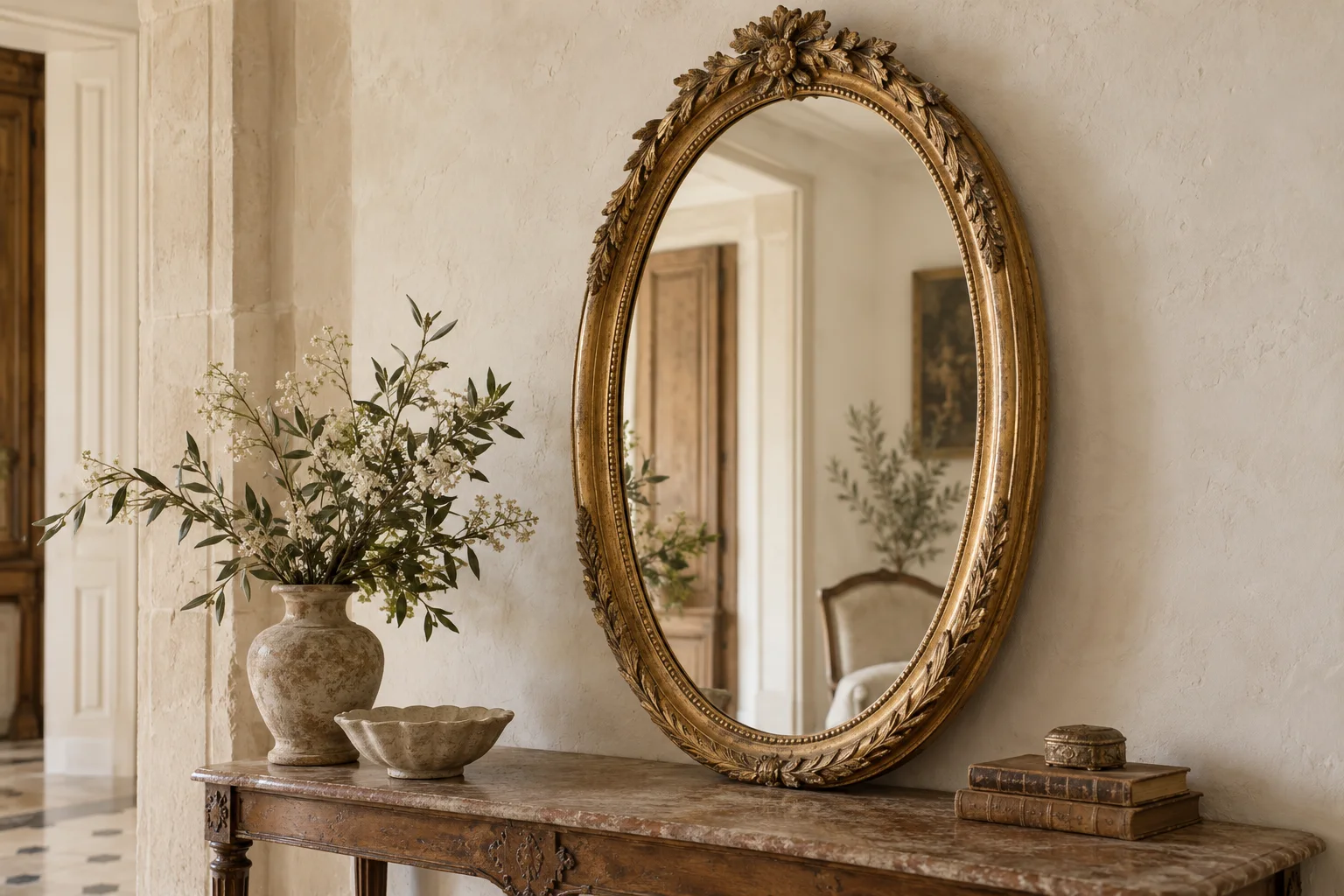 AI-created styling idea
Mirrors
Check bevels, etched panels and silvering, and confirm the weight before choosing hooks.
Explore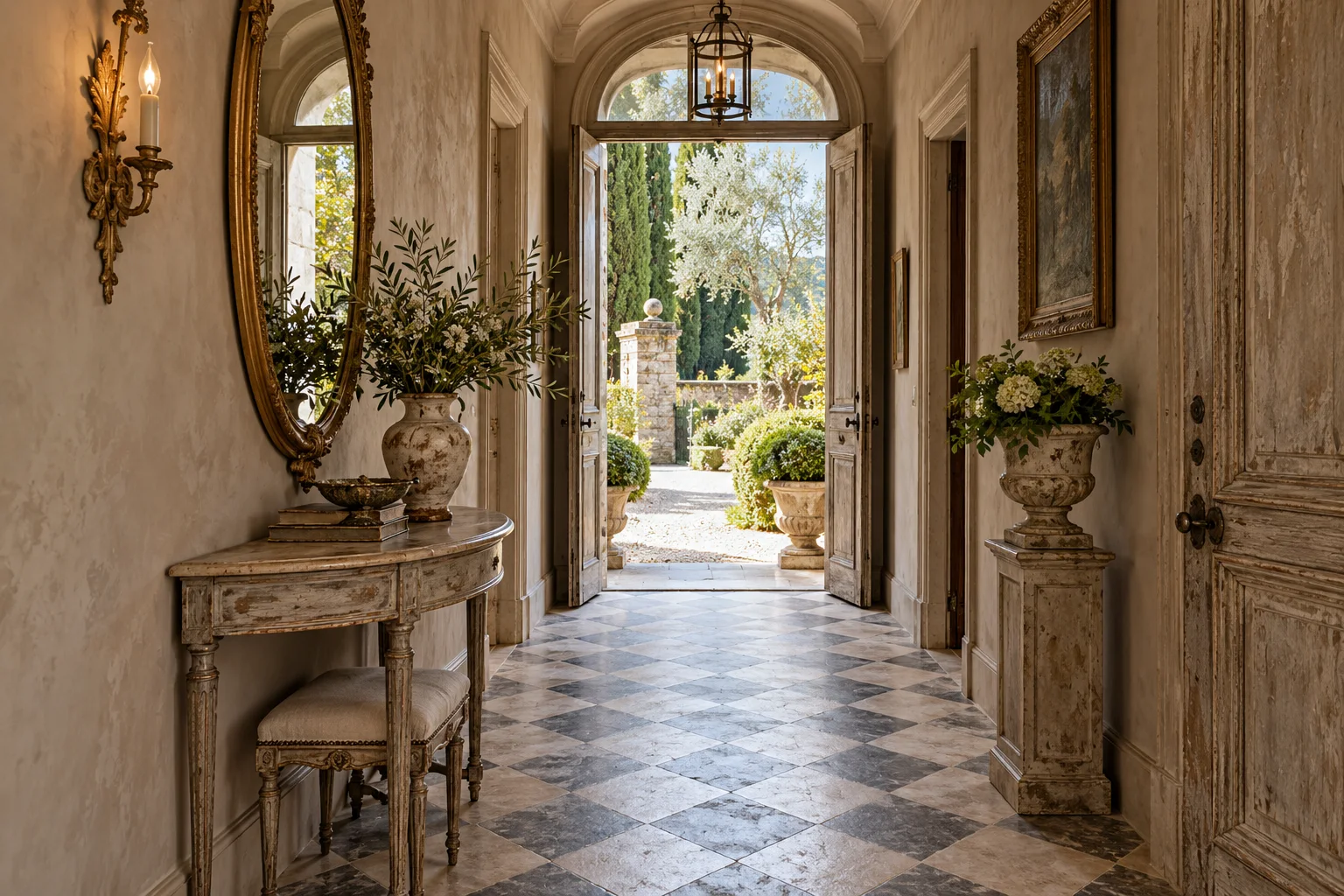 AI-created styling idea
Tables
Measure the depth against your hallway and check marble tops for cracks and repairs.
ExploreFrench Art Deco furniture is furniture made in France from about 1910 to the late 1930s in the style later named after the 1925 Paris exhibition of decorative arts. It combines simple, geometric forms with rich veneers, lacquer, shagreen, metal and glass. Most pieces on the market come from workshops and stores rather than famous designers, and a maker is named only with a stamp, signature or document.
Check the construction before the style. A period piece usually has solid wood or blockboard under the veneer, wear on the feet and drawer runners, oxidized surfaces inside and screws that match its age. Particleboard, MDF, staples or crisp, uniform finishes inside point to later manufacture. Ask the seller for photographs of the back, underside and drawers, and for any document behind a date.
Yes, Art Deco furniture works in a French country home when it is used sparingly. Choose one strong piece per room, such as a mirror, a side table or a bedside cabinet, and repeat its metal or color once. The straight lines and polished surfaces then contrast with waxed oak, linen and terracotta instead of competing with them.
Keep veneered and lacquered pieces out of direct sun and away from radiators and vents, since heat and dry air lift veneer and craze finishes. Dust with a soft, dry cloth and avoid silicone sprays and water. Lift tops and drawers rather than dragging them. Leave lifting veneer, chipped lacquer and lost inlay to a furniture conservator, because a quick glue repair can complicate later work.
Guides in this collection will appear as the journal grows. Meanwhile, explore the room ideas and plan your next antique finds.