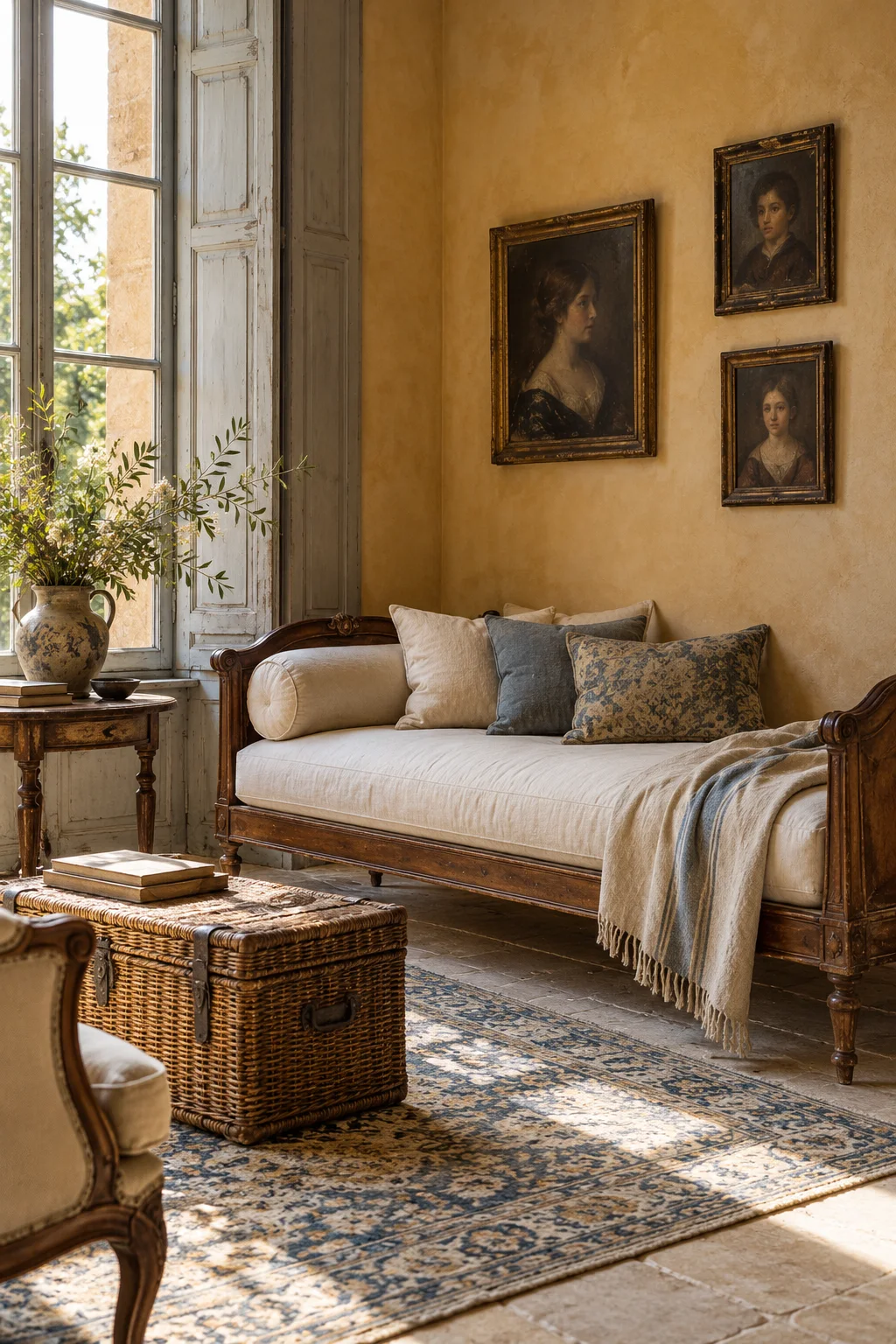
 AI-created styling idea
Tables
Side & nesting tables
Check marquetry tops for losses and lifting, and nesting tables for smooth runners.
ExploreFrench Country · An inspiration catalogue
Art Nouveau furniture follows the lines of plants, with whiplash curves, carved stems and flowers, and marquetry in walnut and fruitwood, made mostly between about 1890 and 1910.
Art Nouveau furniture belongs to a style usually dated from about 1890 to 1910. The name is commonly traced to Siegfried Bing's Paris gallery, the Maison de l'Art Nouveau, which opened in 1895. The Paris Exposition Universelle of 1900 showed the style at its height, and Hector Guimard's entrances for the Paris Métro, from about the same years, brought it into the street.
In Nancy, in Lorraine, designers and makers around Émile Gallé formed an association usually dated to 1901 and known as the École de Nancy. Its furniture is known for marquetry of local and exotic woods and for carving based on regional plants such as the thistle, the umbel and the water lily. Gallé and Louis Majorelle are the best-known historical names. A piece is attributed to them only by signature or documented provenance.
By about 1910 the style was falling out of fashion, and designers moved toward the straighter lines that led to Art Deco. Interest returned with the revival of the 1960s, which also brought reproductions and posters in the style. Today, period pieces, factory furniture of the early 1900s and later copies share the same name, so the label alone proves nothing.
Walnut, oak, mahogany and pear are the usual woods, with marquetry in many species and occasional bronze or gilt-bronze mounts shaped as leaves. Glass plays a large part: leaded panels in cabinet doors, colored glass shades and vases. The palette of Art Nouveau decor comes from plants and water: olive, moss, amber, honey brown, plum, mauve and muted gold. Those tones sit easily beside terracotta and waxed oak.
The whiplash curve, a line that swells and snaps back like a cord, runs through legs, aprons and door panels. Carving flows from one part into the next, so a leg becomes a stem and a crest becomes a flower. Marquetry panels show landscapes, flowers and insects such as dragonflies. Handles, hinges and escutcheons are often cast as leaves or stems.
Much of the Art Nouveau furniture on the market came from commercial workshops that adopted the curves without the fine marquetry. Those pieces are genuine period furniture, simply not attributed. Later copies are a different matter. Period marquetry is cut from real veneers, with small gaps, fading and slight lifting; printed or laser-cut patterns look flat and perfectly even. Carving should show tool marks in solid wood, not the smooth surface of molded resin. Signatures are also faked, so treat one as a reason to ask for documents, not as proof.
Ask for photographs of the back, the underside, the drawer joints and every repair, and check marquetry for losses, since replacing missing veneer takes skill. Many Art Nouveau pieces are now more than 100 years old; with age documentation they may fall under HTS heading 9706 for antiques, though the rate is confirmed at entry. Lo Cantou lists French antiques and vintage finds with condition notes, and designers can brief Antiques 360 for documented pieces, every flaw photographed and the landed cost known upfront.
A set of nesting tables in marquetry, a small display cabinet with leaded glass and a plant stand by the window carry the Art Nouveau interior into a living room. Keep upholstery plain so carved frames read clearly. Our article on École de Nancy forms and checks looks at the pieces still found, and the living room guide covers layout around them.
Bedroom furniture is among the most common survivals: carved headboards, bedside cabinets with marble tops and full suites with an armoire. Many French beds of the period were made for mattresses of about 55 x 75 in / 140 x 190 cm, closer to a US full than a queen, so measure before planning an adaptation. A headboard alone can be fitted to a modern frame by a cabinetmaker. Our bedroom ideas help balance a carved piece with plain linen.
A carved buffet with leaded glass doors, chairs with curved backrests and a table on shaped legs make an Art Nouveau dining room. Many dining sets of the period were made in walnut or oak, which helps them fit a country room. Our page on French country dining tables covers sizes, and the kitchen guide shows how one curved dresser or shelf can sit among copper and earthenware.
A coat stand with carved branches, a mirror in a curved frame and a plant stand give an Art Nouveau welcome at the door; see our entryway ideas. The style loved plants indoors, so a sunroom with tall plant stands, called sellettes, and glazed pots suits it well. Ideas for pots and planters outdoors are in the French country garden guide.
French country decor, room by room, rests on plain forms in oak, walnut and pine. A single Art Nouveau piece, such as a carved nightstand or a marquetry side table, adds movement without breaking the mood, because the woods are often the same. Keep the curves to one piece per wall and let linen, terracotta and plants echo the plant motifs.
Art Nouveau pieces are now antiques in their own right and sit well beside older French country antiques. Next to the gilt and crystal of a chateau-style room, a walnut Art Nouveau cabinet brings a warmer, more personal note. Avoid placing several strongly carved periods side by side; let one lead and keep the others quiet. A plain Louis-Philippe chest or a farmhouse table makes a calm neighbor.
Art Nouveau curves and grows; Art Deco, which followed it, straightens and polishes. Nouveau favors carved wood, marquetry and plant motifs, while Deco favors veneer, lacquer, metal and geometry. Both pair with French country style in small doses, and a room can hold one of each if they share a wood tone. In short, Nouveau suits a room built on wood and plants, and Deco suits one that wants a sharper, polished accent.
AI-created styling ideaTables
Check marquetry tops for losses and lifting, and nesting tables for smooth runners.
Explore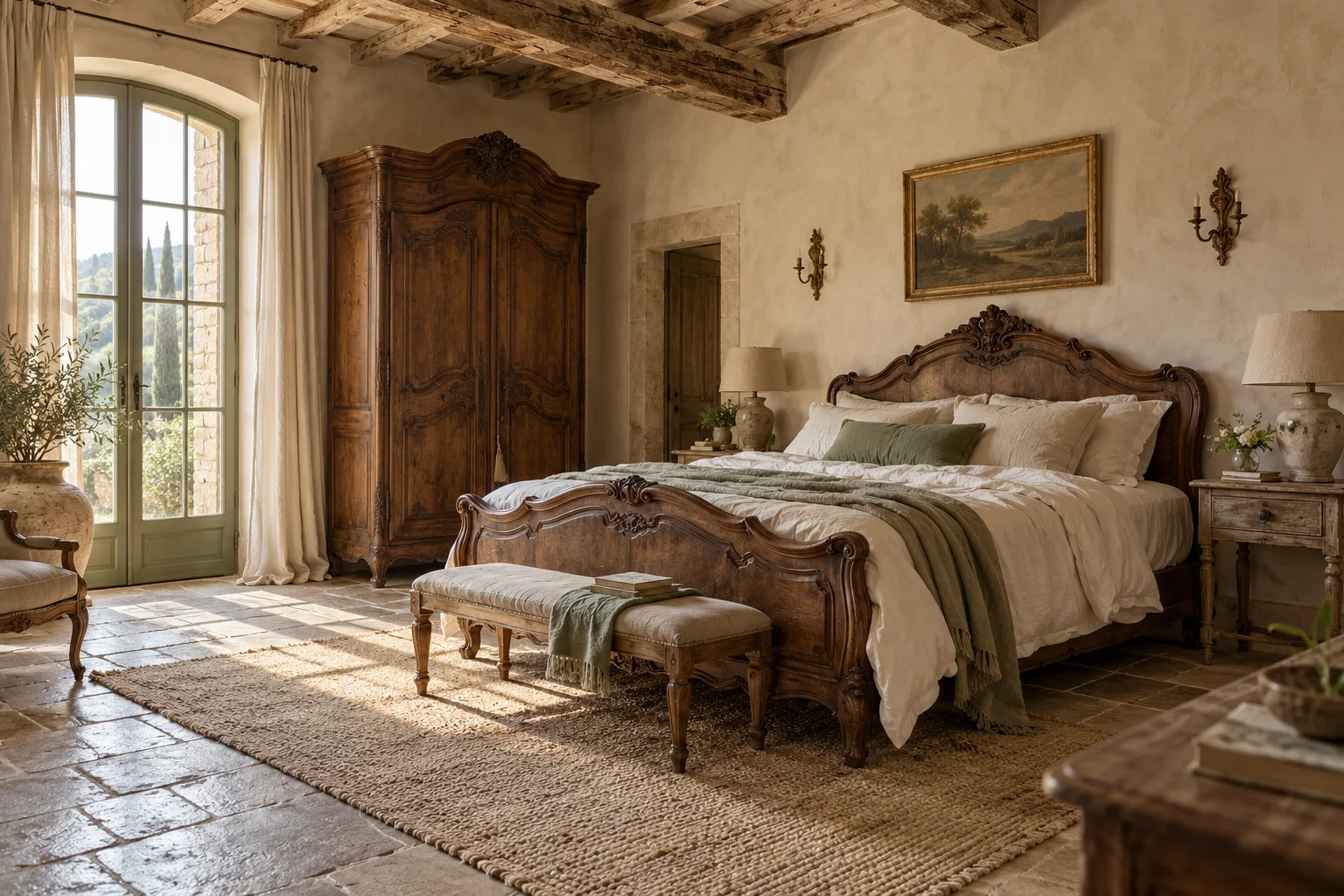 AI-created styling idea
Bedroom
Measure width and length against your mattress before planning any adaptation.
Explore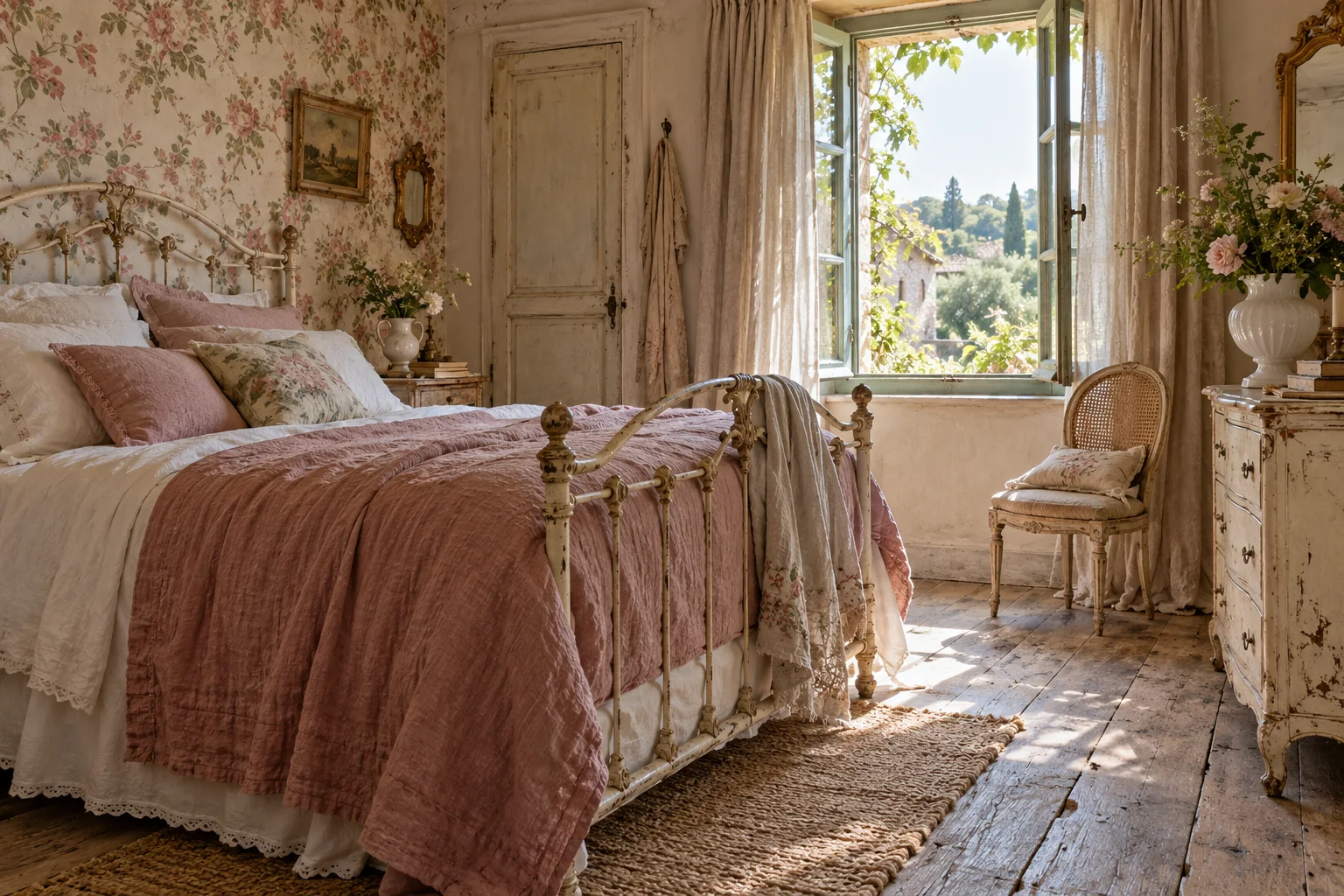 AI-created styling idea
Bedroom
Check marble tops for cracks and ask whether the top belongs to the base.
Explore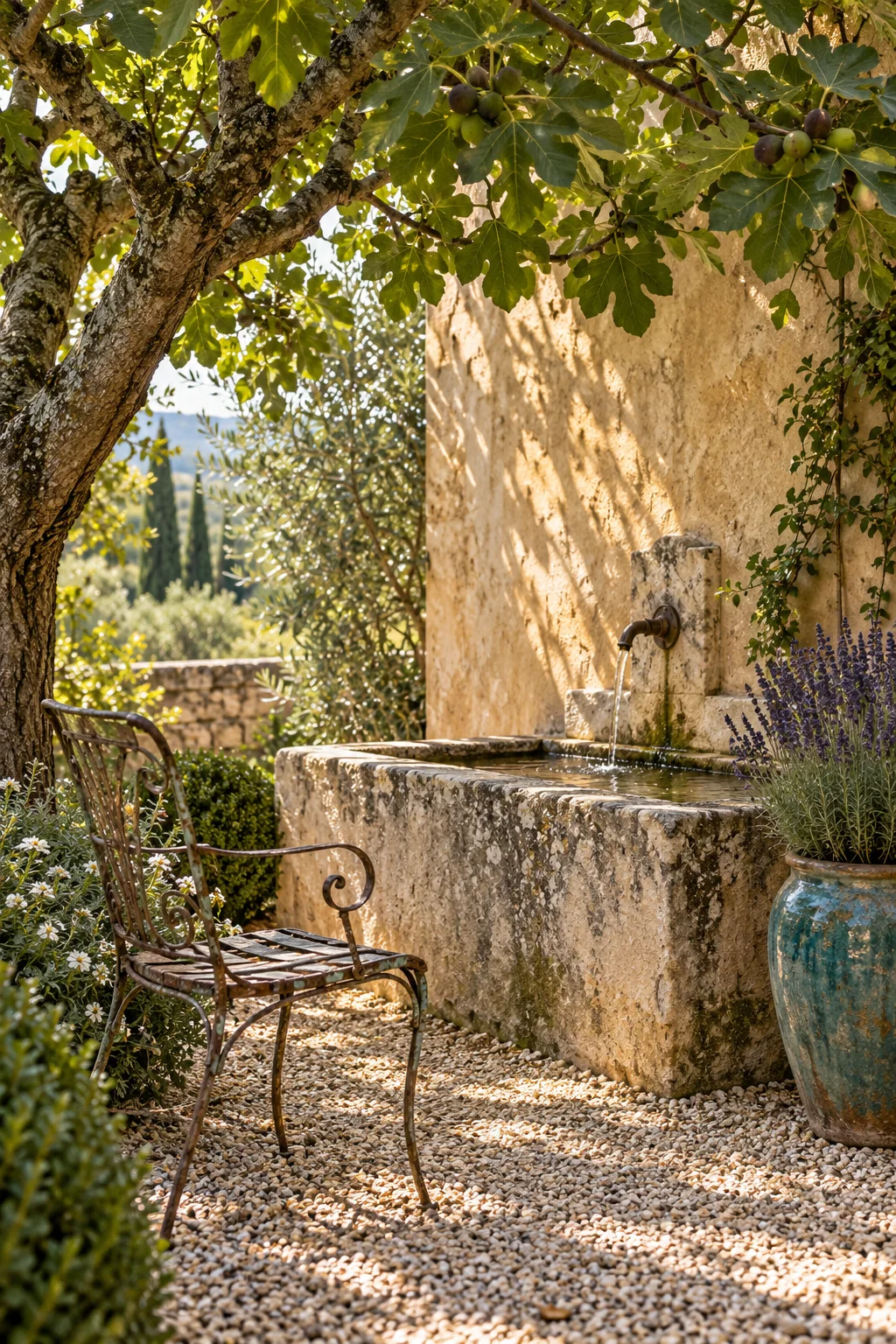 AI-created styling idea
Stands
Check stability on an uneven floor and protect the top from water rings.
Explore AI-created styling idea
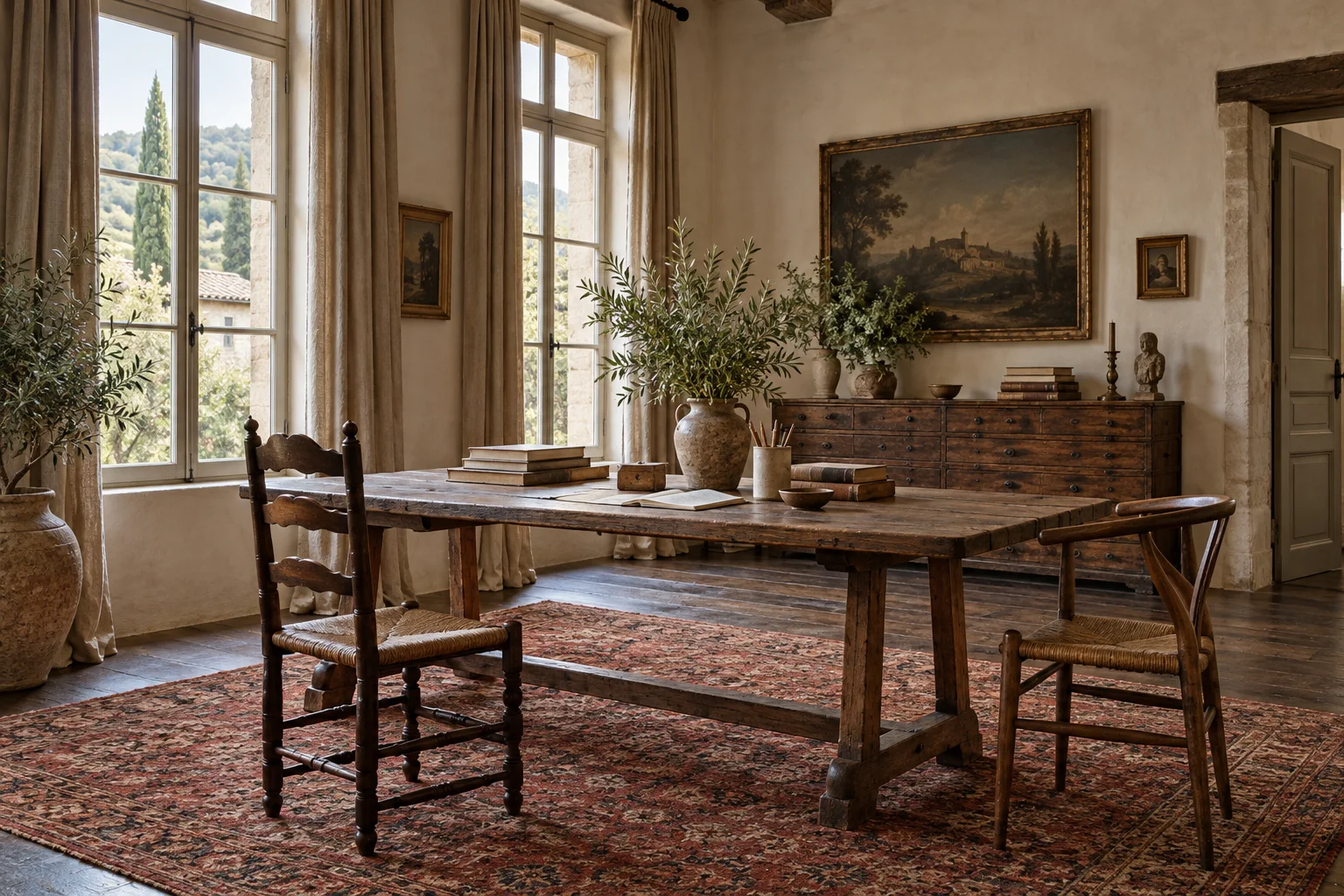 AI-created styling idea
Storage
Check leaded glass for cracks and loose cames, and shelves for sagging.
ExploreArt Nouveau furniture is furniture made mostly between about 1890 and 1910 in a style based on plant forms and flowing curves. French examples use carved walnut, oak or mahogany, marquetry of many woods, leaded glass and leaf-shaped hardware. Much of what survives came from commercial workshops; names such as Gallé or Majorelle apply only with a signature or documented provenance.
The École de Nancy was a group of designers and craftsmen in Nancy, in Lorraine, formally organized as an association around 1901 with Émile Gallé as its leading figure. Its furniture is known for marquetry and carving based on local plants and insects. Louis Majorelle is the other best-known name. Many pieces in the Nancy manner are unsigned, and signatures are sometimes faked.
Look closely at the marquetry and the carving. Period marquetry is cut from real veneers, with small gaps, fading and wear; printed or laser-cut patterns look flat and even. Period carving shows tool marks in solid wood, while molded resin is smooth and repetitive. Check the back, drawers and screws for consistent age, and ask for documents behind any date or name.
Yes, Art Nouveau furniture works with French country decor because both often use walnut and oak and both draw on nature. Choose one curved piece per room, such as a bedside cabinet or a plant stand, and surround it with plain country furniture, linen and plants. Avoid full matching suites in small rooms, where the carving can feel heavy.
Guides in this collection will appear as the journal grows. Meanwhile, explore the room ideas and plan your next antique finds.