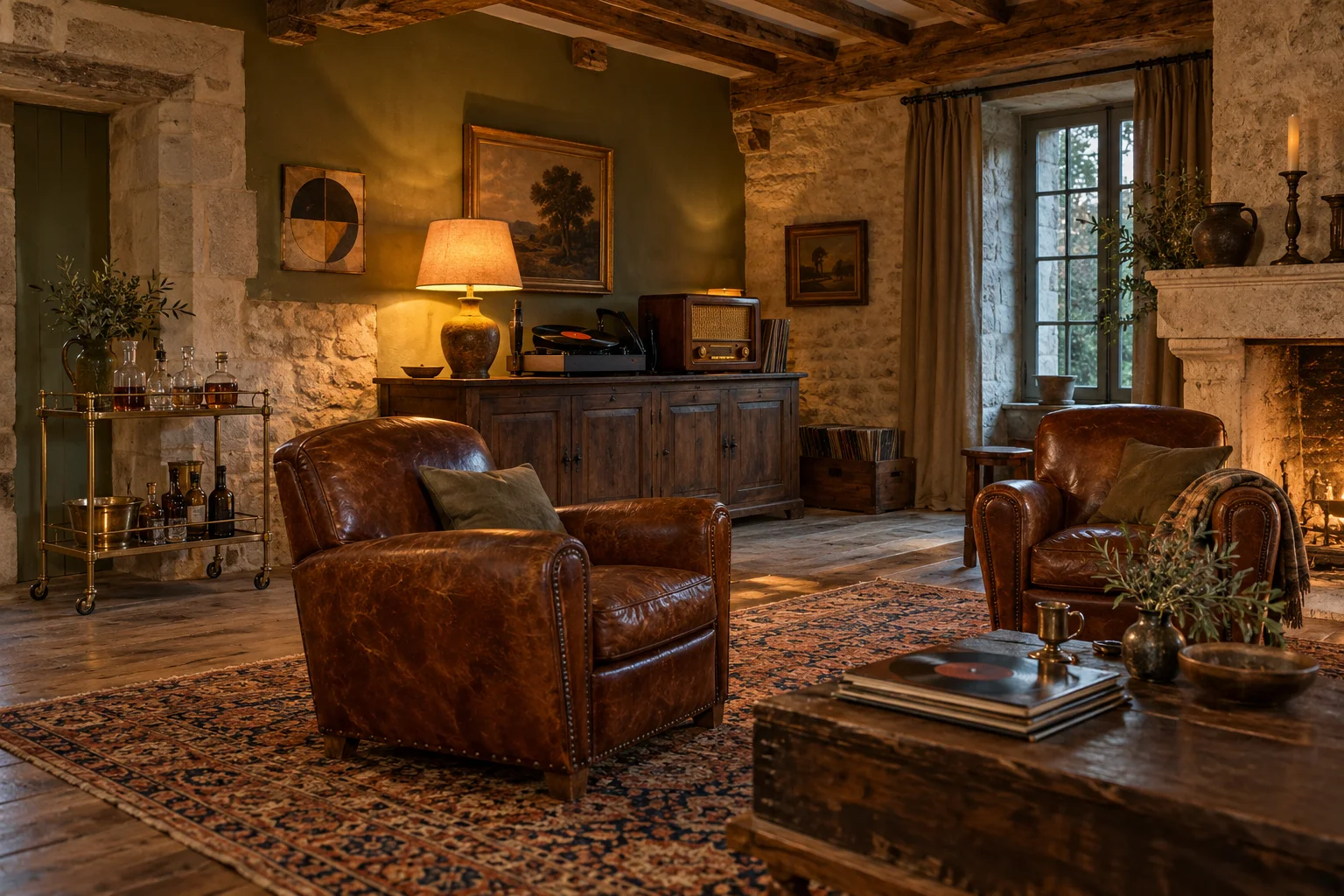
 AI-created styling idea
Collectibles
Birdcages & collectibles
Check wire, joints and domes; confirm materials before buying across borders.
ExploreFrench Country · An inspiration catalogue
French collectibles are the small, often mass-made objects of French daily and commercial life that people now gather in themes: Limoges porcelain boxes, enamel signs, carved duck decoys, clocks, birdcages, radios and glass. This page explains how to read them and links every guide in the series.
French collectibles sit between antiques and souvenirs. They were rarely made as art: a porcelain pill box, a street sign, a hunter's decoy or a kitchen clock had a job to do. What makes them collectible today is the combination of a recognizable French form, a manageable size and enough variety to build a theme on a single shelf.
Most French collectibles come from three worlds: the home (clocks, boxes, glass, flower frogs), the shop and the street (enamel signs, advertising pieces, shop fittings) and the countryside (decoys, tools, baskets). Pieces made in thousands are common; pieces in good condition, in an uncommon color or with a clear mark are not. That gap between common and good is where collecting begins.
Collectibles give a room a personal layer that furniture alone cannot. In its 2026 interior design trends survey, 1stDibs reported that collectibles from the 1920s to the 1950s and pre-1920s antiques are growing in popularity among the designers it polled; the 1stDibs survey press release gives the figures. A row of decoys or a wall of enamel signs is also the easiest way to signal a collector's house.
Many collectible forms were made for a century and are still made now. A "1930s enamel sign" or an "antique Limoges box" names a style until a mark, a construction detail or a document supports the date. Every guide in this series describes first and attributes second.
Limoges boxes are small hinged porcelain boxes, painted and fitted with a metal mount, made in and around Limoges in west-central France. Most fit in a palm, roughly 1½–3 in (4–8 cm) long, in forms from a plain oval to a shoe or a croissant. The marks under the glaze and over it, and the words Peint main (hand painted), are covered in collecting Limoges boxes.
French enamel signs, the plaques émaillées of streets, shops and farm gates, are steel sheets coated with powdered glass and fired, usually one color at a time. They are hard, glossy and long-lived, which is also why they are widely copied. Our guide to French enamel signs and reproductions explains flat and domed plaques, enameller's marks and the evidence of age.
Decoys, called appelants in French, are carved or molded birds that hunters floated to draw wild ducks; old French examples are in wood or cork, painted and repainted over decades. Paint wear, weights and keels tell their story. See our guide to antique duck decoys and Lo Cantou's page on antique duck decoys.
Three families cover most French clocks on the market: the tall comtoise from eastern France with its pressed-brass front, the mantel clock in gilt bronze or black marble, and the small brass carriage clock with glass panels. Our guide to choosing a French clock explains movements, servicing and honest display.
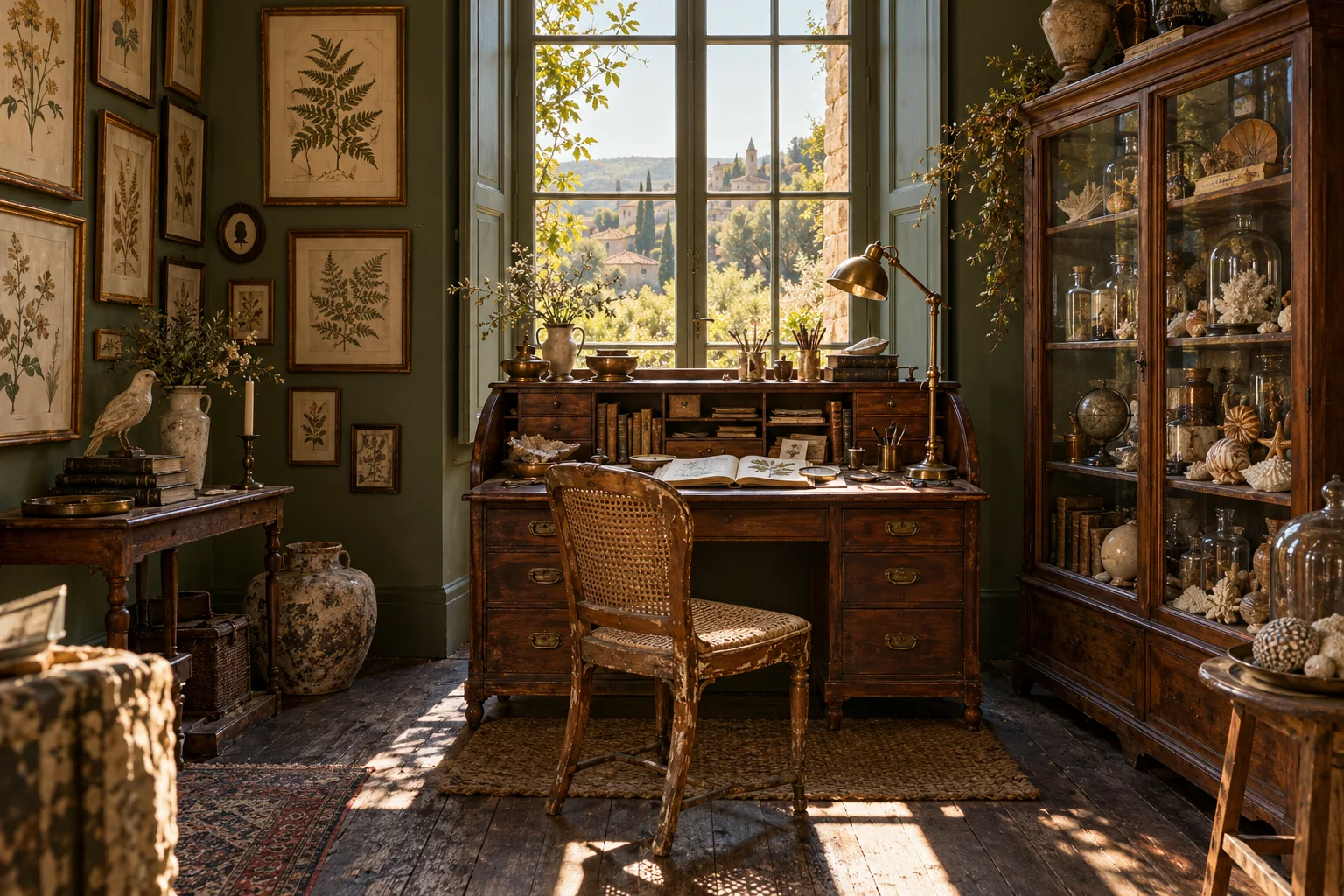
Wire and wood birdcages, shop display stands, scientific instruments and taxidermy domes belong to the cabinet-of-curiosities tradition. Check wire for rust and broken joints, domes for cracks at the base, and anything with feathers or ivory for legal restrictions before buying across borders. Browse birdcages and collectibles for forms and checks.
Bakelite telephones and valve radios from the mid-twentieth century are display pieces first: old wiring should not be connected without a technician's inspection. Glass and metal flower frogs, the pique-fleurs, are small enough to collect by the dozen. See vintage radios and telephones and vintage flower frogs.
Opaline boxes, perfume bottles and faience plates are collected as intensely as any of the families above. They have their own series: our hub on antique French glass and our hub on French faience and pottery.
A mark can name a factory, a decorator, a retailer or simply a town. On porcelain, a mark under the glaze was applied before the final firing; one over the glaze was added later, sometimes much later. On enamel signs, the enameller's name usually appears in a lower corner. On clocks, a stamp on the movement matters more than a name on the dial. Attribute only by mark, and compare the mark with documented examples.
Real wear follows use. Hinges loosen and gilding rubs on the high points of a box; enamel chips around fixing holes and at edges where a sign was knocked; decoy paint wears on the breast and the head where hands held it. Wear that is even all over, or appears where nothing could touch, suggests artificial aging.
Reproduction enamel signs are often thinner, lighter and too evenly rusted; check the back and the fixing holes. New "Limoges" boxes may carry only the word Limoges without a full factory mark. Decoys with crisp carving under heavily distressed paint deserve suspicion. When the price of a supposedly rare piece seems low, the description is usually what is wrong.
Open and close every box: the lid should meet the base without a gap, and the clasp should hold. A replaced mount or a lid from another box changes the value. Keep porcelain away from radiators and sudden temperature changes, and dust with a soft brush rather than a cloth that can catch on a hinge.
Clean enamel signs with a damp cloth and mild soap only; abrasives dull the glaze and solvents can lift old paint around repairs. Treat rust at chips with care, and keep signs indoors in a dry room. The Canadian Conservation Institute's guidance on caring for metal objects explains why humidity matters.
Never strip or repaint a decoy: the old paint is the object. Dust it, keep it out of direct sun and away from damp walls. Have a clock movement serviced by a clockmaker before setting it running, and move a pendulum clock only with the pendulum removed or secured.
A collection reads well when it repeats one idea with variations: Limoges boxes shaped as fruit, enamel signs in blue and white, decoys of a single species, carriage clocks in brass. Five to seven pieces of one theme make a display; twenty make a collection. Decide the theme before buying the third piece.
One sign in excellent condition is worth more on a wall, and later at resale, than three with heavy damage. Ask for photographs of the back and of every flaw, measure in inches and centimetres, and keep the seller's description with the object. Our French country antiques guide explains what a good description contains.
Markets and brocantes are full of collectibles; our hub on antique shopping in France explains how to buy there. Lo Cantou lists collectibles with marks and condition photographed. A designer sourcing a curated set for a client can send a brief to Antiques 360 and receive documented pieces with the landed cost known upfront.
Enamel signs, a wall clock and a row of flower frogs suit the kitchen, where hard surfaces tolerate splashes. Hang signs away from the stove, where heat and grease build up, and keep paper labels away from steam.
Decoys on a mantel or a bookcase, a mantel clock between candlesticks and a birdcage on a stand give the living room and the home office and library a collector's character. Our page on French country accents shows how to edit a shelf so it does not tip into clutter.
Limoges boxes and perfume bottles group on a tray in the bedroom or on a dressing table. A glass-fronted cabinet protects small pieces from dust and handling. For walls, our page on French country mirrors and wall decor covers hanging heights and groupings.
Each guide takes one family of French collectibles, with the marks, the wear and the checks that separate a good piece from a copy. New guides are added as they are published.
AI-created styling ideaCollectibles
Check wire, joints and domes; confirm materials before buying across borders.
Explore AI-created styling idea
Clocks
Read the movement stamp, not the dial, and plan a service before running it.
Explore AI-created styling idea
Wall decor
Check the back and the fixing holes: that is where reproductions show.
ExploreAI-created styling ideaCollectibles
Display first: have old wiring inspected before connecting anything.
Explore AI-created styling idea
Collectibles
Glass and metal flower frogs: check for chips at the holes and rust on pins.
Explore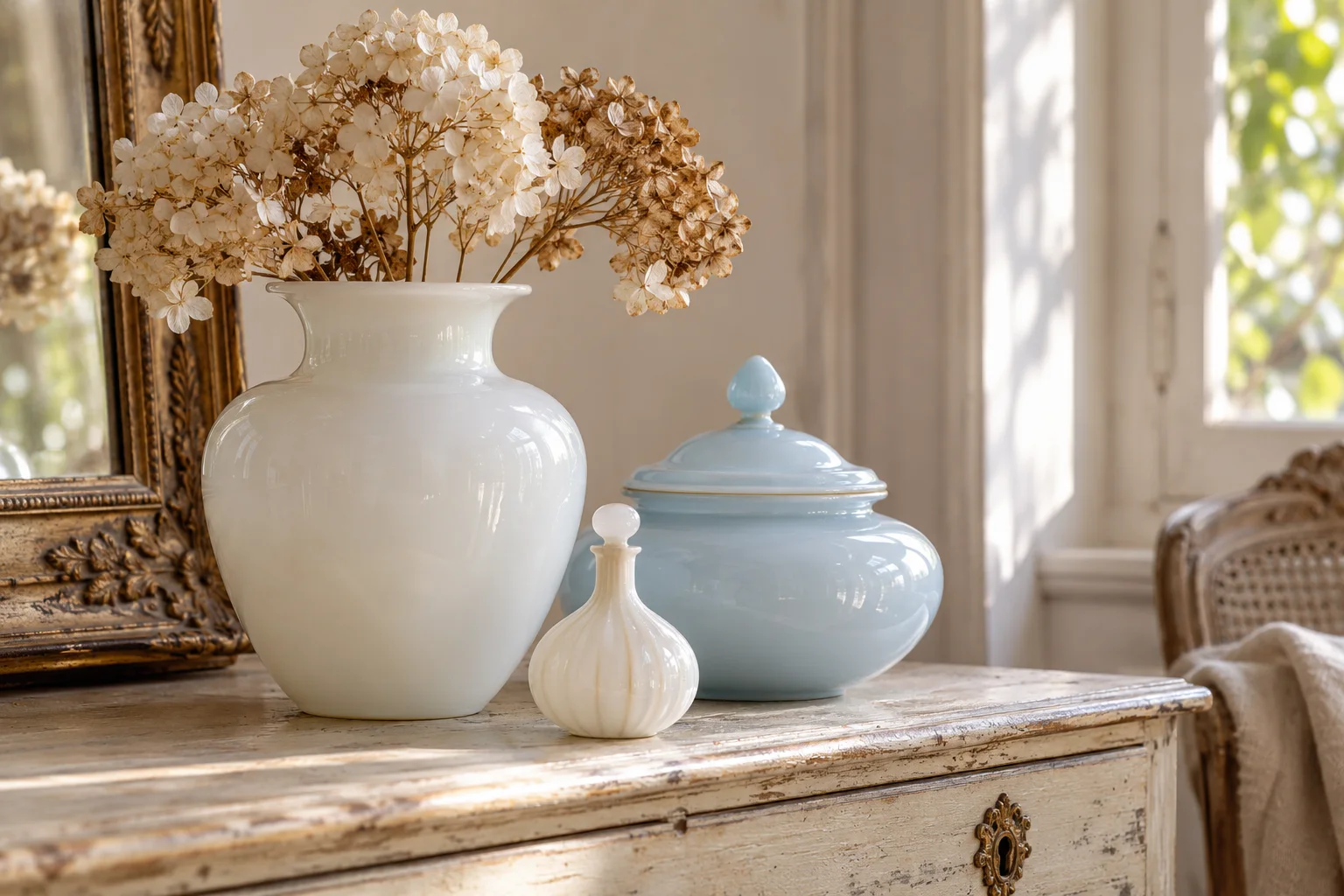 AI-created styling idea
Limoges porcelain boxes, enamel signs, duck decoys, French clocks, opaline glass, faience plates, birdcages and flower frogs are among the most sought-after. They share a recognizable French form, a manageable size and wide variety, which lets collectors build a theme. Condition and a clear mark matter more to value than the category itself.
Look at the back and the edges first. Old signs are usually heavier steel with enamel on both faces, chips concentrated around fixing holes and edges, and rust only where the enamel is broken. Reproductions are often thinner, lighter, evenly distressed and printed rather than fired in layers. An enameller's mark in a lower corner supports age but can also be copied.
Peint main is French for hand painted. On a Limoges box it indicates that the decoration was painted by hand rather than applied as a printed transfer. It describes the decoration only: it does not date the box or name the factory. Read it alongside the factory mark under the glaze and check the hinge and clasp.
Leave a decoy's paint alone: stripping or repainting destroys most of its interest and value. Clean it with a dry brush only. A clock is different, because a movement needs servicing to run safely; have a clockmaker clean and adjust it, and keep any replaced parts. Describe every restoration if you ever sell the piece.
Group by theme and by material, in odd numbers, on one surface at a time. Five decoys on a mantel or seven boxes on a tray read as a collection; the same pieces scattered around a room disappear. Leave space between groups, and rotate pieces seasonally rather than showing everything at once.
Nov 6, 2026 · Antique guide
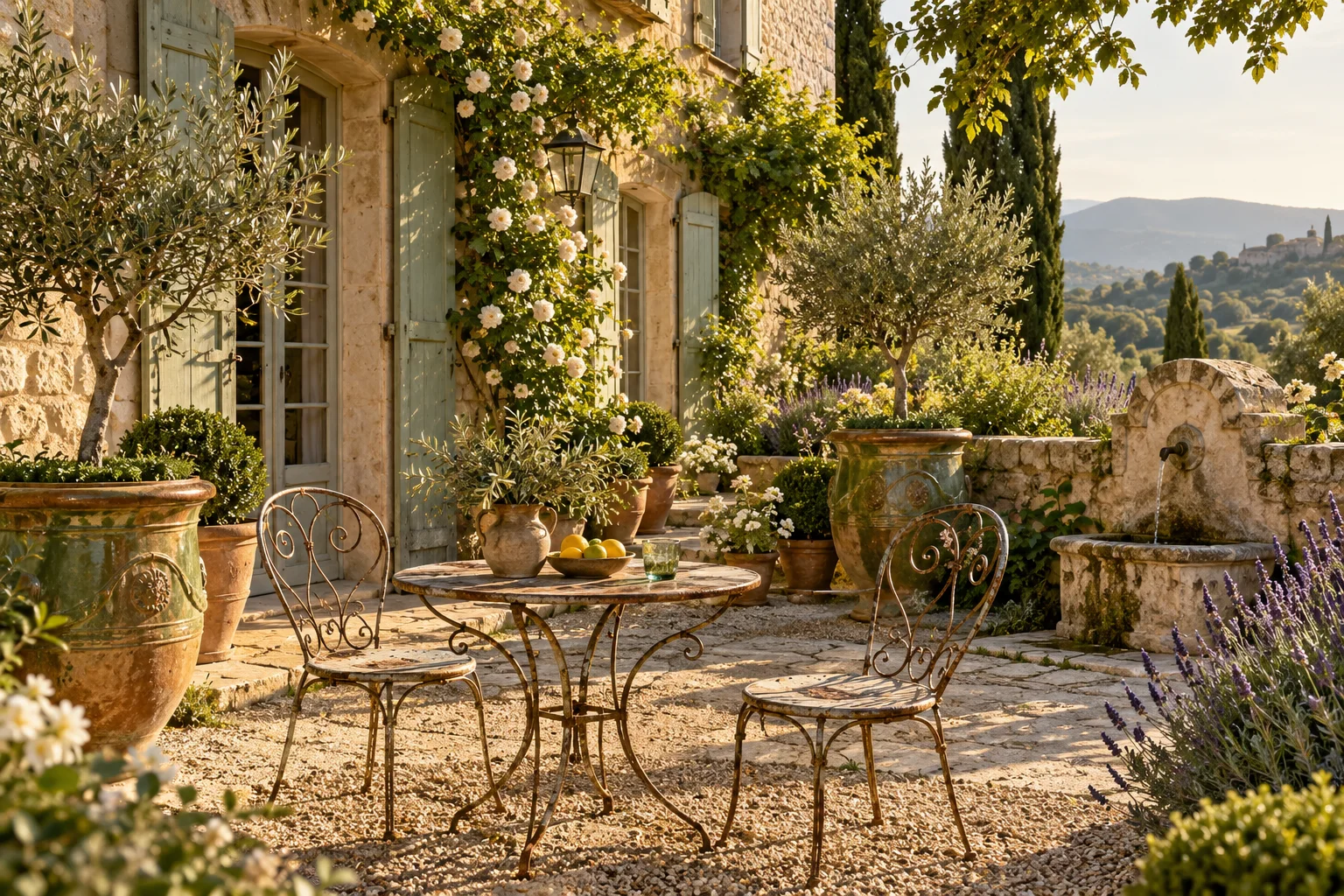
French gardens are easier to borrow from than to copy.
Nov 6, 2026 · Antique guide
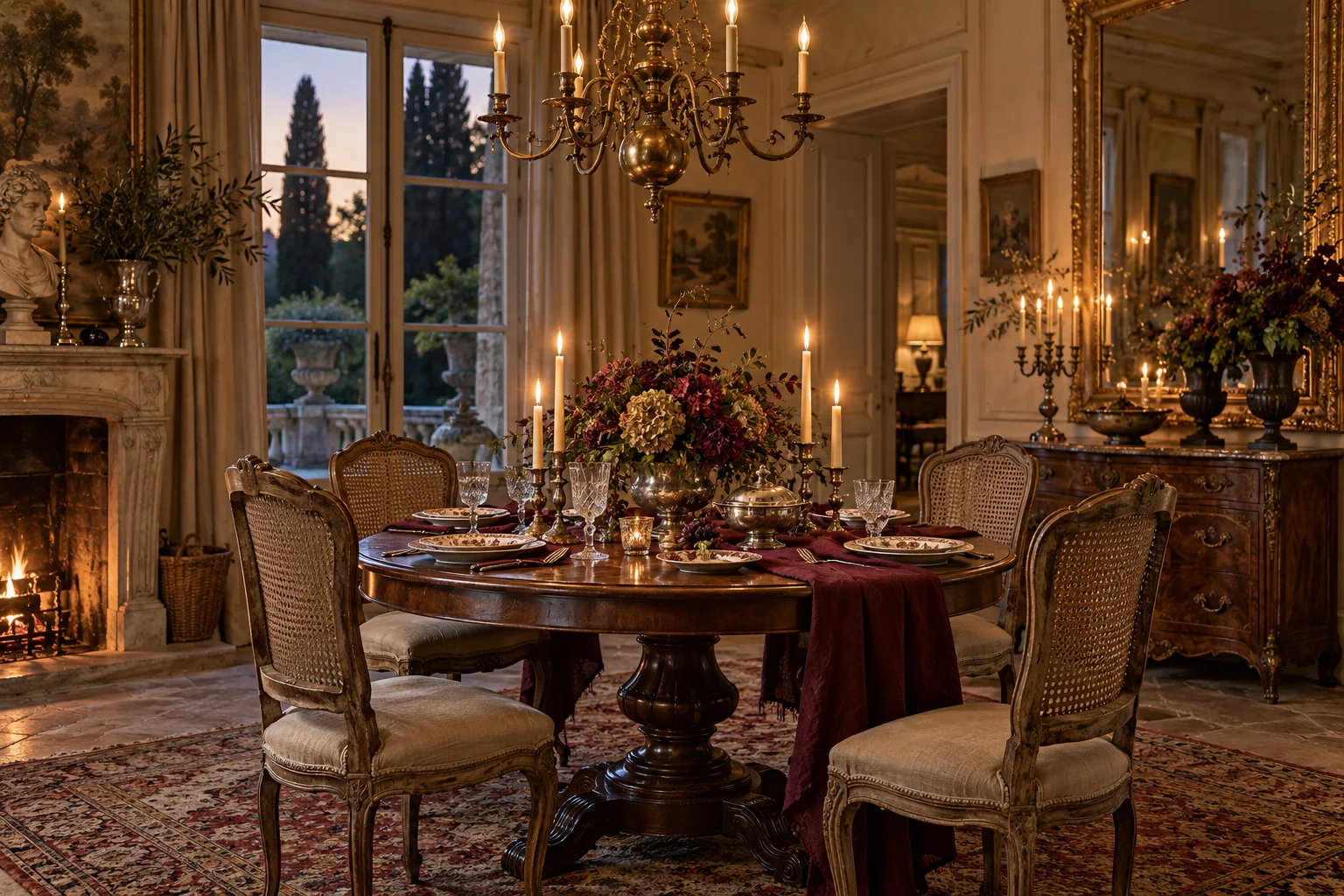
A French country Thanksgiving table takes its look from the farmhouse: a linen cloth, white ironstone or faience plates, mixed silverplate, short bistro glasses,…
Nov 6, 2026 · Antique guide
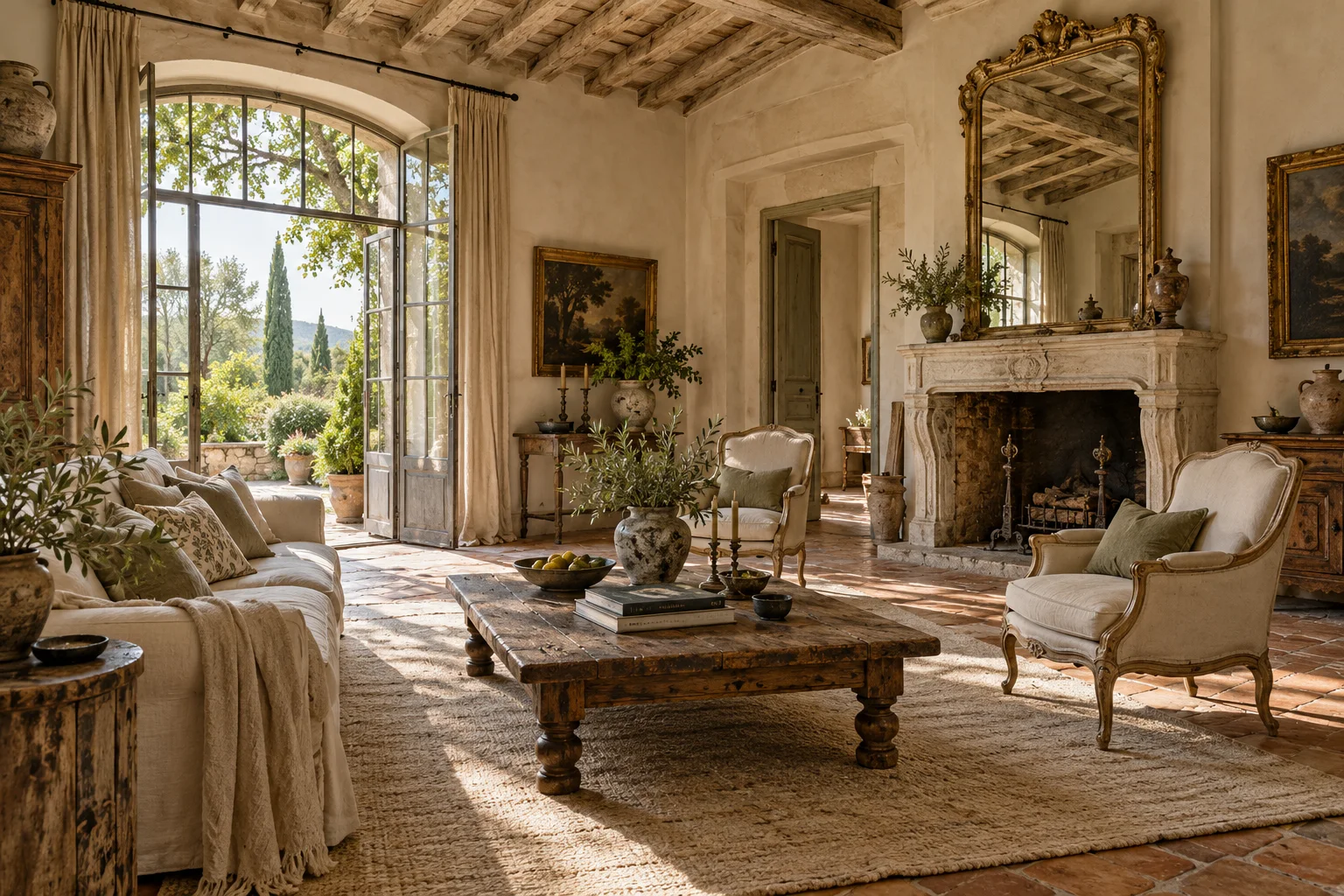
An antique fireplace mantel sets the scale of a living room before any furniture arrives.
Nov 6, 2026 · Antique guide
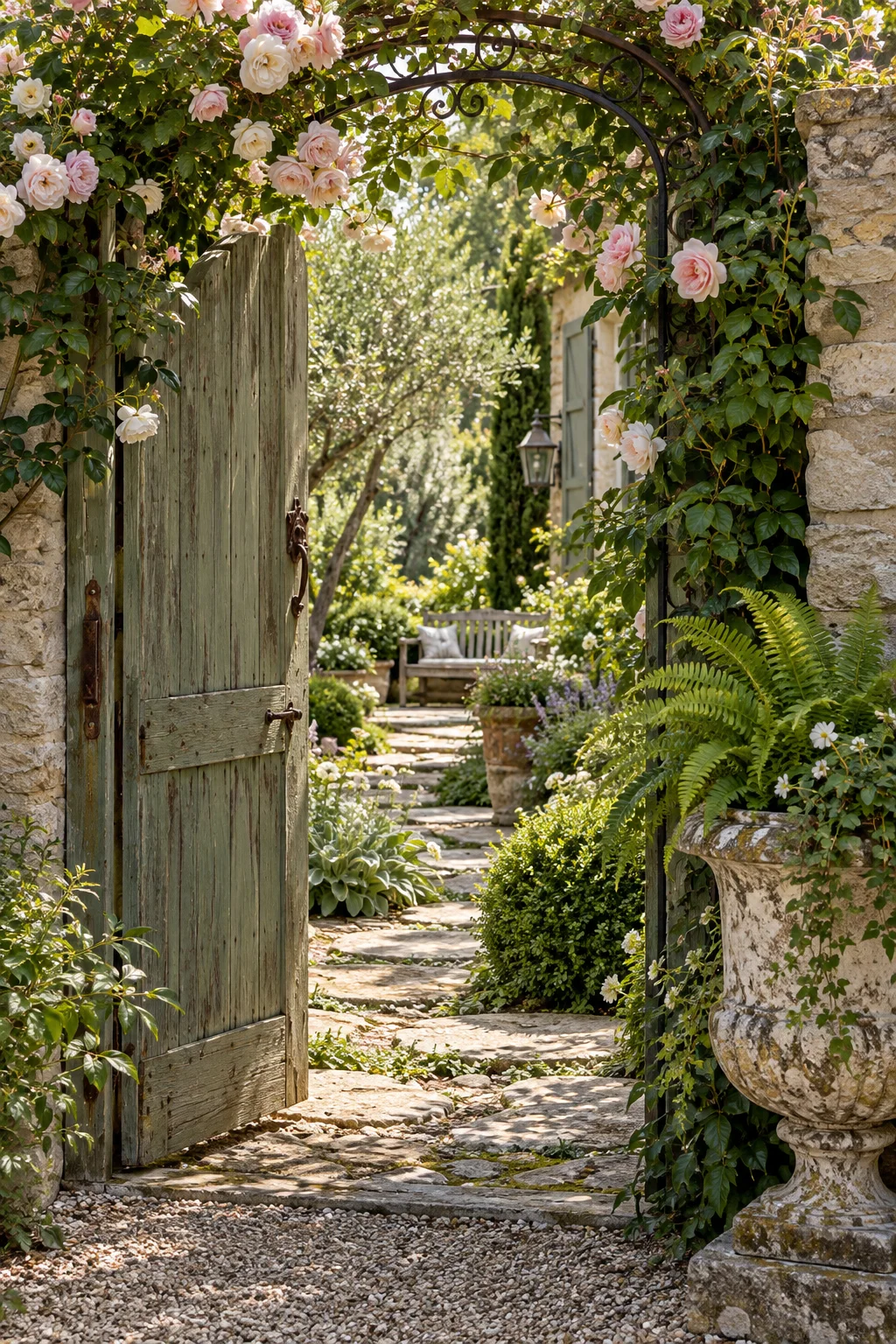
Terra cotta pots give a French country garden its color and weight: a pair of glazed Anduze vases at the top of the steps, a Biot jar in a bed of lavender, rows of…
Nov 5, 2026 · Antique guide
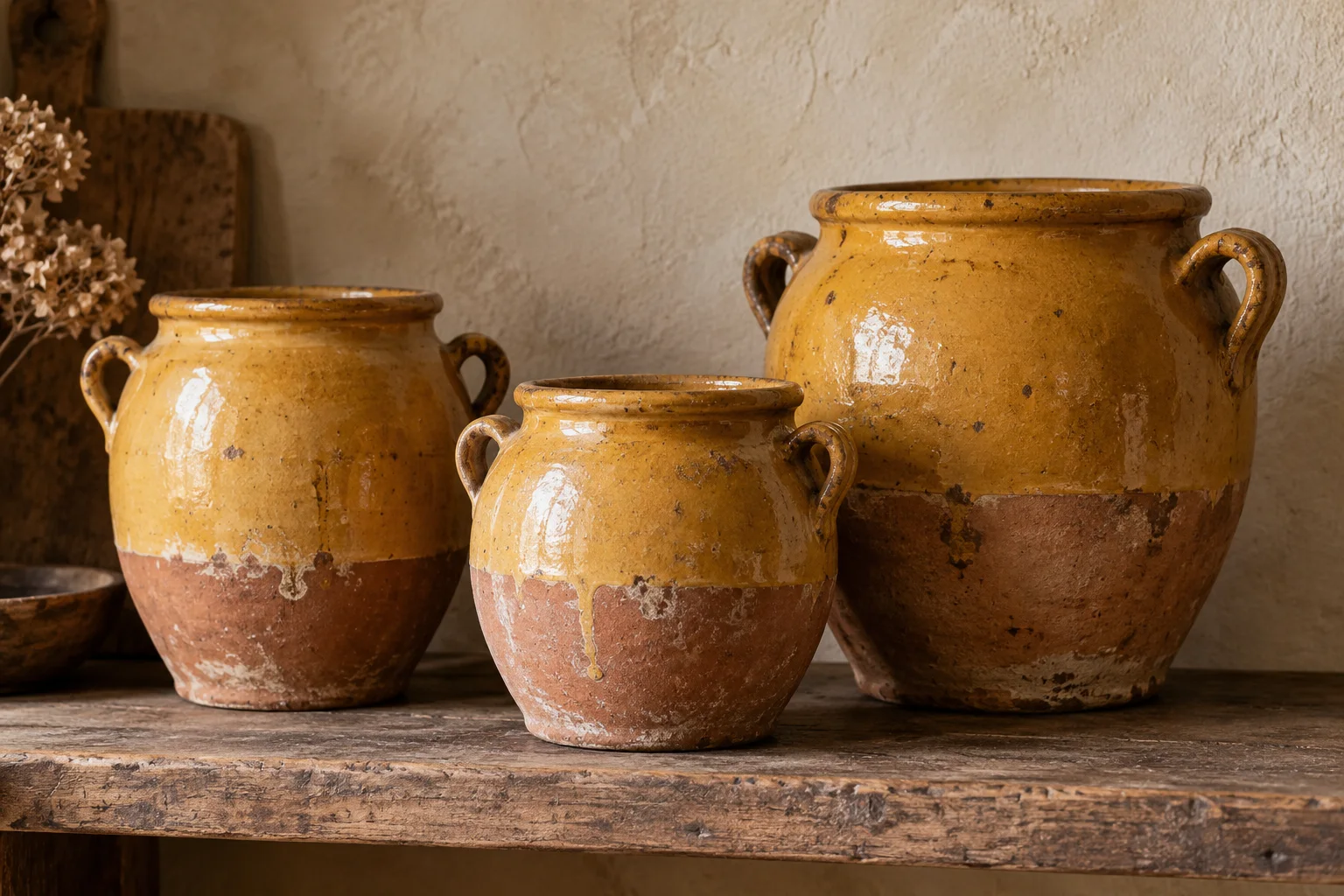
Vintage pottery from French kitchens and workshops falls into two bodies and three glazes.
Nov 5, 2026 · Antique guide
An antique magazine rack is one of the few small antiques that still does its original job and several new ones.