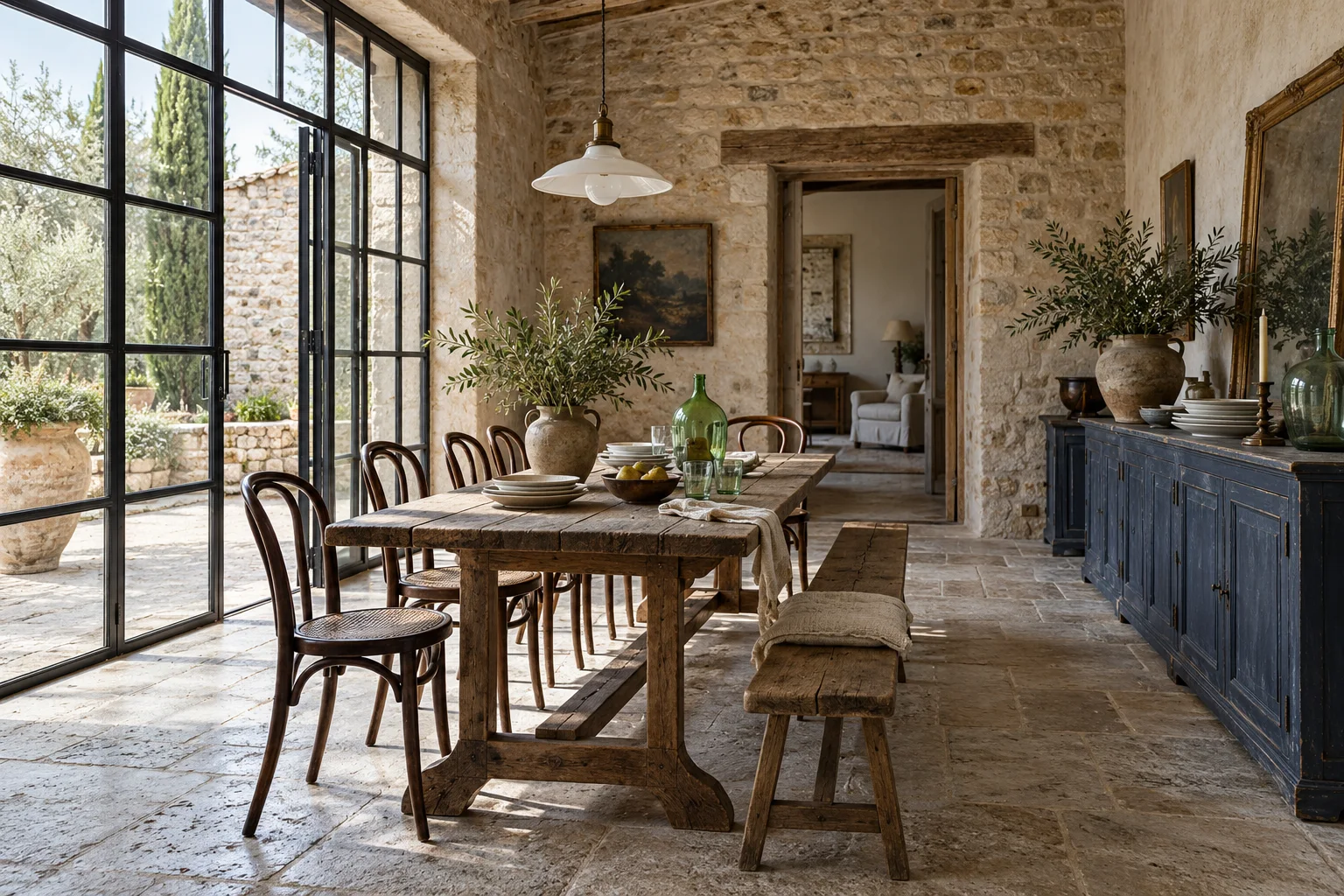
 AI-created styling idea
Tableware
Serving dishes & tableware
Turn every plate over: the foot shows the body, the wear and often the mark.
ExploreFrench Country · An inspiration catalogue
French faience is earthenware covered with an opaque white tin glaze that takes painted decoration, made in France from the sixteenth century onward. Around it sit its country relatives: majolica, ironstone, stoneware crocks and glazed earthenware. This page sorts them and links every guide in the series.
French faience is the painted pottery most people picture on a country dresser, but sellers use the word for almost any old French ceramic. Knowing which body you are holding decides how it should be described, whether it can serve food and how it should be washed. Collectors and designers seek these pieces because they bring color and handmade irregularity to a room at a scale that suits everyday life.
True faience is a soft, porous earthenware body under a glaze made white and opaque by tin oxide. Painted decoration sits in or on that glaze. Faience is lighter than it looks, chips to show a buff or reddish body, and often shows fine crazing. The Metropolitan Museum's essay on French faience explains the technique and its history.
In the nineteenth century, French factories turned to faïence fine, a fine white or cream earthenware under a clear lead glaze, close to English creamware. Harder versions sold as terre de fer or demi-porcelaine are the French counterpart of ironstone; read antique ironstone and French terre de fer.
French majolica, called barbotine, is molded earthenware with thick colored lead glazes, often in relief. Stoneware (grès) is fired hot enough to become dense and watertight. Glazed earthenware covers the confit pots, terrines and gratin dishes of country kitchens. See antique majolica plates and antique stoneware crocks.
According to the Metropolitan Museum's essay, tin-glazed faience emerged in France in the sixteenth century under Italian influence, with workshops at Lyon and Rouen, and Nevers became a major center in the early seventeenth century. Demand grew when Louis XIV, in 1689, called on the nobility to melt down their silver plate, and faience took its place on aristocratic tables.
Early faience was decorated in grand feu: colors painted on the raw glaze and fired once at high temperature, which limits the palette to blue, yellow, green, manganese purple and orange. From the second half of the eighteenth century, petit feu added a second, lower firing that allowed reds, pinks and finer detail. Looking closely at the colors is the first step to reading a plate.
Centers such as Moustiers, Marseille, Strasbourg and Quimper developed their own styles, and nineteenth-century factories such as Gien, Sarreguemines, Lunéville, Longchamp and Creil-Montereau produced printed and painted wares for a wide market. These names describe history, not the plate in front of you: a plate in the Quimper manner without a mark is not Quimper. Our guide to French faience plates, factories and marks covers the main centers.
Dinner plates of about 9–10 in (23–25 cm) and dessert plates of about 7–8 in (18–20 cm) are the most common faience forms. Talking plates (assiettes parlantes) with inscriptions, and series with scenes, are collected for the wall. Lo Cantou keeps a page on vintage faience plates with marks and condition shown.
Oyster plates have six or twelve wells around a central well for lemon or sauce; fish services pair a long platter with plates, each painted with a different species. Both were made in majolica, faience and porcelain. See oyster plates: forms, marks and display, antique fish plates and fish services, and Lo Cantou's page on oyster plates.
The soupière, a deep covered bowl with handles, a notched lid and often a stand, survives in faience, porcelain, ironstone and silver plate. A complete tureen has its lid, and ideally its stand and ladle. Read antique soup tureens before buying one as a centerpiece.
Salting crocks (saloirs), grease jars, oil jars and confit pots range from about 6 to 24 in (15–60 cm) high. Some are stoneware, many are glazed earthenware; the body decides what they can still hold. Our vintage French kitchenware hub shows them beside copper and wood.
A mark can name a factory, a decorator, a retailer or a town, and it can be painted, printed, impressed or added later. Our guide to signed pottery and marks on French ceramics sorts the four kinds. Attribute only by mark, compare it with documented examples, and describe unmarked pieces as "in the manner of" a center.
Crazing, a fine network of cracks in the glaze, is normal on old faience and majolica and is cosmetic on display pieces. A hairline crack through the body is structural: tap the rim gently, and a dull note instead of a ring suggests a crack. Chips at the foot matter less than chips at the rim, which show and can spread.
Old restorations include metal staples, visible as pairs of small holes either side of a crack. Modern restorations use fillers and repainting that can be hard to see in daylight; under an ultraviolet lamp, painted repairs often look different from the original glaze. Ask the seller for photographs of the back and of any repair.
Old lead glazes, used on majolica and much country earthenware, can release lead into acidic foods. Use those pieces for display, bread or dry foods, not for vinegar, wine, fruit or tomato dishes or for long storage. Sound, uncrazed stoneware and later faïence fine are generally fine for serving. Any piece with a hairline crack should stay away from hot food.
Hand wash in lukewarm water with a mild detergent and dry at once; never soak porous earthenware, which takes up water through chips and crazing and can stain. Keep faience out of the dishwasher. Stack plates with a felt or paper disc between them. The Canadian Conservation Institute's guide to caring for ceramic and glass objects covers handling and display.
Use adjustable spring hangers sized to the plate diameter, with the claws padded so they do not chip the rim, or adhesive disc hangers on the back. Check older spring hangers, which can tighten and crack a plate in a warm room. Arrange a plate wall on the floor first, keeping about 2 in (5 cm) between plates.
Faience reads best in one color family: blue and white, the polychrome of Quimper-type plates, or the ochre and green of country earthenware. Mixing makers and periods is fine if the palette holds. Our page on French country tableware shows how to build a mixed table around one glaze.
Before buying, ask for the diameter or height in centimetres, a photograph of the back and of the mark, and a description of every chip, crack and restoration. A seller who cannot answer is not necessarily dishonest, but the price should reflect the uncertainty. Lo Cantou lists antique French tableware with this information.
A designer assembling faience, ironstone and serving pieces for a client project can send a brief to Antiques 360 for documented tableware from dealers in southwest France, with the landed cost known upfront. Our French country antiques guide explains what the documentation covers.
Confit pots, crocks and glazed earthenware belong on open shelves and the floor of the kitchen, with a few plates on a rail. Our French country kitchen page shows the arrangement.
Faience and ironstone plates fill a dresser in the dining room, a tureen sits at the center of the table, and oyster plates come out for winter lunches. The dresser itself is covered on our page on French country sideboards and buffets.
A plate wall suits a hallway or a staircase; our page on French country mirrors and wall decor covers groupings. Frost-proof stoneware jars can stand in a garden; glazed earthenware should come in for winter.
Each guide takes one form or one body of French faience and pottery, with the marks and checks that matter. New guides are added as they are published.
AI-created styling ideaTableware
Turn every plate over: the foot shows the body, the wear and often the mark.
Explore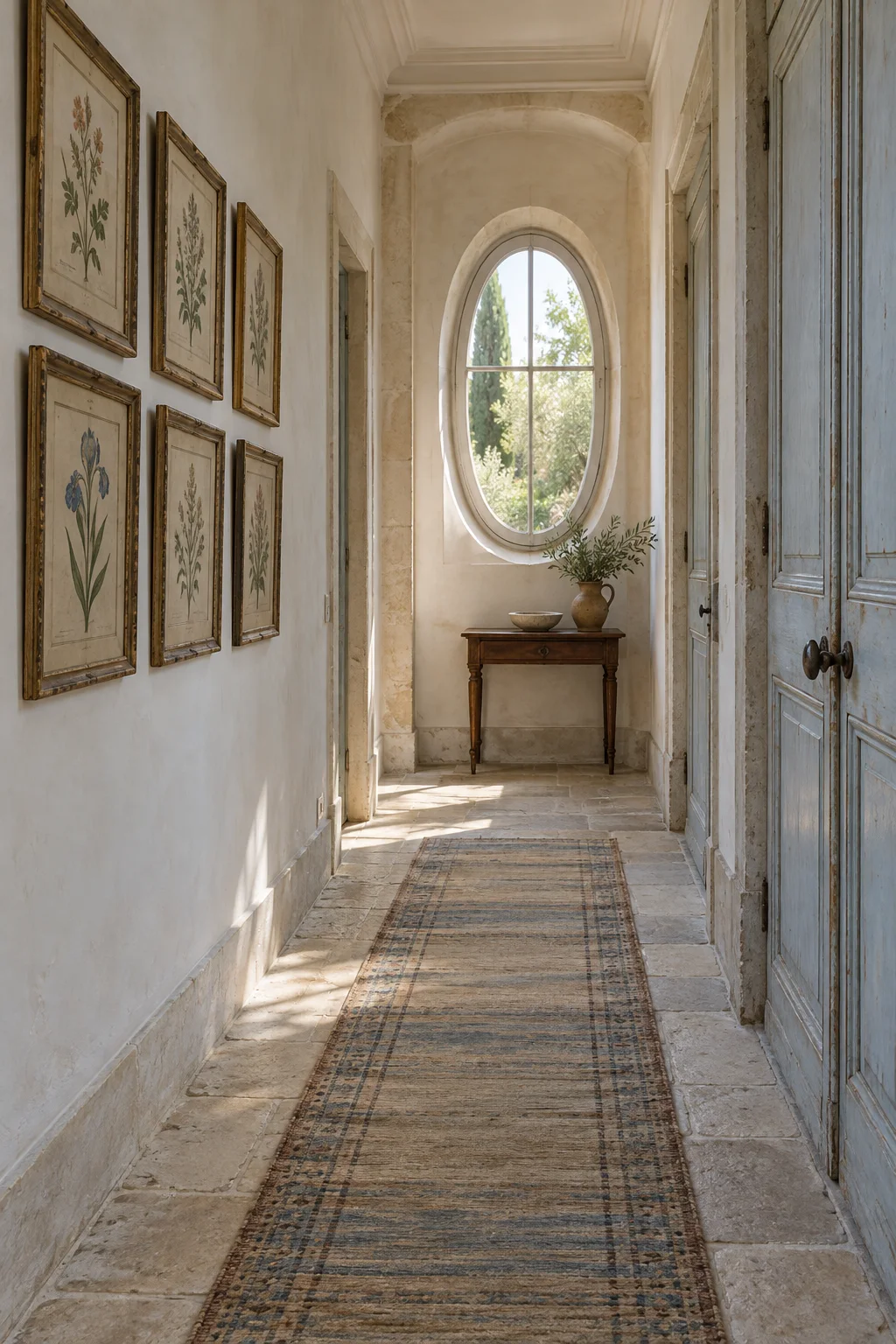 AI-created styling idea
Tableware
Six or twelve wells, a mark on the back, and a hanger rated for the weight.
Explore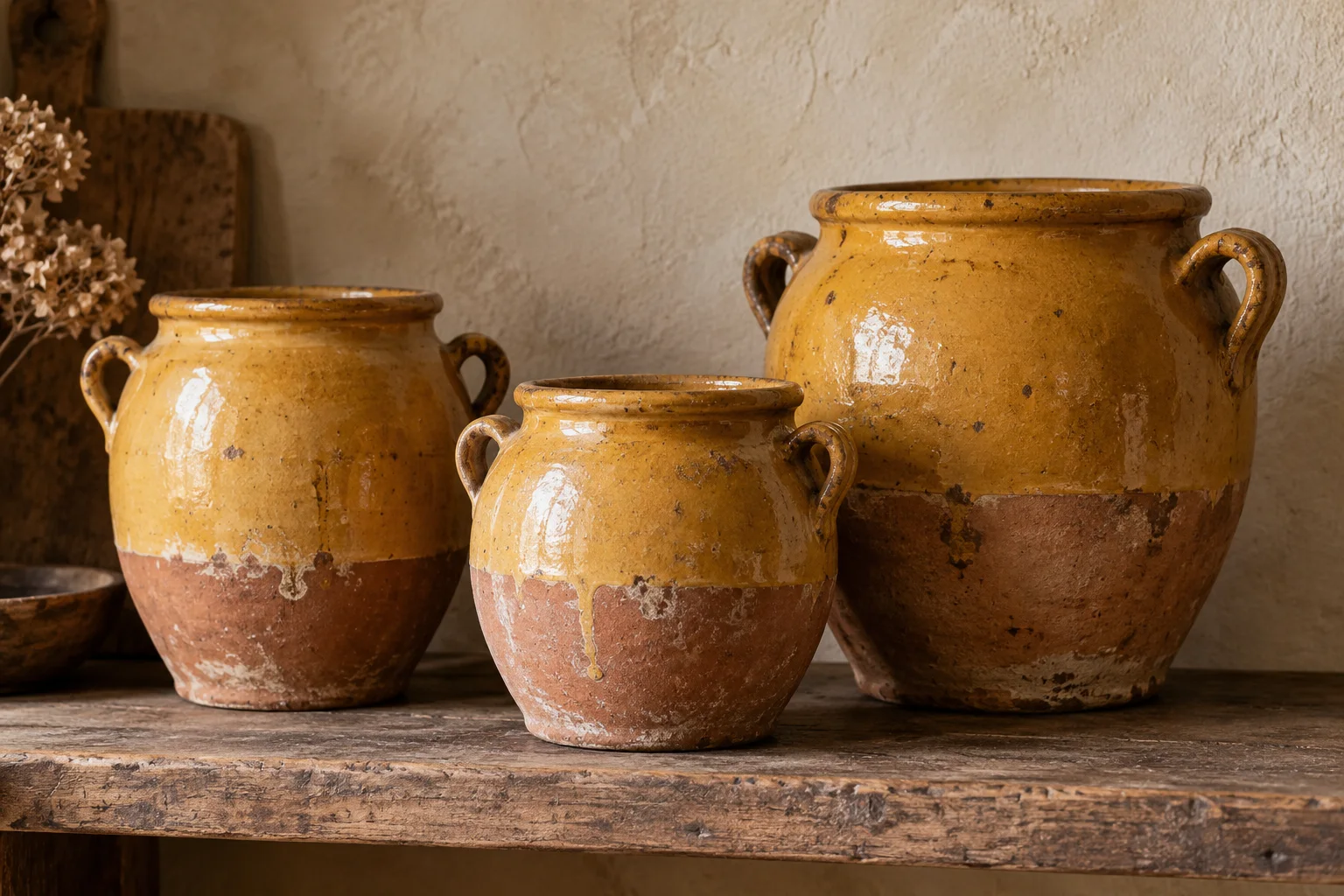 AI-created styling idea
Tableware & kitchen
Describe a confit pot by body and condition before assigning an origin.
Explore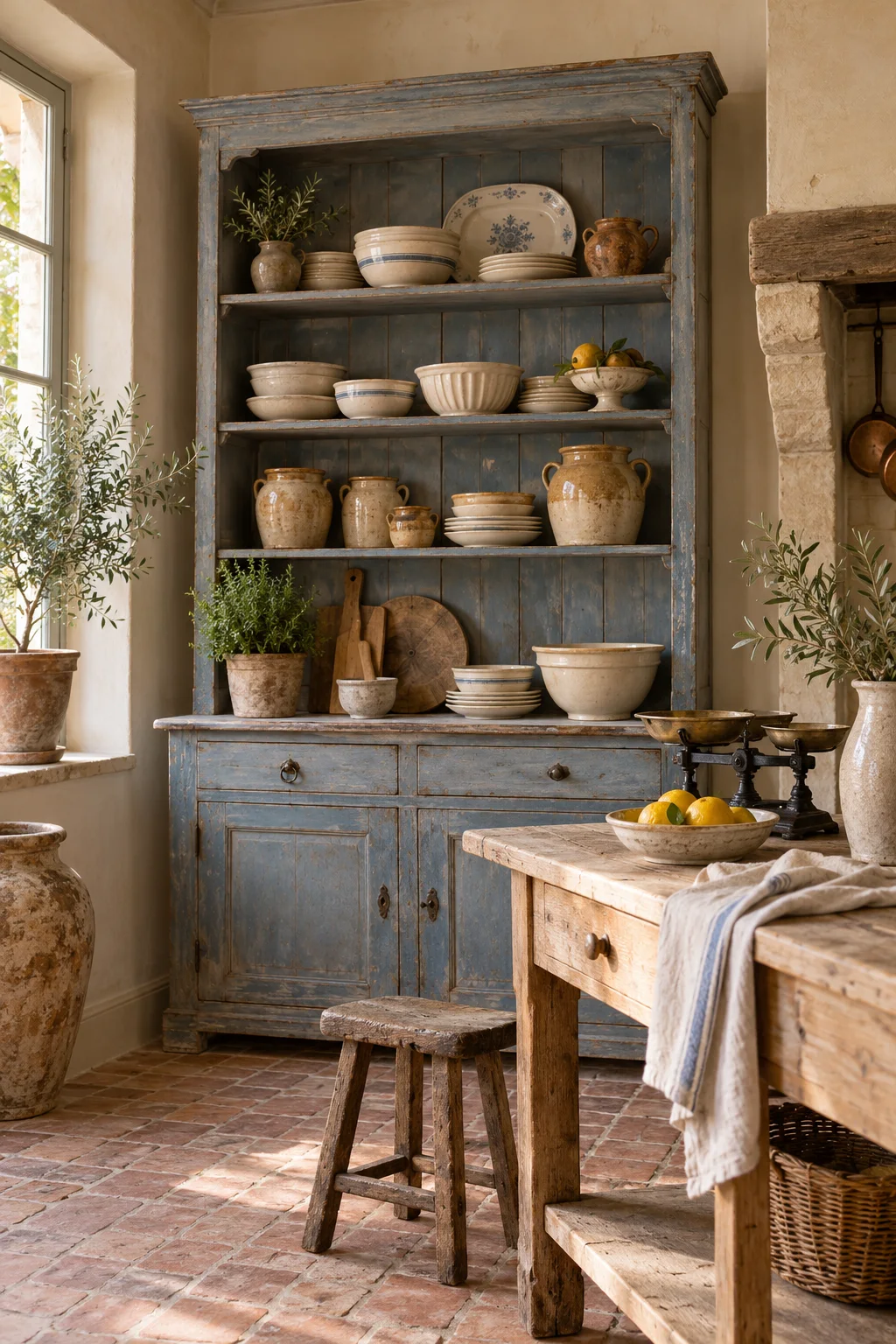 AI-created styling idea
Tableware & kitchen
Faience jugs: check the handle joins and the spout for hairlines.
Explore AI-created styling idea
 AI-created styling idea
Tableware & kitchen
The whole family of French tableware and kitchen pieces in one place.
ExploreBoth are earthenware with colorful glazes, but faience is covered with an opaque white tin glaze on which the decoration is painted, while French majolica, or barbotine, is usually molded in relief and covered with thick, colored lead glazes. Faience tends to be flat and painted; majolica is sculptural, with leaves, fruit or shellfish standing out from the surface.
Look at the body where the glaze is chipped or at the unglazed foot: faience shows a soft buff or reddish earthenware under an opaque white glaze. Then look for a painted or printed mark on the back. Attribute a factory only when the mark matches documented examples; otherwise describe the piece by body, decoration and condition, as in the manner of a center.
Use it with care. Sound faience without cracks can serve dry foods and bread. Crazed glazes and old lead glazes, common on majolica and country earthenware, should not hold acidic or hot foods or be used for storage. When in doubt, use the antique piece to present food and a modern plate to eat from.
Crazing, the fine network of cracks in a glaze, is normal on old faience, majolica and ironstone and does not by itself reduce a piece to scrap. It matters for use: liquids enter the body through the cracks, causing stains and smells. Keep crazed pieces for display or dry foods, and distinguish crazing from a hairline crack through the body.
Use spring plate hangers sized to the diameter, with padded claws, or adhesive disc hangers fixed to the back. Avoid tight or rusted old hangers, which can chip or crack a rim. Lay the arrangement out on the floor first, keep about 2 inches between plates, and hang heavy platters on a hook into a stud or wall anchor.
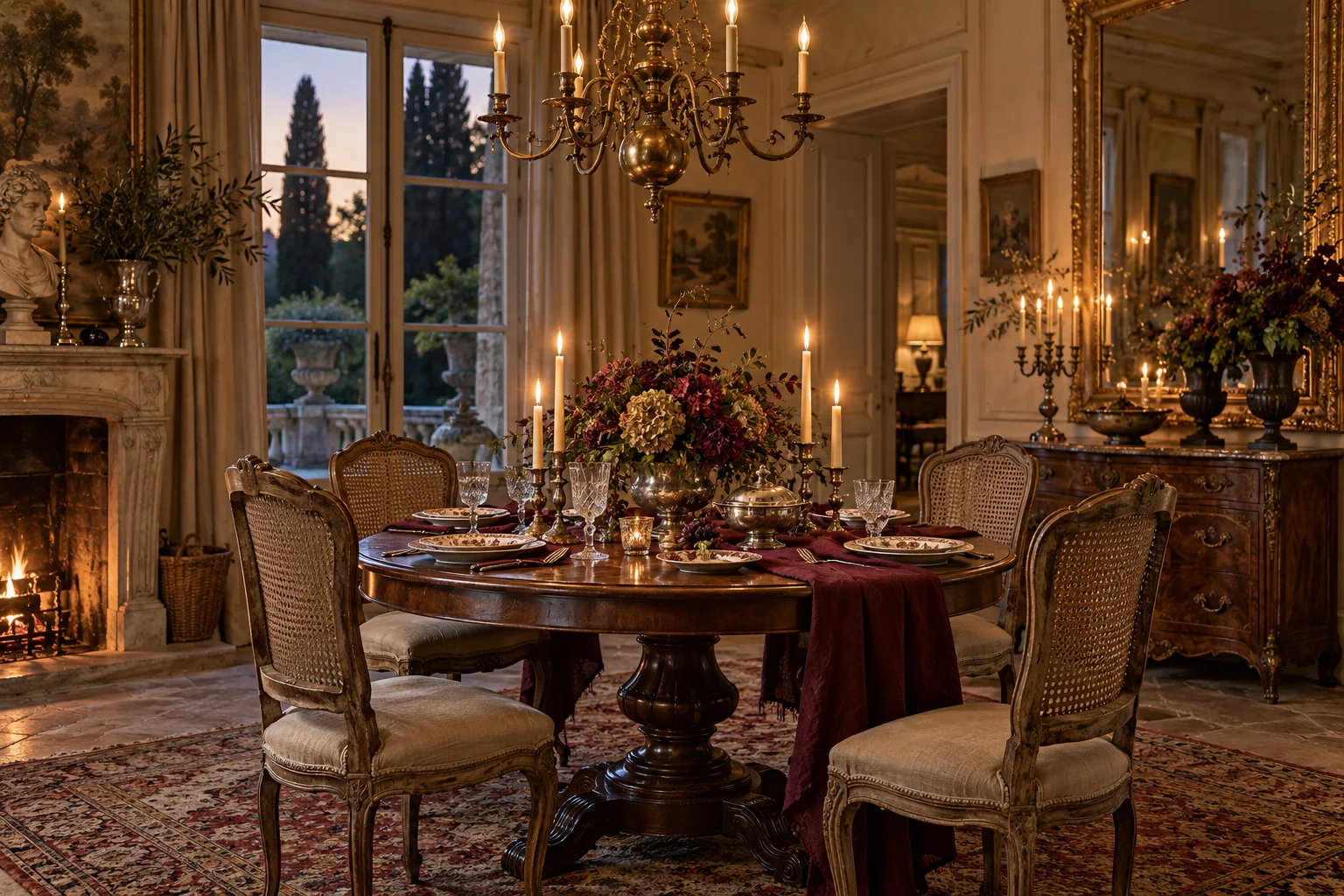
Nov 6, 2026 · Antique guide
A French country Thanksgiving table takes its look from the farmhouse: a linen cloth, white ironstone or faience plates, mixed silverplate, short bistro glasses,…
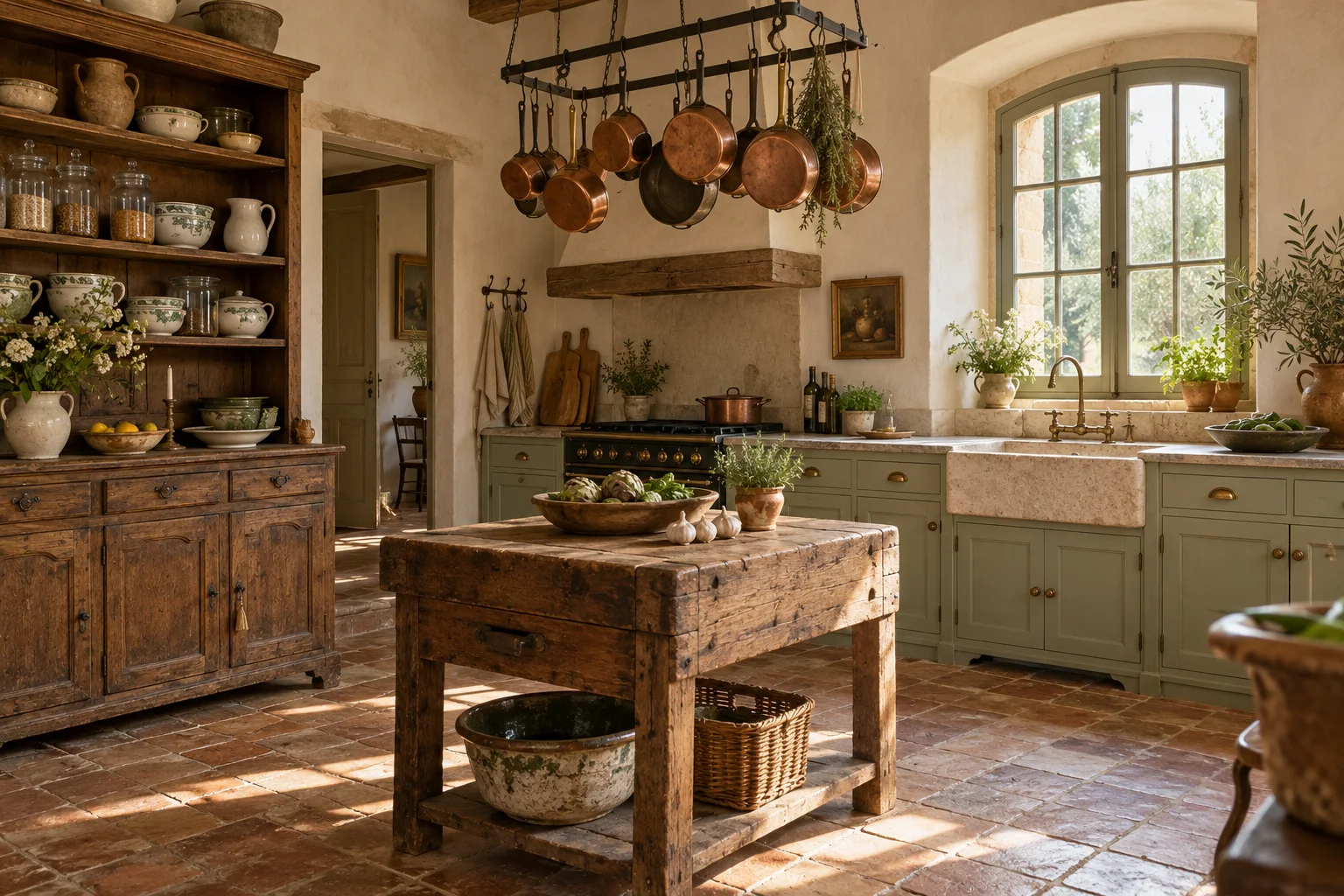
Nov 6, 2026 · Antique guide
French kitchenware from 1880 to 1960 was made for daily work, which is why the good pieces are still at it.
Nov 6, 2026 · Antique guide
Samadet faience is the tin-glazed tableware made in a single village of the Landes, in the Tursan hills south of Mont-de-Marsan, from about 1730 to 1840.
Nov 5, 2026 · Antique guide
Vintage silver and vintage silverplate look alike on a sideboard and behave differently in the hand, in the sink and at resale.
Nov 5, 2026 · Antique guide
Vintage pottery from French kitchens and workshops falls into two bodies and three glazes.
Nov 5, 2026 · Antique guide
An antique magazine rack is one of the few small antiques that still does its original job and several new ones.