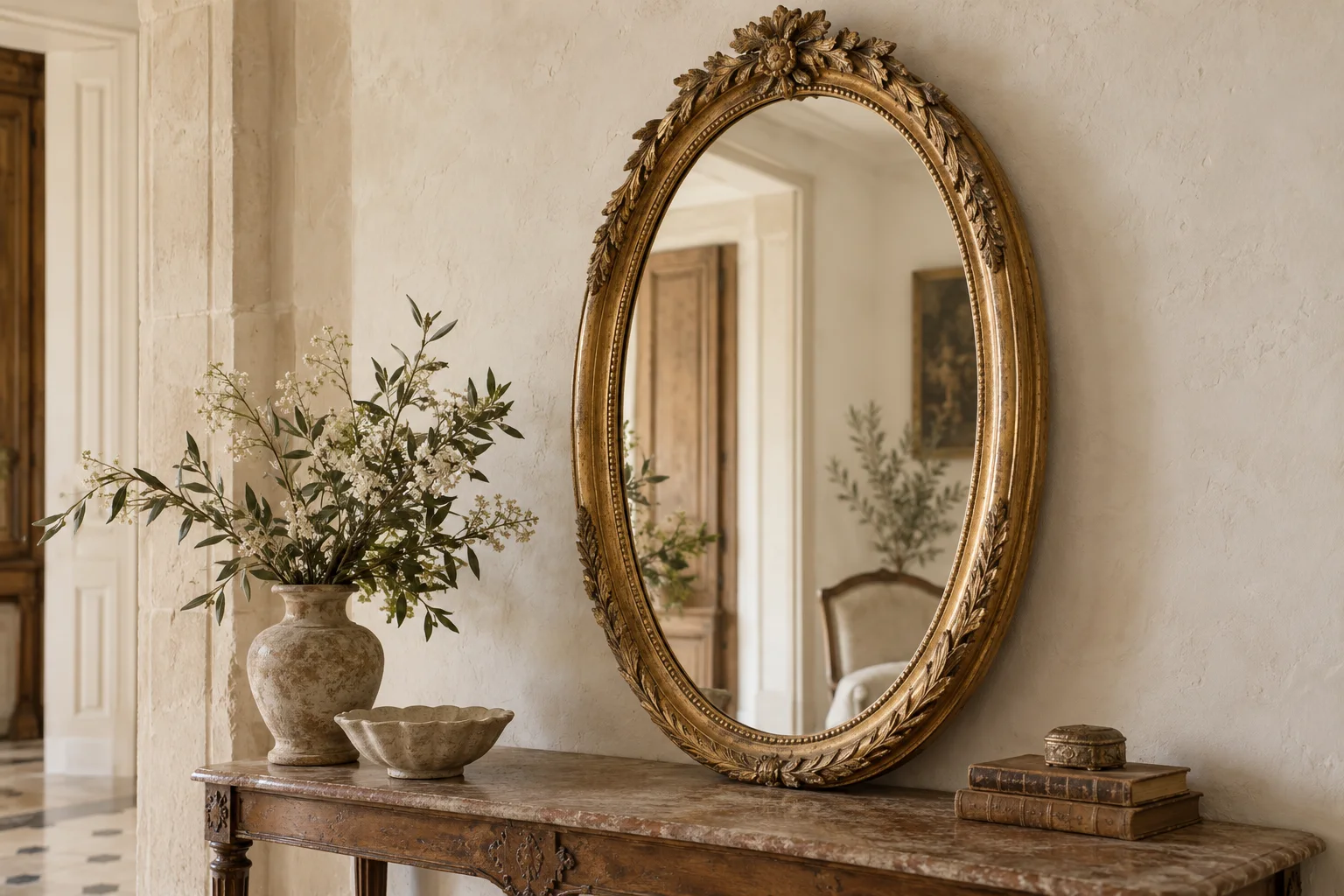
 AI-created styling idea
Mirrors
Antique mirrors
Check the silvering, the frame joints and how the mirror will be crated.
ExploreFrench Country · An inspiration catalogue
Antique shopping in France means choosing between dealers' shops, flea markets, village brocantes, private vide-greniers and auction rooms, then getting what you buy home in one piece. This page explains how each kind of sale works and links every guide in the series.
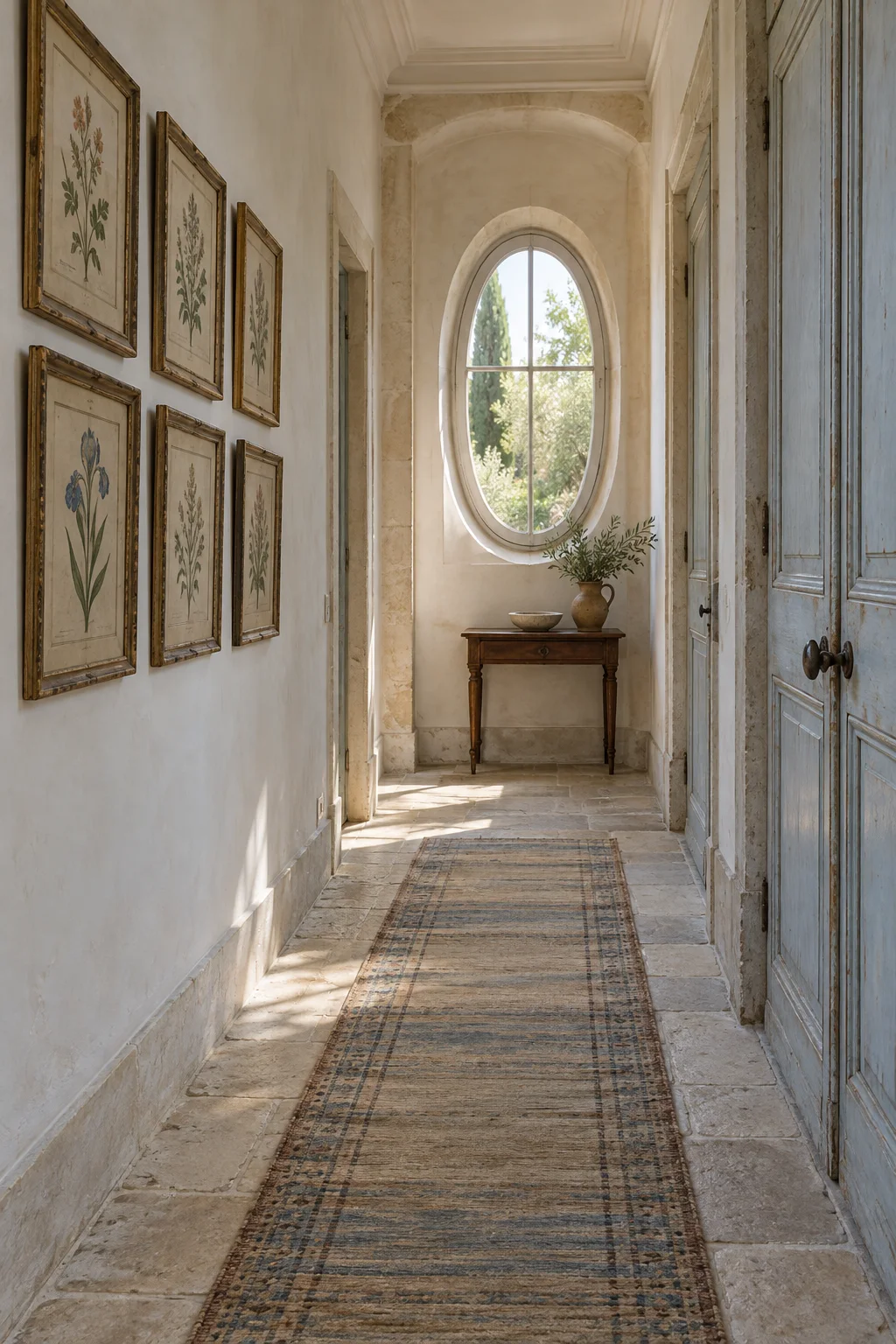
Antique shopping in France rewards people who know which kind of sale they are standing in. The same faience plate can appear at a dealer's shop with a written description, at a Sunday brocante with a handwritten price, or in a box at a village vide-grenier with no price at all. Each sale has its own rhythm, its own rules on bargaining and its own level of documentation.
An antiquaire is a professional dealer with a shop, a stand in a covered market or a space in a dealers' village. Prices are higher, but the dealer can usually say what a piece is, what has been restored and how it can be shipped. Paris has the largest concentration at the Marché aux Puces de Saint-Ouen; Provence has L'Isle-sur-la-Sorgue. For furniture, mirrors and lighting, this is where documentation is most likely.
A brocante is a market of second-hand and vintage goods sold mostly by semi-professional traders, often weekly or monthly in the same square. A vide-grenier, literally "empty the attic", is a one-day sale where private households sell from tables or car boots. Our guide to how French brocantes and vide-greniers work explains the differences, how to find dates and what to bring.
French auction houses (salles des ventes) sell everything from house clearances to fine furniture; buyer's fees are added to the hammer price, so read the sale conditions first. A dépôt-vente is a consignment store, usually on the edge of town, where furniture is sold on behalf of owners at fixed prices. Both are good hunting grounds for large country furniture.
The Paris flea market most visitors mean is Saint-Ouen, a district of covered markets and dealers' streets just north of the city, busiest at weekends. The Puces de Vanves lines two avenues in the 14th arrondissement on weekend mornings and suits smaller objects. The Hôtel Drouot auction rooms hold sales on weekdays. Our Paris flea market guide covers which suits which search, when to arrive and how to ship from there.
East of Avignon, the river town of L'Isle-sur-la-Sorgue gathers several hundred dealers in antiques villages and along the quays, open mainly from Friday to Monday, with a brocante every Sunday and larger international fairs around Easter and in mid-August. Read the full guide to L'Isle-sur-la-Sorgue antiques before you plan the drive.
Beyond these two, many towns hold seasonal antiques fairs (foires and salons des antiquaires), and some northern cities hold huge street sales once a year. Lyon, Bordeaux, Toulouse and the southwest all have regular markets. Days, hours and dates change from year to year, so confirm on the organizer's or tourist office's site before you travel.
Dealers trade among themselves at the opening, often before 8 a.m.; private visitors find more choice early and better prices late. Bring cash in small notes, since many brocante sellers do not take cards, and a tote, newspaper and bubble wrap for small pieces. Always greet the seller with a bonjour before asking a price; it is the expected courtesy and changes the tone of everything that follows.
Asking "c'est votre meilleur prix ?" (is that your best price?) is normal at a brocante and at most flea market stands. Offers far below the asking price are poorly received; a modest reduction, or a better price for two pieces together, is the usual outcome. In a dealer's shop with marked prices there may be less room. Once a price is agreed, the sale is done.
Turn every piece over. Look for chips at rims and feet, cracks in glaze, worm holes in wood (fresh pale dust means active), replaced hardware, and re-glued joints. Open every drawer and door of a piece of furniture. Photograph the piece, any mark and any flaw on your phone before paying, so that you can describe it to a shipper and compare it later.
Carry a tape measure and note height, width and depth in both centimetres and inches; French sellers measure in centimetres. Check the measurements against the room at home and against the shipper's limits. An armoire of 210 cm (about 83 in) may not pass under an 8 ft (244 cm) ceiling once its cornice is on, and may not turn a stair.
Small, sturdy pieces such as linens, silverplate and copper can travel in your luggage, wrapped in clothing. Fragile or heavier objects go by parcel service, packed by a professional. Furniture, mirrors and full collections go by freight through a packer and shipper; at Saint-Ouen and L'Isle-sur-la-Sorgue, shippers often work alongside the dealers. Our guide to shipping antiques from France to the US compares the routes, with timelines given as ranges.
Wooden crates used for international freight generally have to meet the ISPM 15 standard for wood packaging; the IPPC explains the ISPM 15 requirements. For the United States, U.S. Customs and Border Protection sets out the basic import process. Antiques over 100 years old fall under heading 9706 of the US tariff schedule; keep the dealer's invoice and any documentation of age, and confirm duties with a customs broker before you ship.
Visitors who live outside the European Union may be able to reclaim French VAT on purchases from a registered dealer above a minimum amount, using the dealer's tax-free form validated at departure; private sellers at a vide-grenier cannot offer this. Very valuable or historically significant pieces may need a French export certificate for cultural goods. Ask the dealer in both cases, and keep every receipt.
French markets are rich in kitchen and table pieces: copper pans, confit pots, faience plates, bistro glasses and silverplate. They are small, affordable and easy to carry. For the kitchen, see our French country kitchen page; for the dining room, the guide to French country pottery and tableware shows how to assemble a mixed table.
Monogrammed linen sheets, métis pillowcases and hemp grain sacks fill crates at almost every brocante. Unfold sheets fully to check for holes and stains, and measure them: old French sheets are often long and narrow. Our page on French linen and antique textiles explains the weaves; the bedroom page shows how to use them.
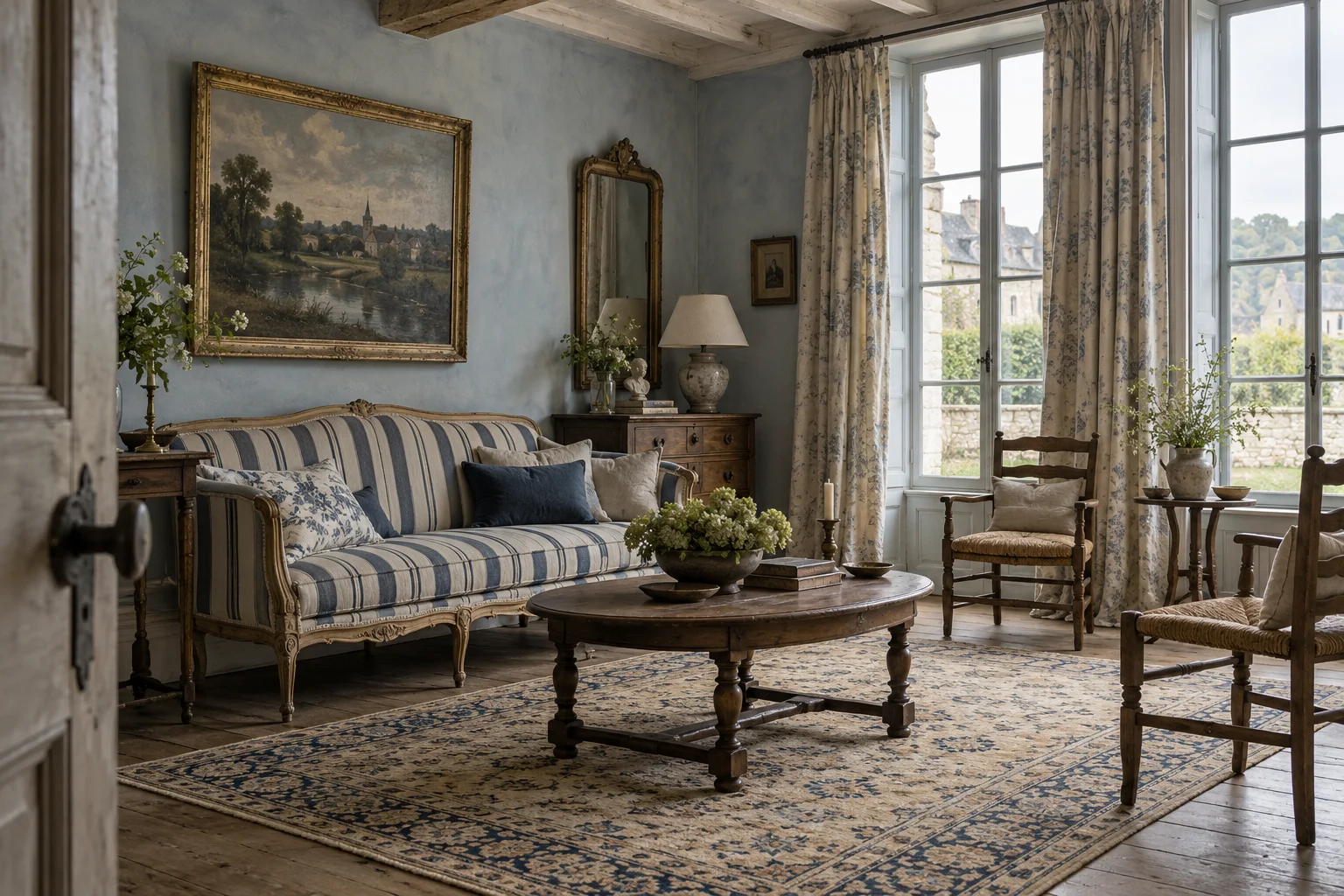
Gilt mirrors, small consoles, clocks and paintings are the classic market finds for the entryway and the living room. Mirrors are fragile to ship; read the complete guide to antique French mirrors on silvering and frames before you buy one at a stall.
Iron chairs, terracotta pots, zinc watering cans and stone troughs are heavy but robust. Check iron for rust through the seat, terracotta for frost cracks, and plan freight before buying anything over about 40 lb (18 kg). Our French country garden page lists the pieces worth the effort.
A buying trip pays off when you enjoy the hunt, have flexible dates and are looking for many small pieces or for one important piece you want to see in person. Plan around a market weekend, leave room in the budget for packing and freight, and build a list of measurements before you leave. Our French country antiques guide explains what to look for in each category.
If travel is not possible, buy from a seller who describes the piece by material, dimensions and condition, with every flaw photographed. Lo Cantou lists French country pieces this way and answers questions through its contact page.
A designer who needs several pieces for a project can send a brief to Antiques 360, which proposes three documented pieces within 72 hours from dealers in Occitanie and southwest France, with age documentation for antiques over 100 years and the landed cost known upfront. Our page for interior designers explains the process.
Each guide takes one part of antique shopping in France, from the markets to the paperwork. New guides are added as they are published.
AI-created styling ideaMirrors
Check the silvering, the frame joints and how the mirror will be crated.
Explore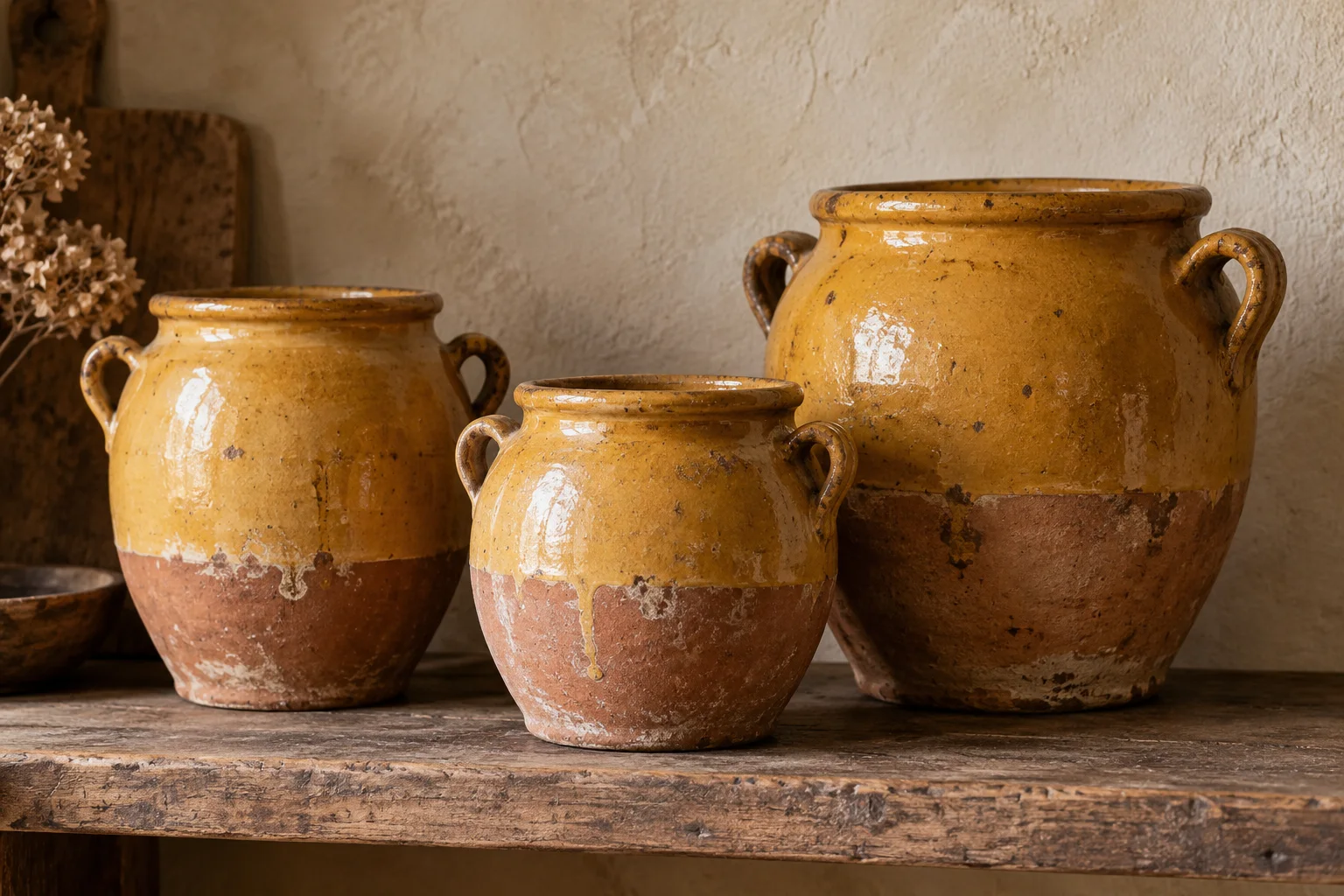 AI-created styling idea
Tableware & kitchen
Tap for cracks and describe by material and condition before assigning an origin.
Explore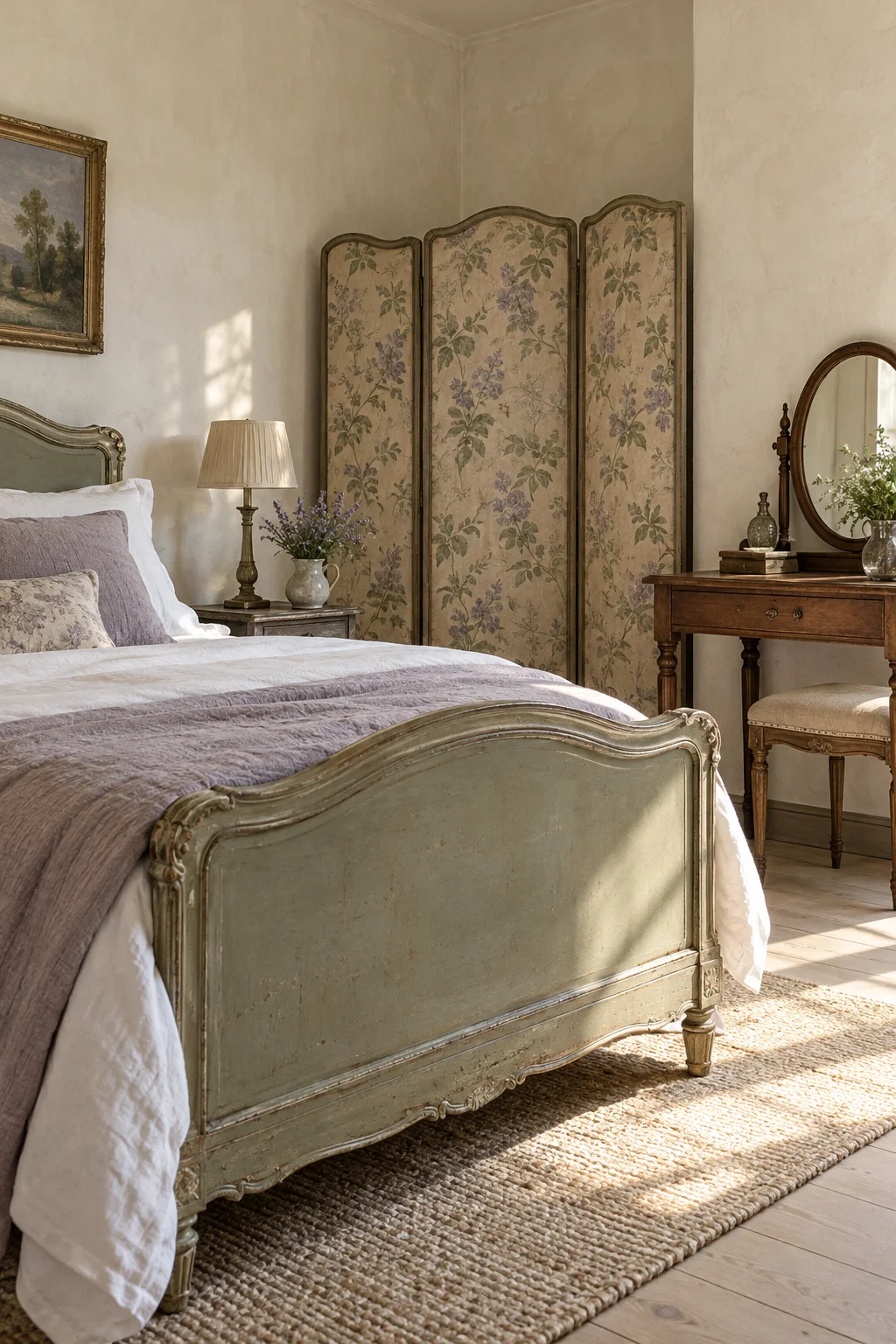 AI-created styling idea
Textiles
Unfold every sheet: holes, stains and the true size only show when it is open.
Explore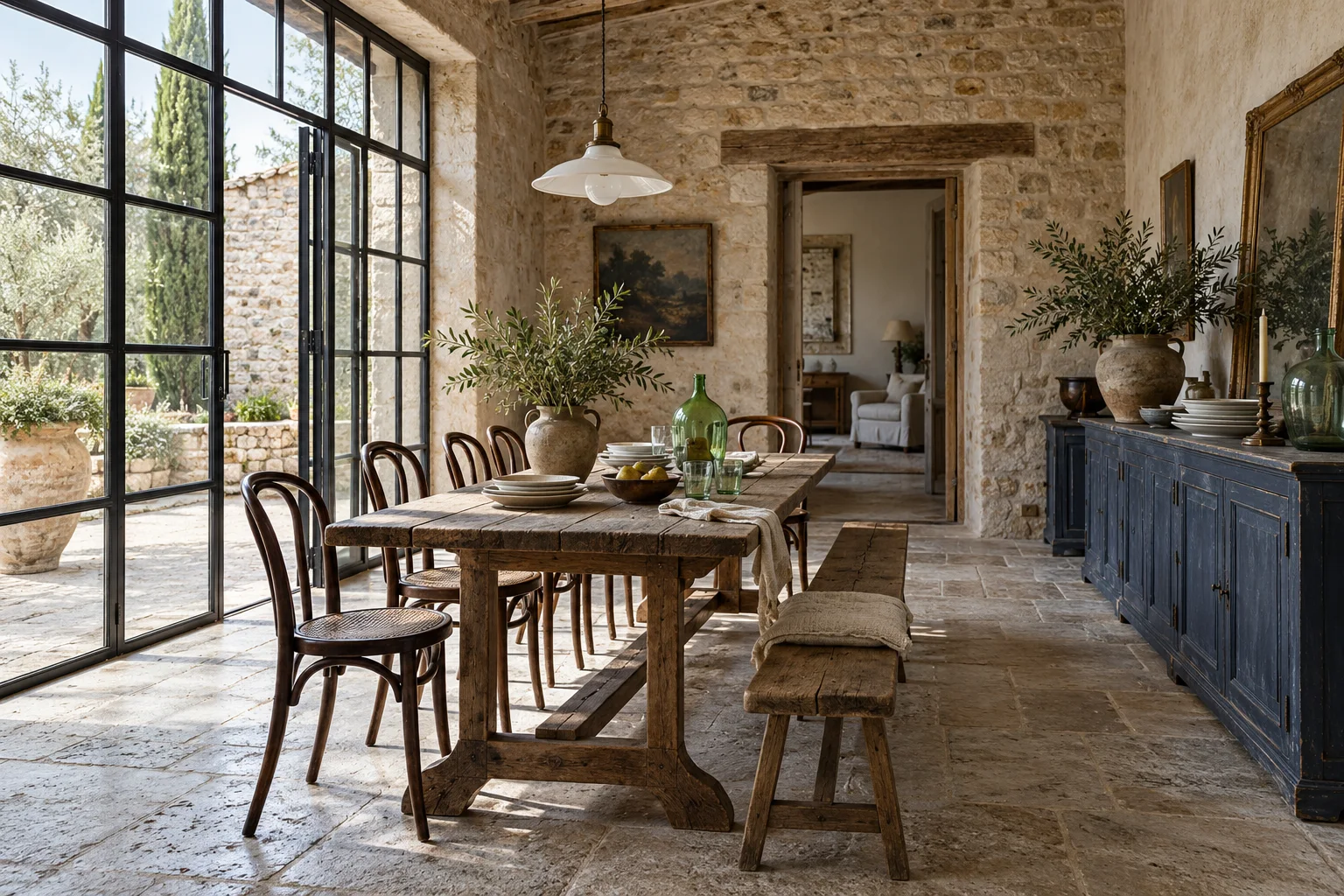 AI-created styling idea
Tableware
Turn plates over for marks, chips at the foot and staining in the crazing.
Explore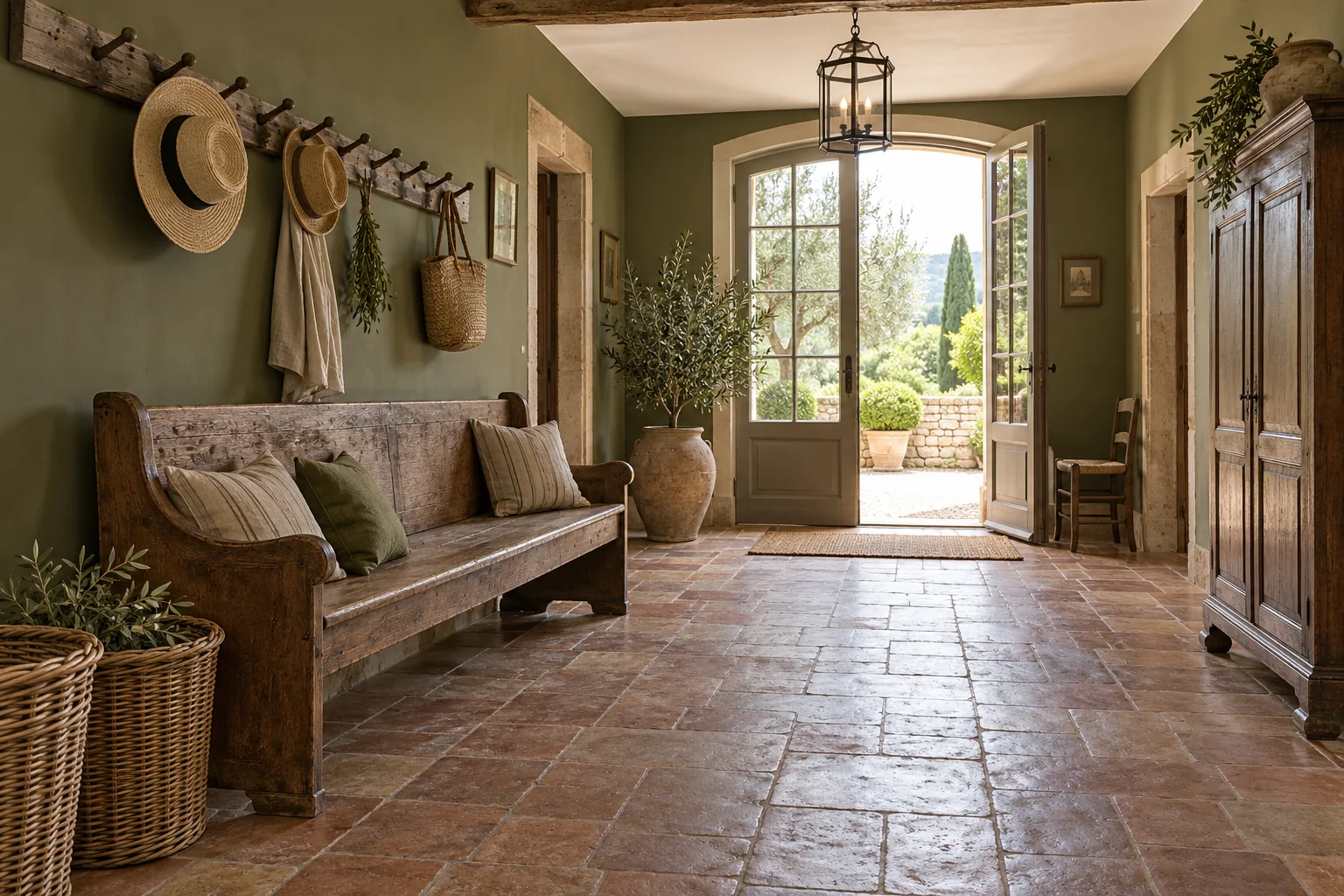 AI-created styling idea
Baskets & boxes
Light to carry home; check the weave for broken strands and the base for wear.
Explore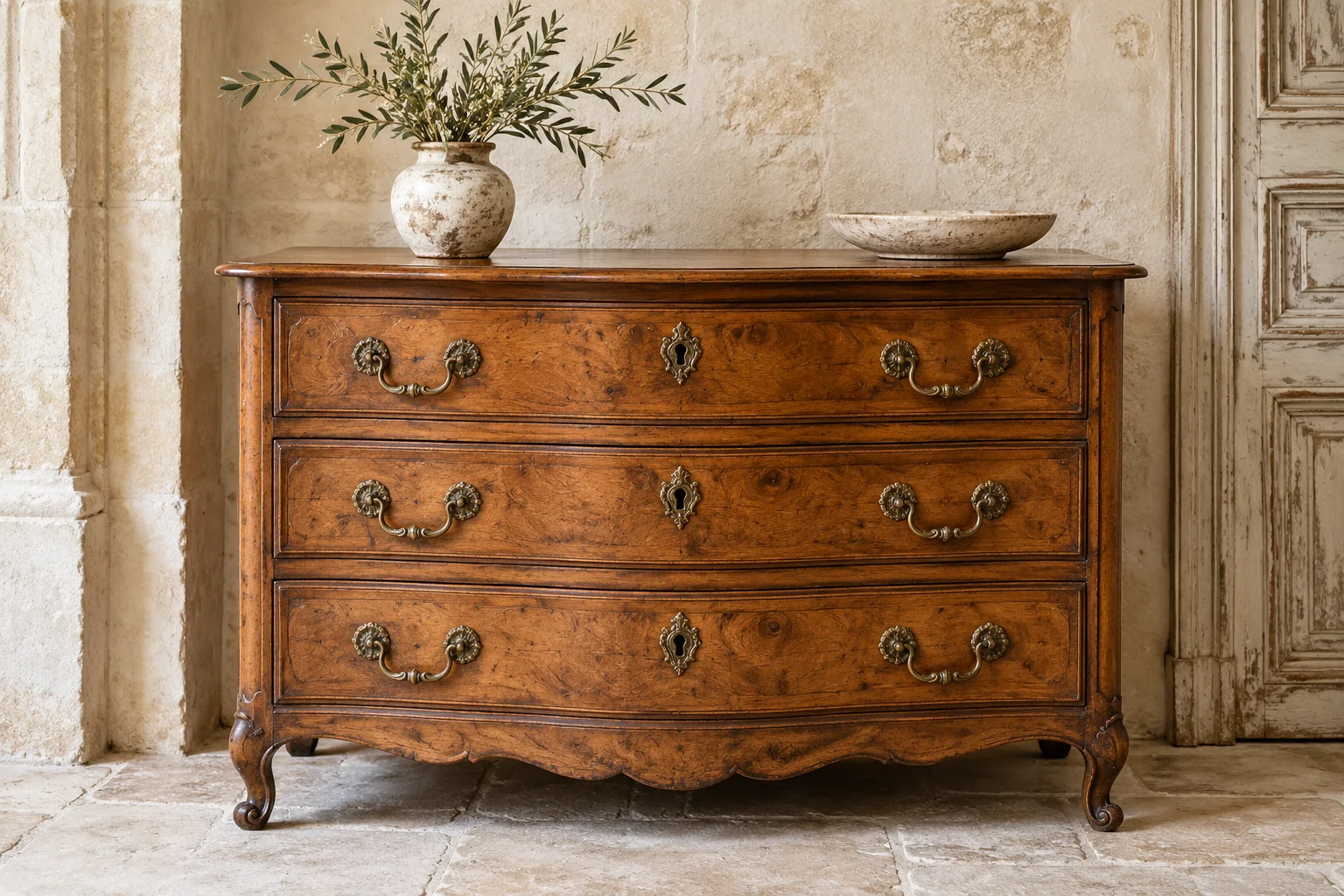 AI-created styling idea
Furniture
Open every drawer, measure in cm and inches, and plan freight before paying.
ExploreA brocante is a market of second-hand and vintage goods sold mostly by regular, semi-professional traders, often on a set day each week or month. A vide-grenier is a one-day sale where private households sell their own belongings. Brocantes offer more choice and some expertise; vide-greniers offer lower prices and more luck, with almost no information about the objects.
Spring to early autumn is the busiest season for outdoor brocantes and vide-greniers, and most village sales happen on weekends. Big dealers' markets such as Saint-Ouen and L'Isle-sur-la-Sorgue trade all year, mainly from Friday or Saturday to Monday. Arrive early for choice and late for bargains, and check official sites for days and fair dates before travelling.
Yes, politely. At brocantes and flea market stands, asking for the seller's best price is normal, and buying two pieces together often earns a better total. Very low offers are poorly received. Greet the seller first, ask calmly, and accept a modest reduction. In a dealer's shop with marked prices, there may be less room to negotiate.
Small pieces can travel in luggage or by parcel service. Furniture and fragile items go by freight through a professional packer, in crates that meet the ISPM 15 standard. Keep the dealer's invoice and any proof of age, since antiques over 100 years old fall under a specific US tariff heading, and confirm duties and paperwork with a customs broker before shipping.
Yes. Buy from sellers who describe each piece by material, dimensions and condition, with every flaw photographed, and who can arrange shipping. Lo Cantou lists French country pieces this way. Interior designers sourcing for a client can send a brief to Antiques 360 for documented pieces with the landed cost quoted upfront.
Nov 6, 2026 · Antique guide
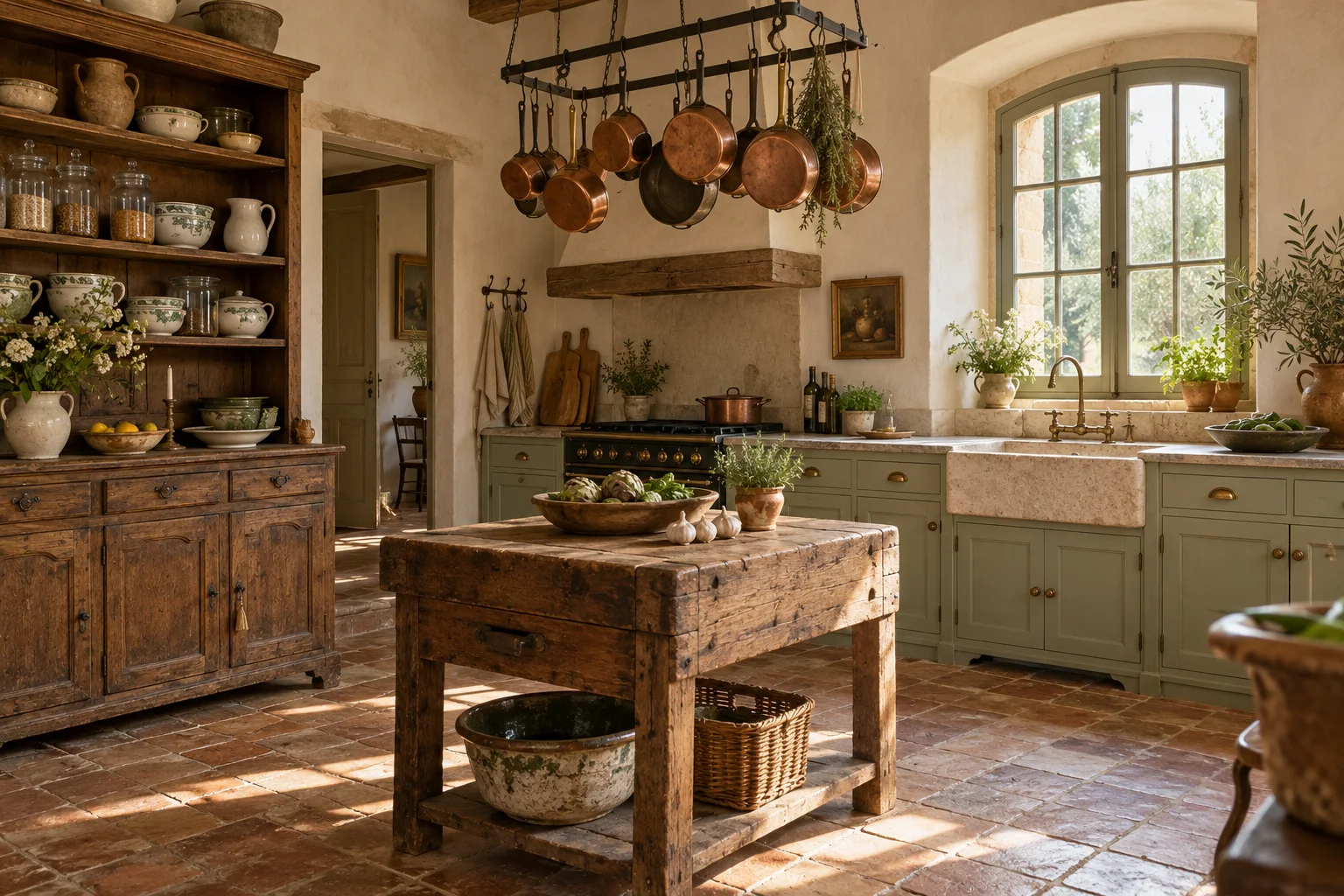
French kitchenware from 1880 to 1960 was made for daily work, which is why the good pieces are still at it.
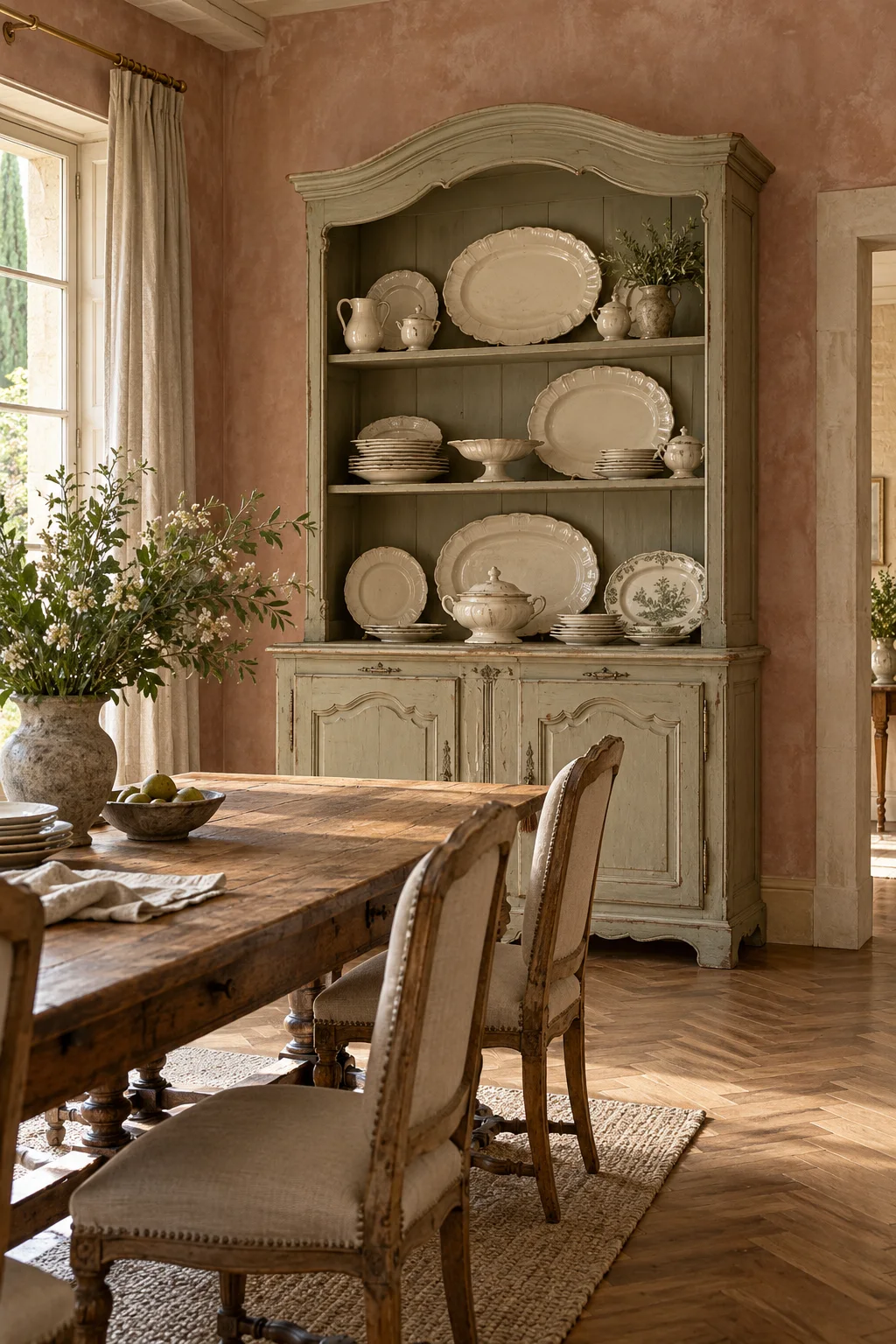
Nov 5, 2026 · Antique guide
French country Christmas decor works best when it borrows from the house rather than from a store: brass candlesticks taken down from the mantel, greenery cut from…
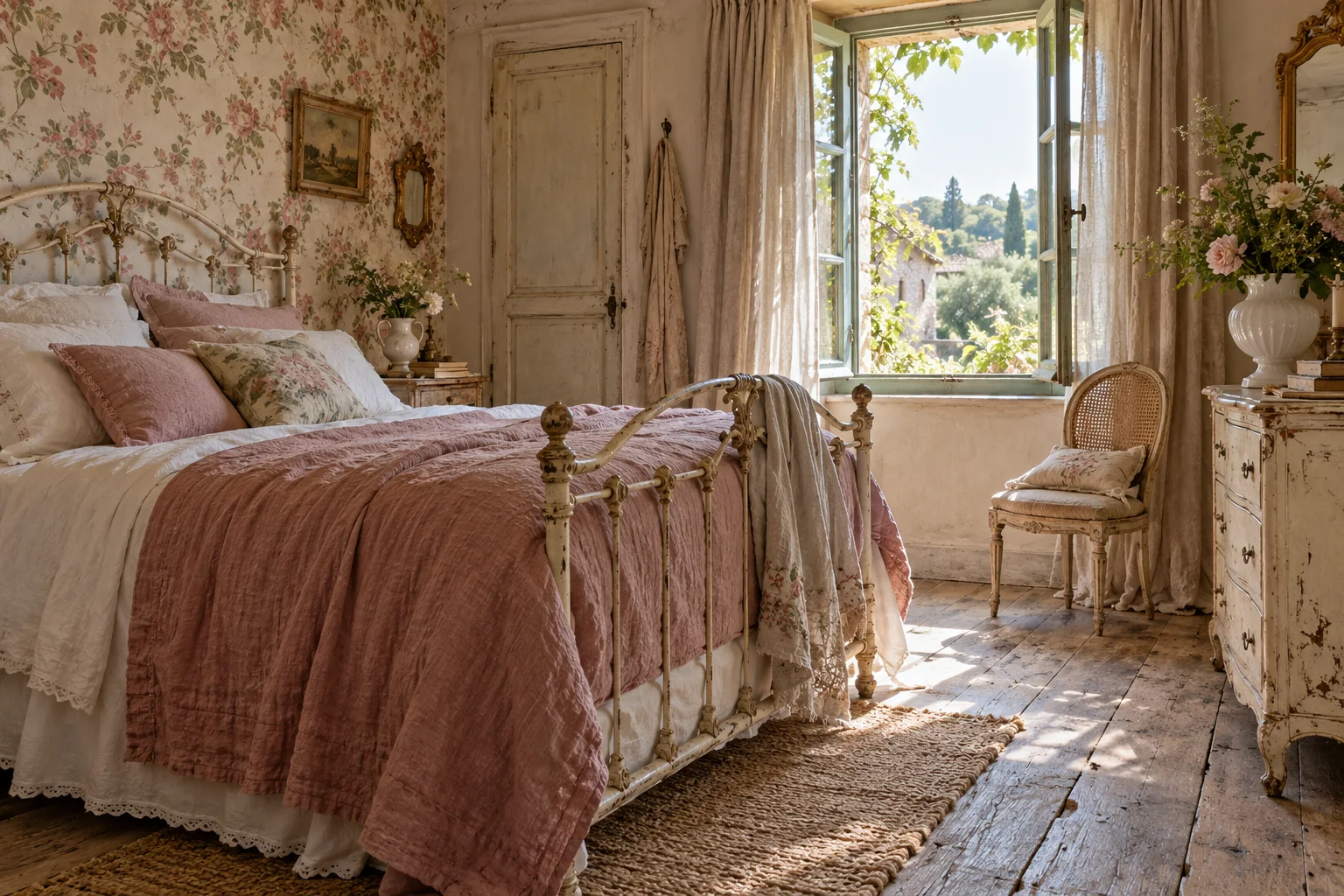
Nov 3, 2026 · Antique guide
French country paint colors come from the landscape and from old materials: limewash whites, warm ochre, sage, Provençal blue, faded red and soft greige.
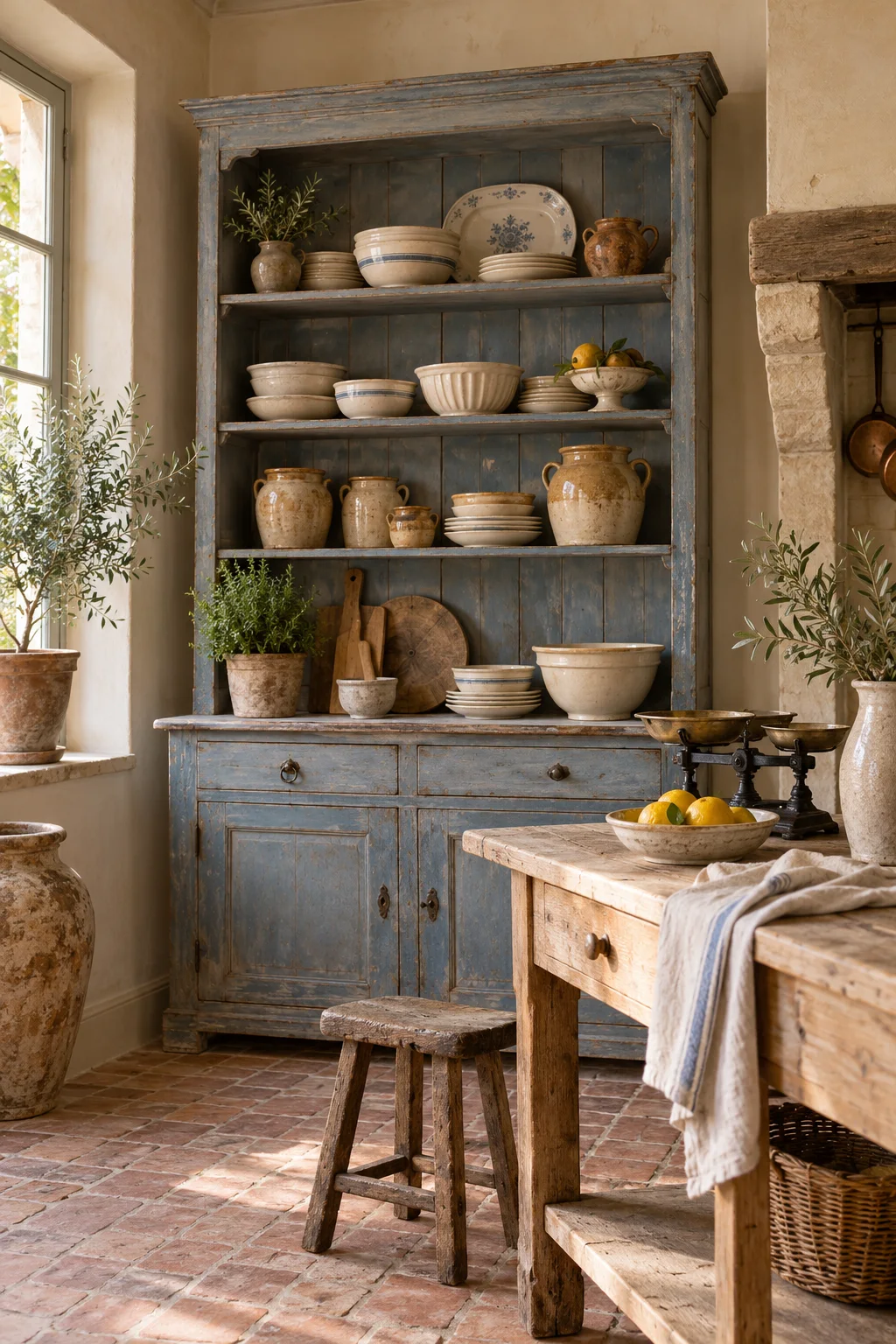
Nov 1, 2026 · Antique guide
Vintage French country decor draws on the objects of French homes, cafés and kitchens made between about 1920 and 1970: bistro chairs, enamel coffee pots, opaline…
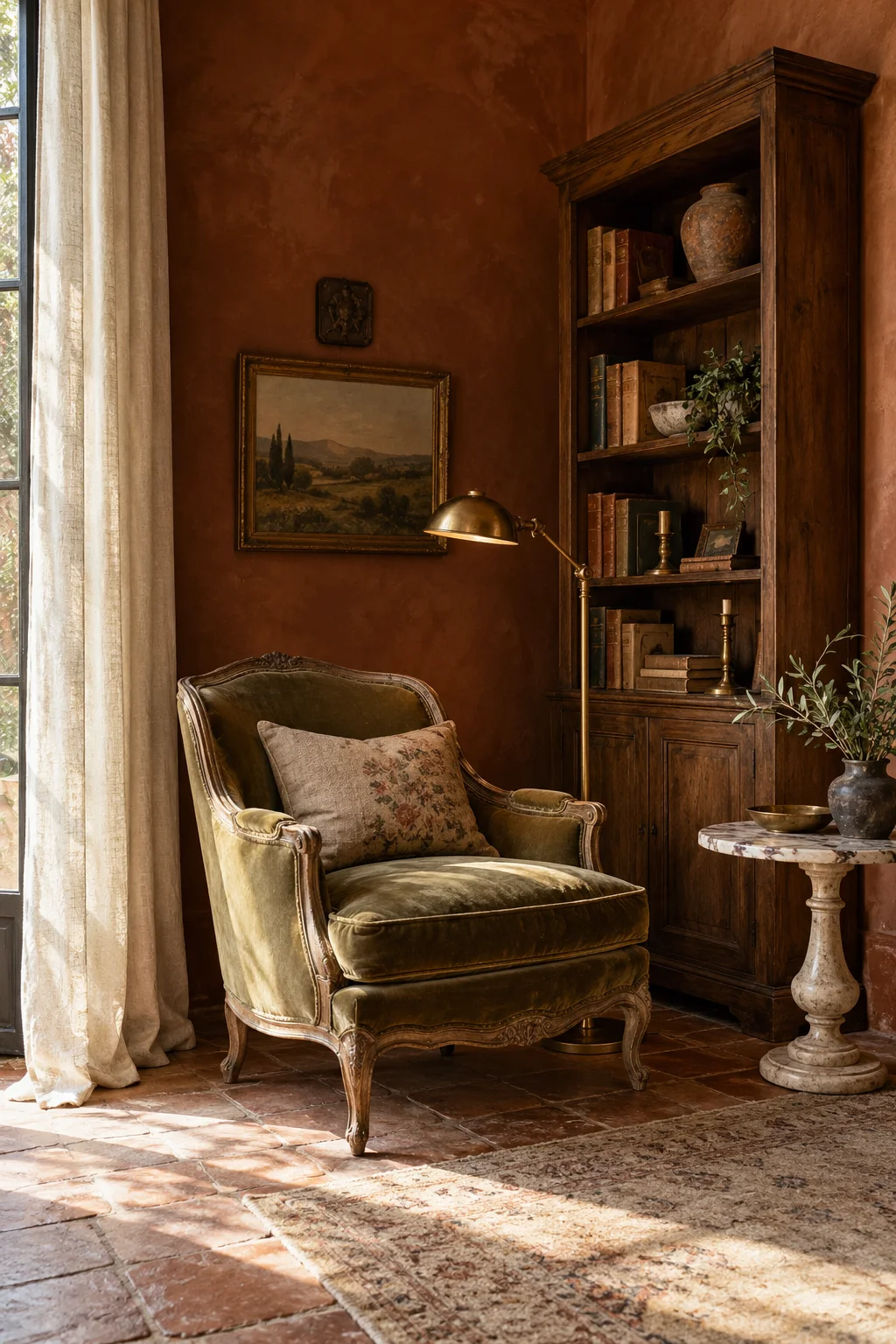
Oct 31, 2026 · Antique guide
Modern French country decor keeps the warmth of the style, worn wood, linen, stone and old glass, and sets it in rooms with clean lines, fewer objects and more open…
Oct 30, 2026 · Antique guide
French country decor ideas work best when each one is concrete: a measurement, a material, a place in the room.