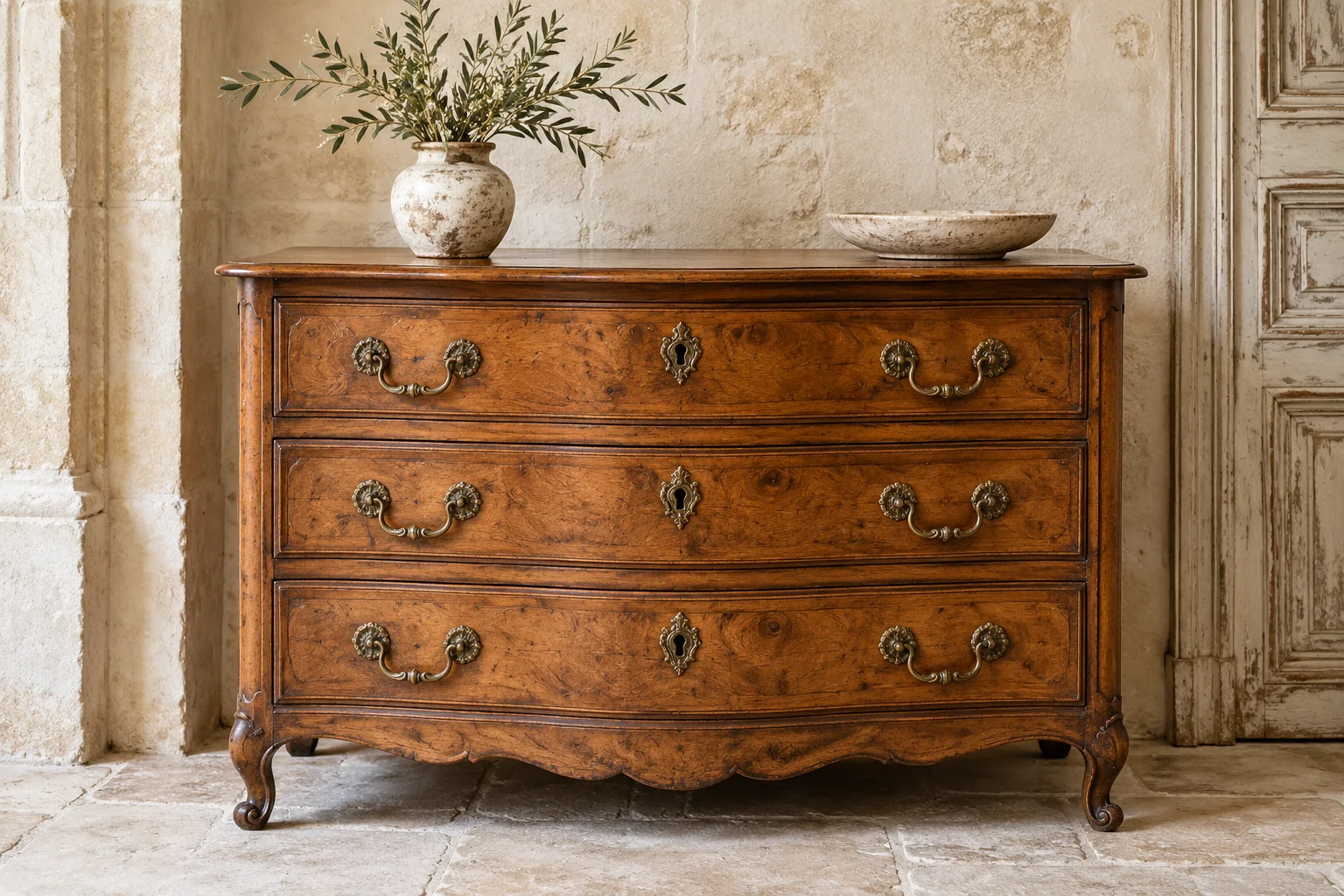
 AI-created styling idea
French Country · An inspiration catalogue
Sourcing French Antiques for Interior Designers and Their Clients
French antiques for interior designers need three things a showroom photo cannot give: precise documentation, written proof of age and a landed cost known before the client commits; this page gathers the checklists, the import facts and the 2026 trend notes, and links them to every guide on the site.
Why Designers Are Specifying French Antiques Now
French antiques for interior designers fit a clear shift in how rooms are furnished. The 1stDibs 2026 Interior Design Trends survey reports that 36% of the items in a typical 2025 project were vintage or antique, and that the use of pre-1920 antiques rose to 63%.
The survey numbers
The 1stDibs survey, published on November 17, 2025, was taken by 468 design professionals worldwide. It reports that “on average 36% of all items sourced for a given project in 2025 were vintage or antique,” and that “85% of designers sourced vintage pieces, made between the 1920s and 2000.” Older pieces gained most: “The percent of respondents employing antiques, made before the 1920s, also surged, from 56% in 2024 to 63% in 2026.” Our reading of the survey for French sourcing is in what the 1stDibs designer survey means for French antique sourcing.
What older pieces bring to a project
A 19th-century walnut commode or a pair of gilt mirrors gives a new room scale, patina and a story the client can repeat. Antique sourcing for interior designers also solves a practical problem: a documented piece is one of a kind, so the room cannot be copied from a catalogue. The guide to French country antiques explains period, style and attribution, and why a style name describes an inspiration, not a documented attribution.
The tariff pressure in the same survey
The same release reports that “92% of designers report that tariffs introduced in 2025 have had an impact on their businesses.” That is why documentation and landed cost come first on this page: a piece that can be dated, described and costed before the client commits is easier to specify than one that arrives with questions.
How to Source French Antiques Through Us
Send a brief to Antiques 360, our sister sourcing service for American designers, to receive three documented options within 72 hours, each with a landed-cost quote. For ready pieces and trade enquiries, contact Lo Cantou, our sister shop in Gascony.
Send a brief to Antiques 360
The Antiques 360 brief form asks for the piece, the style or period, maximum dimensions in inches, the budget per piece, the delivery date and the preferred shipping mode. Antiques 360 works with dealers mainly in Occitanie and southwest France and states that it sends three documented options within 72 hours, each with photographs, a condition report, age documentation and a landed-cost quote. Its first trial brief is described on the site as free.
Know the landed cost before committing
The landed-cost calculator on the Antiques 360 site shows how a quote is built: dealer price, export crate and pickup, freight, insurance, brokerage and entry fees, the sourcing fee and estimated duties. The site describes its rates as illustrative and says duties are to be confirmed by a licensed U.S. customs broker. Ask for the dealer price and the fee as separate lines, so that you can set your own margin.
Lo Cantou for listed pieces and trade enquiries
Lo Cantou lists French vintage homeware and antiques sourced in Gascony, from chandeliers and copper to faience and silver-plated flatware. Check each listing for condition, marks, dimensions and current availability. For a project, the Lo Cantou contact page accepts trade and sourcing enquiries; send the object reference, the dimensions you need and photographs of the room.What Every Piece Should Come With
Every antique on a client specification should arrive with dimensions in inches and centimetres, a written condition report with repairs photographed, a written age statement, the materials, and the weight and crate size. Paste the list below into your own spec sheet.
Why the list matters
A client approves what you present. If the specification omits a replaced marble top or a reworked leg, the omission becomes yours. Ask every dealer for the same set of facts so that pieces can be compared across sources, and keep the answers in the project file with the invoice.
The paste-ready checklist
- Dimensions: overall width, depth and height in inches and centimetres, plus seat height, top height or drop as relevant.
- Materials: primary wood or metal, secondary woods, marble or stone tops, glass, upholstery and finish.
- Age statement: approximate date of manufacture in writing, and whether the piece is over 100 years old.
- Condition report: original and replaced parts, every repair photographed, wear vs damage, woodworm history.
- Weight and crate: net weight, crated weight in pounds and crate dimensions in inches.
- Electrical: for lighting, whether rewired for US use, with the invoice for the work.
Photographs worth asking for
Ask for the back, the underside, the inside of drawers and doors, the hardware and every flaw, in natural light and without retouching. For seating, ask for the frame under the upholstery. For mirrors, ask for the back of the glass and the corners of the gilt. Our complete guide to antique French mirrors and complete guide to antique French lighting list the details to photograph for each.
Importing French Antiques into the United States
Antiques over 100 years old are classified under heading 9706 of the Harmonized Tariff Schedule, with a general duty rate of Free when the age is documented. Additional tariffs changed repeatedly in 2025 and 2026, so confirm the current position with a licensed customs broker before quoting a client.
Heading 9706 and proof of age
The USITC tariff schedule for heading 9706 covers antiques of an age exceeding 100 years. The classification depends on evidence: a dealer's invoice that describes the piece and states its age, provenance records, an expert opinion for valuable pieces, and photographs of construction. A style name in a listing is not proof of age.
Vintage pieces are classified differently
Pieces under 100 years old, such as 1930s bistro chairs or Art Deco lighting, are classified as ordinary goods by product and material, for example furniture in chapter 94. Their duty depends on the exact subheading and on any additional measures in force on the day of entry, which is why the broker's confirmation matters most for vintage.
Never quote a rate without a broker
Additional tariffs changed repeatedly in 2025 and 2026. Ask a licensed customs broker to confirm the position for the classification and entry date, in writing, before you quote the client. Crates, wood declarations and restricted materials are covered in our guide to importing French antiques into the US.
Lead Times, Crating, Delivery and Client Approvals
Lead times, holds and delivery terms vary by dealer and by shipment, so treat them as questions to ask before the deposit, not as promises. Get every answer in writing and give your client a decision date inside the hold.
Lead times
Ask: Is the piece in stock and ready to crate? How long do crating and export paperwork take? What is the estimated date by sea and by air? Is the shipment tracked through delivery? Antiques 360 publishes its own delivery estimates on its site; read them with the quote, because each shipment is different.
Crating and white-glove delivery
Ask: Is the export crate built to ISPM 15 and stamped with the IPPC mark? What are the crate dimensions and gross weight? Is insurance door to door at declared value? Who receives the crate in the United States, and who unpacks, carries and places the piece? How many days do we have to report damage?
Holds and client approvals
Ask: How long will you hold the piece while my client decides? Is a deposit needed for the hold? Can you send a live video from the shop? What happens if another buyer asks during the hold? The workflow in a designer's workflow for sourcing French antiques shows where each question fits.
Trend Notes for 2026 Projects
The survey's 2026 trends map neatly onto French antiques: curved forms, maximalist and eclectic rooms, warm browns and burgundy, rattan and skirted seating, florals, upholstered walls and papered ceilings, and bonus rooms from second kitchens to libraries. Each note links to the matching guide.
Curves, maximalism and eclecticism
Curvy furniture was named by 43%, maximalism by 39% and eclecticism by 38%. French answers: cabriole legs, serpentine fronts and bombé commodes, explained in curved French furniture forms, and mixed-period rooms, covered in French antiques in a maximalist and eclectic room. For pre-1920 pieces see pre-1920 French antiques; for later vintage see French vintage from the 1920s to the 1950s.
Colors: chocolate, butter yellow, burgundy
Chocolate brown was selected by 33%, butter yellow cited by 30% and burgundy by 21%. Walnut, old leather, ochre faience and red glazes carry these colors without paint; the guide to chocolate brown, burgundy and butter yellow with French antiques pairs each color with objects.
Materials and motifs
Wicker and rattan were cited by 27%, skirted seating by 24% and floral and botanical motifs by 22%. See French rattan and wicker furniture and the French rattan, cane and wicker hub, skirted chairs and slipcovers, and botanical and floral motifs in French antiques.
Walls, ceilings and bonus rooms
Upholstered walls were noted by 30% and wallpapered ceilings named by 35%; see upholstered walls and papered ceilings. For bonus rooms, designers suggested second kitchens (56%), mudrooms (44%), outdoor kitchens (43%) and home libraries (34%): read a French scullery or second kitchen, a French country mudroom, a French-style outdoor kitchen and the home office and library room.
Room-by-Room Sourcing Shortcuts
Start from the room you are furnishing: each room guide lists the French forms that suit it, the sizes to check and the categories to brief. Then use the category hubs for furniture, lighting, mirrors and tableware to refine the specification.
Living room and bedroom
For a living room, brief a commode, a pair of bergères, a gilt mirror and a bouillotte lamp; the French country living room guide sets out sizes and placement. For a bedroom, think armoire, walnut bed and marble-topped bedside tables, all in the French country bedroom guide.
Kitchen and dining room
Kitchens take a buffet de cuisine, a work table, copper and confit pots, covered in the French country kitchen guide. For dining rooms, the guide to French country dining tables gives seating widths and leg clearances, and the French country tableware hub covers faience and silverplate.
Garden, lighting and walls
Outdoor rooms take iron furniture, stone troughs and terracotta, in the French country garden guide. Brief lighting through the French country lighting hub, walls through French country mirrors and wall decor, and case pieces through our guide to French country furniture.
Explore the Pieces Designers Brief Most
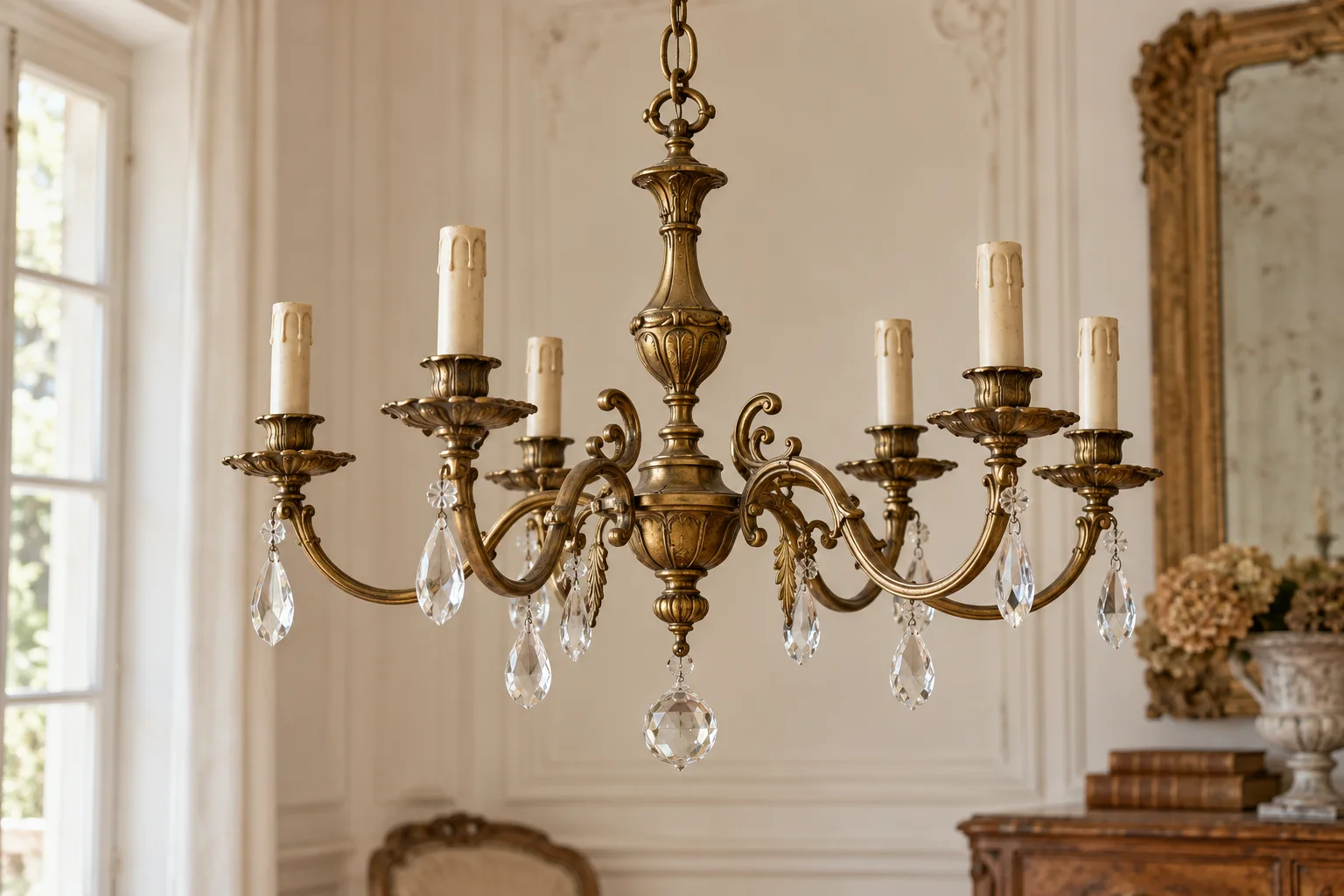
AI-created styling idea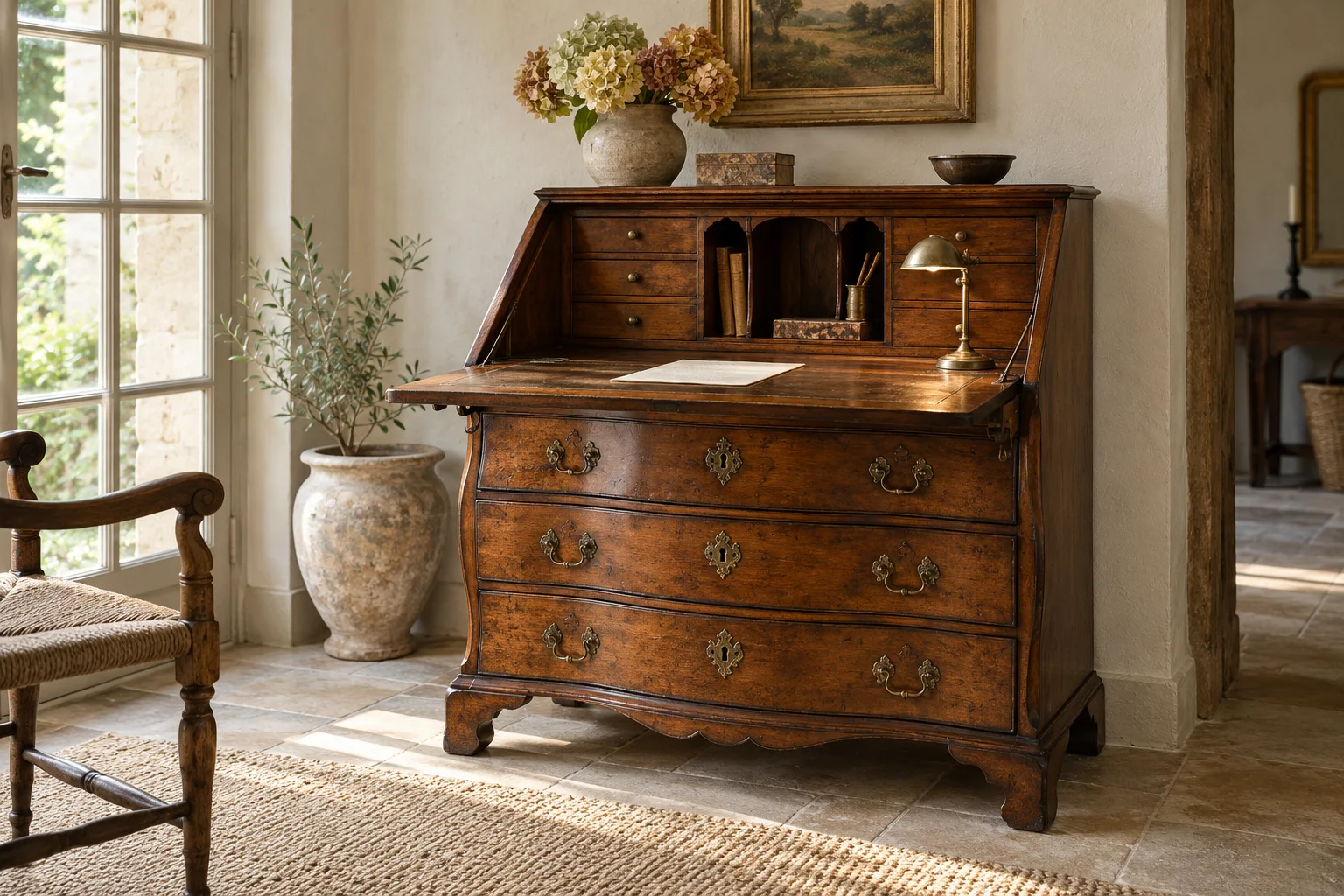 AI-created styling idea
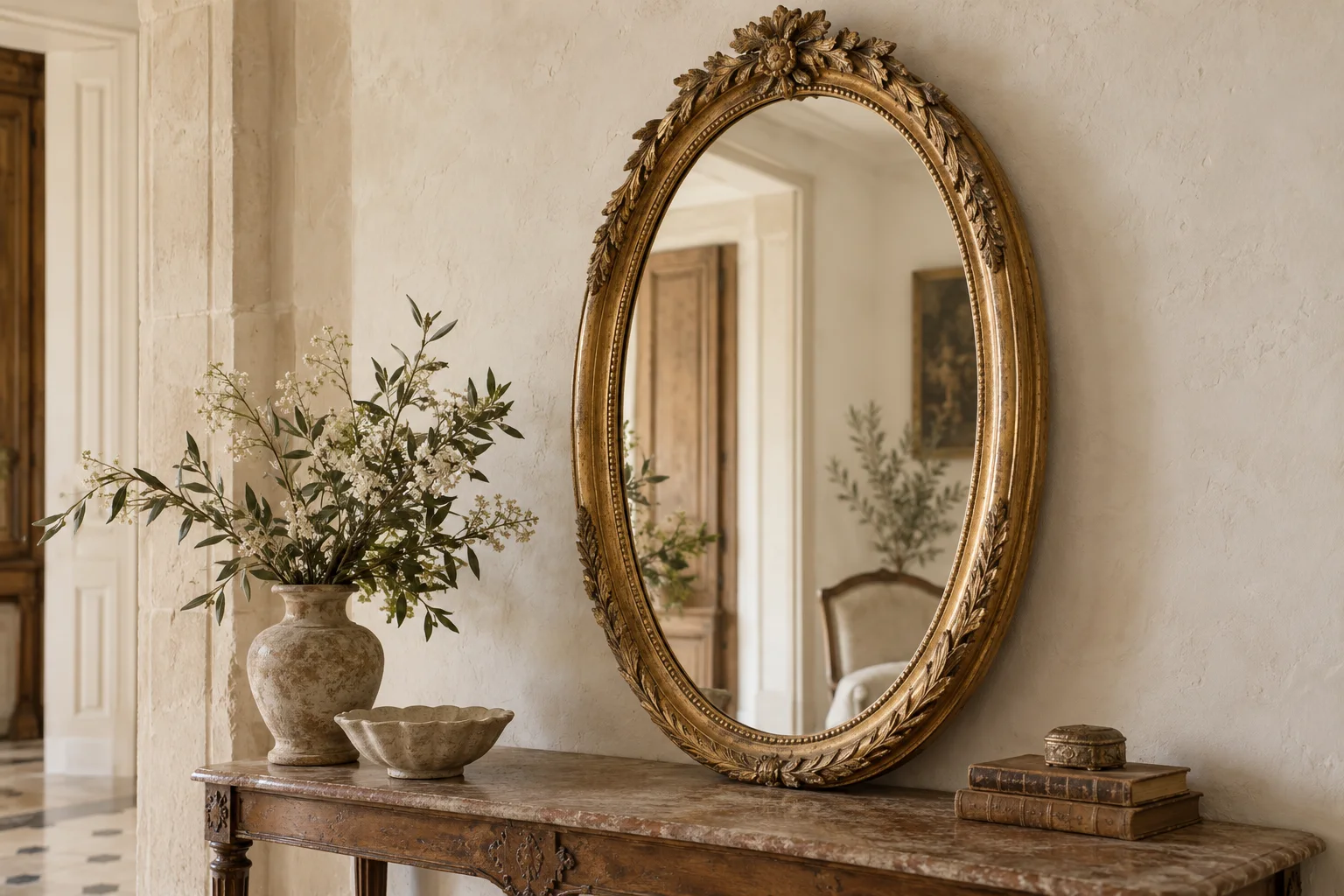
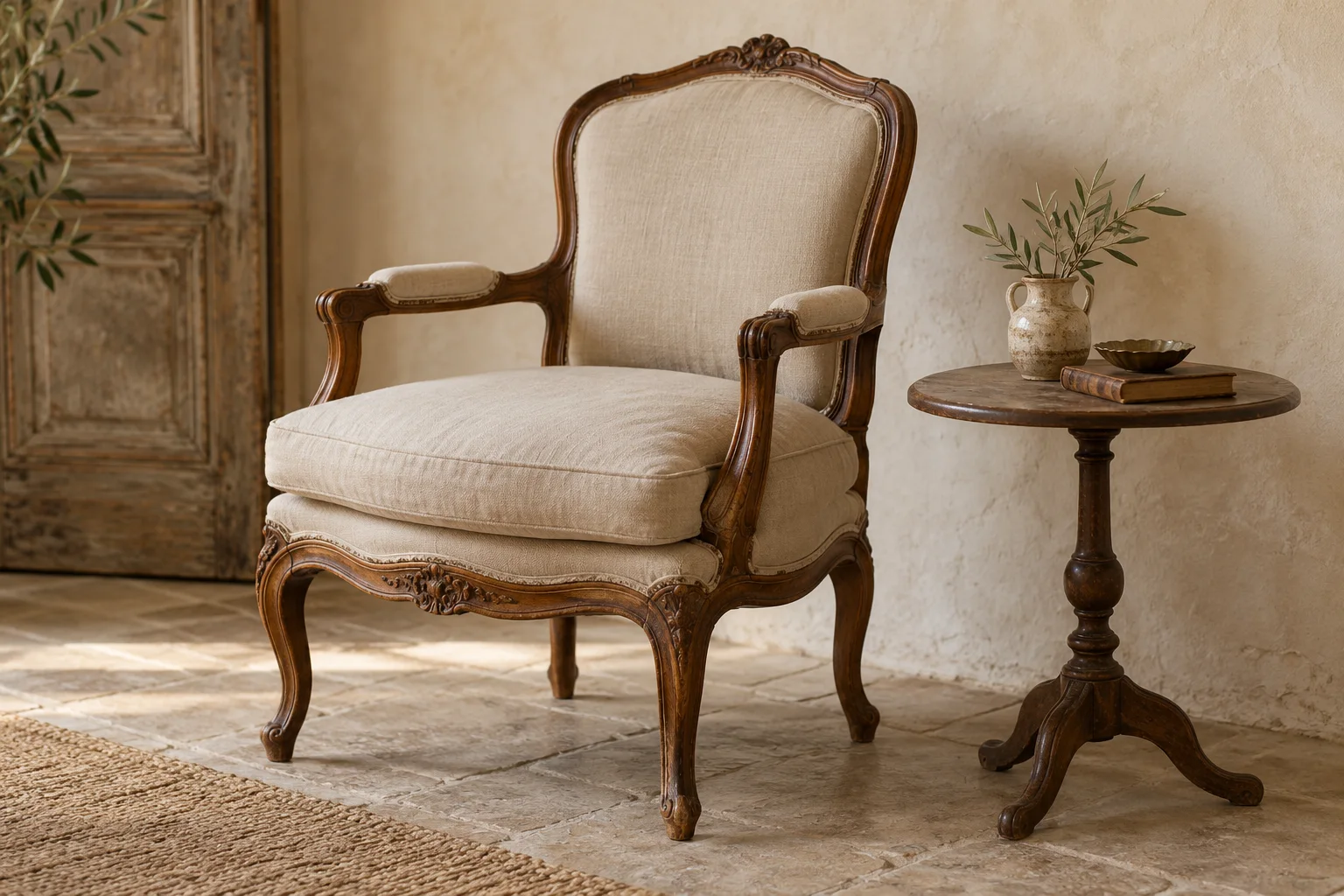 AI-created styling idea
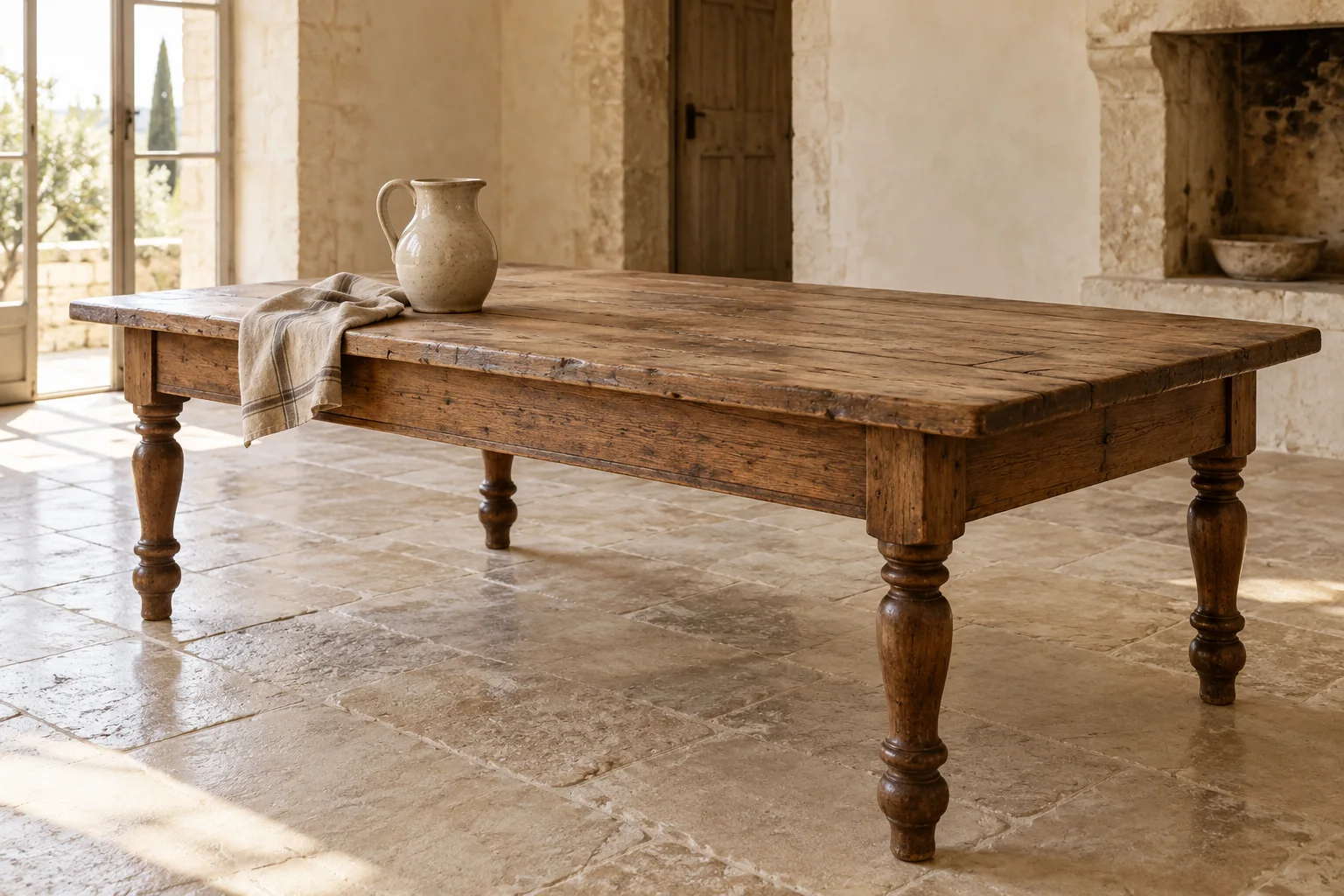
 AI-created styling idea
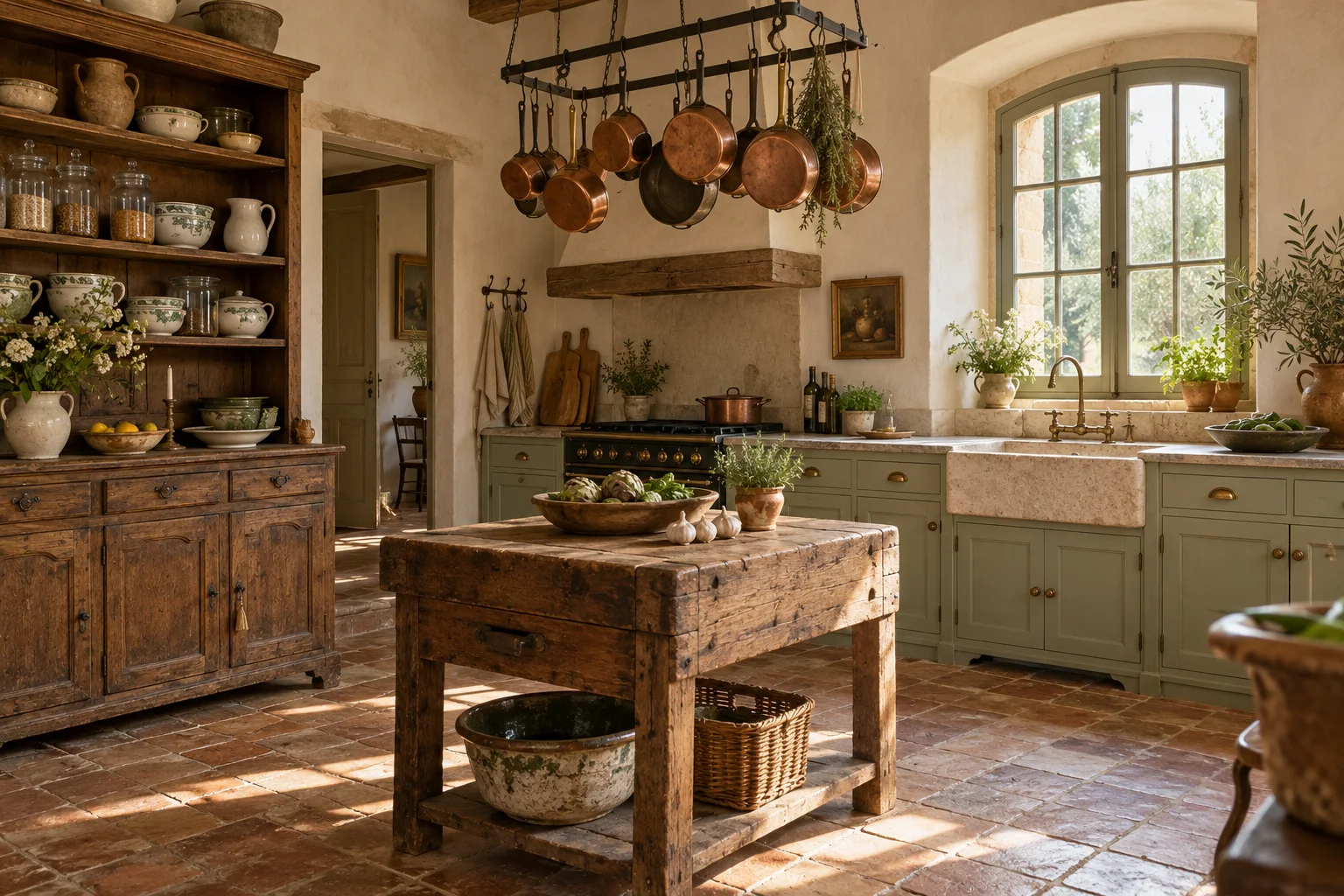
 AI-created styling idea
 AI-created styling idea
Frequently Asked Questions
Do you offer trade pricing for interior designers?
Ask Antiques 360 or Lo Cantou directly, because terms are set by each service and can change. Antiques 360 describes a trade program on its site, including monthly closeout pieces at trade pricing for members, and its quotes show the dealer price and its fee separately. Lo Cantou handles trade and sourcing enquiries individually through its contact page.
How quickly can I get options for a client brief?
Antiques 360 states that it sends three documented options within 72 hours of a brief, each with photographs, a condition report, age documentation and a landed-cost quote. Include the piece, style or period, maximum dimensions, budget per piece, delivery date and shipping preference so that the search starts immediately, and confirm the timing for your own brief.
Are French antiques duty-free in the United States?
Antiques over 100 years old are classified under heading 9706, which has a general duty rate of Free when the age is documented. Additional tariffs changed repeatedly in 2025 and 2026, and vintage pieces under 100 years are classified differently. Confirm the current position with a licensed customs broker before you quote a client.
What documents should come with an antique for a client project?
Ask for dimensions in inches and centimetres, the materials, a written condition report naming original and replaced parts, photographs of every repair, a written age statement, the crated weight and crate size, and for lighting the rewiring invoice. Keep these with the dealer invoice; the customs broker and the installer will both need them.
Can my client see a piece before approving it?
Yes, ask for it. Request photographs of the back, underside and every flaw in natural light, and a live video from the dealer's shop for important pieces. Antiques 360 states that it can livestream from the dealer's shop. Agree the length of any hold in writing and give the client a decision date inside it.
How are large antiques shipped from France to a US project?
Large pieces travel in wooden export crates built to ISPM 15, by sea or by air, with insurance at declared value. Ask for the crate dimensions and weight, the estimated date for each mode, tracking through delivery, and who unpacks and places the piece. A white-glove installer should receive the crate and photograph the piece before it moves.
Start a Client Brief
Working on a client project? Send a brief to Antiques 360 for documented pieces with the landed cost known before you commit, or send a trade enquiry to Lo Cantou.
Include the room, the maximum dimensions in inches and centimetres, the budget per piece and the deadline. Every answer you receive can go straight into the checklist above.
The guides
Nov 6, 2026 · Antique guide
French Kitchenware Essentials: 12 Pieces Worth Collecting
French kitchenware from 1880 to 1960 was made for daily work, which is why the good pieces are still at it.
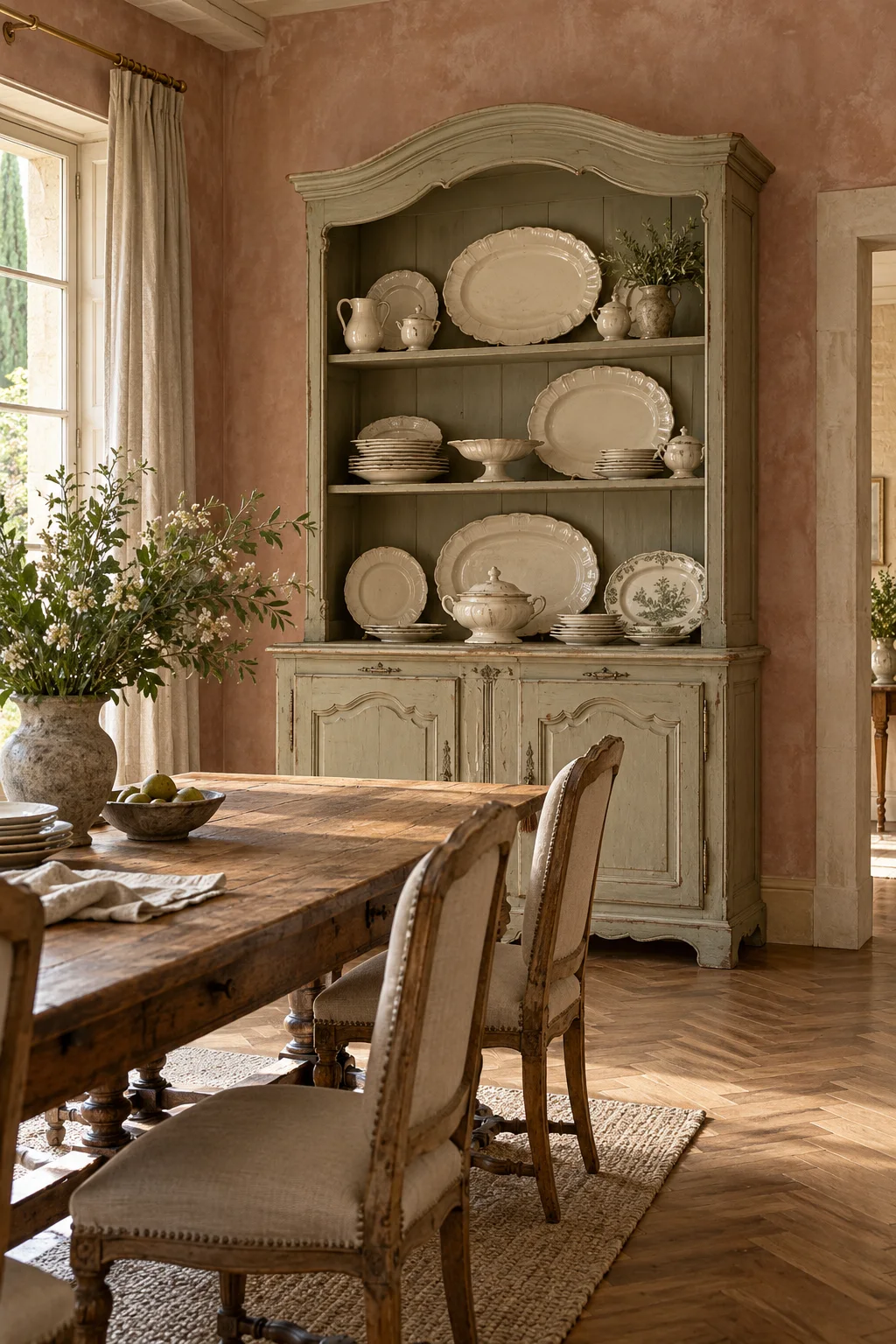
Nov 5, 2026 · Antique guide
French Country Christmas Decor with Antiques and Candlelight
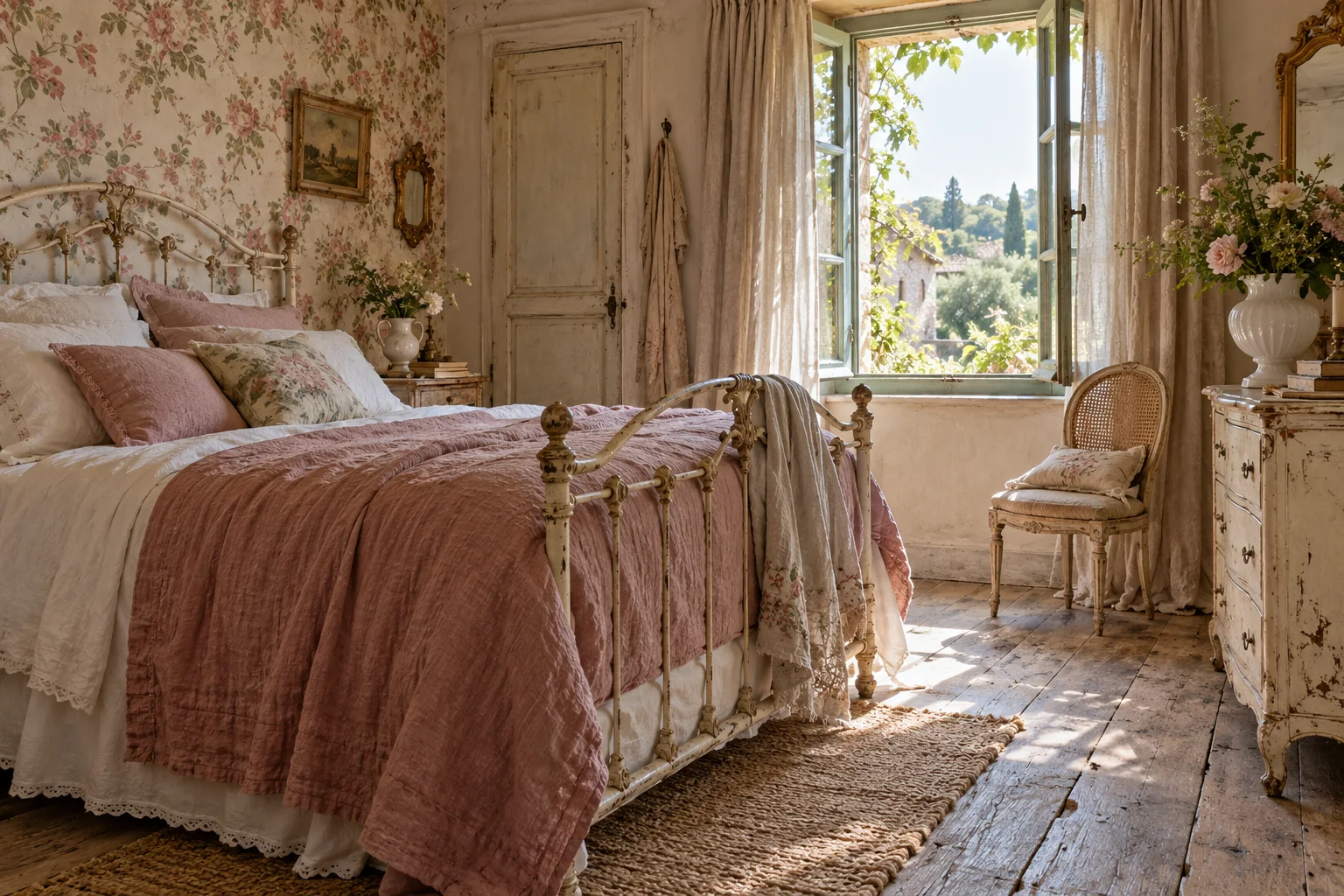
French country Christmas decor works best when it borrows from the house rather than from a store: brass candlesticks taken down from the mantel, greenery cut from…
Nov 3, 2026 · Antique guide
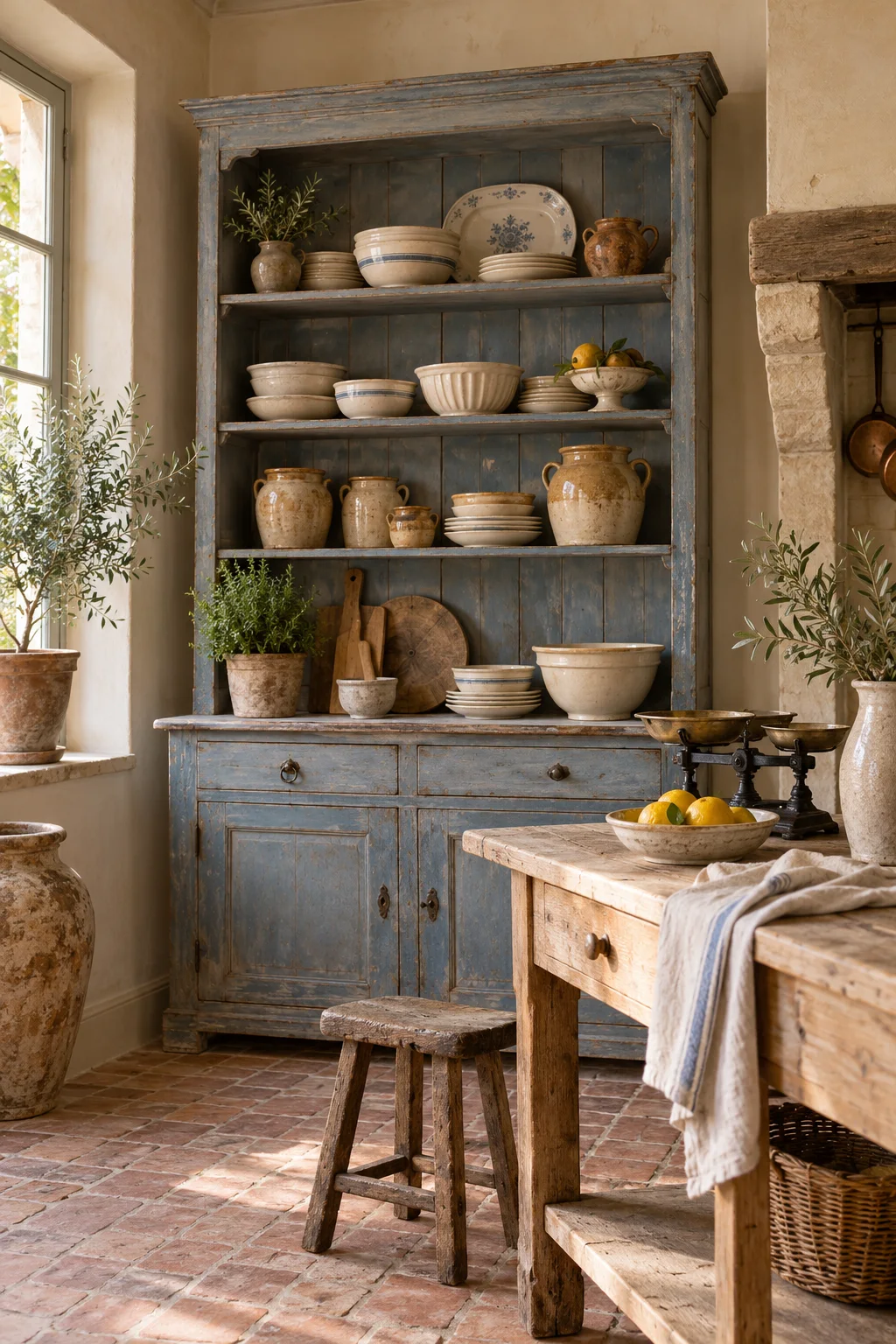
French Country Paint Colors: A Palette for Every Room
French country paint colors come from the landscape and from old materials: limewash whites, warm ochre, sage, Provençal blue, faded red and soft greige.
Nov 1, 2026 · Antique guide
Vintage French Country Decor: Pieces from 1920 to 1970
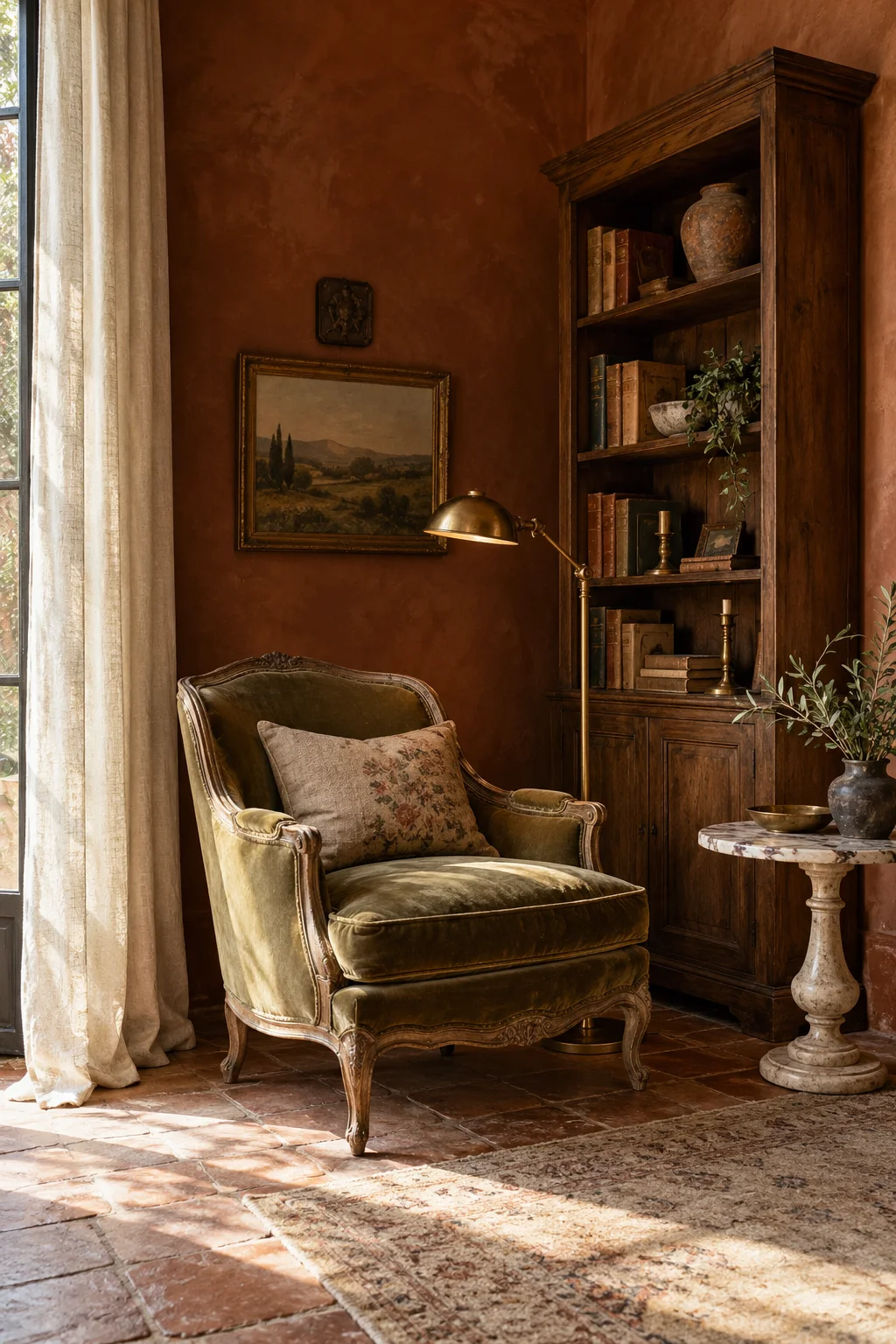
Vintage French country decor draws on the objects of French homes, cafés and kitchens made between about 1920 and 1970: bistro chairs, enamel coffee pots, opaline…
Oct 31, 2026 · Antique guide
Modern French Country Decor: Antiques Meet Clean Lines
Modern French country decor keeps the warmth of the style, worn wood, linen, stone and old glass, and sets it in rooms with clean lines, fewer objects and more open…
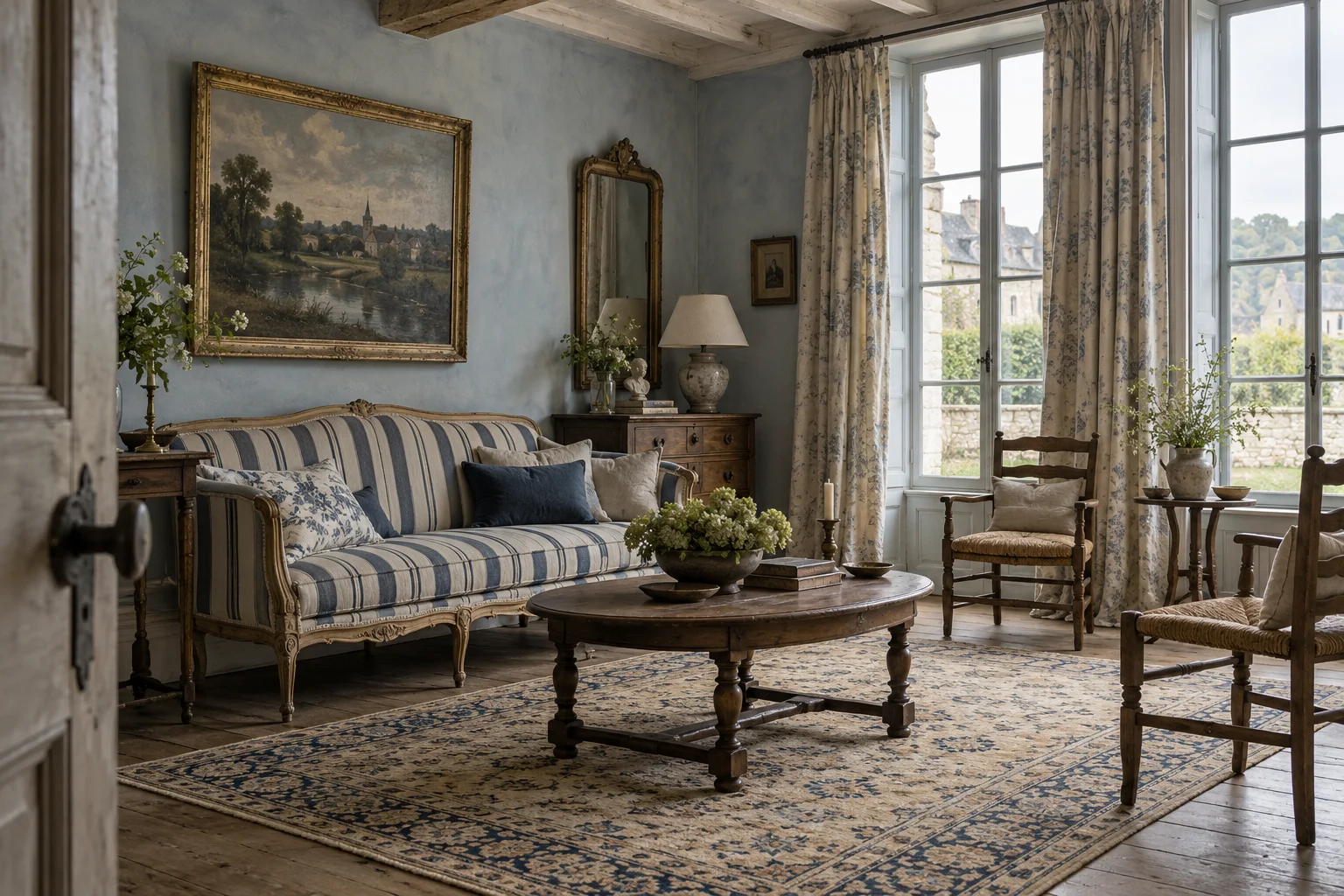
Oct 30, 2026 · Antique guide
French Country Decor Ideas: 30 Ways to Style Each Room
French country decor ideas work best when each one is concrete: a measurement, a material, a place in the room.